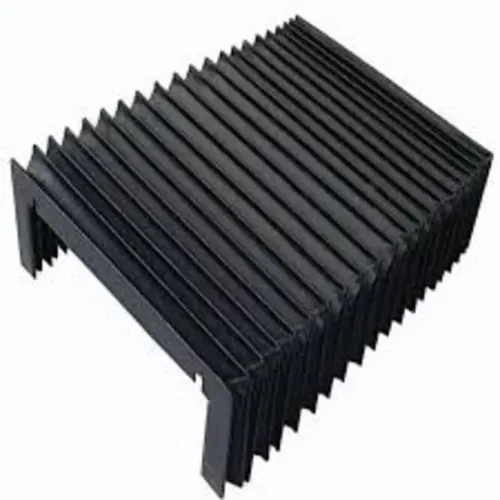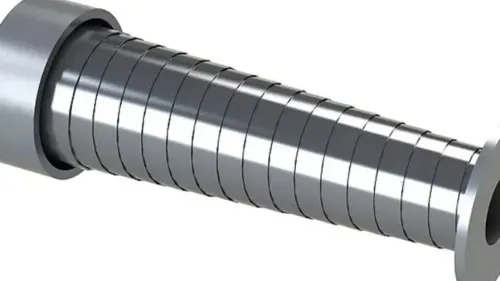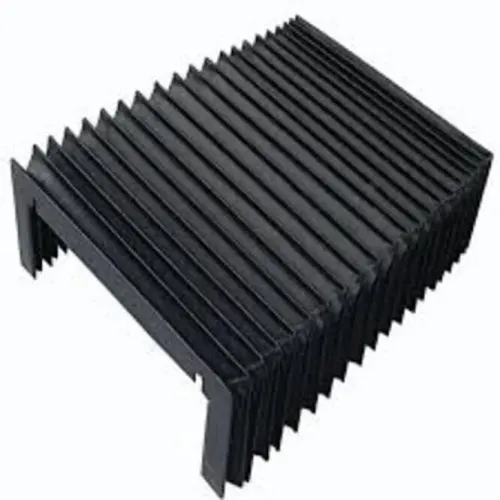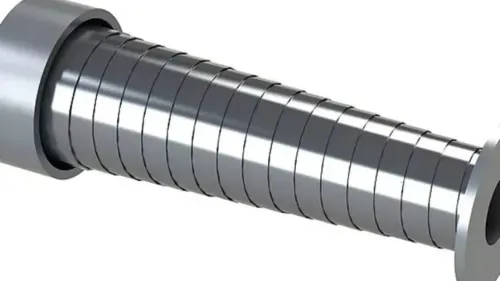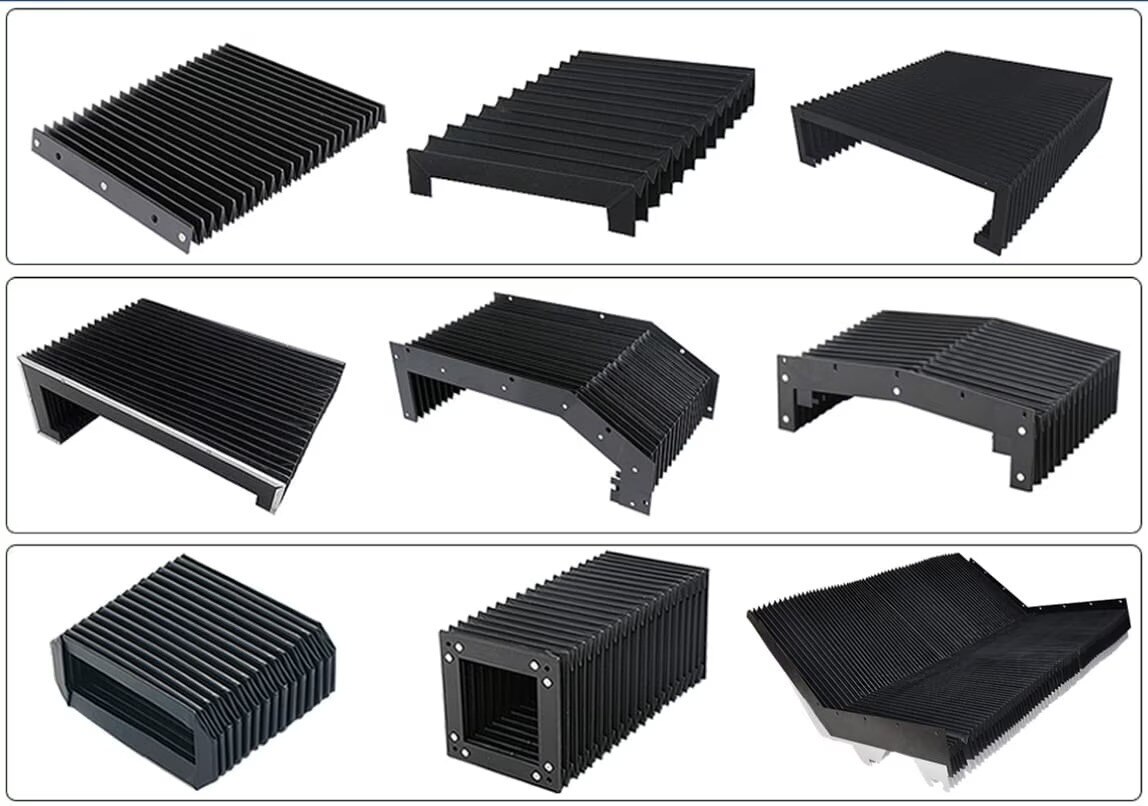
Coolant that remains on or inside a telescopic cover can turn into an abrasive residue, harden wipers and restrict panel movement. By following a controlled cleaning, inspection and test sequence, you can distinguish a recoverable spill from damage that requires repair or replacement.
Key takeaways
- Stop movement, isolate energy, and secure raised axes before cleaning.
- Rinse coolant away without driving it into seams, slides, or wipers.
- Inspect folds, scrapers, fasteners, guides, and trapped coolant after washing.
- Run a slow, unloaded travel test before returning the machine to production.
What to do immediately when coolant reaches the cover
Stop the spindle, halt coolant flow and prevent axis movement before touching the cover. Isolate electrical and hydraulic energy, apply lockout/tagout, and secure any raised or counterbalanced axis. Springs, gravity and trapped hydraulic pressure can move a cover suddenly; cleaning is not a substitute for making the machine safe.
- Confirm zero movement and release stored pressure before opening or manually extending the cover.
- Remove loose chips with a hand tool or vacuum, keeping them from being pushed into overlaps, drain slots or wiper edges.
- Identify the fluid: water-miscible coolant leaves a concentrated residue as water evaporates; straight-cutting oil leaves an oily film; semi-synthetic coolant can leave both. Coolant mixed with abrasive chips creates an immediate sliding-surface risk.
- Blot pooled fluid with a lint-free cloth, then use a low-pressure rinse and neutral or manufacturer-approved detergent. Do not use a pressure washer, abrasive pad, uncontrolled high-pressure air, chlorinated cleaner or unapproved solvent.
- Check fully closed and fully extended positions, without forcing travel, for trapped coolant behind wipers, inside overlaps, at folded seams, in end boxes and around drain slots.
- Dry those areas promptly. In Kolhapur’s humid or monsoon conditions, trapped rinse water under an overlap can start corrosion even when the coolant itself is non-corrosive.
- If coolant reached a cable carrier or adjacent cable-management compartment, isolate and inspect cables, connectors, bend-limiting parts and strain relief separately; a clean cover does not prove that system is dry or electrically safe.
Do not restart production until the cover moves freely and the inspection is complete. Record photographs and the fluid involved for a telescopic cover for maintenance after coolant exposure in Kolhapur.
How to wash and dry the cover without forcing coolant inside
Use a low-pressure rinse and a neutral or manufacturer-approved detergent to remove coolant, chips and residue without driving contamination past the wipers. Before opening or manually extending the cover, stop the machine, isolate electrical and hydraulic energy, and secure any raised axis, spring or counterbalance.
Coolant type determines the residue you must remove:
| Coolant type | Main residue or risk | Cleaning choice |
|---|---|---|
| Water-miscible | Dried salts and concentrated film | Rinse while soluble, then use diluted neutral detergent |
| Straight-cutting oil | Oily film that attracts chips | Wipe first with a lint-free cloth, then wash |
| Semi-synthetic | Sticky residue and staining | Use approved detergent; rinse thoroughly |
| Coolant with abrasive chips | Grinding paste in overlaps | Lift chips gently before rinsing; never scrub across wipers |
- Remove loose chips with a soft brush or vacuum. Do not drag swarf across painted, plated or sliding surfaces.
- Wash from the upper panels downward, keeping the spray shallow and low pressure. Do not use a pressure washer, uncontrolled high-pressure air, abrasive pads, chlorinated cleaners, strong alkaline products or unapproved solvents.
- Extend and close the cover only under the machine maker’s safe procedure. Clean overlap zones, end boxes, drain slots and the areas behind wiper strips.
- Dry immediately with lint-free cloths and clean, low-pressure air directed away from gaps. Pay special attention to folded seams and channels.
During telescopic cover care in kolhapur, trapped rinse water under an overlap can corrode surfaces during humid or monsoon conditions. Clean the cover fully closed and fully extended, then leave every drain path clear.
How to identify damage after the surface looks clean
A clean outer skin does not clear the cover. Inspect it fully closed and fully extended, because coolant and swarf can remain in overlap zones, end boxes, drain slots and behind wiper strips. Isolate electrical and hydraulic energy and prevent axis movement before opening or manually extending it.
| Inspection point | Physical sign | What it indicates |
|---|---|---|
| Overlap zones | Sticky film, dried residue, trapped chips or scraping marks | Binding, abrasive wear or panels failing to slide freely |
| Wiper strips and seals | Swelling, cracks, hard edges, gaps or loss of spring contact | Coolant bypass, reduced sealing and possible leakage into the cover |
| Folded edges and welds | Blistered coating, red-brown staining, pits or white corrosion deposits | Crevice corrosion or coating failure beneath trapped residue |
| End boxes and drain slots | Blocked openings, pooled coolant or sludge | Poor drainage and coolant entering the cover during movement |
| Panel alignment | Uneven gaps, lifted corners or a panel that sits low | Bent sections, loosened fasteners or structural distortion |
Move the cover slowly by its approved method and compare resistance across the stroke. Jerking, a scraping sound, sudden stiffness or one side moving ahead of the other points to telescopic cover coolant damage, even when the panels appear clean.
Do not cover stiffness with heavy grease. It can hold chips against the sliding surfaces and create grinding paste; inspect the specified lubrication points instead. If coolant reached an adjacent cable carrier, inspect its cables, connectors and strain relief separately.
When recovery is possible and when repair or replacement is necessary
Cleaning and lubrication are enough when the cover dries clean, moves evenly by hand, retains correct overlap, and shows no swollen wipers, hardened seals, dents, coating blisters, corrosion or trapped chips. Isolate electrical and hydraulic energy, prevent axis movement, and account for spring or counterbalance force before extending it for inspection.
Choose the intervention that matches the defect:
- Clean and lubricate when the problem is sticky residue, light surface staining or dry sliding interfaces, with no scraping, binding or coolant behind the wipers.
- Replace wipers or seals when rubber is swollen, cracked, brittle, permanently compressed or no longer contacts the mating panel. Do not substitute generic rubber without checking the original profile, material and contact pressure.
- Straighten or repair a section when a panel has a local dent, distorted overlap or damaged drain slot but its folded edges, welds and guide geometry remain sound. Do not bend panels in place or drill extra drain holes.
- Replace the cover when sections are warped, spring force is lost, corrosion has weakened folded edges or welds, or repair cannot restore smooth travel and sealed overlap.
For telescopic cover recovery in Kolhapur, check the coolant with a refractometer against the supplier’s specified concentration range. Inspect tramp oil, filtration and chip-control practices; an incorrect mix or abrasive contamination can cause repeated failure.
SCUTES INDIA PRIVATE LIMITED can assess whether a damaged section is repairable or whether the cover’s original clearances require a correctly matched replacement.
Related product
 | TELESCOPIC COVERS A telescopic cover protects guide-way surfaces and components of moving axis of machines. View product → |
How to test the recovered cover before production resumes
A dry, unloaded axis cycle at reduced speed is the safest confirmation before cutting resumes. Keep the machine in lockout until the cover is reassembled, guards are in place and no person is near the travel path; a raised axis, spring or counterbalance can release stored energy.
1. Remove tools and workpieces, select the lowest practical jog speed and run the axis through its full protected travel. Watch each panel open and close without sticking, jerking, scraping, collision or abnormal noise.
2. Confirm that the panels maintain even gaps and the designed overlap throughout the stroke. Stop the test if one section leads, binds, tilts or fails to return fully to its end position.
3. Inspect the cover fully extended and fully closed. Check overlap zones, end boxes, drain slots and wiper strips for trapped coolant, chips or fresh leakage.
4. Run a short supervised cycle with the normal coolant flow, without cutting. Confirm that coolant drains through the intended outlets rather than crossing wipers, entering between boxes or collecting inside the cover.
5. Check the coolant with a refractometer against the supplier’s specified concentration range, and remove tramp oil or excess chips from the filtration system. Do not approve the cover because it looks clean; correct any failed movement, overlap or coolant-control result before production.
A light, compatible lubricant belongs only at the cover maker’s specified points. Wipe excess from exposed sliding surfaces, because heavy grease captures chips and turns the overlap into an abrasive paste.
Frequently asked questions
What should you do first when coolant reaches a telescopic cover?
Stop the spindle and coolant flow, prevent axis movement, apply lockout/tagout, and secure raised or counterbalanced axes before touching the cover.
How do you wash and dry a telescopic cover safely?
Remove pooled coolant with low-pressure wiping or rinsing, keep spray away from seams and wipers, then dry all panels, joints, guides, and drain paths.
How can you identify telescopic cover coolant damage after cleaning?
Check for distorted panels, seized slides, damaged scrapers or wipers, loose fasteners, corrosion, blocked drains, and coolant trapped between sections.
When should you repair or replace a coolant-damaged telescopic cover?
Recover it when panels, guides, seals, and mounting points remain sound; repair or replace it when travel binds, panels deform, seals fail, or structural parts crack.
How do you test a recovered telescopic cover before production resumes?
Check manual movement first, then run slow unloaded axis cycles while watching for binding, scraping, uneven extension, leakage, vibration, or abnormal noise.