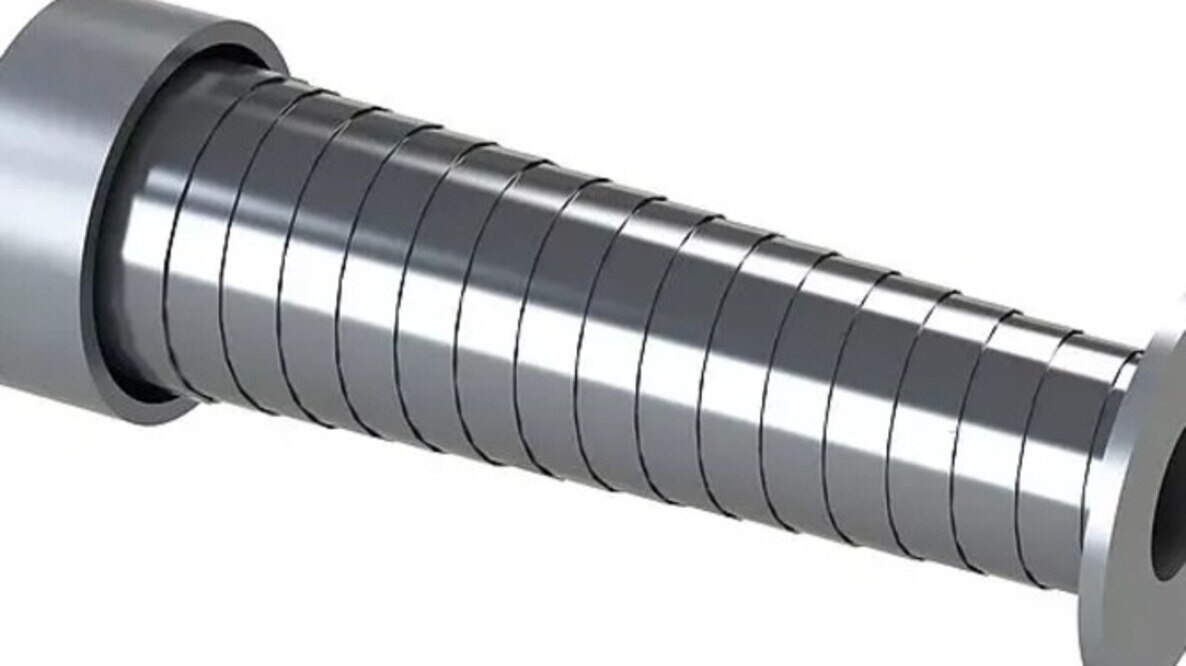
The wrong cover can buckle at the compressed position, rub against a flange, or fail because a flexible protection cover was treated as a pressure-rated expansion joint. By the end, you will be able to define the movement, measure the installation, select materials, and compare supplier drawings before placing an order.
Key takeaways
- Measure compressed, extended, lateral, and angular movement before sizing.
- Confirm whether the spring supports fabric or forms the protective spiral.
- Match fabric, liner, temperature, pressure, and chemical resistance to service conditions.
- Approve dimensions, movement tests, seams, fasteners, and material certificates before delivery.
What a spiral spring bellows cover is—and which construction you need
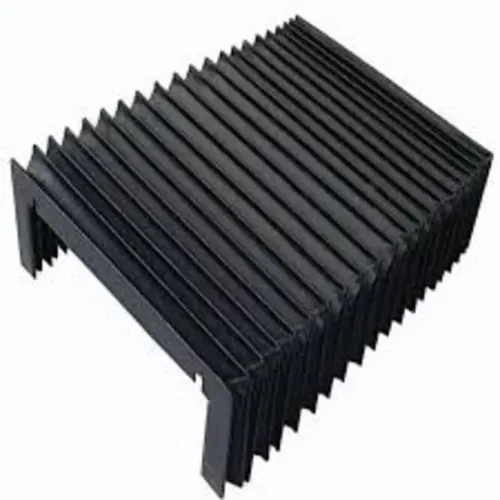
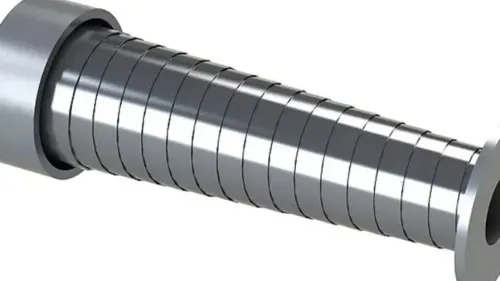
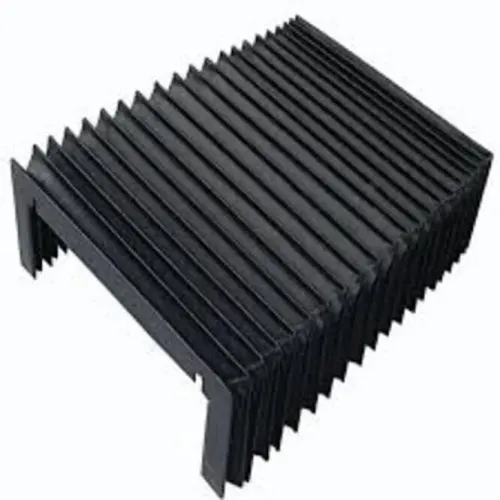
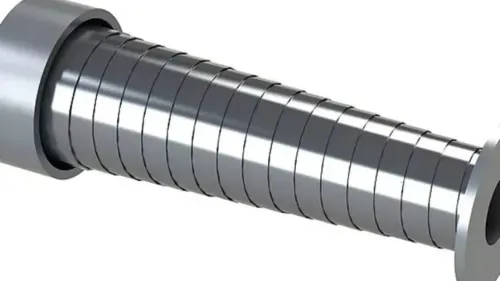
A spiral spring bellows cover for ducts is a flexible fabric, coated-fabric, or elastomer enclosure supported by a helical spring or spring strip. The spring keeps the cover open and stable while allowing axial, lateral, and angular movement. A spring-steel strip may also form the protective spiral itself, so confirm which construction is quoted.
| Option | Movement and protection | Pressure, fatigue, and space |
|---|---|---|
| Spiral spring duct bellows | Handles combined movement and shields against chips, dust, coolant, and contact | Not automatically gas-tight; needs clearance and support |
| Fixed flexible connector | Absorbs limited vibration or misalignment | Usually less movement and protection; compact |
| Fabric expansion joint | Takes thermal movement in ductwork | Can contain pressure when engineered; fabric fatigue and seal details matter |
| Rubber expansion joint | Handles vibration and axial or lateral movement | Pressure-rated only to its specification; needs bolt and face clearance |
| Sliding sleeve | Primarily accommodates axial travel | Requires sealing surfaces and straight installation space |
| Metal expansion joint | Provides controlled thermal movement | Pressure-rated construction with guides; fatigue and installation space are critical |
A machine-protection cover is not automatically a gas-tight duct joint, fire damper, or pressure-rated component. For hot, hazardous, corrosive, vacuum, or pressurised process air, specify the cover and actual duct expansion joint separately.
Your purchase description must name the cover material, spring material, attachment method, and whether the assembly shields the duct or contains the conveyed medium. Use the same boundary when comparing a spiral spring duct bellows in Kolhapur with other quotations.
How to measure the duct and calculate the bellows size
Duct bellow size selection starts with the installed envelope, not the nominal duct diameter. Measure the duct outside width and height, or outside diameter, exactly where the cover will attach.
1. Record the installed length, minimum compressed length, maximum extended length, axial stroke, lateral offset, angular movement, attachment length at both ends, radial clearance, and required connection dimensions.
2. Add a dimensioned drawing showing flange thickness, collar depth, bolt-hole pattern, bolt-head projection, inspection doors, clamps, weld beads, insulation, and nearby cable carriers. Measure the largest moving feature, not only the static duct.
3. Check radial and axial clearance with the duct at every position, including full compression, full extension, lateral offset, and angular movement. A protruding bolt or cable carrier can create a rubbing point that the nominal diameter hides.
4. State every quoted length precisely: compressed, installed, neutral, or extended. “1,000 mm long” is incomplete and can produce the wrong cover.
5. Estimate the required cover length as travel plus both end-attachment zones, then add the manufacturer’s allowance for folds, spring pitch, overlap, and installation tolerance. Confirm the result against the available space.
Treat minimum compressed length as a governing dimension. Excess length can buckle, rub, and transmit force into duct supports; insufficient length can reach full extension early, tear the fabric, or pull away from its attachments. Include the compressed and extended dimensions in the purchase drawing and acceptance check.
How movement type changes the cover design
A cover that sees the wrong motion will fail early: distinguish the movement source before selecting spring pitch, fabric length, or attachment.
| Motion source | How to recognise it | Design consequence |
|---|---|---|
| Thermal expansion | Stroke follows duct temperature | Provide axial travel and controlled end loading |
| Fan vibration | Repeating oscillation with measurable frequency and amplitude | Check acceleration, fatigue, and reversals, not stroke alone |
| Equipment isolation | Equipment moves against a relatively fixed duct | Allow combined axial and lateral movement |
| Building settlement | Slow, persistent offset over time | Provide sustained offset capacity and inspect supports |
| Installation misalignment | Local rubbing, skew, or torsion at the ends | Correct guides and duct supports; do not use the cover as a correction |
Estimate thermal stroke with ΔL = α × L × ΔT. Use the actual duct material and temperature range: a long carbon-steel duct and a short stainless-steel duct will not produce the same movement.
Give the supplier the complete motion profile:
- Peak velocity, acceleration, deceleration, reversing frequency, vibration, orientation, and full travel.
- Whether the duct is horizontal, vertical, or inverted.
- For horizontal installation, the permitted unsupported span or the location of intermediate supports.
A short vertical spiral spring duct bellows in Kolhapur can sag onto the duct or machine bed when installed horizontally across a longer span. Compare a spiral spring bellows cover for ducts in Kolhapur by its supported travel and fatigue evidence, not by nominal stroke alone.
How to select the spring, fabric, liner, temperature, and pressure limits
1. Convert the movement and installation into a spring requirement. A heavier or closer-pitch spring resists sag, chip impact, and collapse, but increases restoring force, packed size, and end-attachment load. A lighter or wider-pitch spring follows movement more easily, yet needs adequate support and is more vulnerable to buckling.
2. Specify the spring grade or corrosion environment, not merely “stainless spring.” Carbon spring steel is more vulnerable to coolant, wash-down water, and corrosive dust. State the required grade, coating, or exposure class, because stainless grades change stiffness, cost, and fatigue behaviour.
3. Choose the cover from the combined exposure: air temperature, abrasive chips or dust, oil mist, moisture, coolant, chemicals, sparks, ultraviolet light, and cleaning agents. Coated polyester suits many general protective duties; polyurethane improves abrasion and oil resistance; neoprene suits selected oil and weather exposure; silicone handles higher heat; aramid suits demanding heat and abrasion.
Confirm compatibility with the actual coolant and solvent. Add an inner or outer liner when abrasion, permeability, heat, or chemical compatibility requires it.
4. Before approving a bellows cover for industrial ducts, obtain written limits for continuous and peak temperature, positive pressure, vacuum rating, leakage, media compatibility, seam type, fire or antistatic performance, and grounding continuity where applicable. A fabric temperature rating alone does not prove resistance to solvent, combustible dust, hot exhaust, or negative pressure.
Treat a protective cover as separate from any certified pressure-rated or gas-tight duct joint.
How to compare suppliers and approve the finished cover
Reject any quotation that gives only a length and price. A spiral spring cover supplier in Kolhapur must identify what the quoted length means and show how the cover fits your installed duct, movement, and support arrangement.
Request one dimensioned, revision-controlled drawing showing:
- Duct width, height or diameter; neutral, compressed, and extended lengths; travel direction; and connection dimensions
- Spring pitch, spring material, fabric and coating, liner, end attachment, attachment hardware, and allowable unsupported span
Ask for written temperature, positive-pressure, vacuum, leakage, and media limits for the exact construction and seam, not a generic catalogue rating. Compare evidence, not price per metre.
| Criterion | Quotation to approve | Warning sign |
|---|---|---|
| Replacement lead time | Stated in calendar days | “Immediate” with no commitment |
| Drawing control | Revision number and approval date | Uncontrolled sketch |
| Travel proof | Full-stroke test record | No test evidence |
| Support | Permitted unsupported span stated | Rating omitted |
Use this checklist for a spiral spring bellows cover for ducts in Kolhapur and for a spiral spring duct bellows in Kolhapur from another location. SCUTES INDIA PRIVATE LIMITED can be considered alongside other suppliers when it provides this evidence for the proposed construction.
At acceptance, move the assembly through its full stroke. Check compressed and extended dimensions, clearance at every position, spring continuity, fold damage, rubbing marks, attachment security, and chip or coolant ingress. Record spring pitch, end construction, material, and drawing revision so repeat covers remain interchangeable.
Related product
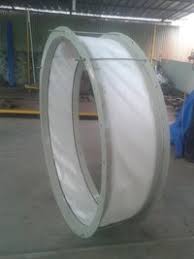 | Duct Bellows HVAC systems and industrial ducting rely on high-quality duct bellows for durability and performance. View product → |
Frequently asked questions
What is a spiral spring bellows cover for ducts?
It is a flexible fabric, coated-fabric, or elastomer enclosure supported by a helical spring or spring strip. The support keeps the cover open while allowing axial, lateral, and angular movement. Confirm whether the spring supports the cover or forms the protective spiral itself.
How do you measure a duct for a bellows cover?
Record the duct’s outside dimensions or diameter, fixed-end dimensions, available mounting length, compressed length, extended length, lateral offset, and angular movement. Include flange thickness, bolt pattern, clearances, and the largest object passing through the opening.
How does movement affect spiral spring bellows cover design?
Axial travel requires enough fabric length and spring extension. Lateral movement needs clearance and a cover that does not buckle or rub. Angular movement requires flexible end connections and a spring pitch that remains stable through the operating range.
What materials and limits should you specify?
Specify the fabric or elastomer, coating, liner, seam construction, spring material, operating temperature, pressure or vacuum, chemical exposure, abrasion, moisture, and cleaning method. Select each material from the actual duct temperature and media conditions.
How should you compare spiral spring cover suppliers?
Compare a dimensioned drawing, movement calculations, material data sheets, spring details, temperature and pressure limits, seam and mounting methods, inspection records, and a documented movement test. Approve the finished cover against the drawing rather than appearance alone.