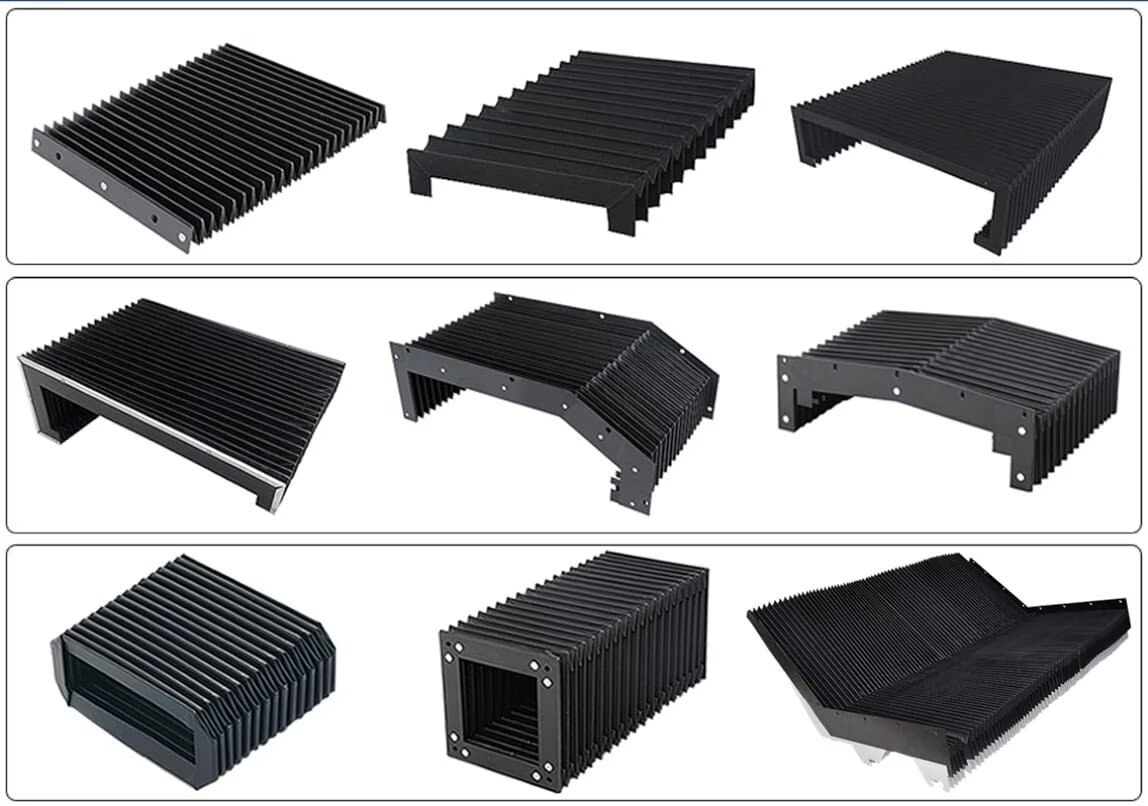
Hot swarf, sharp chips and coolant can reach guideways and ballscrews through gaps that a static panel cannot cover during axis movement. By the end, you will know how steel slats travel, when their impact resistance justifies their added mass, which dimensions and machine data to provide, and how to prevent premature failure.
Key takeaways
- Overlapping slats block chips while preserving the machine axis stroke.
- Specify axis travel, opening size, speed, load and mounting points before ordering.
- Choose steel when chip impact and heat outweigh added mass and friction.
- Clean slats, inspect guides and correct tracking faults before they damage seals.
How overlapping steel slats block chips without stopping axis movement
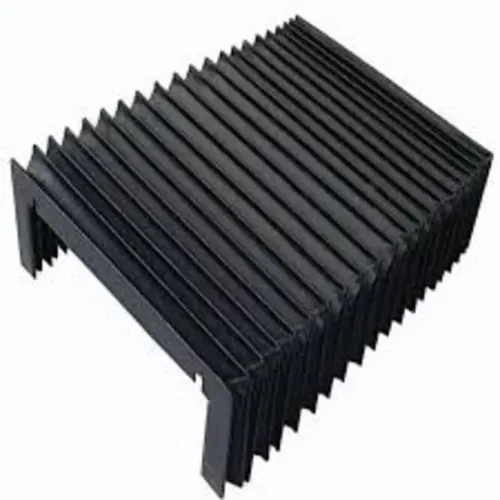
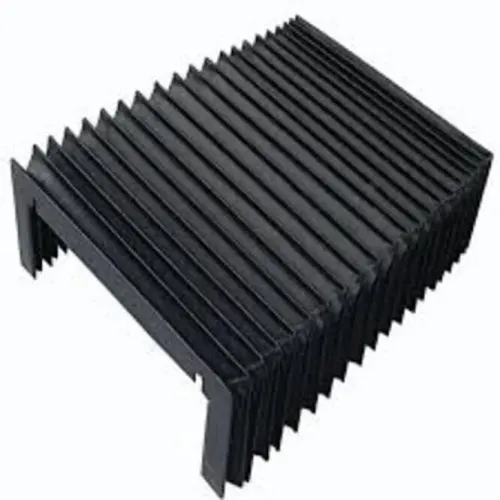
Custom steel apron covers are assemblies of overlapping steel slats that slide or roll as a machine axis moves. Interlocking or overlapping steel slats form a continuous moving shield across a guideway or machine opening, attaching between the moving carriage and fixed frame without reducing the axis stroke.
The slats may travel straight, fold, or roll into a compact housing.
The overlap intercepts sharp chips, hot swarf, dust, oil and coolant before they reach guideways, ballscrews, racks or other moving parts. That is machine guideway protection, not a cosmetic panel.
| Factor | Steel slat cover | Aluminium-and-fabric cover |
|---|---|---|
| Stiffness | Higher; resists deflection across wide openings | Lower; fabric flexes and needs support |
| Impact resistance | Better against concentrated chips and heavy swarf | Better suited to light debris and splash |
| Weight | Heavier, increasing drive and support demands | Lighter and easier to move |
| Corrosion behaviour | Use coated carbon steel or stainless steel; trapped coolant still attacks edges and fasteners | Fabric and aluminium resist some environments, but coatings, seams and frames can degrade |
| Noise | Slat contact can create more operating noise | Usually quieter and more compliant |
| Flexibility | Limited bending radius and tighter guide requirements | More flexible for compact folds and irregular movement |
| Service conditions | CNC lathes, machining centres, grinders and transfer lines with hot or heavy chips | Dust, light chips, lower-impact applications |
Debris trapped between slats, bent edges or excessive deflection can open a leak path. A large chip can also jam the cover. Do not treat a steel slat cover as walk-on or load-bearing protection unless separately engineered; operator access requires a separate guard and safeguarding assessment.
How the cover travels with a horizontal, vertical or inclined axis
An apron cover travels with the axis by hinging its overlapping steel slats around rollers, folding them into a guided slat-pack, or sliding them along edge rails.
One end fitting anchors the cover to the moving section; another anchors it to the fixed frame, allowing the protected span to extend and retract through the full stroke. Guide rails, rollers and hinges must withstand acceleration without buckling or climbing out.
Orientation changes the return arrangement:
- A horizontal machine cover needs a low-friction roller return or guided fold, plus clearance for chips that collect on its upper surface. Keep the return path and wipers accessible for cleaning.
- A vertical machine cover must support the cover’s mass against gravity. Counterbalance, a controlled take-up or positive guide rollers prevent slat-pack sag, impact and uneven tracking.
- An inclined cover needs side-guided tracking so gravity cannot pull the slats sideways. Provide drainage paths and a slope that stops coolant and chips pooling at hinges or end fittings.
- Specify the minimum bend or folding radius, maximum slat-pack height, guide-rail width and wiper position before fixing the machine opening.
- Check the fully open and fully closed envelope against the turret, fixture, chip conveyor, covers and axis limits; a nominal opening can still stop the stroke.
Custom steel apron covers follow an axis; they are not operator guards. Where a person can reach the moving hazard, provide a separate fixed or interlocked movable guard. Inspect bent slats, loose fasteners, damaged wipers, abnormal drag and uneven tracking, and remove chips before they enter guides or joints.
When steel construction is worth the added mass and friction
Steel construction is worth the added mass when a machine generates sharp, hot or heavy chips that would cut, burn or deform fabric. That makes a CNC lathe cover, machining-centre enclosure, transfer-line shield or grinding-machine cover a strong candidate for hot swarf protection, especially during frequent cycles and aggressive cutting.
| Machine or condition | Why steel is justified | Main design concern |
|---|---|---|
| CNC lathes and machining centres | Sharp, heavy chips and tool impacts | Slat denting, guide clearance and take-up space |
| Transfer lines | Repeated cycles and sustained chip loading | Fatigue, vibration, hinge wear and stopping performance |
| Grinding machines | Hot, abrasive swarf and dust | Heat, trapped debris, damping and corrosion cleaning |
Steel slats provide impact interception, not liquid-tight sealing. Coolant exclusion depends on side wipers, end seals, overlapping joints, drainage paths and cover orientation; high-pressure coolant demands tighter control than ordinary flood coolant because jets can drive liquid through small gaps.
Custom steel apron covers add mass and friction, so the specification must account for slat thickness, overlap, hinges, guides, damping, take-up, servo sizing, acceleration and stopping distance. A trapped chip can dent a slat, raise operating force or halt the axis.
- Choose stainless steel or coated carbon steel with a corrosion plan for cut edges, fasteners, hinges and trapped debris.
- State coolant concentration, chemistry and cleaning access.
- Provide maximum speed, acceleration, vibration, cycle frequency, travel and service-life requirements.
- Obtain exact limits from the design specification; never assume a universal rating.
What to measure and specify before requesting a custom cover
Before requesting custom steel apron covers, record custom machine cover dimensions and the complete motion envelope, not just the protected opening. Measure opening width, closed and extended lengths, axis travel direction, installation height, mounting points, available clearance, bend or folding radius, slat-stack space, and adjacent-component interference.
Add these service conditions to the apron cover specification:
- State maximum machine-axis speed and acceleration, vibration level, and cycle frequency.
- Identify chip type and temperature, including sharp, hot or impact-heavy swarf.
- Record coolant pressure and chemistry, including oils, detergents and cutting additives.
- State whether the cover runs horizontally, vertically or on an incline; provide cleaning access and required service life.
- Mark turret, fixture, chip-conveyor, axis-limit and maintenance zones.
| Check | What static dimensions miss | Why it matters |
|---|---|---|
| Fully open envelope | Slat-stack height, end fittings and folded length | The cover can strike a turret, fixture or conveyor. |
| Travel dynamics | Return force during acceleration and reversal | Slats can buckle, slap or climb out of guides. |
| Guide arrangement | Guide clearance, wiper contact and friction | Trapped chips or excessive preload can stop travel. |
| Stroke limits | End-stop loads at maximum allowable travel | A hard stop can damage slats, guides or mountings. |
Give a specialist manufacturer such as SCUTES INDIA PRIVATE LIMITED the machine drawing, operating envelope and contamination conditions. Require confirmation of slat material, thickness, guides, wipers, drive or return arrangement and allowable travel before approving the design.
Related product
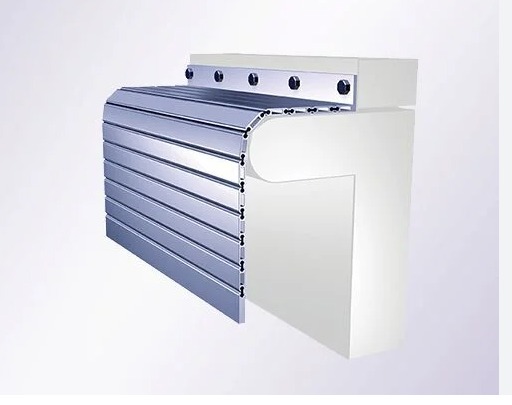 | APRON COVER Effectively engaged in offering a vast collection of outstanding quality products which include Apron Covers. View product → |
How maintenance keeps the slat shield tracking and sealing
Apron cover maintenance keeps custom steel apron covers tracking freely and sealing coolant away from the guideway. Inspect at each shift start, after an impact, and whenever axis resistance changes.
- Remove accumulated chips before they enter slat joints, side guides or drainage paths.
- Check every visible slat for bending, distortion or cracked edges.
- Check fasteners, mounting brackets and hinge connections for looseness or damage.
- Inspect slat cover wipers for cuts, hardening, gaps and loss of contact; replace them as wear components, not permanent seals.
- Watch for abnormal drag, jerky travel or uneven tracking. Stop the machine if the cover rubs, climbs or pulls to one side.
- Look for coolant carried toward the guideway. Correct blocked drains, displaced end seals or poor overlap before contamination reaches ballscrews or guide surfaces.
Lubricate only the hinges or guides identified by the cover design. Indiscriminate lubricant turns fine chips into abrasive paste and can increase wear.
Set travel limits at the machine’s designed end stops or an engineered stop system. Do not repeatedly slam the slat pack into an improvised obstruction; impact bends slats, breaks hinges and distorts mounting frames.
A cover provides contamination protection, not complete machine guarding. Wherever a person could reach a hazardous moving part, provide a separate fixed or movable guard, an interlock and a machinery risk assessment.
Frequently asked questions
How do overlapping steel slats protect a moving guideway?
Overlapping or interlocking slats form a continuous shield that blocks chips and debris while sliding or rolling with the moving axis.
Can a steel apron cover follow horizontal, vertical and inclined axes?
Yes. The assembly can be designed to travel with horizontal, vertical or inclined axes, provided its mounting, support and travel path match the machine layout.
When is a steel apron cover worth its added mass and friction?
Steel is worth considering when the guideway faces sharp chips, heavy contamination, heat or mechanical impact, and the machine can handle the added moving mass and friction.
What information is needed to request a custom steel apron cover?
Provide the opening dimensions, axis travel, orientation, speed, acceleration, temperature, contamination type, mounting points and available space for the cover’s travel and storage.