Chips, coolant and abrasive swarf do more than dirty a machine: they can score guideways, contaminate bearings and obstruct ballscrews. By the end, you will know how steel apron covers work, which machine movements suit them, what information a custom design requires and when another protection method is safer.
Key takeaways
- Use overlapping slats to deflect chips, coolant and oil from exposed ways.
- Choose apron covers for long linear travel with limited installation depth.
- Compare movement, sealing and access before selecting an apron, bellows or wipers.
- Specify slat material, thickness, travel, mounting and maintenance access.
How overlapping steel slats deflect contamination from moving parts
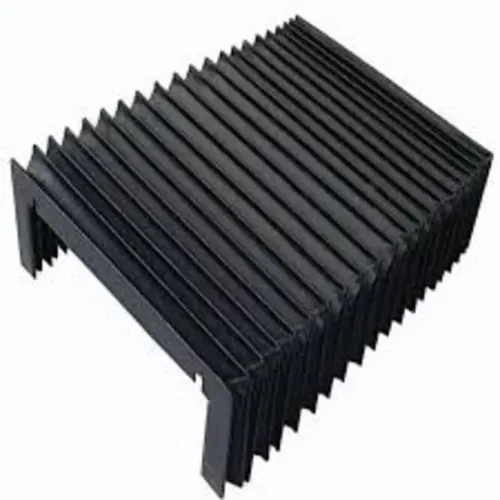
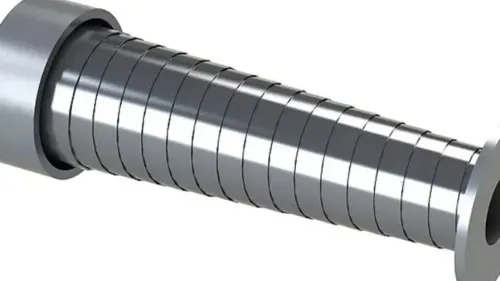
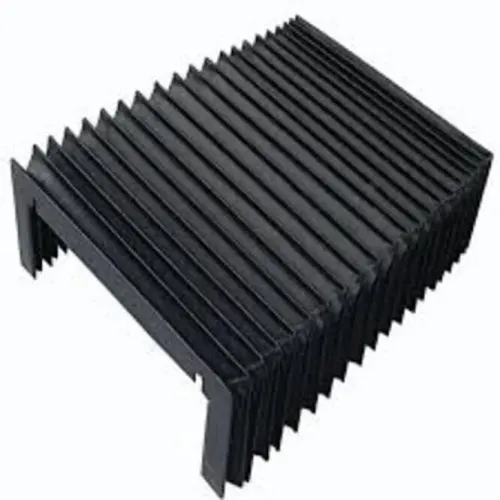
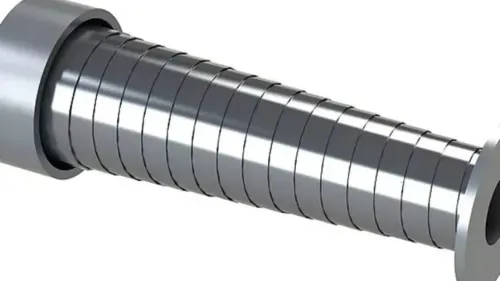
A steel apron cover is a moving assembly of overlapping or interlocking steel slats mounted over a machine way, guide, pit or opening. The slats bridge the exposed area while hinges or interlocking edges let the cover bend and travel with the axis.
Custom steel apron covers suit hot, sharp or heavy chips that could cut or burn a flexible bellows.
As the cover moves, each slat presents a deflecting surface and passes contamination toward the sides or away from the opening. That protects:
- Guideways by keeping chips and abrasive swarf off their bearing surfaces, where particles could score the way or cause uneven travel.
- Ballscrews by blocking debris from the screw and nut, reducing packed contamination that increases friction and backlash.
- Racks by preventing chips from lodging between teeth, where they could damage the pinion or interrupt movement.
- Bearings by limiting coolant, dust and metal particles reaching rolling or sliding contact areas.
A cover protects the central span only if its ends, sides and return path are enclosed correctly. Gaps at mounting transitions can still direct coolant or swarf onto the machine. Overlap improves deflection but does not create a liquid-tight seal; fluid pressure, direction, drainage and side sealing determine leakage.
Wipers are replaceable wear parts, not permanent seals. Inspect them for hardening, tears and embedded chips, then replace them according to contamination and motion conditions. An apron also needs attention to its slat joints and guiding surfaces, which can produce more noise than a bellows.
Which machine movements and mounting spaces suit an apron cover
Custom steel apron covers suit a machine when their guided path matches the actual movement envelope and leaves enough room for the return or storage path. A supported horizontal bed is the easiest case; an unsupported span, tight bend or obstructed return path causes sagging, binding or collision.
Before selecting the cover, record:
- Travel length and movement direction
- Horizontal, vertical or inclined orientation
- Available storage, wrap or return space
- Mounting height and maximum cover width
- Nearby fixtures, tooling, hoses and guards
- Clearance required by the moving table or carriage
| Movement or mounting situation | Suitability | Design condition |
|---|---|---|
| Horizontal bed or guideway | Strong fit | Support the apron across its travel and provide unobstructed storage at the fixed end. |
| Vertical axis | Suitable with added support | Use side guides, rollers or a balanced arrangement so the slats do not hang, buckle or pull on the carriage. |
| Cross slide | Suitable for short, repeated travel | Keep the apron narrow, align both guides precisely and confirm that the return path stays outside the slide’s clearance envelope. |
| Restricted mounting space | Possible with a compact layout | Measure the folded or wrapped length, mounting height and adjacent obstructions; a cover that fits at full extension may jam when retracted. |
| Long unsupported opening | Poor fit without structural support | Add intermediate support or choose a telescopic cover, bellows or roll-up design instead. |
How to choose between apron covers, telescopic covers, bellows and wipers
Choose a steel apron cover when sharp or heavy swarf threatens a moving way and the machine needs repeated travel through a shallow or irregular space. “Steel apron” usually means overlapping or interlocking steel slats, hinged plates, or both, linked to travel over a bed, pit, or opening.
| Option | Best fit | Main limitation |
|---|---|---|
| Steel apron cover | Hot chips, abrasive swarf, incidental impact; horizontal beds, vertical axes, and tight mounting spaces | Joints, rollers, hinges, and wear strips need service; sides and ends can leak |
| Telescopic steel cover | Long straight guideways needing rigid, enclosed protection and strong chip deflection | Needs stacking clearance and a defined extension path |
| Bellows cover | Dust, oil mist, and coolant on complex or three-dimensional movements | Sharp or hot chips can cut, burn, or abrade the fabric |
| Roll-up cover | Compact protection where the cover must retract into a small housing | The flexible curtain is less suitable for heavy impact or aggressive swarf |
| Brush wiper | Removing residual chips or coolant at an edge or sliding interface | It is a consumable seal, not a protective enclosure |
Do not call an apron liquid-tight without checking the overlap, side seals, drainage, wipers, guide design, and coolant direction. High-pressure coolant can enter through joints, exposed return paths, or uncovered mounting transitions.
Choose another method when you need a sealed enclosure, very quiet operation, a complex three-dimensional path, or frequent direct access to the protected area. Treat wipers as replaceable parts, and keep any personnel guard separate; an apron cover is not protection from nip points or point-of-operation hazards.
What to specify for a custom steel apron-cover design
Custom steel apron covers must be sized around the machine’s complete motion envelope, not only the opening and nominal travel. Give the designer the maximum width, travel length, movement direction, mounting height, orientation, available storage or wrap space, adjacent obstructions and clearance needed by the table or carriage.
Provide these operating details with the drawing:
- Maximum speed, acceleration, cycle frequency and stopping behaviour.
- Slat construction, including overlap or interlock arrangement, hinge style and allowable stored length.
- Carbon steel or stainless steel, selected against coolant chemistry, tramp oil, cleaning agents, temperature and galvanic contact with the machine frame.
- Finish: paint, plating, bluing or another corrosion-control treatment, with any required coating thickness.
- Wiper and scraper locations, contact pressure, replaceable-material specification and access for cleaning.
- Chips, abrasive swarf, dust, coolant spray, oil, washdown pressure and hot-particle exposure.
- Whether the cover must carry incidental loads or only deflect contamination.
| Material and finish | What it addresses | When it applies |
|---|---|---|
| Carbon steel with paint | General corrosion protection | Dry or controlled environments |
| Plated or blued carbon steel | Added surface protection | Moderate moisture or coolant exposure |
| Stainless steel | Corrosion resistance without relying on paint | Aggressive coolant, frequent washdown or cleaning chemicals |
Treat wipers and scrapers as consumables: chips can embed in them, while heat and chemicals can harden or tear the material. SCUTES INDIA PRIVATE LIMITED can use these operating inputs to distinguish a cover that merely fits from one whose guides, rollers, seals and slats survive repeated cycles.
Related product
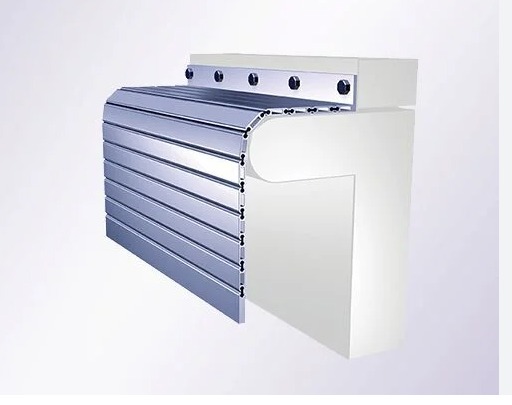 | APRON COVER Effectively engaged in offering a vast collection of outstanding quality products which include Apron Covers. View product → |
How to verify protection during movement and maintenance
Verify an apron cover during full machine movement, not only by checking its stationary fit. Run the cover through its complete travel in both directions, including normal acceleration, deceleration and rapid reversals.
Record drive current or load against a clean baseline, then repeat the cycle after the cover has warmed and representative chips have entered the return path.
Test each condition against a specific failure sign:
- Movement: confirm guide clearance, smooth slat engagement and correct return radius; stop for binding, lifting or abnormal noise.
- Coolant: apply the actual coolant or washdown pattern; inspect the protected way, side gaps and mounting transitions for wetting.
- Chips: run representative chip sizes and abrasive swarf through repeated cycles; remove any accumulation that blocks the return path.
- Maintenance: inspect end attachments, side guides, hinges, fasteners, wipers and slat edges for looseness, wear, cracks or distortion.
| Test condition | What to compare | Failure requiring attention |
|---|---|---|
| Full travel and reversal | Drive load, noise and travel smoothness | Load rise, snagging or slat separation |
| Heated, contaminated cycle | Guide clearance and return-path movement | Binding after heat or chip entry |
| Coolant and washdown | Way protection at ends, sides and transitions | Leakage onto guides, ballscrews or bearings |
An apron cover is not personnel guarding. Keep point-of-operation and nip-point hazards behind dedicated guards.
Frequently asked questions
How do overlapping steel slats protect moving machine parts?
Overlapping slats form a continuous shield over the exposed way. Their interlocking or hinged edges let the cover bend and travel while deflecting chips, coolant, oil and impact away from the guideway.
Which machine movements and spaces suit a steel apron cover?
Apron covers suit linear axis travel over a machine way, pit or opening when the available mounting space can accommodate the slat stack, guides, return path and attachment hardware.
How do apron covers compare with telescopic covers, bellows and wipers?
Choose an apron cover for rugged chip and impact protection over long linear travel. Use telescopic covers for rigid enclosed protection, bellows for flexible three-dimensional coverage, and wipers for cleaning exposed surfaces rather than spanning large openings.
What should you specify for a custom steel apron-cover design?
Provide the opening dimensions, travel and speed, slat material and thickness, contamination type, temperature, mounting space, guide arrangement, attachment points and maintenance-access requirements.