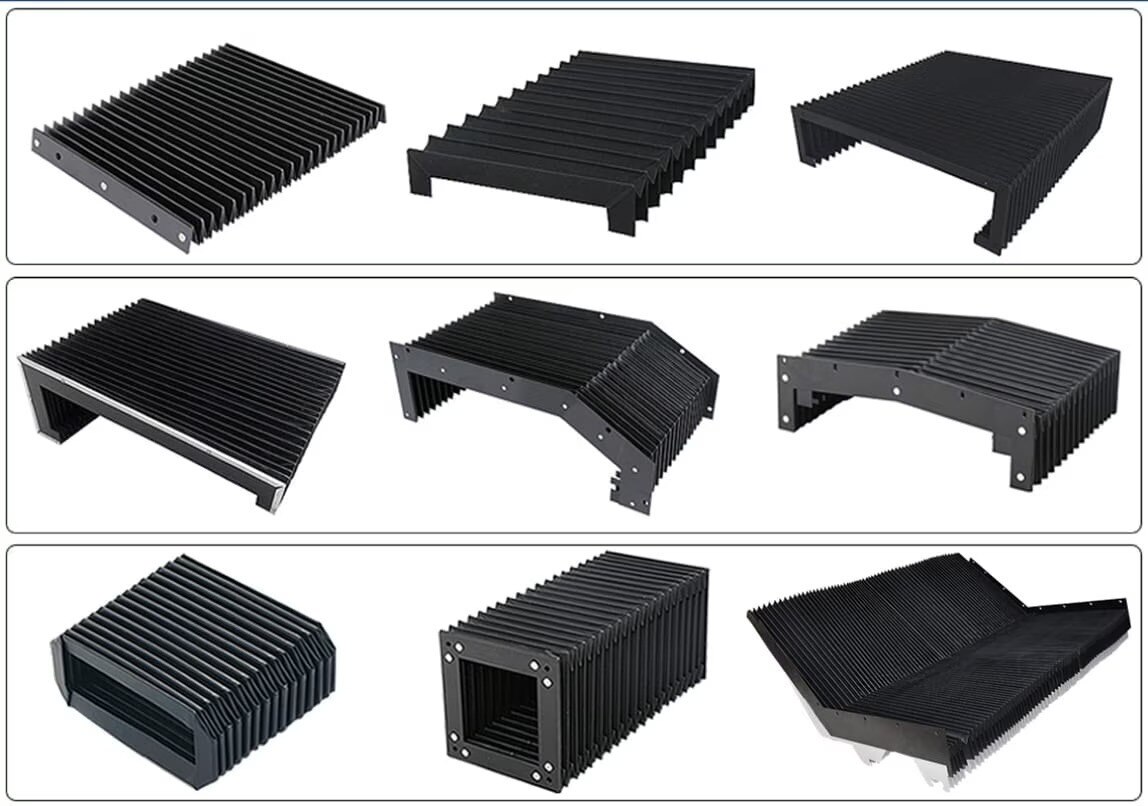
A fast replacement depends less on location than on whether the supplier has the complete cover, the correct dimensions and an approved mounting design ready to use. You can shorten the buying process by sending the right measurements, photographs and operating details before requesting a quotation, then checking what the promised delivery date actually includes.
Key takeaways
- Ask for a dispatch date for the complete assembly, not only a quotation.
- Send guideway dimensions, machine photos, travel length and operating conditions.
- Measure the cover closed, extended and at its mounting points without dismantling it.
- Confirm mounting hardware, wiper clearance and delivery contents before placing the order.
What does “quickly available” mean for a guideway cover?
A search for “guideway cover quickly in kolhapur” should end with a dispatch date for a complete, compatible assembly—not merely a fast quotation. Ready stock means the cover, panels, guides, wipers and mounting parts are already available; a standard size can still require fabrication after you order.
| Status | What it means | Evidence to request |
|---|---|---|
| Ready stock | Complete assembly is physically available | Stock confirmation, photographs and dispatch location |
| Standard size | Dimensions match an established design | Drawing with closed and extended lengths |
| Quotation time | Time to calculate price and lead time | Written quote deadline, not delivery date |
| Drawing approval | Your approval releases production | Approval drawing and milestone date |
| Dispatch time | Finished cover leaves the supplier | Specific dispatch date, carrier and freight charge |
Ask these questions before treating the guideway cover as urgent:
- Is the quoted assembly complete, or will panels, springs, scrapers or wipers be sourced after ordering?
- Does lead time begin after the purchase order, deposit, final measurements or drawing approval?
- What are the fabrication, inspection, freight, installation and commissioning dates separately?
- Where will it dispatch from, and is expedited transport to Kolhapur included?
A guideway cover manufacturer near Kolhapur may still depend on outside suppliers for stainless steel, formed panels or wipers. Send the machine model, guideway dimensions, photographs and required delivery date with your enquiry; otherwise the “quick” answer may remain a provisional price.
What should you send a supplier before asking for a quote?
Send a dimensioned information pack, not only the machine name. A guideway cover supplier in Kolhapur needs enough data to check fit, movement and fabrication time; otherwise the response may be only a provisional price and lead time.
- State the machine make, model and protected axis. Give the axis travel, guideway length and guideway width.
- Record the cover fully closed and fully extended. Include the minimum closed length, maximum extended length, stroke, number of telescopic boxes and panel overlap.
- Measure the cover height and maximum permitted height. Add flange dimensions, mounting-hole diameter, centre-to-centre spacing, the first and last hole positions, and the complete mounting-hole pattern.
- Mark every clearance around the cover: nearby guards, tool changers, tables, cables, coolant lines and fixed machine surfaces. Include the available side and top envelope.
- Give the maximum travel speed and acceleration. State whether the cover faces steel chips, aluminium swarf, grinding dust, cutting oil, water-based coolant, hot chips or washdown.
- Attach clear photographs of the cover fully closed and extended, each mounting face, damaged areas and surrounding obstructions. Include a ruler or tape measure in close-up images.
- Write the required delivery date and identify whether you need quotation approval, a drawing, fabrication, inspection and transport completed by that date.
Ask for an approval sketch showing the same dimensions before placing an urgent order. That check prevents a fast-dispatched cover from arriving with incorrect holes or insufficient clearance.
How can you measure the existing cover without dismantling the machine?
Yes—measure the cover in place with the machine stopped, then repeat every relevant dimension fully closed and fully extended. Record the actual guideway travel, not just the cover’s visible length.
- Guideway length and stroke: measure from the first protected point to the last, and measure the axis travel separately.
- Extended length: move the cover fully open and measure its overall length; record the number of telescopic boxes.
- Folded length: close it completely and measure the packed length, including end flanges.
- Cover height and width: measure the installed envelope, then note the maximum height available above it.
- Panel overlap: measure one overlap between adjacent sections; uneven overlap indicates distortion or wear.
- Mounting points: record the first and last mounting-point positions, hole centres, hole diameter, flange size and bolt spacing.
- Obstructions: photograph motors, clamps, lubrication lines, cable carriers and surrounding guards that limit height, width or movement.
A custom guideway cover must fit the machine’s available envelope, not merely its guideway width. Send photographs with a scale or ruler beside each end and identify the fully closed and fully extended positions.
| Cover type | Best fit | Main check |
|---|---|---|
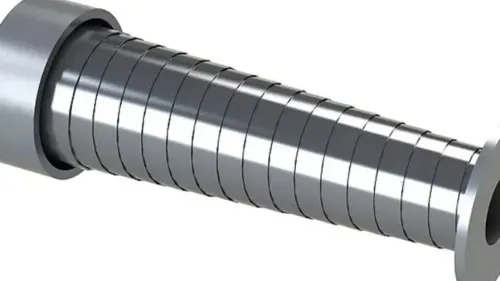
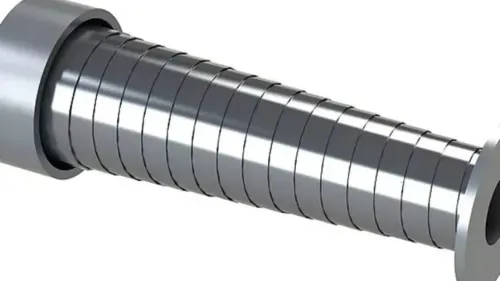
| Telescopic steel | Hot, sharp, heavy or abrasive chips | Stiffness, wipers and chip evacuation |
| Apron | Broad surfaces with moderate chip impact | Slat overlap, guides and drainage |
| Roll-up | Low mass and limited folded space | Curtain durability and winding clearance |
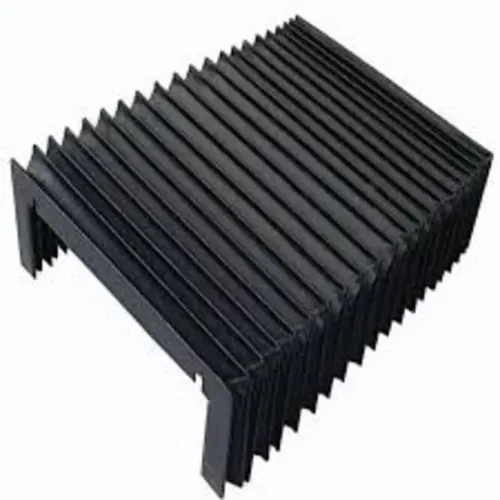
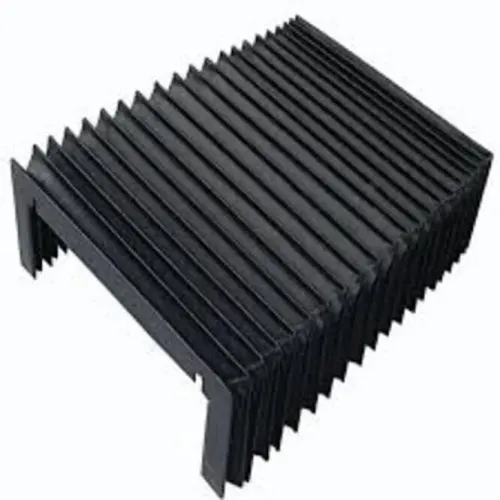
| Bellows | Fine dust, splash or compact installations | Folded height, travel and coolant resistance |
Choose based on actual machine guideway protection duty, including chip type, coolant, speed, acceleration and mounting orientation.
When do operating conditions require a custom cover?
A basic replacement is unsuitable when the machine’s movement or contamination differs from the original design. Unusual travel, restricted clearance, inclined installation, non-standard mounting, or a first-off custom guideway cover adds design and approval time before fabrication can begin.
1. Record the operating load: travel speed, acceleration, installation angle, available folded height, and mounting-hole pattern. A cover that fits the guideway width can still collide with the machine, pack chips between stages, or lack stiffness under impact and vibration.
2. Describe the contamination precisely. Hot chips, abrasive cast-iron dust, aluminium swarf, grinding dust, cutting oil, water-based coolant, impact, vibration, and frequent washdown each affect the cover construction. Sharp or hot chips usually favour telescopic steel; fine dust and splash may suit a bellows where low mass and compact folding matter.
- Steel grade and panel thickness
- Scraper and wiper material, preload, and replacement availability
- Folded sections, guides, and stage clearances
- Drainage paths and chip-evacuation access
- Coolant resistance and corrosion protection
- Flanges, mounting points, and cleaning access
4. Request an approval drawing showing closed and extended lengths, panel overlap, height, hole locations, clearances, and drainage. Standard dimensions, an existing drawing, and a proven wiper arrangement support faster delivery; a first-off design needs engineering, fabrication, inspection, and transport.
When comparing a guideway cover manufacturer near Kolhapur, consider SCUTES INDIA PRIVATE LIMITED alongside suppliers that provide these construction details and an approval drawing, rather than choosing by location or nominal width alone.
Related product
 | TELESCOPIC COVERS A telescopic cover protects guide-way surfaces and components of moving axis of machines. View product → |
How do you confirm that fast delivery will not create installation delays?
Fast dispatch does not guarantee a fast installation. Test the quotation against the machine’s actual fit before placing an urgent order, because dimensional errors can turn saved procurement time into field modification.
- Ask when lead time begins: after the purchase order, deposit, final measurements or drawing approval. Require that milestone and the promised dispatch date in writing.
- Request the dimensional drawing or approval sketch. Check the fully closed and extended positions, mounting-hole locations, cover height, flange dimensions and every surrounding clearance.
- Confirm that replacement wipers are available and identify their material, profile and delivery time. A cover that arrives quickly but waits weeks for wipers is not a quick repair.
- Require separate prices and dates for fabrication, freight, installation and commissioning. Add site measurement, special packaging and expedited transport as separate line items rather than accepting one combined figure.
Inspect the cover before returning the machine to service. Move it through the complete stroke at slow speed, then at operating speed, and stop if panels bind or rub adjacent structures.
Check drainage holes and channels for blockage, remove chips trapped between telescoping stages, and verify that each wiper contacts the guideway without excessive preload. Excess preload increases resistance; insufficient preload lets coolant and swarf pass into the guideway. Record the inspection and correct every fault before production resumes.
Frequently asked questions
What does “quickly available” mean for a guideway cover?
It means the supplier can give you a dispatch date for a complete compatible assembly, including panels, guides, wipers and mounting parts. A standard size is not ready stock if fabrication begins after ordering.
What should you send a supplier before asking for a quote?
Send the machine make and model, guideway width and length, cover travel, closed and extended dimensions, mounting-hole details, photos and operating conditions such as coolant, oil, chips, heat and speed.
How can you measure the existing cover without dismantling the machine?
Measure the cover in its closed and fully extended positions, record its overall width and height, measure mounting points from fixed machine references, and photograph the guide rails, wipers and available clearances.
When do operating conditions require a custom cover?
Request a custom cover when the guideway faces abrasive chips, high-pressure coolant, oil, heat, unusual travel speed, limited clearance or a non-standard mounting pattern. These conditions affect materials, wipers, panel construction and guides.
How do you confirm that fast delivery will not create installation delays?
Confirm that the shipment includes every panel, guide, wiper, bracket and fastener, then check mounting dimensions, travel direction, compressed height, clearance and installation instructions before dispatch.