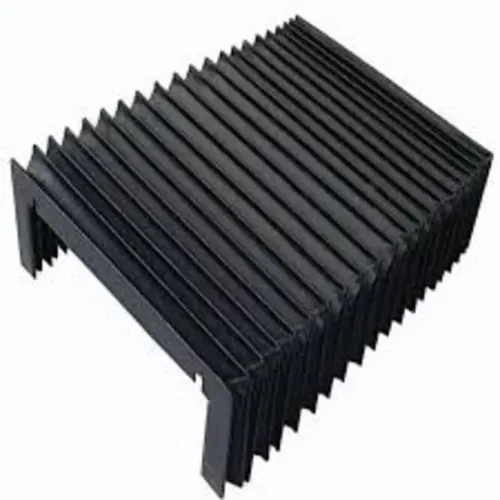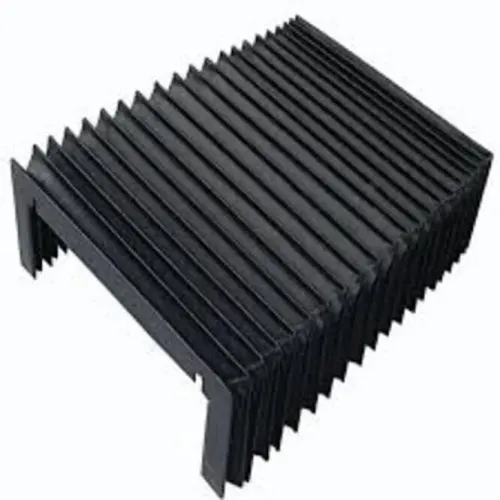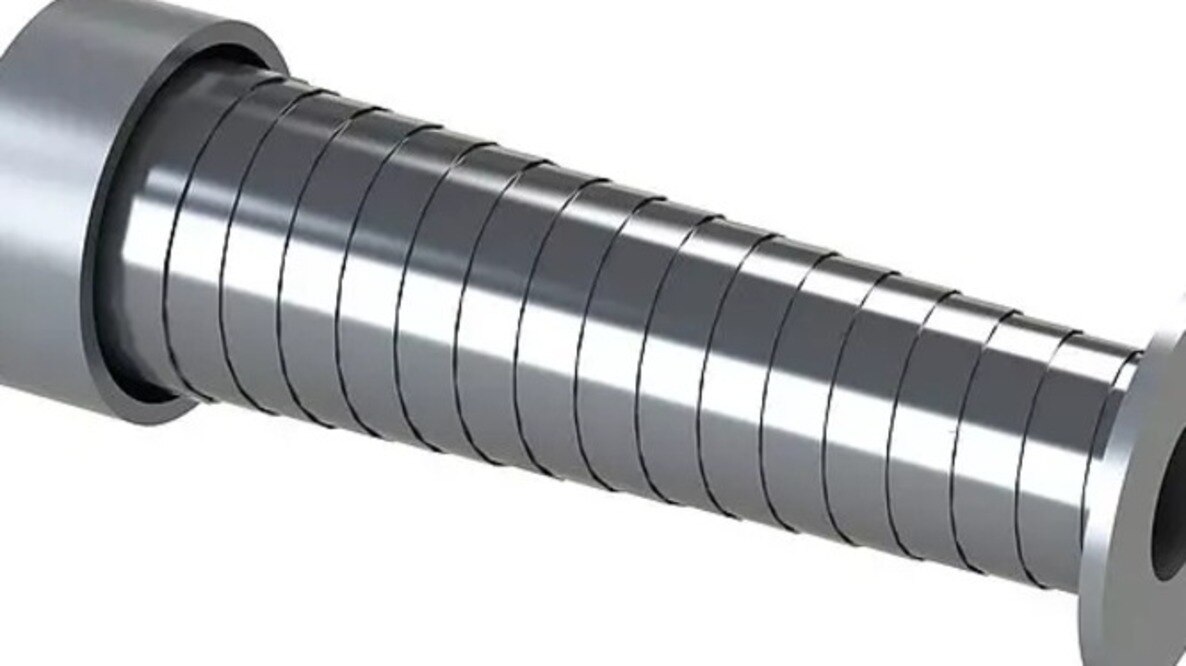
A telescopic cover earns its cost when chips, coolant and abrasive residue create more expense through cleaning, downtime or guideway and axis repairs than the cover adds through purchase, installation and upkeep. You will be able to assess that trade-off, specify the measurements and design features that matter, and test a proposed cover before accepting it on your machining centre.
Key takeaways
- Compare installed cost with annual cleaning, repair and downtime costs.
- Specify cover materials and seals for your chips, coolant and travel geometry.
- Check speed, reversals, chip impact and maintenance access before ordering.
- Accept the cover only after verifying dimensions, travel, motion and documentation.
When the avoided repair cost justifies the cover
Price the cover against the failure it prevents, not against its purchase price alone. It is financially worthwhile when the annual cost of contamination-related cleaning, guideway or ballscrew repair, replacement wipers, and lost production exceeds the cover’s installed cost plus its upkeep.
Build the comparison from this machine’s records:
- Add invoices for guideway, ballscrew, linear-scale and wiper repairs caused by chips, coolant or oil.
- Multiply downtime hours by the machine’s contribution margin, then include setup, requalification and expedited-parts costs.
- Add installation downtime, commissioning labour, inspection and the supplier’s quoted maintenance interval.
- Divide the cover’s total installed cost by the expected service years and compare that annual figure with the avoidable failure cost.
Use the telescopic cover benefits where chips and abrasive coolant strike an exposed axis directly. A cover is weaker value when contamination comes mainly from falling chips that an enclosure roof, chip shield, chip conveyor or improved way wipers could control.
Do not count a repair as avoidable until the proposed cover’s wipers and joints have been checked against the machine’s coolant pressure, spray direction, fluid temperature and chip load.
For a Kolhapur machining centre, include monsoon moisture, workshop dust and humidity in the maintenance estimate. Reject the business case if the cover’s mass slows a fast axis, blocks access, interferes with the pallet changer or requires frequent cleaning that costs more than the contamination it prevents.
The decision is sound when measured avoided cost remains higher after those operating penalties.
Match the cover to Kolhapur’s chips, coolant and machine geometry
Start with the chips, coolant and axis layout, not the machine’s brand or travel figure. A telescopic cover for machining centers in Kolhapur earns its place when abrasive chips, cutting oil, coolant, dust or monsoon moisture can reach guideways, ballscrews, linear scales or wipers.
| Operating condition | Cover design consequence | Measurement or fact to confirm |
|---|---|---|
| Hot, sharp or heavy chips | Use steel slats, robust wipers and chip-resistant seals | Chip size, temperature and impact direction |
| High-pressure coolant or washdown | Specify drainage and joints tested against the actual spray | Pressure, fluid temperature and spray angle |
| Vertical axis travel | Retain and guide retracted stages against gravity and vibration | Vertical orientation, retracted position and moving mass limit |
| Horizontal axis travel | Prevent chips and coolant pooling on the upper surface | Top clearance, slope, drain route and cleaning access |
Measure the machine before requesting a quotation:
- Protected travel, fully extended length and collapsed length
- Cover width, height and the exact mounting-hole pattern
- Guideway width, rail spacing, neighboring axes and enclosure openings
- Clearance to the table, tooling, pallet changer and chip conveyor
- Axis speed, acceleration, reversal frequency and available installation space
Do not size the cover from axis stroke alone. Two machining centers with identical travel can need different widths, stage counts and mounting arrangements because their guideways, moving mass limits and chip paths differ. Request a section drawing showing each stage, wiper, seal, drain and service access; external dimensions alone can hide a poor fit.
Choose the protection type and compare the details that control service life
A steel telescopic cover is the right choice for a milling machine that produces hot, sharp or heavy chips, especially when coolant strikes the guideway at pressure. Choose another protection type when low moving mass, flexibility or access matters more than resistance to impact.
| Option | Strength | Use it when | Main service-life risk |
|---|---|---|---|
| Steel telescopic cover | Rigid slats, wipers and staged boxes resist heavy swarf | The axis has aggressive cutting, hot chips, flood coolant or frequent washdown | Bent slats, worn wipers, blocked drainage or loose mounting |
| Fabric bellows | Low mass and flexible movement | The machine produces fine chips and needs a compact, lightweight cover | Hot swarf, sharp chips, coolant jets and damaged seams or coatings |
| Apron cover | Flexible steel strips handle chips while following longer travel | Space is limited and the guideway needs broad surface protection | Torn links, poor overlap or chips entering at the ends |
| Roll-up cover | Retracts into a small housing | You need access around the axis and face moderate chip exposure | Slat or fabric damage from impact and incorrect winding |
| Spring cover | Compact retracting protection for lighter contamination | The motion is short and chip load is low | Spring fatigue, poor tension and exposed edges |
Do not compare covers by external size alone. Request section drawings showing wipers, inter-stage seals, guide strips, drainage and lubrication points, then check collapsed height, extended length and mounting stiffness against the machine.
Get the quoted service life with daily cycles, speed, acceleration, chip type, coolant pressure, cleaning method and inspection interval. Price and lead time for replacement wipers and wear strips matter more than an optimistic life figure.
Keep cables in a drag chain with controlled bend radius; a cable rubbing on the cover can fail before the cover does.
Account for speed, reversals, chip impact and maintenance access
A cover that survives slow travel can fail on a high-speed machining centre. Specify maximum axis speed, acceleration, cycle frequency and reversal rate; rapid direction changes demand guided stages, positive stops and correctly preloaded wipers. If stages slam at each reversal, vibration loosens fasteners and damages joints.
Cover mass matters as much as travel. On a moving Z-axis, excess steel increases moving load, servo effort and following-error risk; request mass and inertia, not merely load capacity. Vertical designs also need retention so gravity or vibration cannot let retracted stages drop.
Horizontal designs need a slope or drainage path because chips and coolant sit on their upper surfaces.
Match seals to the actual coolant pressure, spray direction, fluid temperature and chip shape. High-pressure through-tool coolant or enclosure washdown can drive fluid past ordinary wipers and joints, carrying abrasive fines onto guideways, ballscrews and linear scales. Large, hot or sharp chips need impact-resistant panels and a discharge path, not a pocket that traps debris.
Give the manufacturer these duty figures before accepting a service-life claim:
- Daily cycles and reversal count
- Maximum speed, acceleration and vibration exposure
- Coolant pressure, temperature and spray direction
- Chip size, material and cleaning method
Provide removable panels or reachable fasteners for routine cleaning. If an operator must dismantle the cover to remove packed chips, cleaning will be delayed and wipers will wear faster. Agree on inspection intervals and obtain replacement wiper and wear-strip prices and lead times before installation.
Procure and accept a cover without guessing
Request a duty-based specification, not a service-life promise. A telescopic cover is worth installing only when its design survives your machine’s actual chips, coolant and axis movement.
1. Give the telescopic cover manufacturer in Kolhapur the protected travel, extended and collapsed lengths, width, height, mounting-hole pattern, guideway profile, table clearance and available installation space. Attach photographs showing every axis at both stroke limits.
2. Ask the quotation to state expected daily cycles, maximum speed, acceleration, reversal frequency, chip type, coolant pressure, spray direction, fluid temperature and cleaning method. A quoted “service life” means little without these assumptions.
3. Request a section drawing identifying slats, wipers, inter-stage seals, guide strips, drainage paths and lubrication points. Obtain prices and lead times for replacement wipers, wear strips and other service parts, plus the recommended inspection interval.
4. Confirm cable and hose routing separately. Require controlled bend radius, strain relief, clearance from sharp edges and a drag chain or equivalent carrier where needed; a cable rubbing against the moving cover can create intermittent faults.
5. Before signing acceptance, run the cover through its complete stroke at operating speed. Check smooth travel, stage clearance, mounting stiffness, collapsed and extended dimensions, drainage during coolant spray, cleaning access and cable clearance at every axis position.
SCUTES INDIA PRIVATE LIMITED is one supplier you can ask for these drawings and duty details; compare its response with any other quote on the same measurements and test conditions. Reject a cover that fits the machine but cannot document replacement parts, drainage performance or acceptance criteria.
Related product
 | TELESCOPIC COVERS A telescopic cover protects guide-way surfaces and components of moving axis of machines. View product → |
Frequently asked questions
When does a telescopic cover justify its cost?
It is worthwhile when annual contamination-related cleaning, guideway or ballscrew repairs, wiper replacement and production losses exceed the cover’s installed cost and upkeep.
How should you match a cover to a machining center in Kolhapur?
Assess the machine’s chips, coolant, heat, travel length, mounting space and guideway geometry before choosing materials, seals and cover dimensions.
Which details control telescopic cover service life?
Construction material, sealing arrangement, scraper design, lubrication, chip impact resistance, travel speed, reversals and access for maintenance all affect service life.
What should you verify before accepting a telescopic cover?
Check drawing dimensions, mounting points, stroke, closed and extended lengths, motion clearance, speed rating, seal condition and documentation against the purchase specification.