Laser axes need protection that matches their motion, contamination load, heat exposure and available space; a cover that looks closed can still admit fine dust, coolant mist or moisture. By the end, you will be able to compare round bellows with spiral springs, check the installation dimensions and choose a protection system without adding avoidable servo load or maintenance problems.
Key takeaways
- Use round bellows for broad, flexible coverage around moving laser components.
- Use spiral springs on clean, cylindrical axes with limited space.
- Check compressed length, travel, mounting diameter and heat exposure before ordering.
- Inspect folds, seams and spring coils before contamination causes axis failure.
Round Bellows and Spiral Springs Solve Different Motion Problems
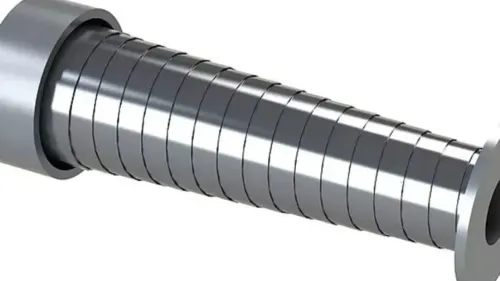
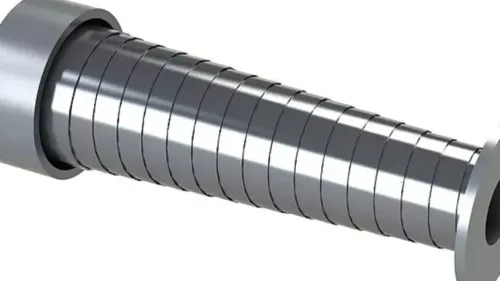
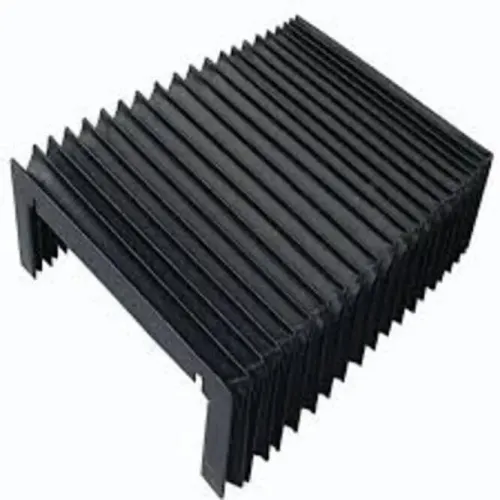
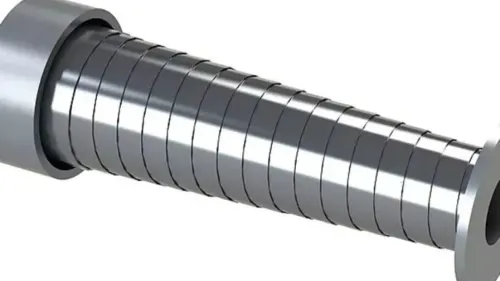
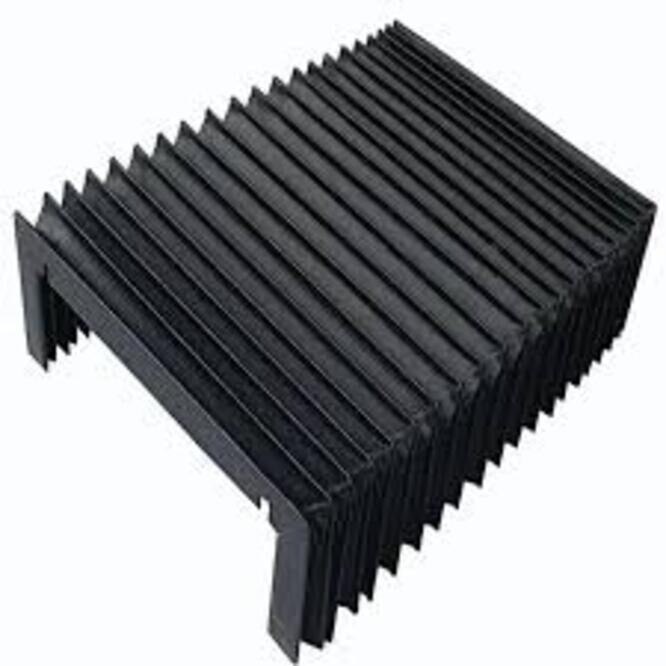
Choose a round bellow for broad, flexible coverage; choose a spiral spring for compact protection around a clean, cylindrical axis. Round bellow motion protection uses flexible convoluted folds that expand and collapse around guideways, ball screws, linear bearings, cable routes, or moving laser heads.
| Protection technology | Movement and construction | Practical advantage |
|---|---|---|
| Round bellow | Flexible folds follow straight, curved, or non-linear travel | Low sliding friction, low drive resistance, compact folded length, and broad enclosure |
| Spiral spring | Helical spring-steel strip telescopes axially around an exposed shaft, screw, or column | Compact installation, axial compression, chip shedding, and access around cylindrical components |
The laser machine bellow benefits are greatest where cables, bearings, guideways, or irregular envelopes need flexible routing. Its folds accommodate changing geometry without imposing the resistance of a rubbing sleeve, but unsupported wide folds can sag and contact the machine.
A spiral spring deflects chips and particles from relatively clean axial motion. Its overlapping turns are not a liquid-tight or fine-powder-tight seal, and it does not provide the broad enclosure of a bellow.
Treat these technologies as complementary, not competing. Install a round bellow on a guideway and cable route, then use a spiral spring on a separate exposed ball screw or shaft when each axis presents a different motion and contamination problem.
Match the Cover to Laser Heat, Dust and Chennai Moisture
Specify a round bellow for laser machines in Chennai against the actual hazard, not the word “laser.” Evaluate fine abrasive dust, smoke residue, hot metal spatter, reflected heat, assist-gas flow, coolant on combination machines, and exposure of optics or sensors.
General dust-resistant fabric can shrink, crack, char or burn beside repeated sparks or radiant heat; flame resistance is not fire containment.
| Option | Strength | Limitation |
|---|---|---|
| Coated fabric | Flexible, light, economical | Coating and seams need temperature, chemical and particle evidence |
| Elastomeric bellows | Better sealing and chemical resistance | Heat, stiffness and compatibility limits require verification |
| Sewn folds | Repairable and flexible | Stitch holes can admit powder or coolant |
| Bonded folds | Smoother, tighter seams | Heat or chemicals can attack the bond |
| Spiral spring | Compact chip deflection around shafts | Overlapping turns do not stop fine powder, coolant mist or moisture |
- Temperature, flame, particle and chemical exposure, including the actual smoke and coolant.
- Guide rings, support hoops, end frames, seam quality and cable penetrations; these determine real protection.
- Spring-wire material, stainless or corrosion-protected hardware, and corrosion resistance in humid, chloride-bearing Chennai air.
- Drainage and inspection access where condensation or washdown can trap moisture inside the cover.
Choose bonded construction only with documented compatibility. Even a round bellow or spiral spring laser machine protection in Chennai needs inspection after heat exposure, washdown or corrosion; trapped moisture can attack stitching, coatings, fasteners and machine surfaces.
Use a Fit Check Before Ordering Either Cover
Measure the axis before requesting a quote. Record protected diameter or cross-section, full stroke, extended length, compressed length, mounting pitch, fixed and moving attachment points, minimum folded length, full-travel clearance, and minimum bend radius.
Add speed, acceleration, mounting orientation, and allowable restoring force; these inputs determine whether round bellow motion protection supports travel or fights it.
Compressed length is never zero. Folds, end frames, reinforcement rings, and minimum radii consume space, so omitting that reserve can bottom out or buckle the cover. Complete these checks:
- Run the axis through its full stroke with the laser head, cable route, workpiece, and maintenance access in position.
- Check clearance from optics, beam paths, sensors, nozzles, hot-work zones, and every adjacent moving part.
- Confirm the mounting flange or frame closes gaps at fixed and moving ends; a collapsing bellow can breathe contaminated air through seams or end interfaces.
- Reject undersizing, off-axis mounting, unsupported wide folds, fold-to-fold rubbing, excessive restoring force, and excessive moving mass.
| Error | Result | Fit-check response |
|---|---|---|
| Undersized or off-axis | Buckling, carriage load, following error | Recheck pitch, alignment, and stroke |
| Unsupported wide folds | Sagging and abrasion | Add supports or change geometry |
| Excess force or mass | Vibration and slower acceleration | Specify force and mass limits |
These failures erase laser machine bellow benefits: servo load rises, folds wear, and accuracy suffers. Verify the final drawing against the machine before ordering.
Choose Round Bellow, Spiral Spring or Another Cover by Axis Geometry
Choose by the axis, not by the cover’s catalogue name. A round bellow for laser machines in Chennai fits guideways, cable routes and broad or irregular envelopes, including curved travel, when guide rings or supports prevent the folds from sagging.
| Option | Axis geometry | Best use and limitation |
|---|---|---|
| Round bellow | Broad, flexible or curved travel | Fine-dust control around guides and cables; needs supported folds |
| Spiral spring | Exposed rotating or translating shaft or screw | Compact axial compression and chip deflection; not liquid-tight or fine-powder-tight |
| Telescopic steel cover | Rigid rectangular travel | High chip load and hard mechanical exposure; needs space to telescope |
| Roll-up cover | Long travel with limited folded length | Space-saving coverage; verify sealing and side guidance |
| Cable drag chain | Repeated cable or hose routing | Organises movement; does not seal the protected surface |
Select spiral spring laser machine protection in Chennai when access around a cylindrical shaft matters more than enclosure. Its overlapping spring-steel turns shed chips, but coolant mist, moisture and fine powder can pass through the overlaps.
A machine can use both: assign a round bellow motion protection to the guideway and cable route, then fit a spiral spring to a separate ball screw.
Before ordering, compare these items with the machine builder’s drawings and hazard limits:
- fabrication capability and material selection
- mounting flange, support and cable-entry design
- stroke, clearance, heat, chips, dust and coolant exposure
- application review and inspection access
SCUTES INDIA PRIVATE LIMITED can be assessed on those points rather than on appearance alone. Unsupported wide folds remain a disqualifier, even when the nominal stroke matches.
Related products
 | Laser Machine Bellows Laser Machine Bellows are specialized protective coverings designed to safeguard the vital internal components of laser machines. View product → |
 | TELESCOPIC SPRING COVER Telescopic Spring Covers provide protection under extreme conditions. View product → |
Inspect the Cover Before It Becomes the Failure Point
Inspect the cover after installation and at every maintenance interval; a small opening can turn into guideway contamination, servo overload, or a damaged laser head. Preserving laser machine bellow benefits requires checking the cover, its supports, and its travel—not just its appearance.
1. On a round bellow, check pinholes, seam separation, cracked coatings, fold abrasion, heat damage, trapped chips, loss of end-frame rigidity, blocked drainage, and interference at both ends of travel. Sagging wide folds can enter the work envelope or rub against the machine, workpiece, or cable route.
2. On a spiral spring, check distorted turns, reduced overlap, corrosion, trapped chips, scraping against adjacent components, and contamination between sliding interfaces. Cleaning the spring does not fix ingress when fine dust, coolant mist, or moisture continues to enter. For spiral spring laser machine protection in Chennai, inspect corrosion after condensation or washdown.
3. Trigger an additional inspection after a collision, unusual servo load, visible smoke exposure, washdown, cutting thick reflective material, or a change in assist-gas or coolant conditions.
Record the cover’s dimensions, material, mounting orientation, and inspection findings. A replacement that matches the proven geometry is safer than one selected by appearance alone.
Frequently asked questions
What is the main difference between a round bellow and a spiral spring?
A round bellow provides broad, flexible coverage through expanding and collapsing convoluted folds. A spiral spring provides compact protection around a clean, cylindrical axis.
How should you match protection to a laser machine in Chennai?
Check the cover’s material and construction against laser heat, abrasive dust, cutting debris, coolant, oil and Chennai’s moisture. Confirm the temperature range and sealing method with the supplier.
What measurements should you take before ordering a cover?
Record the axis diameter or guideway width, required travel, compressed and extended lengths, mounting dimensions, clearance and the machine’s motion speed.
When is a round bellow the better choice?
Choose a round bellow when the protected component needs broad coverage, the motion involves expansion and collapse, or the route includes guideways, linear bearings, ball screws or cables.
When is a spiral spring the better choice?
Choose a spiral spring when the axis is cylindrical and clean, installation space is tight, and compact protection suits the axis geometry.