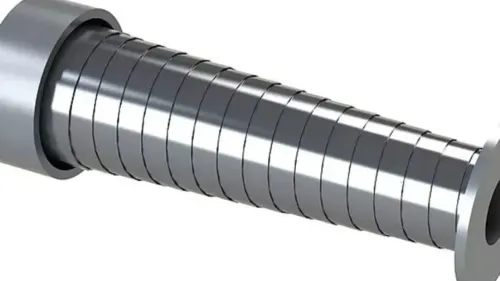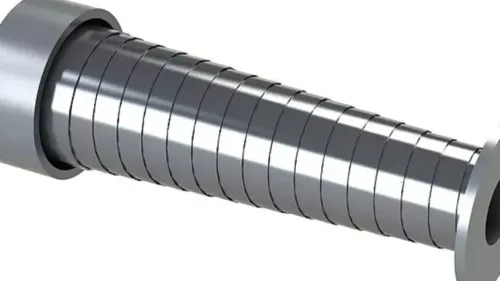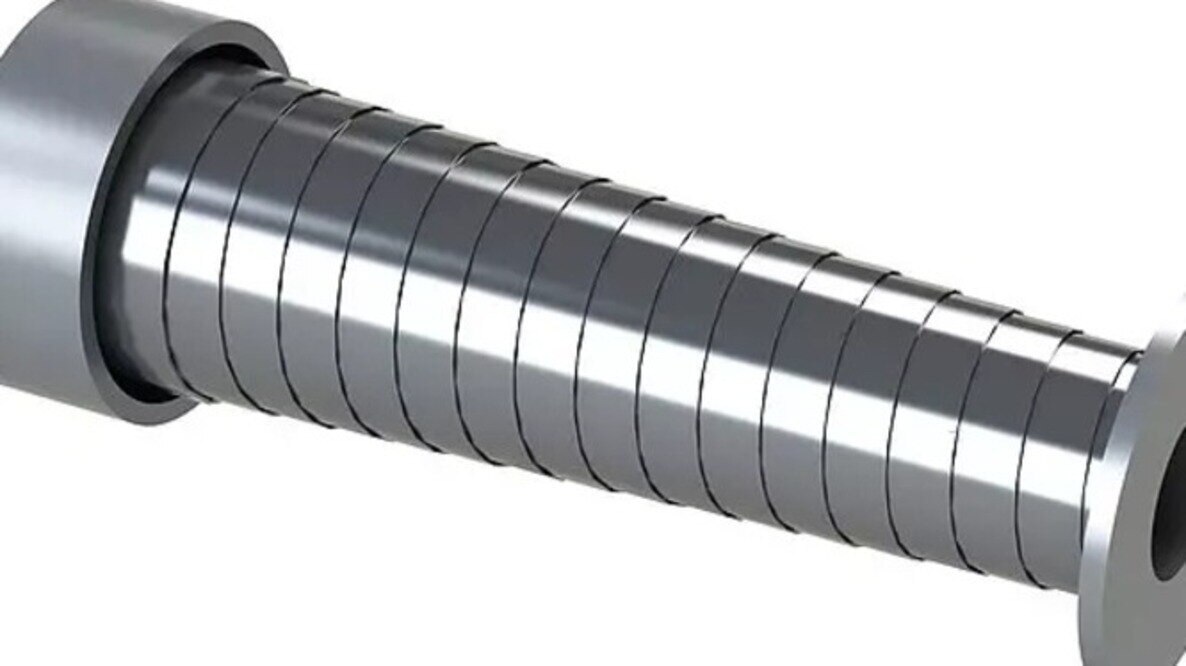
A spiral spring cover can still look intact while gaps, lost rewind tension, trapped chips, or a failed wiper allow coolant and abrasive swarf onto a guideway or ballscrew. You will be able to identify the failure pattern, separate spring wear from alignment and sealing faults, and decide when inspection, correction, or complete replacement is justified.
Key takeaways
- Replace the spring when overlap breaks or rewinding loses controlled tension.
- Check for exposed guideways, uneven gaps, chipped edges, and coolant entering the cover.
- Inspect strip tension, mounting, alignment, chips, coolant, and nearby telescopic cover wear.
- Match replacement dimensions, material, travel, speed, temperature, and coolant exposure.
When wear becomes a loss of protection
A worn spiral spring does not automatically stop protecting a CNC machine. Scratches or light surface wear can leave the barrier effective if the strip still overlaps continuously, rewinds with controlled tension, and keeps chips and coolant away from the guideway, ballscrew, or shaft.
Wear becomes a loss of protection when the cover no longer closes the exposed area throughout axis travel.
- A visible gap between turns, loose section, dent, crack, or thinned strip exposes the protected way.
- The strip extends unevenly, rubs, scrapes, buckles, or vibrates because it has lost rewind tension or tracking.
- The coil fails to rewind, binds before the travel limit, or remains partly extended after the axis reverses.
- Chips or coolant pass beneath the cover and collect on the moving component; that is the clearest practical proof that protection has ended.
Do not assume the spring itself is the fault: a mounting or alignment problem can make a sound spring telescope unevenly and create the same failure. Stop production if any position leaves the way exposed or produces binding. Continued travel can drive contamination into bearings and turn cover damage into unplanned downtime.
Symptoms that point to spring wear or another fault
A cover that moves smoothly can still have a spiral spring machine protection problem if chips or coolant pass the edge. Separate spring failure from installation and sealing faults by watching slow forward and reverse travel, then checking the strip, mounts, guideway, and wipers.
| Fault | Clues during travel or inspection | What it indicates |
|---|---|---|
| Worn spiral spring | Gaps between turns, weak rewind, loose sections, scraping, vibration, dents, cracks, or visibly thinned steel | Strip fatigue, coil damage, or lost preload |
| Misalignment | The cover rubs on one side, telescopes unevenly, buckles, or leaves an end gap that changes with travel | Cover or guide is out of line |
| Damaged bracket | The mounting shifts, fasteners are loose, or one end lifts while the cover moves | Support cannot hold the cover in its designed position |
| Blocked guideway | Travel binds at the same machine position, with chips packed under or beside the cover | Debris is restricting movement rather than spring force failing |
| Failed wiper | Extension and rewind remain normal, but a hardened, torn, chip-embedded, or poorly adjusted edge leaves a coolant trail | The seal has failed while the spring remains serviceable |
Stop the axis if the cover binds, buckles, exposes the guideway, or produces metal-on-metal scraping. Continuing can drive contamination into guideways or ballscrews and turn a correctable alignment fault into cover damage. Cosmetic scratches alone do not prove worn spiral spring symptoms; continuous overlap, controlled rewind, and a clean protected component matter more.
A safe inspection that reveals where protection is failing
Record the machine state before touching the cover: axis, position, recent material machined, chip type, coolant condition, and the failure you observed. This gives you a baseline instead of blaming spring tension for contamination or a jammed guide.
1. Apply lockout/tagout, isolate electrical and stored energy, and secure the axis against unexpected movement. Remove chips and dried coolant with a brush, vacuum, or approved tool; never put fingers between coil turns. Photograph the cover before cleaning.
2. Inspect the spring-tempered strip from end to end. Record scratches, dents, cracks, thinned edges, bent sections, gaps between turns, uneven telescoping, and corrosion. Check whether the coil is packed with stringy swarf or dried coolant.
3. Check the guides, wipers, brackets, fasteners, stops, and mounting points. Record loose hardware, shifted brackets, damaged guide surfaces, hardened or torn wipers, and any rubbing marks on the cover or machine.
4. With guards in place, run the axis through its permitted travel at low speed in both directions. Record binding, scraping, vibration, hesitation, uneven winding, loss of preload, and the exact axis position where each occurs.
5. At both travel extremes, verify continuous overlap or contact where the design requires it. Record any exposed guideway, ballscrew, shaft, or other protected component, then stop the machine if coverage disappears or movement binds.
A clean strip with correct alignment can remain serviceable; a damaged strip, failed attachment, or repeated exposure needs the manufacturer’s dimensional and safety limits checked before repair or replacement.
What operating conditions accelerate damage
A cover exposed to abrasive chips and dried coolant deserves inspection every shift, not only at scheduled maintenance. Telescopic spring cover wear describes box-section sliding surfaces and wipers; a spiral spring cover instead suffers strip fatigue, coil damage, poor tracking, or lost rewind tension.
- Chips lodged between turns can hold the coil open and scratch the strip. Remove them before they become an abrasive paste, and inspect the cover at each shift in heavy dry-machining work.
- Coolant can carry fine chips into openings and attack contaminated or unprotected surfaces. Clean the cover daily when wet machining leaves residue, then check for gaps between adjacent turns.
- Heat accelerates fatigue and can reduce material or lubricant performance. Inspect more frequently near laser cutting, hot chips, or high-temperature enclosures than in a cool, clean enclosure.
- An impact can dent an edge, bend a guide, or create a tracking fault immediately. Stop and inspect after a crash, collision, or falling workpiece.
- Repeated hard-stop contact, over-compression, or extension beyond the specified travel can permanently deform the strip. Verify coverage at both travel limits after any axis or cover adjustment.
- Compressed air can drive chips and coolant under the turns. Vacuum or brush debris away without placing your hands in the coil, and remove dried deposits before they force the spring open.
A clean-looking cover still needs a slow travel check. If it binds, leaves an opening, or exposes the way at either extreme, keep the machine out of production.
Repair, replacement, and the specifications that must match
Cleaning or correction can restore protection when the strip is intact, the coil still rewinds with steady tension, and the failure comes from dried coolant, chips, loose fasteners, or misalignment. Remove contamination without placing hands between turns, tighten or replace damaged mounting hardware, and correct guide alignment before testing the axis at low speed.
Replace the cover when the strip is cracked, perforated, thinned, permanently bent, repeatedly uncoils, or rubs after cleaning and alignment. Do not return the machine to production if any travel position leaves the guideway exposed, causes binding, or produces uneven telescoping.
For a spiral spring replacement for cnc work, match the original cover against these specifications:
- Extended length across the full axis travel
- Compressed or minimum coil diameter
- Strip width and thickness
- Mounting-hole pattern, brackets, and attachment geometry
- Travel direction and winding orientation
- Permitted axis speed and acceleration
- Clearance from the guideway, ballscrew, seals, and nearby tooling
Outside diameter alone is not a valid substitute; a cover with the right diameter can still bottom out, lose overlap, or overload its mounting. A telescopic steel cover is also not a drop-in replacement for a spiral spring cover because its sections, wipers, and sliding clearances work differently.
If the original drawing is missing, give SCUTES INDIA PRIVATE LIMITED the measured travel, closed length, available diameter, mounting photographs, and machine-axis speed before ordering a new cover. Record the final low-speed test at both travel extremes.
Related product
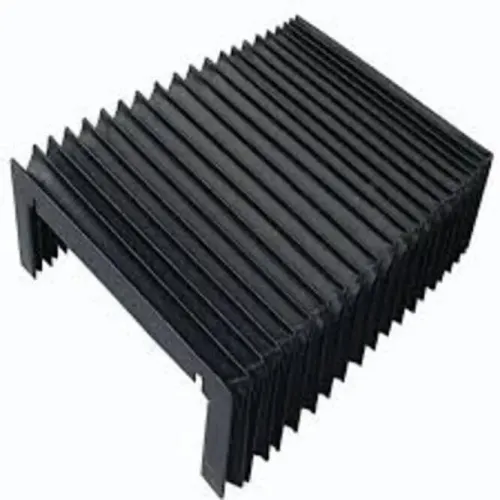
 | TELESCOPIC SPRING COVER Telescopic Spring Covers provide protection under extreme conditions. View product → |
Frequently asked questions
When does wear become a loss of CNC machine protection?
Protection fails when the strip no longer overlaps continuously, rewinds without controlled tension, or allows chips and coolant to reach the guideway, ballscrew, or shaft.
What are common worn spiral spring symptoms?
Look for broken overlap, uneven gaps, weak or irregular rewinding, scratched or deformed strip sections, exposed machine components, and coolant or chips inside the cover.
How can you inspect a spiral spring safely?
Stop and isolate the machine, clean loose chips without reaching into moving parts, then inspect the strip, overlap, tension, mounting points, alignment, and adjacent telescopic spring cover.
What must match when replacing a spiral spring for CNC equipment?
Match the spring’s dimensions, strip material, travel, retraction force, speed, temperature range, mounting arrangement, and resistance to the machine’s coolant, oil, chips, and heat.