A cover that stops chips can still fail against laser heat, molten spatter, fine dust, or reflected beam energy. By separating those hazards from travel geometry and safety-enclosure duties, you can select the right protection, reject an unsuitable design, and give a supplier dimensions that produce a workable cover.
Key takeaways
- Identify beam energy, sparks, spatter, dust and residue before choosing a cover.
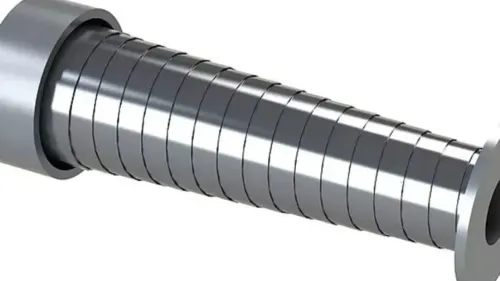
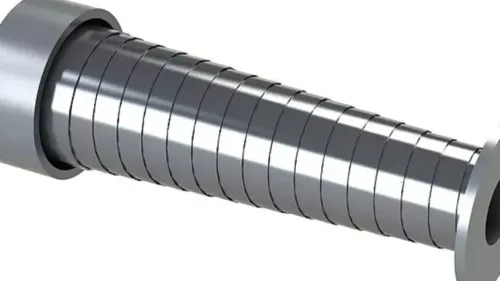
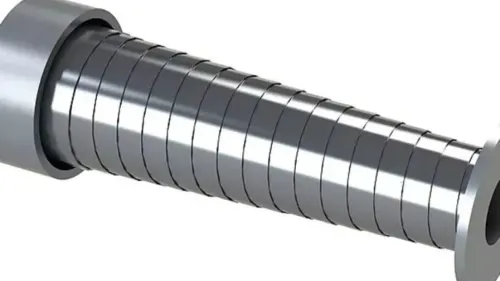
- Choose a spiral spring cover for compact movement and chip-resistant protection.
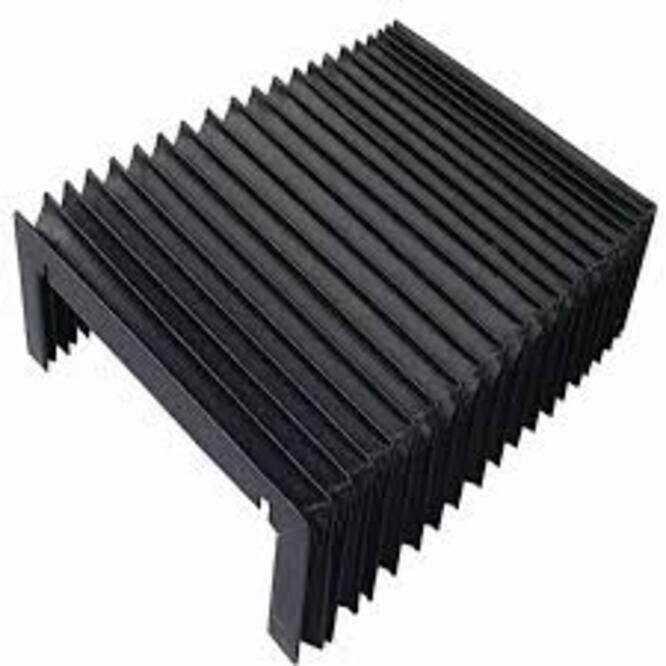
- Choose a leather bellow when flexibility and broad surface coverage matter.
- Measure travel, folded length, mounting space and clearances before ordering.
Start with the hazard, not the material name
A laser machine cover must solve a defined hazard, not merely hide a moving axis. Decide whether the way is exposed to direct or reflected beam energy, hot sparks, molten spatter, abrasive dust, oil mist, coolant, smoke residue, or ordinary chips.
A cover that stops chips is not automatically a laser enclosure, beam stop, interlock, or fume-control device. IEC 60825-1 and ISO 11553-1 address those laser and machine-safety duties separately; ISO 14120 also requires guards to suit intended use and foreseeable misuse.
| Option | Suitable protection problem | Reject it when |
|---|---|---|
| Spiral spring cover | Compact way protection against dust, chips, and limited hot debris with mostly straight travel | Open joints admit fine dust, acceleration deforms the spring, or beam, spatter, or heat reaches exposed surfaces |
| Leather bellow | Enclosed protection for guides, screws, cables, and sensors across changing cross-sections or complex movement | Direct or reflected laser energy, hot molten particles, smoke, oil, or coolant can scorch, swell, stiffen, or attack leather and adhesive seams |
For a spiral spring or leather bellow for laser machine damage in Chennai, ask the supplier to classify the cover as a contamination guard, hot-particle guard, or safety guard. Record surface temperature, particle temperature and size, travel, speed, acceleration, bend or roll radius, chemical exposure, cycle count, and replacement interval.
Request a failure-test report using your actual laser-process residue. A leather bellow for laser machine damage in Chennai is the wrong choice if its folds can ignite or lose movement before the machine reaches its service target.
Match the cover to dust, chips, heat and process residue
A cover that sees direct beam energy, reflected radiation, or molten spatter is not automatically suitable because it blocks dust. A leather bellow can scorch, ignite, stiffen from smoke residue, swell from coolant, or suffer adhesive-seam failure.
A spiral spring cover avoids exposed leather folds, but hot particles can lodge between slats and abrasive dust can enter through joints or openings.
| Option | Response to contamination and heat | When it applies |
|---|---|---|
| Spiral spring cover | Handles ordinary dust, oil mist and small chips when its slats, joints and seals remain outside the cutting plume. Hot spatter can pit, jam or deform the spring; fine powder can work into the rolled assembly. | A straight, fast axis with moderate contamination and no direct beam or spatter exposure |
| Leather bellow | Provides a more continuous barrier against fine dust, smoke residue, chips and coolant when the fabric, coating and seams match the process. Radiant heat, hot cut debris and solvent-laden residue can scorch, perforate or chemically attack it. | A guided axis requiring enclosed folds, provided surface temperature and debris energy stay within the material specification |
Use this acceptance procedure before choosing either cover:
1. Map the cover’s position against the beam path, reflected beam, cutting zone, extraction flow and coolant spray. Keep it outside direct and reflected laser exposure; IEC 60825-1 laser classification and enclosure controls remain separate.
2. Record surface temperature, particle size and temperature, oil or coolant contact, smoke residue, maximum travel, speed, acceleration and cycle count.
3. Demand a failure-test report using your actual dust, chips, spatter and residue. Replace the cover at a defined cycle count or when a seam, slat, fold or seal first fails.
The search phrase leather bellow laser machine damage in chennai should lead to a contamination and heat map, not a climate-only decision. Chennai’s humidity, salt air and monsoon wetting can accelerate corrosion, adhesive failure and leather conditioning changes, but the cutting process determines the primary risk.
Compare travel, folded size and movement limits
The deciding dimensions are the axis stroke, retracted package length, maximum extension, speed, acceleration, and the smallest bend or roll radius the cover must tolerate. Exceed one limit and the cover can wrinkle, rub, lose spring force, tear at a fold, or jam the axis.
| Option | Travel and folded size | Movement limits and failure risk |
|---|---|---|
| Spiral spring laser machine cover | Usually gives a compact rolled package and handles straight, repeated travel with overlapping steel strips. | Specify stroke, maximum speed, acceleration, roll radius, guide alignment, and allowable lateral offset. Misalignment causes rubbing, permanent deformation, or fatigue. |
| Leather bellow | Requires space for folded pleats and a defined compressed height; its travel depends on pleat count and extension per fold. | Check minimum bend radius, compression, lateral movement, acceleration, surface temperature, and contact with chips or hot spatter. Overextension tears folds or pulls mounts loose. |
Measure the full stroke, closed length, open length, mounting width and height, axis orientation, and any clearance at both travel ends. Record whether the cover follows straight motion, a changing angle, or compound lateral motion; a spiral spring is the wrong choice when exposed overlaps cannot follow that path.
Before approval, match the design to particle size and temperature, cover-surface temperature, oil or coolant exposure, required cycle count, and replacement interval. Request a failure-test report using contamination from your actual laser process, not a generic travel demonstration.
Measure the machine before requesting a cover
Give the supplier a dimensioned drawing, photographs, and operating data—not only the machine model. A laser machine protection comparison in Chennai is useful only when the proposed cover is matched to the axis, contamination map, and heat at its actual location.
1. Record the protected axis’s full stroke, maximum speed, acceleration, cycle count per shift, and expected service cycles. State whether movement is straight, telescopic, lateral, or combined.
2. Measure the available length at full extension and compression, mounting-face positions, cover height and width, guideway clearance, and the minimum bend or roll radius. Include nearby cable carriers, sensors, clamps, and collision points.
3. Map the cover location against the beam path, cutting zone, extraction flow, and chip or spatter direction. Record cover-surface temperature, particle size and temperature, smoke residue, oil mist, coolant contact, and accidental impact risks.
4. Send photographs with a scale, a simple side and top view, and the machine’s duty cycle. Mark orientation, fixed and moving ends, access panels, and the space available for replacement.
5. Ask for allowable travel, speed, acceleration, radius, temperature range, cycle life, replacement interval, and a failure-test report using contamination from your process. Do not accept “laser protection” without a defined hazard.
SCUTES INDIA PRIVATE LIMITED can use this information to distinguish a bellows layout from a telescopic spring arrangement rather than forcing either cover into an unsuitable envelope. Recheck dimensions after installation; a correct drawing cannot compensate for a misaligned mounting face.
Related products
 | Laser Machine Bellows Laser Machine Bellows are specialized protective coverings designed to safeguard the vital internal components of laser machines. View product → |
 | TELESCOPIC SPRING COVER Telescopic Spring Covers provide protection under extreme conditions. View product → |
Separate way protection from laser safety and verify service life
A cover passes validation only when its mechanical protection claim is tested separately from laser safety. Treat it as a way guard unless its documentation explicitly defines another function; IEC 60825-1 classification, enclosure, interlocks, beam stops and extraction remain separate controls under ISO 11553-1.
Blocking sight of a guide does not make a cover safe against a direct or reflected beam.
| Option | Validate it for | Reject it when |
|---|---|---|
| Spiral spring | Travel, speed, acceleration, roll radius, hot-particle exposure and guide contamination | Open overlaps admit fine dust, or beam and spatter can strike the spring directly |
| Leather bellow | Fold movement, seam strength, temperature, oil, coolant, smoke residue and impact | Folds burn, stiffen, tear or obstruct the axis at full stroke |
For anyone making a spiral spring or leather bellow for laser machine damage in Chennai decision, request a written intended-use statement under ISO 14120. It must say whether the cover is a contamination guard, hot-particle guard or part of a safety guard. Do not accept the phrase “laser protection” without a defined hazard.
Record these acceptance values before approval:
- Maximum travel, speed and acceleration
- Minimum bend or roll radius
- Cover-surface temperature and particle temperature
- Exposure to oil, coolant, abrasive dust and smoke residue
- Tested cycle count and recommended replacement interval
- Failure-test report using contamination from your actual process
A useful laser machine protection comparison in Chennai ends with a witnessed cycle test, not a material preference. Stop the trial if seams open, strips deform, debris reaches the guide or movement becomes restricted.
Frequently asked questions
How do I choose between a spiral spring and a leather bellow for laser machine damage in Chennai?
Start with the hazard. Compare direct or reflected beam energy, hot sparks, molten spatter, abrasive dust, oil mist, coolant, smoke residue and chips. Then check each cover’s temperature resistance, flexibility, travel and mounting space.
When is a spiral spring laser machine cover the better choice?
A spiral spring cover suits applications needing compact folded size, guided extension and resistance to chips or mechanical contact. Confirm that its travel and movement limits match the machine axis.
When should I use a leather bellow for laser machine damage in Chennai?
A leather bellow suits applications requiring flexible enclosure over a broad moving area. Specify the leather treatment, stitching, reinforcement and temperature exposure instead of treating all bellows as equivalent.
What measurements do I need before requesting a laser machine cover?
Provide maximum travel, closed and extended lengths, width, height, mounting-hole pattern, attachment method, moving-axis speed, minimum bend or fold clearance and nearby obstructions.
Does a machine cover provide laser safety?
No. Way protection and laser safety are separate controls. Use the machine’s guarded enclosure, interlocks, beam shielding and approved protective equipment for laser hazards, while selecting the cover for contamination and motion protection.