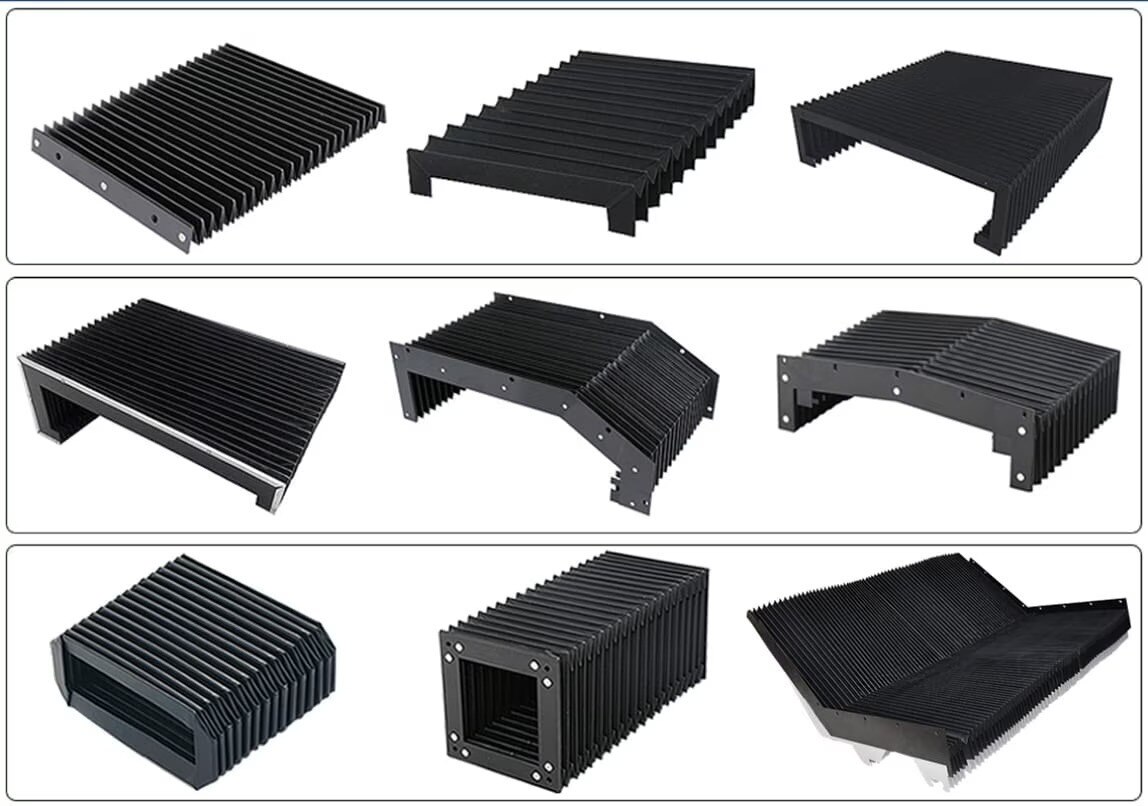
Uncovered scissor mechanisms collect grit, coolant, hydraulic spray and metal chips, while the gaps between crossing arms create crushing and drawing-in hazards. By the end, you will know how the bellows move with the lift, what they can and cannot guard, how to measure the mechanism, and which construction details to specify before ordering.
Key takeaways
- Mount the bellows to frames or brackets, never to parts carrying the lift load.
- Measure closed and extended distances, opening size, fold depth and attachment points.
- Allow folds to move freely without rubbing, snagging or entering pinch zones.
- Inspect fasteners, seams, folds and clearances before operating the lift.
What a bellows shields as the lift moves
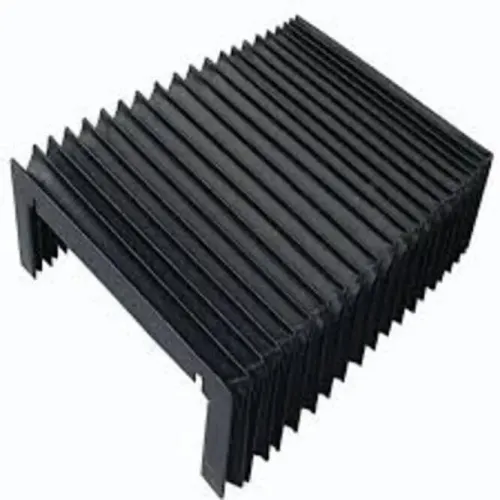
Accordion bellows for scissor lifts attach between the base, platform and moving sections through dedicated frames, rails or brackets. As the lift rises, the cover unfolds or expands with the changing distance between those attachment points; as it descends, the folds compress. The mounting hardware carries the enclosure, not the platform load.
A correctly sized bellows follows the complete motion envelope without rubbing, snagging or twisting. It leaves the scissor arms, hydraulic cylinders, hoses, bearings, pivot pins and guide surfaces free to move, while covering the re-entrant spaces where hazards develop:
- Gaps between crossing arms, where crushing and shearing can occur.
- Openings between the arms, chassis and platform, where clothing, tools or fingers can be drawn in.
- Exposed mechanism areas reached by falling objects, dust, grit, water, oil, hydraulic-fluid spray, weld spatter and metal chips.
The enclosure reduces contamination on cylinder rods, pivot hardware and guides, but it is not a structural safety device. It does not increase rated load, stabilize the scissor structure or replace guardrails, toe boards, interlocks, emergency lowering systems or personal protective equipment.
Keep emergency controls, inspection points, lubrication points and safety devices accessible through service openings or quick-release mounts. Never let the bellows become a travel stop or restrain arm movement.
How the folds avoid rubbing, snagging and stroke restriction
Accordion bellows for scissor lifts survive repeated extension and retraction through controlled geometry, not flexible material alone. Size the cover for fold height, minimum compressed length, maximum extended length, minimum bend radius, scissor-arm travel, pivot locations and mounting offsets. Include torsion, lateral movement, and nearby hydraulic or structural parts.
Check the complete motion envelope, not vertical stroke alone. Every fold needs clearance in both directions during the worst combination of sideways deflection, twisting and extension; a fold that clears at full height can snag during an offset, uneven or partially raised position.
- Confirm the minimum bend radius at every reversal and pivot position.
- Map the cover against arms, pins, cylinders, hoses, rails and brackets throughout travel.
- Provide mounting offsets that prevent the fabric from being pulled sideways or twisted against its frame.
- Leave the bellows free to move; it must never carry platform load, restrain an arm, act as a structural tie or become the travel stop.
Contact causes coating abrasion first, followed by pulled stitching, failed fasteners, pinholes or fatigue at repeatedly reversed folds. Large or vertical covers may need internal support rings, slats, baffles or anti-sag features; without them, the cover can collapse into the mechanism, flutter during travel, or trap water and debris.
What to measure and specify before ordering
Before ordering accordion bellows for scissor lifts, measure the complete motion envelope, not only maximum height. Record the lift fully lowered, at an intermediate position and fully raised, including hoses, cylinders, brackets and guards.
- Collapsed height, fully extended height and usable stroke
- Cover width and depth, mounting perimeter and required overlap
- Platform and base offsets
- Clearance around pivot arms, plus lateral travel and torsional movement
Choose the construction from that exposure. Accordion fold height follows the usable stroke; wall thickness, reinforcement and seam method follow abrasion, pressure and flexing. Specify mounting frames, fasteners, removable inspection openings and low-point drainage, while preserving access to controls, lubrication points, cylinder rods and safety devices.
PVC-coated polyester suits many general-purpose environments; polyurethane-coated fabric offers a different balance of flexibility and abrasion resistance; neoprene-coated fabric may suit particular oil, weather and heat exposures; silicone-coated fabric serves higher-temperature applications but brings different strength and cost trade-offs.
| Fabric | Check before selection | Typical reason to compare |
|---|---|---|
| PVC-coated polyester | Hydraulic fluid, washdown, UV and flex limits | General industrial protection |
| Polyurethane-coated | Abrasion, solvents, flexing and low-temperature limits | Repeated movement or chip exposure |
| Neoprene-coated | Actual fluid, heat, ozone and chemical data | Oil or weather exposure |
| Silicone-coated | Temperature, flame, chemical and tear data | Higher heat or flame demands |
Match the coating, thread, adhesive and seam tape to the actual hydraulic fluid and cleaning chemical. Ask for documented temperature, chemical and flexing limits; “oil-resistant” alone proves nothing. Confirm compatibility with abrasive chips, UV, heat, flame requirements, washdown and the lowest operating temperature.
How installation and inspection keep the cover safe
Installation and inspection keep accordion bellows for scissor lifts safe by confirming that the cover follows the mechanism through its entire travel. A common error is fixing the bellows at nominal length while the lift is partly raised.
That setup can leave too little compression clearance at the bottom and put the fabric under excessive tension at full extension.
Run a full-stroke check during installation with energy isolated and the lift mechanically secured against unexpected movement. Confirm that the bellows compresses without bottoming out, then extends without tension, snagging or pulling on its mounts.
Inspect the cover in both positions:
- Look for cracked coating, delamination, pinholes, torn seams, loose fasteners, trapped grit, water pockets and contact marks.
- Examine seams, corners, mounting flanges and hose or cable penetrations closely; a contamination cover is not automatically watertight.
- Check that no fold, fastener or mounting edge contacts the scissor arms, cylinder or guide surfaces.
Provide removable sections, quick-release fasteners or inspection openings so technicians can reach emergency lowering controls, lubrication points, cylinder rods, limit switches, load-sensing devices, safety interlocks and pivot hardware. Do not hide hydraulic leaks, corrosion or foreign-object accumulation behind a permanent cover. The bellows also does not replace rod-wiper checks, specified lubrication or mechanical inspections.
How to turn the specification into a workable supplier brief
Turn the design into a supplier brief by describing the complete motion envelope, not by requesting a generic replacement cover. Include the lift’s minimum compressed and maximum raised positions, scissor-arm travel, lateral movement, torsion, mounting offsets and nearby hydraulic or structural parts.
1. Send photographs and drawings of the lowered and raised lift, mounting perimeter, pivot-arm clearances and service-access points. Name the hydraulic fluids and cleaners, and state outdoor exposure, ultraviolet exposure, washdown method, operating temperature range and travel cycle.
2. Ask the supplier to confirm compressed and extended dimensions, fold height and clearance assessment. Require details of fabric and coating, seam construction, reinforcement, support features, mounting hardware, inspection access and the proposed test procedure, including service openings or quick removal where controls, lubrication points, limit switches or interlocks need access.
3. Install the cover at the correct reference position, then test it through the full stroke with the lift isolated and mechanically secured. SCUTES INDIA PRIVATE LIMITED becomes useful when it reviews that motion envelope and builds around the installation instead of supplying a fabric sleeve.
Accept the cover only when it passes full-stroke operation with no rubbing or snagging, leaves emergency controls unobstructed, transfers no load into the bellows and has a documented inspection schedule.
Related product
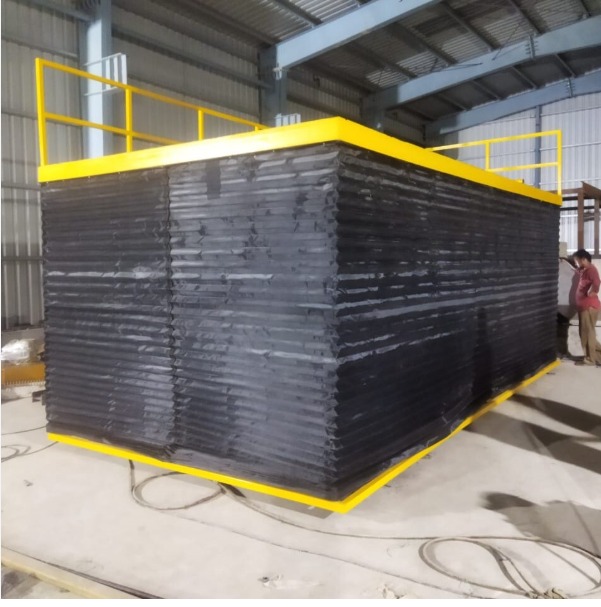 | SCISSOR LIFT BELLOWS Scissor Lift Bellows are one of the broadly demanded stabilizer for which we are considered an acclaimed designed in the market. View product → |
Frequently asked questions
What do accordion bellows shield on a scissor lift?
They enclose moving gaps and shield mechanisms, personnel and nearby equipment from dust, chips, oil, coolant and mechanical contact as the lift changes height.
How do bellows avoid restricting scissor-lift travel?
Correct fold depth, guide rails or frames, and attachment positions let the cover expand and compress without rubbing, snagging or reaching its stroke limit.
What measurements should you provide before ordering?
Provide the closed and extended distances, opening width and length, fold depth, mounting-point locations, attachment method, clearance limits and the contaminants or temperatures involved.
What should you inspect after installing the bellows?
Check fasteners, brackets, seams, folds, guides and clearances through the full lift stroke, then confirm the cover does not enter pinch points or contact moving components.