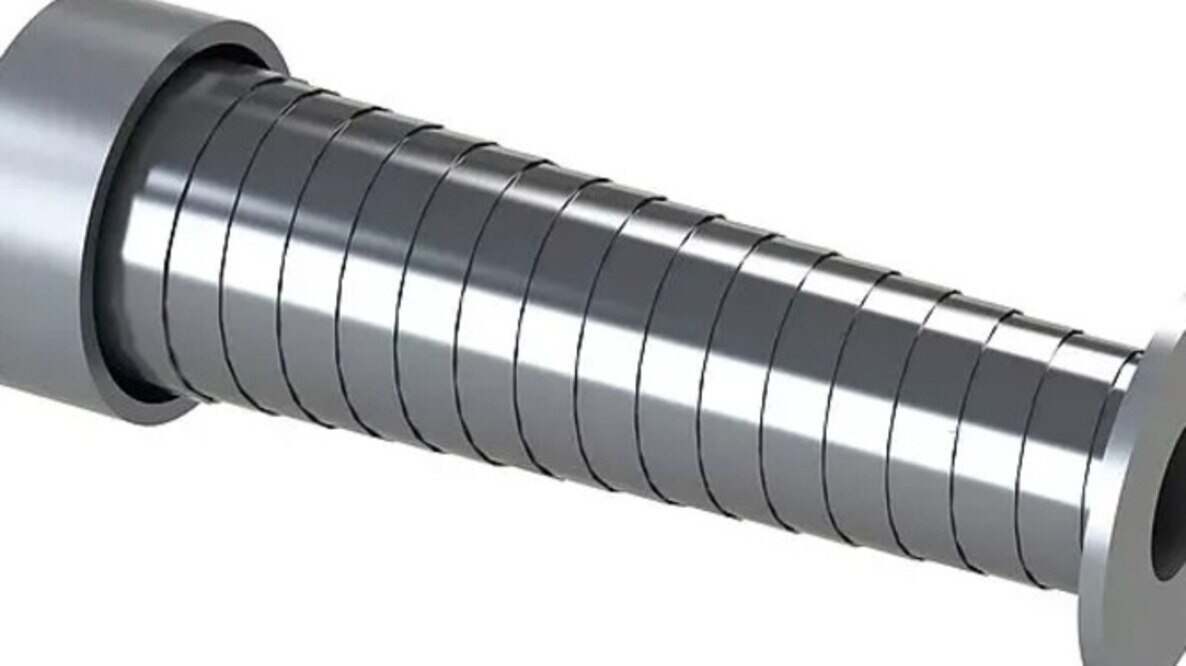
A conventional steel telescopic cover does not automatically need a spiral spring. The right choice depends on the cover’s orientation, moving mass, stroke, speed, guidance, and operating environment; by the end, you can identify the mechanism, check the fit, compare alternatives, and ask a supplier for the figures that matter.
Key takeaways
- A telescopic cover does not automatically need a spiral spring.
- Use spring assistance only when the movement and cover design require retraction or balancing.
- Check cover travel, section overlap, mounting space, and hazards before ordering a spring.
- Ask suppliers for spring torque, cycle life, service access, and compatibility details.
A Steel Telescopic Cover Does Not Automatically Need a Spiral Spring
No. A CNC machine telescopic cover can move through the machine axis, guided box movement, linked sections, gravity, or an external drive without a spring. A spiral spring is an application-specific retraction or balancing element, not a requirement created by CNC control.
| Term | Meaning | Movement or force behaviour |
|---|---|---|
| Telescopic steel cover | Interlocking steel sections protecting a guideway | Axis drive, linkage, gravity, or external drive |
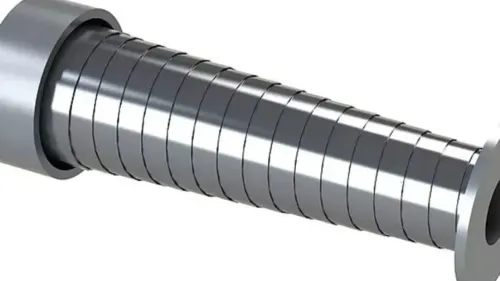
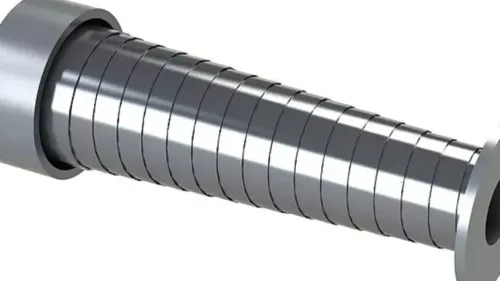
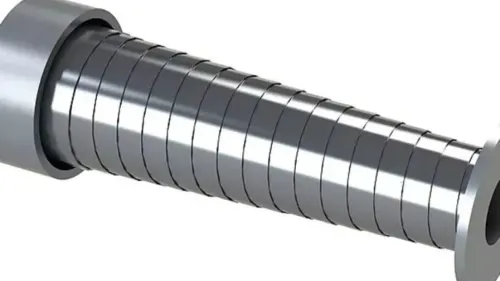
| Telescopic spring cover | A cover design that includes a spring-loaded return mechanism | Spring retracts or assists the sections |
| Spring-assisted cover | Any cover using a spring to offset mass or aid return | Force depends on spring type and travel |
| Flat spiral or constant-force spring | Two different spring technologies | Neither has the same force-versus-stroke curve |
A horizontal cover often travels directly with the axis because the drive can handle its mass. A vertical or steeply inclined cover benefits more from spring assistance because the spring offsets gravity and reduces continuous axis load; incorrect tension can cause violent closing, positioning errors, or guide overload.
Ask these questions before specifying a cnc machine telescopic cover spiral spring:
- Does the cover actually include a spring?
- Is it a flat spiral power spring, constant-force spring, or another return mechanism?
- What motion does the spring perform, and does the axis drive already provide the required force?
The answer to “do cnc machine telescopic covers need a spiral spring in chennai” is therefore: only when the cover geometry, orientation, mass, stroke, and duty require spring assistance.
How Spring Assistance Changes Cover Movement
During extension, axis travel pulls the cover sections over the guideway while the spiral spring stores energy or maintains a balancing force. During retraction, that stored force assists the moving section toward the closed position. This spiral spring machine movement suits an axis only when the spring’s force matches the cover’s actual load and travel.
Specify a CNC machine telescopic cover spiral spring against these inputs:
- Required stroke, extended length, and retracted length
- Moving mass, section overlap, and mounting orientation
- Axis speed, acceleration, reversal frequency, and desired residual force
- Wiper friction, guide resistance, available spring space, and coolant exposure
- End-stop loads, temperature, chip load, and spring replacement access
Confirm whether the quoted force remains constant across travel or changes as the spring winds and unwinds. Do not specify the spring by cover width or machine model alone.
Excessive tension can close the cover violently, strike its stop, disturb positioning, and overload the smallest sections or guide surfaces. Insufficient tension can leave a vertical cover sagging, prevent complete retraction, and force the axis drive to carry more mass than planned.
Spring assistance reduces motion load; it does not control the axis profile or cure binding. Include section overlap, friction, reversal loads, and end-stop impact in the calculation before approval.
Fit-Check the Cover Before Ordering the Spring
Measure the machine before specifying a CNC machine telescopic cover spiral spring. Record the axis travel and the cover’s required working stroke, then capture the complete envelope in both retracted and extended positions.
- Measure retracted and extended height or length, overall width, section count, section overlap, and clearance from tools, guards, table, column, and nearby hoses.
- Identify the fixed and moving mounting faces, hole patterns, attachment heights, and exact spring attachment points.
- Record maximum axis speed, acceleration, reversal frequency, duty cycle, and the mass of the moving sections.
- Check space for the spring housing, replacement access, and the location of mechanical stops.
| Position | What to check | Design consequence |
|---|---|---|
| Horizontal | Axis support, guide alignment, end stops | Spring assistance may be unnecessary |
| Vertical | Gravity load, sag, residual force | Balance the moving mass without violent retraction |
| Inclined | Slope angle, gravity component, travel direction | Size force for the actual orientation |
| Torsional loading | Uneven mounting, twisting, guide stiffness | Add support or reject a spring-only arrangement |
With power isolated, move the cover by hand through its full travel. Sections must run freely, overlap correctly, and reach the stops without binding. A spring cannot fix poor alignment, damaged running surfaces, missing guides, inadequate overlap, failed wipers, or chip-packed cavities. Compare the supplier’s drawing with the machine envelope before fabrication, not after installation.
Choose the Cover Type for the Hazard and Motion
Choose the cover by hazard and motion, not by the machine’s CNC control. CNC machine cover options are not interchangeable: steel handles impact differently from fabric, and a cable carrier protects a different component.
| Option | Best fit | Main limitation |
|---|---|---|
| Telescopic steel cover | Sharp or hot chips, abrasive swarf, coolant, and rigid guideways needing guided section movement | Requires correct overlap, wipers, drainage, and alignment |
| Roll-up cover | Compact storage and moderate contamination where a flexible or slatted curtain follows the axis | Check chip impact, curtain stiffness, and drum clearance |
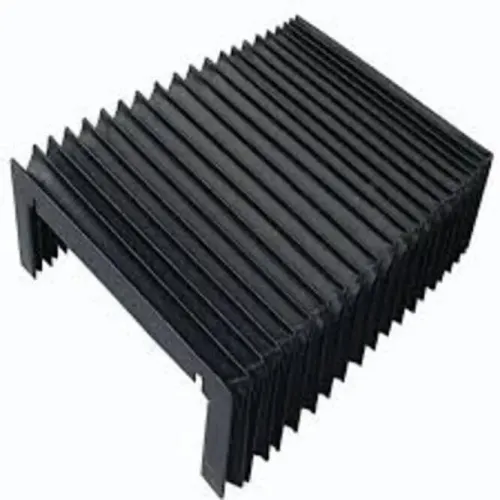
| Fabric bellows | Dust, mist, and light chips on axes requiring flexible folding | Not equivalent to steel against hot, sharp swarf |
| Apron cover | Overlapping protective slats in a compact arrangement | Impact resistance and guidance limits still apply |
| Cable drag chain | Routing and managing cables and hoses | Does not shield guideways from chips or coolant |
A spring-assisted cover is the wrong choice when sections are very heavy, the span is long and unsupported, severe torsional loads distort the cover, or the motion profile needs powered, controlled positioning instead of passive return. The spring assists movement; it does not cure binding, poor guidance, or inadequate section overlap.
For telescopic cover basics in Chennai, specify material, corrosion resistance, sealing, wiper compound, drainage, and coolant compatibility. Humidity, abrasive dust, metal chips, coolant, and frequent washdown can shorten service life, so do not assume every steel cover suits every shop floor.
Plan Service, Commissioning, and Supplier Questions
Do CNC machine telescopic covers need a spiral spring in Chennai? Only after the supplier calculates the balancing force, stroke, orientation, moving mass, acceleration, end-stop load, spring life, and replacement method. Commissioning is part of selection, not an afterthought.
| Arrangement | How movement works | When it applies |
|---|---|---|
| Spring-assisted | Stored force helps retract or balance the cover | Vertical or inclined axes with significant moving mass |
| Guided or linked sections | Axis travel moves sections through guides, links, or gravity | Horizontal covers with suitable geometry |
| External drive | A separate actuator controls cover movement | Heavy covers, long spans, or controlled positioning |
During commissioning, check:
- Full extension and retraction without binding
- Section alignment, wiper contact, scraper condition, and stop impact
- Unusual noise, vibration, and actual axis load
At each inspection, remove chips, inspect fasteners and dents, check for coolant ingress, and measure spring tension without pushing debris into the spring cavity or guide areas. Replace the spring when return force falls or when it shows cracking, deformation, corrosion, or fatigue.
Never correct weak return force by over-tensioning; that can slam the stop and overload smaller sections.
Ask the supplier for the spring’s rated working range, extended and retracted dimensions, supported axis orientations, tested maximum speed and acceleration, service access for spring, wipers, guides, and stops, mounting tolerances, drawings, expected life, and replacement method. These are essential telescopic cover basics in Chennai, alongside suitable CNC machine cover options.
SCUTES INDIA PRIVATE LIMITED can join the measurement and cover-selection review in Chennai, where geometry, protection, and service access must agree.
Related products
 | TELESCOPIC SPRING COVER Telescopic Spring Covers provide protection under extreme conditions. View product → |
 | TELESCOPIC COVERS A telescopic cover protects guide-way surfaces and components of moving axis of machines. View product → |
Frequently asked questions
Do CNC machine telescopic covers need a spiral spring?
No. A CNC telescopic cover can move through guided sections, linked movement, gravity, or an external drive without a spiral spring. Spring use depends on the application.
How does a spiral spring change telescopic cover movement?
A spiral spring can assist retraction or balance cover movement, reducing the force required from the machine or linkage when the design is matched correctly.
What should you check before ordering a spiral spring for a telescopic cover?
Check axis travel, cover weight, section overlap, movement speed, mounting space, spring torque, attachment points, and the machine’s contamination hazards.
Which CNC machine cover type suits different hazards?
Choose the cover construction and material for the hazard: chips, coolant, oil, heat, abrasive dust, impact, and the required axis movement. A spring alone does not solve an unsuitable cover design.