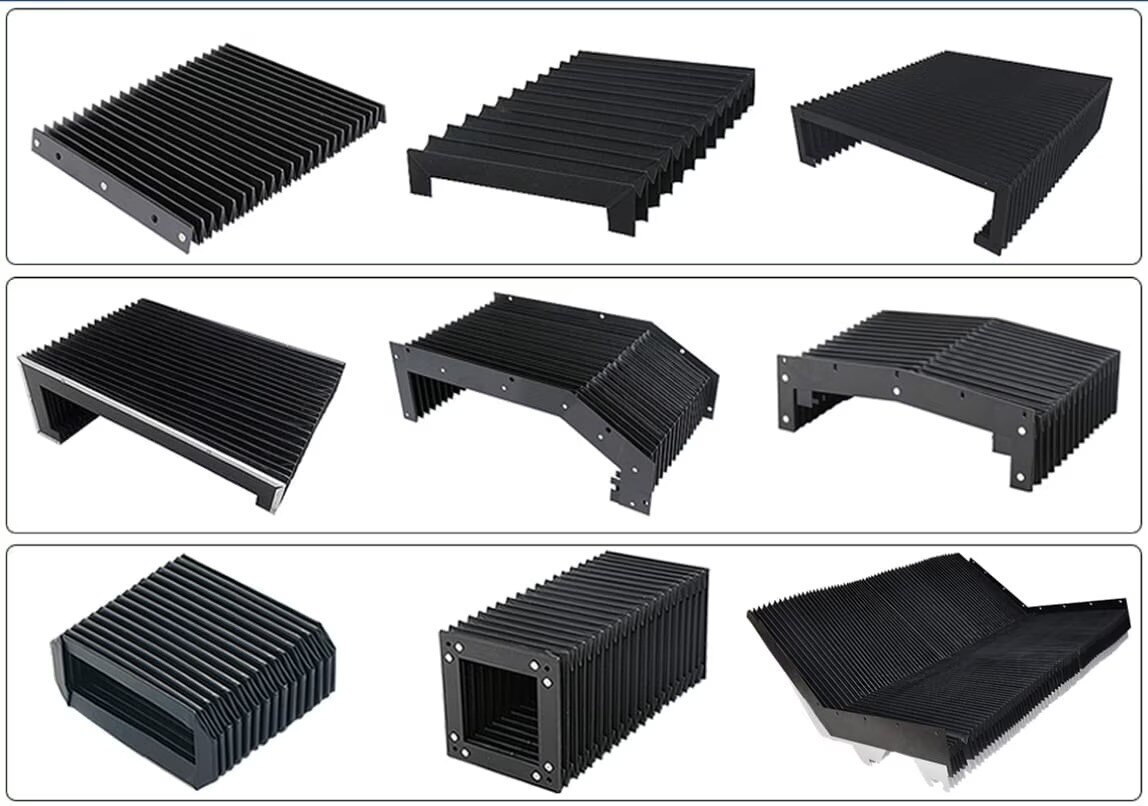
A quoted apron cover is only as good as the dimensional survey, material choice and travel test behind it. By comparing each fabrication stage and checking the installed cover against measurable acceptance points, you can distinguish a machine-specific solution from a cover that merely matches the nominal axis length.
Key takeaways
- Measure full travel, clearances, mounting points and retracted stack height.
- Match fabric, strip thickness and overlap to chips, coolant and motion speed.
- Approve a dimensioned drawing before cutting, stitching or assembling the cover.
- Inspect tracking, smooth retraction, seals and fasteners after installation.
What measurements must a fabricator take before designing the cover?
Nominal travel is only one dimension. Apron cover fabrication starts with a machine-specific survey because the cover must retract without striking equipment and extend without losing support. A custom apron cover in Chennai must fit the complete design envelope, not only the open position.
1. Lock out the axis and record both travel limits without placing tools on the guideway or obstructing its full stroke. Measure closed length, maximum extension and travel length, then record cover width, folded height, mounting-face width and height, fixing-hole pattern, guide-rail position, bend radius, strip pitch and available clearance.
2. Inspect the packed condition at each limit. Check the spindle, doors, cable carriers, chip conveyor and existing way covers, including their movement paths and service access. Then verify clearance again at maximum extension; a cover that passes the extended-position check can still foul a retracted spindle or door.
3. Give the fabricator machine speed, acceleration, coolant direction, chip type and the machine builder’s limits for mounting loads. Include every adjacent moving part and identify whether the cover shares space with a cable carrier or chip-removal system. These details determine roller loading, strip support and dynamic behaviour, not just fabric size.
Use a dimensioned sketch or photographs marked with reference points, hole centres and both travel endpoints. Do not estimate from the axis nameplate: acceleration, folded height and neighbouring motion decide whether the design bunches, derails or strikes the machine. Keep the builder’s mounting-load and clearance limits with the approved survey.
How do fabric, strips and overlaps change cover performance?
A temperature rating alone cannot choose the fabric: alkaline wash fluid can attack an adhesive, while cutting oil can swell a coating rated for heat. Match every layer to the exposure.
| Exposure | Construction check | Failure risk |
|---|---|---|
| Water-miscible coolant | Oil- and water-resistant coating, thread, adhesive and hinge | Swelling, leakage and trapped coolant |
| Cutting oil or alkaline wash fluid | Chemical-compatibility data for coating, thread and edge reinforcement | Softened seams, lifted edges and embrittlement |
| Abrasive chips or welding spatter | Sacrificial or reinforced face, protected joints and heat-resistant edge treatment | Punctures, burns and hinge damage |
| Heat | Continuous and peak temperature limits for fabric, adhesive and thread | Delamination or loss of flexibility |
| Outdoor moisture and ultraviolet exposure | UV-stable coating, corrosion-resistant hardware and sealed edges | Cracking, fading and rust |
| Repeated flexing | Flex-fatigue rating, flexible hinge and reinforced fold line | Early fatigue at folds and rivets |
Thicker aluminium strips add stiffness but increase packed height, weight and friction. Closer spacing and larger overlaps improve chip and coolant deflection, yet increase noise, bunching and fatigue; joint design, guide alignment and roller support decide whether sections glide or bind.
Heavier stainless or reinforced strips resist impact but raise roller load, inertia and wear at fixing points.
Validate high-speed axes through the full stroke. Poor tensioning or inadequate support causes flutter, bunching, derailment and impact noise. For coastal Chennai storage, specify stainless or coated hardware, dry packaging and protected fasteners; inspect rollers and hinges before installation.
What does the apron cover fabrication process include from drawing to assembly?
A cover that matches the drawing can still fail on the machine. The apron cover fabrication process needs an auditable sequence, with records at every handoff from survey to dispatch.
- Survey the machine: record closed and extended lengths, travel, mounting faces, hole pattern, guide position, bend radii, clearances, adjacent moving parts, speed, acceleration, coolant direction and chip type.
- Prepare a drawing or full-scale template from those measurements.
- Request drawing approval before production. The approved drawing must show closed and extended lengths, mounting-hole locations, bend radii, strip pitch, materials, clearances and allowable movement.
- Select fabric, coating, strips, hinges, thread, rivets and fasteners for the coolant, chips, heat, flexing and corrosion exposure.
- Calculate strip layout, overlap, pitch, packed height and roller load.
- Cut the fabric to the approved profile.
- Treat edges and add reinforcement at mounting points, folds and high-wear zones.
- Rivet or fasten reinforced sections without creating raised contact points.
- Attach slats or hinges at the specified pitch and verify free articulation.
- Install rollers and guides, checking alignment and retention.
- Assemble the cover and confirm fixing security.
- Complete dimensional inspection against the approved drawing.
- Run a simulated or machine-mounted full-stroke test. A cover can pass a tape-measure check yet bind at one travel limit.
- Package dry with protected fasteners, then dispatch the inspection record, drawing, material identification and installation instructions.
An IP rating belongs to the complete installed enclosure under IEC 60529, including joints, openings and cable entries—not fabric or strip material alone. Assess machine guarding separately: check nip points, rotating tools, powered axes, interlocks and access distances; way protection does not automatically prevent dangerous access.
When should you choose an apron cover over another cover type?
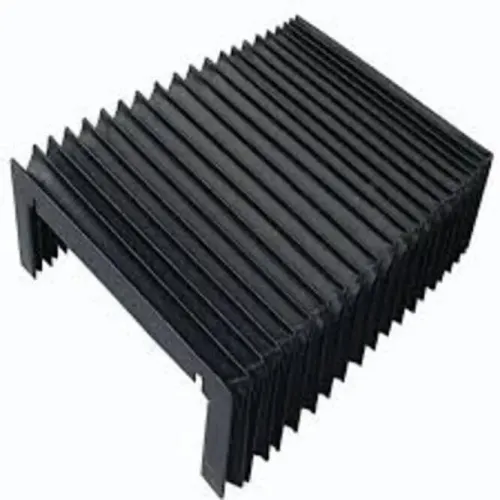
Choose an apron cover when the machine presents a long horizontal opening, frequent operator access, limited installation depth, or a retraction path where flexible overlapping sections are easier to park than a bellows. Geometry and contamination matter more than the product label.
| Option | What it means | When it applies |
|---|---|---|
| Apron cover | Overlapping fabric sections with strips, guides and rollers | Long horizontal openings, frequent access, limited depth, hot chips, or retracting sections |
| Fabric bellows | A compact enclosed form that folds through its shape | Protection must follow multiple axes in a confined envelope |
| Roll-up cover | Flexible material wound onto a roller | A space-saving straight run has predictable travel |
| Telescopic steel or rigid way cover | Rigid panels form a sealed sliding barrier | Heavy falling chips, sharp swarf, severe impact, or exposed guideways needing rigid sealing |
Reject an apron for a high-temperature zone beyond the selected fabric system, an exposed guideway that needs a rigid barrier, or an enclosure where gaps between strips and fabric sections cannot be accepted. Overlaps can deflect coolant and chips, but poorly controlled joints can also trap or carry contamination into the way.
For a fair Chennai comparison, ask SCUTES INDIA PRIVATE LIMITED and each apron cover manufacturer in Chennai to price the same survey drawing, material basis, load assumptions, travel-test method and stated limitations. Compare those controls rather than fabric thickness or delivery promises alone.
Related product
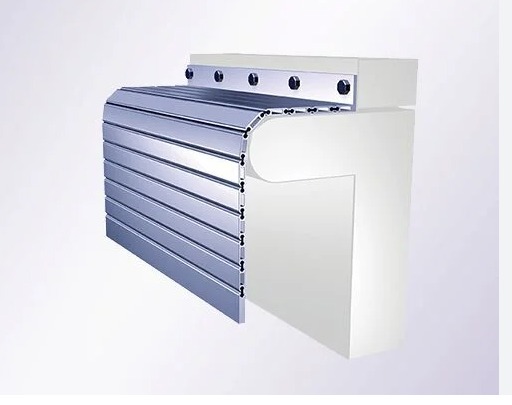 | APRON COVER Effectively engaged in offering a vast collection of outstanding quality products which include Apron Covers. View product → |
How should you compare delivery quality after the cover reaches the machine?
Accept delivery only after an installed performance check, not when the parcel arrives. For apron cover fabrication in Chennai, record the closed length, fully extended length, mounting alignment, fixing security, clearance at both travel limits, and free movement through the complete stroke. Note abnormal noise, roller tracking, bunching, and any chip or coolant bypass.
| Comparison point | Strong delivery evidence | Weak delivery evidence |
|---|---|---|
| Approved design | Drawing shows dimensions, mounting points, clearances and travel limits | Verbal confirmation or an outdated drawing |
| Materials | Fabric and coating identification matches the order | “Industrial grade” without identification |
| Inspection | Dimensional record and machine-mounted travel test | Tape-measure check only |
| Handover | Installation and storage instructions, plus a remedy for dimensional mismatch | Delivery date treated as acceptance |
During sign-off, ask the fabricator to correct:
- Binding or excessive friction through the stroke.
- Loose rivets, edge lifting, or poor roller tracking.
- Contact with the spindle, doors, cable carrier, chip conveyor, guideway, or existing cover.
- Bunching, abnormal impact noise, or bypass paths for chips and coolant.
Include a maintenance handover. Inspect overlaps, hinges, rollers, fasteners, and edge reinforcement after initial running, then repeat the inspection after coolant or chips have reached the cover. Keep the machine builder’s clearance and mounting-load limits with the acceptance record; heavier strips or added reinforcement can overload rollers and fixing points.
Frequently asked questions
What measurements must a fabricator take before designing an apron cover?
Measure nominal travel, opening width, mounting points, retracted stack height, clearances, guide surfaces and the complete extended and retracted design envelope.
How do fabric, strips and overlaps change apron cover performance?
Fabric selection affects resistance to coolant, oil, heat and abrasion; strip material and spacing control support; overlap dimensions influence sealing and flexibility.
What does the apron cover fabrication process include from drawing to assembly?
The process includes machine surveying, a dimensioned drawing, material selection, cutting, strip preparation, stitching or fastening, assembly, inspection and installation checks.
When should you choose an apron cover over another cover type?
Choose an apron cover when a broad horizontal or vertical machine opening needs segmented protection and compact retraction; compare bellows or telescopic covers when the motion, space or contamination pattern demands them.
How should you compare delivery quality after the cover reaches the machine?
Check dimensions, mounting alignment, strip overlap, tracking, smooth extension and retraction, clearance from moving parts, sealing and fastener security under machine motion.