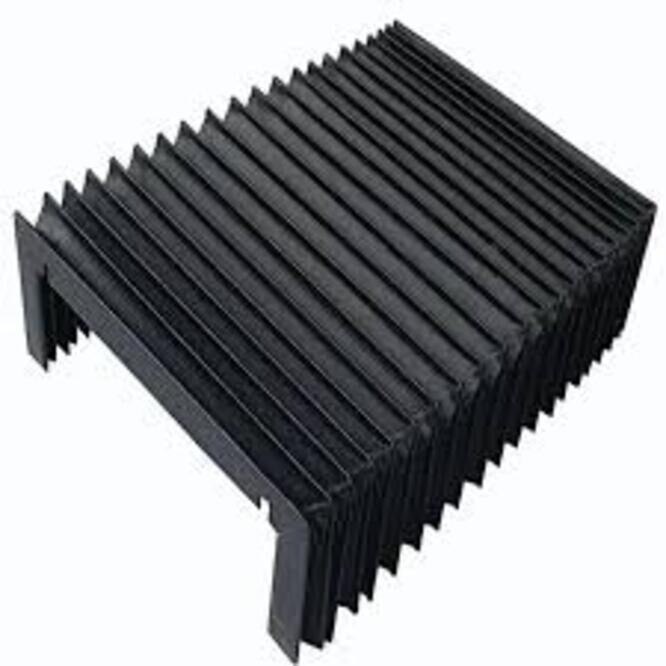
A damaged laser-machine cover is not automatically a request for a new spiral spring: the failure may involve the bellows, spring strips, end frames, mounting brackets, or the axis itself. By checking the damage, identifying the cover design, recording the travel envelope, and testing the replacement safely, you can prepare a specification that avoids a costly mismatch.
Key takeaways
- Identify whether the machine uses bellows, spiral spring, or telescopic protection.
- Match cover materials to laser debris, coolant, heat, and optical contamination risks.
- Measure full travel, compressed length, mounting points, and clearance before ordering.
- Correct the failure cause before fitting a bellows cover spring replacement.
Is the damaged laser machine using a bellows, spiral spring, or telescopic cover?
Inspect the moving cover, not just the damaged fabric, before ordering a bellows cover spiral spring for damaged laser machine in jaipur. A laser machine may use a fabric bellows, a spring-steel spiral cover, a telescopic steel cover, or a bellows with internal spring strips. These parts do not share mounting, travel, or clearance requirements.
| Option | What you will see | What it protects |
|---|---|---|
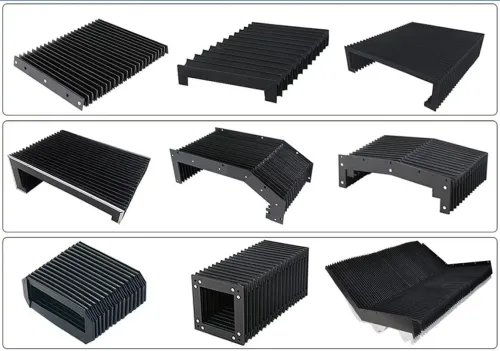
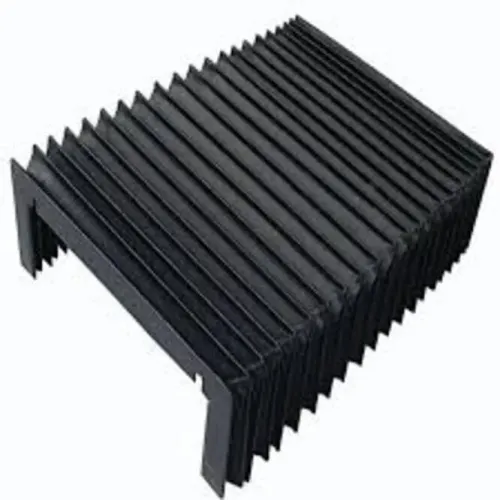
| Fabric bellows | Folded fabric sections joined to frames | Guideways and axes needing flexible, enclosed travel |
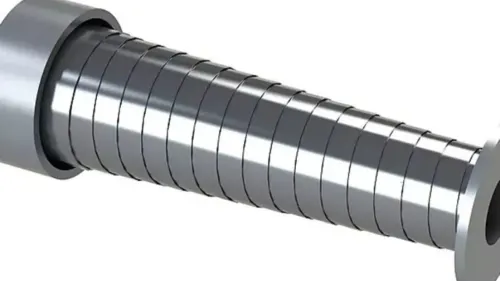
| Spring-steel spiral cover | Overlapping coiled steel slats that roll or retract | Linear guides, screws, shafts, and narrow moving mechanisms |
| Telescopic steel cover | Rigid nested boxes sliding over one another | Heavy chips, impact, coolant, and rigid horizontal or vertical travel |
- Switch off and isolate the machine, then photograph the cover fully extended, compressed, and at both end mounts.
- Check whether the damaged part rolls into a coil, folds into pleats, or telescopes into rigid sections.
- Trace the attachment: record end-frame shape, mounting holes, brackets, and whether spring strips sit inside the bellows.
- Measure protected width and height, extended and parked lengths, stroke, clearances, bend or rolling radius, and axis direction.
- Record the laser process, machine make and model, axis name, speed, acceleration, reversing frequency, orientation, chips, coolant, oil, heat, and sparks.
Do not treat this cover as laser-radiation guarding or an interlocked enclosure. Inspect rails, brackets, carriage, and obstructions before replacement; a torn cover often signals misalignment or a catching mount.
Match the cover design to the laser process and contamination
Choose the cover by axis motion and contamination, not by guideway width alone. A fast linear axis carrying fine metal dust needs a different laser machine spring protection design from an axis exposed to hot dross, coolant, or sparks.
| Option | Construction and material | Use it when |
|---|---|---|
| Spring-supported bellows | Fabric or laminated bellows with internal spring strips; specify heat-, oil-, and coolant-resistant fabric | The axis needs flexible folding over long travel and faces dry dust, smoke condensate, or controlled coolant exposure |
| Spiral spring cover | Overlapping spring-steel coils, using coated carbon steel for dry service or stainless/heat-resistant steel for corrosive condensate and hot particles | The axis needs compact rolling protection against chips, dust, and light splash without a large folded package |
| Telescopic steel cover | Rigid nested steel boxes with scrapers and guides | The axis receives heavy chips, hot sparks, or direct coolant jets and has space for stacked sections |
Do not put a textile bellows in the path of hot sparks or slag; the fabric can burn, harden, or tear. Do not assume stainless steel solves every problem: confirm the spring material’s temperature, chemical-resistance, and chip-load limits with the manufacturer.
Match the cover’s compressed length, extended travel, bend direction, mounting orientation, and acceleration to the axis. A cover that rolls smoothly on a horizontal axis can bind vertically or surge during rapid reversals. None of these covers replaces the laser enclosure, interlock, or radiation guard.
Measure the complete travel envelope before requesting a replacement
Guideway width alone will not prove a replacement fits. Measure the cover’s full travel envelope, including its parked length, extended length, height, and every nearby obstruction.
For spiral spring cover laser equipment in Jaipur, record the following in the machine’s actual installed position:
1. Measure protected width and height, required stroke, fully extended length, and compressed or parked length. Record the minimum rolling or bending radius; an overly long parked cover can collide with the laser carriage.
2. Identify the axis name and direction of travel. Note maximum speed, acceleration, cycle frequency, and whether the cover moves horizontally, vertically, or upside down.
3. Measure each end frame, mounting-hole centre spacing, hole diameter, flange dimensions, rail position, and attachment method. Photograph the damaged cover, both end mounts, guideway, and surrounding carriage.
4. Check clearance at both travel extremes and during acceleration, not only with the carriage parked. Confirm that the cover cannot obstruct the nozzle, assist-gas path, autofocus mechanism, beam path, fume extraction, limit switches, or cable carrier.
5. Record the laser process, machine make and model, chip or smoke type, abrasive dust, coolant or oil contact, ambient temperature, sparks, and cleaning method. Note the installation access, required delivery date, and whether installation support is needed.
Send these measurements with a dimensioned sketch. State the required protection limits instead of calling the cover simply “dustproof”; fine smoke can enter through end gaps, seams, wipers, or poorly fitted rails.
Find the failure cause before installing a bellows cover spring replacement
Do not order a bellows cover spiral spring replacement until you prove the spring is the failed part. Lock out electrical, pneumatic, and laser energy, then photograph the cover before moving it. A broken or unhooked spring causes uneven retraction, slack, or spring surge while the fabric, end frames, and mounting holes remain straight.
| Fault | Evidence | Correct response |
|---|---|---|
| Spring strip | Broken strip, poor retraction, sound fabric and guides | Replace the spring if dimensions remain correct |
| Fabric or laminate | Tears, stretched sections, cracks, delamination, burn marks | Replace or rebuild the cover |
| Frame, rail, or bracket | Bent guide, loose fastener, catching bracket, worn wiper | Repair alignment and damaged hardware first |
| Axis alignment | Uneven gap, side rubbing, carriage load, obstruction on the guideway | Correct the rail, carriage, or mounting position |
- Support the cover and carriage before removing end fixings; never let a suspended cover snap back. Check the guideway for chips, hardened coolant, and burrs, and verify both rails run parallel through the full stroke.
- Measure the compressed and extended lengths, width, height, clearances, bend radius, mounting-hole pattern, and attachment method. Record axis direction, speed, acceleration, reversing frequency, and vertical or inverted orientation.
- Fit the repaired or replacement cover with correct end fixation and cable or hose clearance. Move through the full stroke at low speed, watching for rubbing, folded sections, sag, spring surge, or abnormal carriage load.
- Repeat the test at normal speed after exposure to ordinary debris and coolant. Stop immediately if interference, uneven rolling, or renewed tearing appears.
Turn the inspection record into a Jaipur replacement specification
Send a Jaipur supplier a drawing-ready inspection record, not the phrase “laser machine spring protection.” Your specification for a bellows cover spiral spring for damaged laser machine in Jaipur should include:
- Laser process, machine make and model, axis name, travel direction, travel length, speed, acceleration, and reversing frequency.
- Extended and compressed cover lengths, width, height, bend radius, clearances, attachment method, mounting-hole pattern, and available installation space.
- Installation orientation, including vertical, horizontal, inverted, or side-mounted operation.
- Photographs of the damaged cover, end frames, rails, brackets, cable or hose routing, and both mounting points.
- Contamination details: fine metal dust, slag, smoke condensate, coolant, oil, solvents, hot sparks, and ambient temperature.
- Required delivery date, site installation access, replacement downtime, and whether commissioning support is needed.
Ask the supplier to state whether the quotation covers a fabric bellows, spring-steel spiral cover, roll-up shutter, or bellows with internal spring strips. A spiral spring cover laser equipment in Jaipur quotation is incomplete if it omits material, spring orientation, retraction force, or the full travel envelope.
Accept the cover only after moving the axis through its full stroke at low and normal speed. Check for rubbing, uneven rolling, spring surge, folded sections, abnormal carriage load, and interference with cables or hoses; repeat the test after normal debris and coolant exposure.
SCUTES INDIA PRIVATE LIMITED can use this record to distinguish a suitable laser bellows from a telescopic spring cover that cannot meet the measured motion.
Keep the cover separate from laser interlocked guarding: passing the motion test does not prove radiation safety.
Related products
 | Laser Machine Bellows Laser Machine Bellows are specialized protective coverings designed to safeguard the vital internal components of laser machines. View product → |
 | TELESCOPIC SPRING COVER Telescopic Spring Covers provide protection under extreme conditions. View product → |
Frequently asked questions
How do you identify the damaged cover on a laser machine?
Inspect whether it is a fabric bellows, spring-steel spiral cover, telescopic steel cover, or bellows with internal spring strips. Compare mounting points, travel, and clearance.
How should you match a cover to the laser process?
Consider the machine’s chips, dust, coolant, heat, moisture, abrasion, and optical contamination. Choose materials and construction that withstand the actual exposure.
What measurements are needed for a bellows cover spring replacement?
Record full travel, compressed and extended lengths, width, height, mounting dimensions, guideway position, spring-strip details, and surrounding clearance.
Why must you find the failure cause before installing a replacement?
A replacement will fail again if misalignment, excess travel, trapped chips, incorrect tension, heat, abrasion, or poor mounting caused the original damage.