Distributors need more than a spring diameter when matching a protective cover to a CNC shaft, guide rod, or screw assembly. By the end, you will be able to compare protection types, complete a fit check, identify installation risks, and decide what information a supplier must provide before you stock or quote the component.
Key takeaways
- Use telescopic springs for compact axial shaft protection with limited retracted space.
- Choose bellows or telescopic covers when the motion, debris or geometry exceeds spring limits.
- Confirm shaft diameter, stroke, travel speed, mounting and clearance before requesting quotations.
- Inspect after contamination events and cycle counts instead of relying on arbitrary calendar intervals.
Where a telescopic spiral spring fits—and where other covers fit better
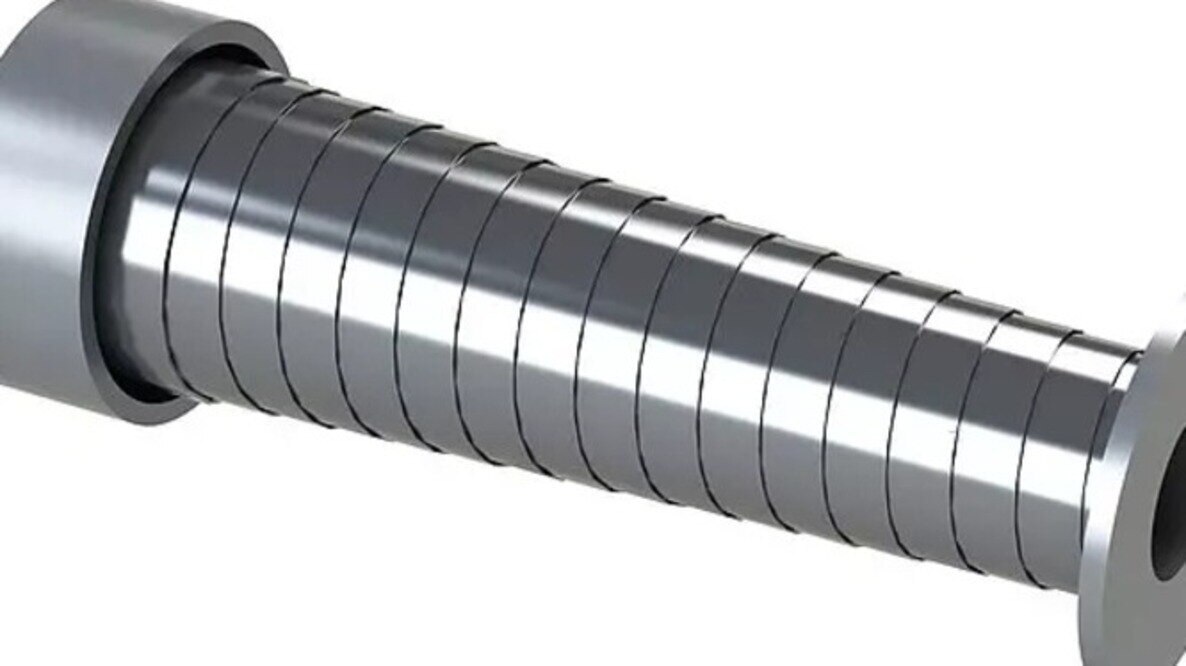
A telescopic spiral spring gives an exposed shaft, guide rod or screw assembly compact axial protection without occupying much space when retracted. Its telescoping strips extend and retract with the machine motion, limit chip impact, reduce coolant splash and leave little obstruction around the moving shaft.
These telescopic spiral spring benefits make it practical for CNC, machine-tool and automation equipment where access and storage space are tight.
| Component | Main protection | Better fit |
|---|---|---|
| Telescopic spiral spring | Shaft, rod or screw; chips, dust and splash | Intermittent contamination, short radial clearance and rapid axial motion |
| Steel telescopic way cover | Guideway or broad sliding machine opening | Heavy chips, high impact and rigid machine-tool protection |
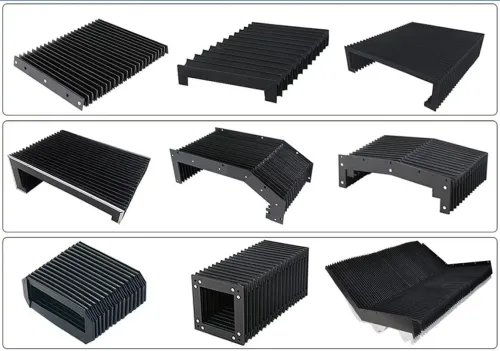
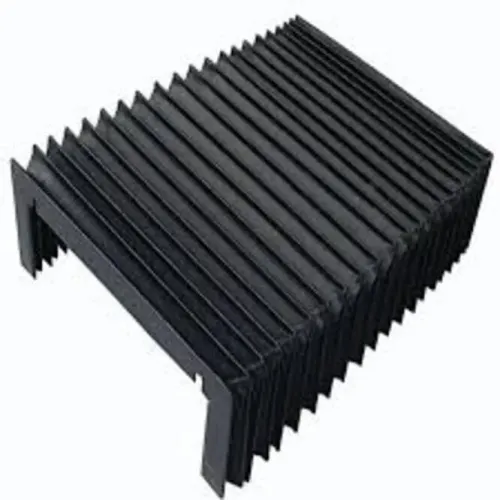
| Bellows cover | Enclosed shaft, guide or slide | Fine dust, continuous coolant exposure and stronger sealing |
| Roll-up cover | Wide opening or flat travel path | Large rectangular areas rather than round shafts |
| Cable drag chain | Cables, hoses and tubing | Controlled routing and bend-radius protection, not sealing a shaft |
Do not treat spiral spring protection components as load-bearing guards, personnel barriers or safety-rated enclosures. They also have finite fatigue life and can fail early when misaligned, overloaded or packed with chips. A conventional helical compression spring stores force for a mechanism; it is not a protective cover and does not provide the same shielding.
Choose stainless steel when humidity, water-based coolant or washdown drives corrosion risk. Specified carbon or alloy spring steel can offer different spring characteristics and lower cost, so confirm the material rather than assuming every coiled strip behaves alike.
Match the spring to the shaft, stroke, motion and Jaipur environment
A telescopic spring for equipment distributors must be specified by its working geometry, not by outside diameter alone. The telescopic spiral spring benefits—compact storage, quick extension and low obstruction—disappear when the cover binds against a shaft or reaches its travel limit.
Record these details before requesting a quotation:
- Shaft or rod diameter, maximum stroke, compressed length and extended length.
- Spring pitch, overlap, material, surface finish and required spring force.
- Fixed and moving mounting points, flange or clamp details, and available radial clearance.
- Operating speed, acceleration, cycle count and installation orientation: horizontal, vertical or inverted.
- Nearby tooling, coolant lines, chips, abrasive dust and access restrictions.
- Jaipur site conditions: dry dust, summer heat, monsoon moisture, coolant concentration and exposure to steel or aluminium chips.
- Cleaning access and the identification method required for future replacement: drawing number, dimensions or photographs.
| Motion profile | Specify | Why it matters |
|---|---|---|
| Slow axial travel | Stroke, cycles and orientation | Prevents overextension and uneven loading |
| Rapid reciprocation | Speed, acceleration and cycle count | Determines fatigue life and force demand |
| Rotating shaft nearby | Shaft diameter and radial clearance | Stops rubbing, snagging and chip winding |
| Vertical installation | Gravity direction and mounting details | Prevents sections from settling or separating |
Do not stock only by nominal diameter. Two springs with the same diameter can differ in stroke, fixing method, overlap and allowable speed, making one unsuitable for the customer’s machine.
Use a fit-check before requesting a quotation or holding stock
A quotation based only on outer diameter is unsafe. Two covers with the same diameter can differ in stroke, compressed length, overlap, fixing details, spring force and allowable speed. The telescopic spiral spring benefits for equipment distributors in Jaipur appear only when the geometry matches the machine’s actual motion.
- Measure the exposed shaft or rod diameter, maximum travel, available radial clearance and the distance to tooling, coolant lines and adjacent guards.
- Record the cover’s closed length and required extended length. Confirm that the spring does not bottom out before the axis reaches full stroke.
- Mark the fixed and moving mounting points, then note the machine orientation, operating speed, acceleration and expected cycle count.
- Send a dimensioned sketch and photographs showing both mounting faces. Ask for the supplier’s drawing, material or surface-finish specification, installation orientation and operating limits.
- On receipt, check the supplied dimensions against the drawing. Extend and retract it through the full stroke; reject sharp burrs, uneven overlap, eccentric mounting features, rubbing or jamming.
A telescopic spring for equipment distributors needs a replacement identification method, such as a drawing number linked to diameter, length, stroke and mounting pattern. SCUTES INDIA PRIVATE LIMITED can use those details to distinguish a repeatable replacement from a visually similar part.
This process lets a telescopic spring supplier in Jaipur quote the correct configuration and helps prevent unsuitable stock.
Related products
 | TELESCOPIC SPRING COVER Telescopic Spring Covers provide protection under extreme conditions. View product → |
 | TELESCOPIC COVERS A telescopic cover protects guide-way surfaces and components of moving axis of machines. View product → |
Install the cover without creating rubbing, misalignment or chip traps
A spring fails early when its axis is offset from the shaft or its moving section rubs a bracket, tooling line, or guide. Set the cover’s fixed and moving mounting points on the same centreline, then confirm that the shaft passes through the spring without side loading.
- Compare the dimensional drawing with the machine: closed length, extended length, outside diameter, stroke, mounting-hole pattern, and available radial clearance must all match.
- Install the fixed end first, keeping the spring square to the shaft. Attach the moving end at the specified travel point and move the axis slowly by hand to find rubbing, binding, or an abrupt change in resistance.
- Leave clearance around every coil and mounting ring. Remove pockets where chips can collect, and route coolant lines so they cannot press against the cover or direct liquid into its open end.
- Run the machine at low speed through the full stroke, then check extension, retraction, noise, and fastener movement before returning to production.
Use the supplier’s stated limits for stroke, travel speed, acceleration, orientation, temperature, and cycle duty; do not estimate them from diameter. The telescopic spiral spring benefits disappear when the cover carries structural loads, stops a person, or replaces a safety-rated enclosure.
Treat telescopic spiral spring protection components as chip and splash protection, not a sealed bellows for fine dust or continuous liquid ingress.
Inspect by cycle count and contamination, not by an invented calendar interval
A cycle counter and contamination log are better inspection triggers than a calendar date. Set the first inspection at the manufacturer’s stated cycle interval, then inspect sooner after a collision, jam, unusual noise, coolant change, or heavy chip accumulation.
The telescopic spiral spring benefits for equipment distributors in Jaipur include easier condition-based stocking: record the machine, cycle count, dimensions, and replacement identification instead of guessing from appearance.
- Stop and isolate the machine before inspection; never reach between overlapping sections during automatic motion.
- Remove chips, dried coolant and abrasive dust with a soft brush or a cleaning method approved for the spring finish. Do not force trapped debris through the overlaps with a screwdriver.
- Check each section for cracks, dents, scoring, corrosion, lifted edges, loose fasteners and permanent deformation.
- Confirm that the spring extends and retracts smoothly without rubbing, sticking, abnormal force or a change in compressed length.
- Replace it when a section remains distorted, overlaps no longer close, mounting points loosen repeatedly, or the spring loses its designed movement.
Continued operation is unsafe when exposed shaft or guideway surfaces are receiving chips, the cover jams, a sharp damaged edge can contact personnel, or the spring separates during motion.
A telescopic spring for equipment distributors should be removed from service after structural damage, a collision or any unexplained change in travel; cleaning cannot restore lost fatigue strength. Record the failure and cycle count before ordering the replacement.
Frequently asked questions
Where does a telescopic spiral spring fit, and when is another cover better?
Use a telescopic spiral spring for compact axial protection around exposed shafts, guide rods or screws. Choose bellows, way covers or cable carriers when the application needs flexible coverage, broad guideway protection or controlled cable routing.
What should Jaipur equipment distributors check before stocking a telescopic spring?
Check shaft diameter, extended and retracted lengths, stroke, travel speed, mounting method, available clearance, chip load, coolant exposure and the machine’s operating environment.
How can installers prevent rubbing, misalignment and chip traps?
Align the spring concentrically with the shaft, maintain the specified radial clearance, secure both ends without distorting the strips and remove pockets where chips or coolant can collect.
When should you inspect a telescopic spiral spring?
Inspect it after the specified cycle count, a coolant or chip-contamination event, abnormal noise, restricted travel or visible deformation rather than using an invented calendar interval.