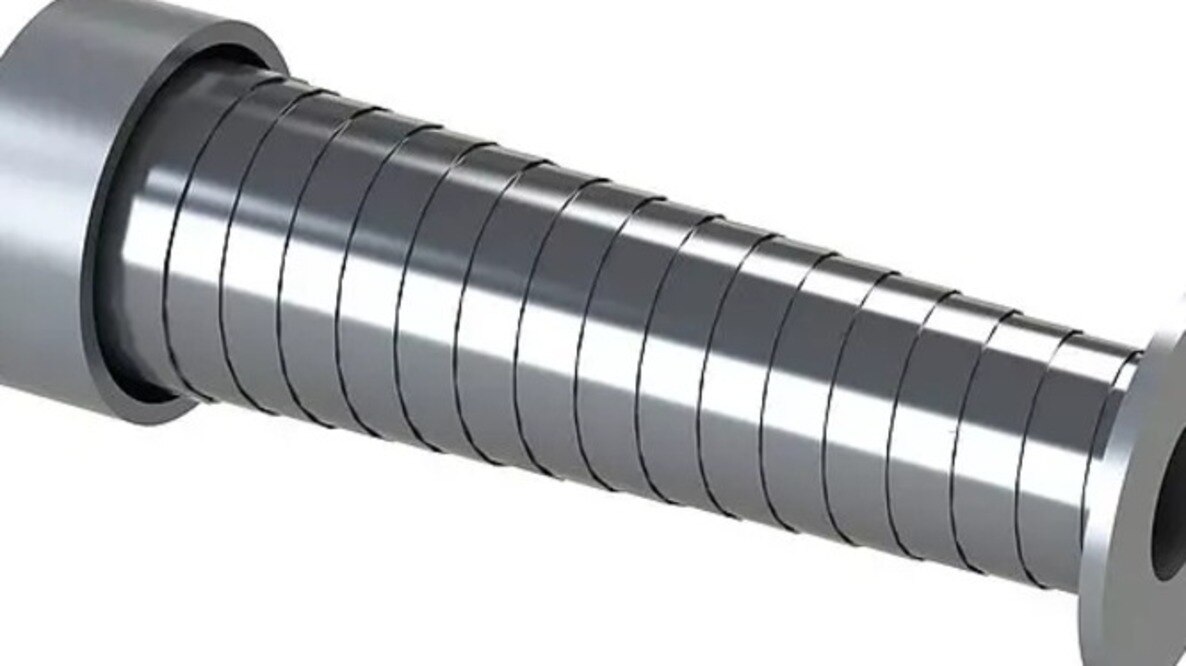
The right cover depends on how the shaft moves, how much retracted space the machine provides, and whether the hazard is dry chips, abrasive dust, coolant spray or impact. By checking the shaft geometry, motion data and contamination conditions, you can request a cover that fits the machine instead of choosing from diameter and length alone.
Key takeaways
- Choose spiral covers for limited retracted space and telescopic covers for impact protection.
- Measure shaft travel, retracted length, outer diameter and nearby machine clearances.
- Match materials and seals to chips, coolant, oil, heat and shaft rotation.
- Send Jaipur suppliers a drawing, motion cycle and contamination details for a useful quote.
Choose the cover by motion, clearance and contamination
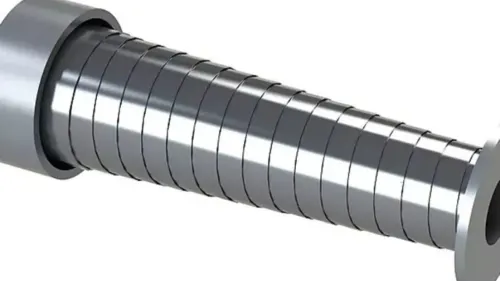
For a moving shaft, choose a spiral cover when retracted space is scarce; choose a telescopic cover when impact and contamination control matter more. A spiral spring or telescopic spring cover in Jaipur must be selected from the machine’s motion and envelope, not from shaft diameter alone.
| Option | Construction and movement | Space and protection |
|---|---|---|
| Spiral spring cover | Wound spring-steel strip expands or contracts axially around the shaft | Compact radial and retracted space; less resistance to impact and lateral loads |
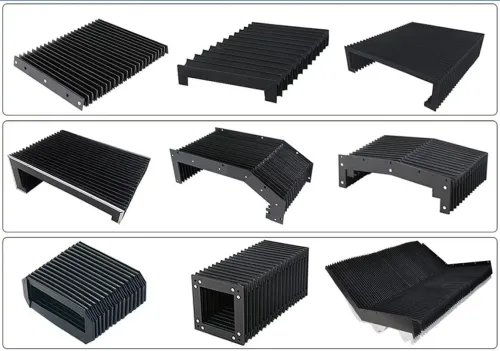
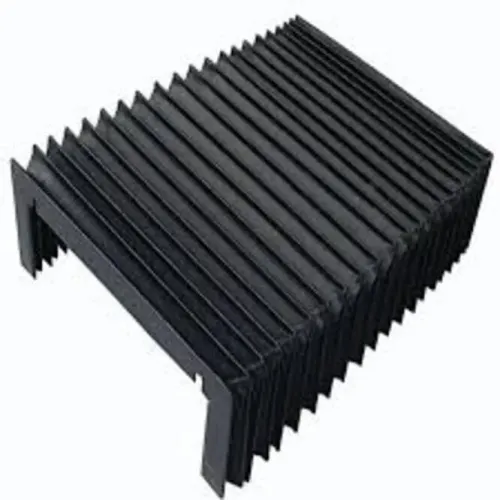
| Telescopic cover | Guided, overlapping sections extend and collapse over a defined stroke | Needs a retracted stack; stronger resistance to falling chips, coolant splash and lateral impact |
Adjacent spiral coils are not automatically a pressure-tight seal. Confirm coil overlap, guide arrangement, minimum winding radius, stroke, speed and fatigue rating; chips entering coil gaps or the mounting area can damage the strip or stop retraction. Require the actual drawing.
A telescopic spring cover for shafts needs a defined closed length, extended length, section height and width, stroke and mounting arrangement. Its joints can retain chips and sludge, so inspect wipers, scrapers and drainage.
Choose spiral protection for tight installation space and moderate contamination after checking motion limits; choose telescopic protection for impact, wet swarf or a larger protected envelope. In a spiral spring cover comparison in Jaipur, compare these limits rather than catalogue length. Neither cover is a bearing, guide or structural support for the shaft.
Measure the shaft and machine envelope before requesting a quote
Provide the supplier with the complete motion envelope, not just a shaft diameter. A catalogue diameter cannot show whether the cover will rub a bearing, coupling or housing at either end of travel.
1. Measure the shaft diameter, maximum protected length, collapsed or closed length, extended length and actual stroke. Record travel speed, acceleration, cycle frequency, rotation speed and radial clearance around the shaft.
2. Measure the fixed mounting diameter and the moving-end geometry. Record the distance available at both ends when the shaft is fully retracted and fully extended, then identify the mounting as a flange, clamp, threaded connection or custom plate. Where applicable, include thread diameter, thread pitch, bolt-circle diameter, hole count and flange thickness.
3. Send photographs and a dimensioned sketch showing nearby bearings, couplings, housings, guideways and chip trays. Mark every obstruction and the space available for installation, maintenance and full retraction.
4. For a telescopic spring cover for shafts, specify maximum permitted height and width, section overlap and allowable deflection. For a spiral spring for machine shafts, identify the strip exit direction, support or guide sleeve, and space required for the coil at full collapse.
The cover must follow the machine’s complete motion envelope without carrying shaft loads or rubbing adjacent parts. Include orientation and clearance measurements even when the shaft dimensions match a catalogue model.
Match the cover to rotation, temperature and the actual contamination
Suitability starts with motion: identify whether the shaft rotates, reciprocates, stays stationary while another assembly moves axially, or belongs to a guideway or spindle assembly.
Do not approve a spiral spring for machine shafts on a rotating shaft until the supplier confirms whether the cover rotates with the shaft or remains stationary, then checks centrifugal force, rubbing, torsional wind-up and balance.
For a spiral spring cover comparison in Jaipur, give the supplier a complete operating record:
- Operating temperature range, coolant name and concentration, oil exposure, abrasive dust, dry chip size, welding spatter and vibration.
- Mounting orientation: horizontal or vertical, plus whether falling chips strike the cover.
- Rotation speed, reciprocating speed, acceleration, cycle frequency and actual stroke.
- Whether the machine needs protection from coarse chips, grinding dust, coolant mist or high-pressure coolant. A cover that stops chips is not automatically suitable for the others.
- Whether carbon spring steel survives the coolant and wash-down routine, or stainless steel is needed for corrosion resistance. Recheck spring force, fatigue life and cost after changing material.
Wipers and overlapping sections reduce ingress; they do not create a pressure-tight enclosure. Specify a sealed bellows or purpose-designed enclosure when pressure-tight protection is required.
A telescopic spring cover for shafts can suit falling chips and wet swarf, but joints can retain sludge. Confirm drainage, wipers and scraper access before approval. A spiral option suits tighter space only after its motion and contamination limits are verified.
Check installation guidance, cleaning and service access
1. Mount either cover as a protective enclosure, never as a shaft guide, bearing or load-bearing member. Align the shaft and cover, prevent the moving end from forcing the cover sideways, and ensure fixed and moving mounts transfer no bearing load into the strip or telescopic sections.
2. For a telescopic spring cover for shafts, confirm the extension sequence, section overlap, guide elements, wipers, scrapers and drainage path. High acceleration or uneven loading can lift sections, cause collisions or make them telescope out of sequence. Ask how chips leave section joints and whether you can inspect them without removing the shaft.
3. For a spiral spring or telescopic spring cover in Jaipur, request the approved cleaning method for dusty conditions. Do not use compressed air blindly: it can drive chips beneath wipers and into guides or bearings. Record the inspection interval, replacement wipers or strip parts, and access required for service.
4. Verify a spiral cover’s minimum winding radius, permitted stroke, retraction force and cycle life. Inspect for permanent set, cracks, lost retraction force, rubbing marks, damaged scrapers and abnormal noise. Include sharp edges, openings, access points and entanglement hazards in the machine-guarding assessment; blocking chips does not make a reachable moving shaft safe.
Give a Jaipur supplier a complete comparison brief
Reject any quote based only on shaft diameter and overall length. A telescopic spring cover supplier in Jaipur must see the machine’s complete motion envelope and mounting arrangement before selecting a cover.
| Option | Construction and space | Main risk |
|---|---|---|
| Spiral spring cover | Wound strip; compact when retracted and suitable for limited radial space | Coil gaps can admit chips; verify winding radius, guide, stroke and fatigue rating |
| Telescopic spring cover | Guided overlapping sections with defined closed length, section height and width | Joints can retain sludge; verify overlap, deflection and stack clearance |
Send one dimensioned drawing or schedule containing:
- Shaft diameter, fixed mounting diameter, flange or thread details, moving-end geometry, closed length, extended length, stroke and radial clearance
- Orientation, travel speed, acceleration, rotation speed and cycle count
- The distance available at both ends when fully retracted and fully extended
- Photographs of both ends, showing bearings, couplings, housings, guideways, chip trays and nearby obstructions
Name the coolant and concentration, oil, dust, chip type and size, welding spatter, vibration and temperature range. Ask each supplier for the proposed construction, material, strip or section dimensions, minimum winding radius or section overlap, allowable deflection, mounting drawing, replacement wiper details, and stated speed, temperature and cycle limits.
Require confirmation for rotating, reciprocating or stationary-shaft service; “spring cover” does not identify the application.
Include SCUTES INDIA PRIVATE LIMITED when it can review these inputs and issue a drawing-based proposal. Compare every offer on fit, contamination control, maintenance access and documented limits, not price alone. A search for spiral spring or telescopic spring cover in Jaipur can otherwise return an unrelated spring, bellows or cable carrier.
Frequently asked questions
When should you choose a spiral spring cover for a moving shaft?
Choose a spiral cover when retracted space is scarce and the shaft motion suits its spring-driven extension and retraction.
When is a telescopic spring cover better for shaft protection?
Choose a telescopic cover when the shaft faces heavier chips, impact or contamination and the machine has room for nested sections.
What measurements should you provide for a shaft-cover quote?
Provide shaft diameter, travel, extended and retracted lengths, cover diameter, mounting space, nearby clearances and the motion cycle.
What contamination and operating conditions must the cover handle?
Specify chip size, coolant, oil, dust, heat, washdown exposure, rotation speed and temperature so the cover matches the actual machine environment.