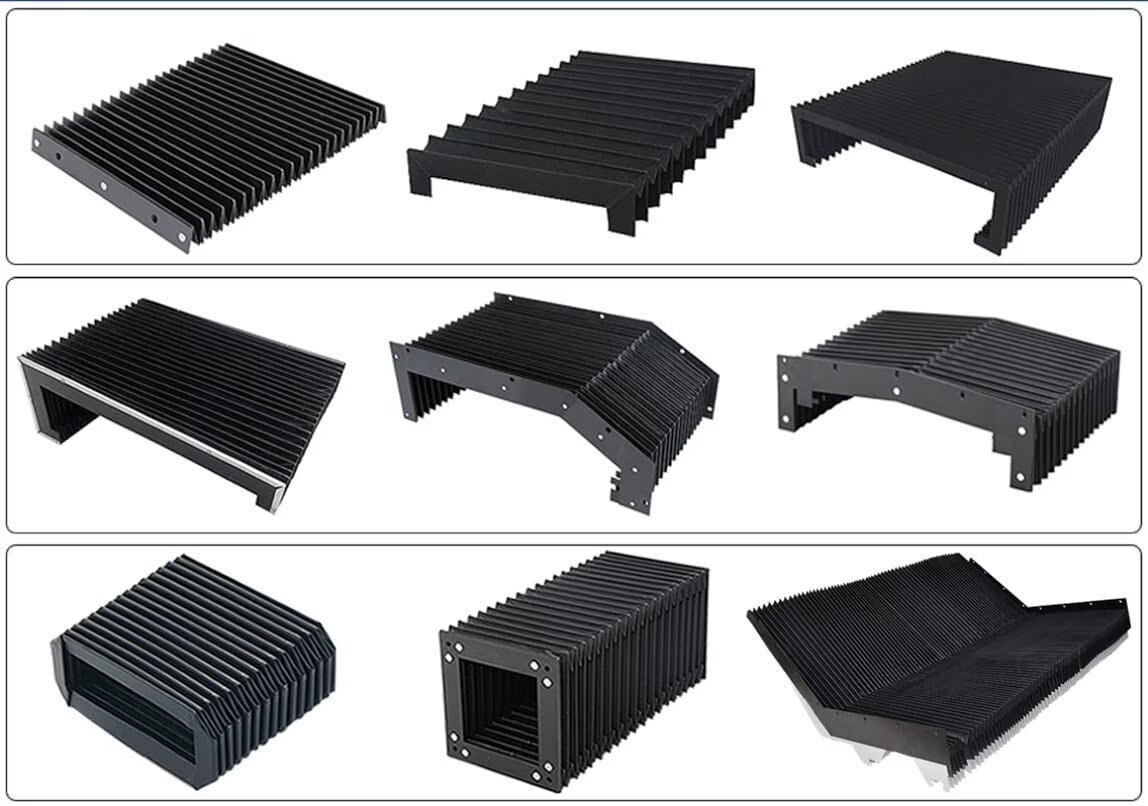
A bellows cover for HVAC ducting is easy to confuse with a machine-protection bellows, a flexible duct connector or a rubber expansion joint. You will be able to identify the correct component, specify its dimensions and movement capacity, and compare materials and suppliers before requesting a quotation.
Key takeaways
- Measure axial, lateral and angular movement before requesting a quote.
- Specify operating temperature, pressure, media exposure and fire classification.
- Install bellows without twisting, sagging or using it to correct duct misalignment.
- Inspect seams, clamps, liners and movement clearance during planned maintenance.
What is an HVAC duct bellows, and where is it installed?
An HVAC duct bellows is a flexible, pleated connector or expansion section installed between duct sections, equipment, and building or machine interfaces. A bellows cover for ducting lets the system absorb defined movement while maintaining an air path and controlled leakage; it is not an infinitely flexible link.
Typical installation points include:
- Between an air-handling unit and rigid ductwork
- Between a fan and connected duct
- Across an equipment isolation joint
- At a duct section exposed to thermal growth, structural movement, or equipment vibration
The assembly is more than a single sleeve. Depending on temperature and pressure, it can include gas-sealing fabric layers, insulation, heat or abrasion shields, liners, retaining frames, gaskets, and bolting hardware. Omitting a liner or insulation layer can damage the outer fabric even when it looks intact.
Install the joint in its neutral position: neither twisted, stretched, nor compressed beyond its designed setting. Starting outside that position consumes the available movement range and accelerates fold fatigue, chafing, or frame leakage.
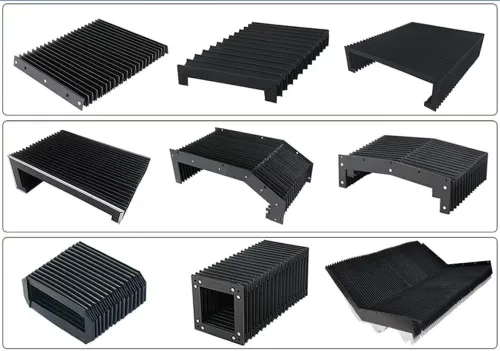
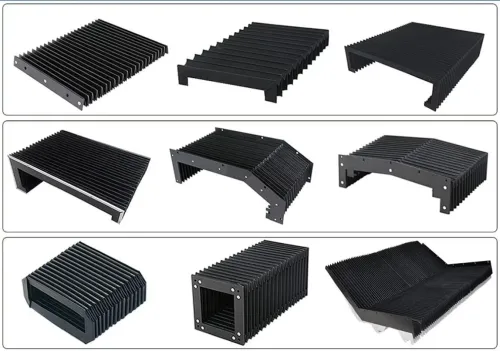
A joint that carries air must be selected for pressure, leakage, temperature, and movement. A protective machine bellows cover merely shields a moving connection, guideway, shaft, or cable from dust and mechanical damage. Its accordion shape does not make it suitable for HVAC air containment.
How does a duct bellows differ from other flexible components?
A duct bellows or expansion joint is the movement-bearing air component; it accommodates specified axial compression and extension, lateral offset, angular deflection, vibration and, where designed, seismic movement. Its accordion profile does not make it interchangeable with every flexible part.
| Option | Primary job | Movement and limitation |
|---|---|---|
| Duct bellows or expansion joint | Carry air while absorbing duct movement | Rated axial, lateral and angular movement; selected for thermal growth, vibration and sometimes seismic movement |
| Flexible fan connector | Isolate fan vibration and protect the fan from rigid duct loads | Limited movement; not a structural thermal expansion joint |
| Air-sealing sleeve | Control leakage or smoke passage at a joint | Seals the gap, but may lack reinforcement, insulation or movement capacity for a hot or heavily loaded joint |
| Machine bellows cover | Shield slides, guideways, shafts or cables from chips, coolant, oil and abrasion | Fold geometry and attachments suit mechanical protection, not airtight pressure containment |
Specify the function before searching for a bellows cover for ducting. State whether the part carries air, seals smoke, shields a joint, isolates vibration or absorbs duct expansion. A machine cover can look suitable yet leak, collapse, chafe or fail under pressure; a fan connector can transmit thermal loads it was never built to absorb.
For a bellows cover in Hyderabad, include duct or joint dimensions, pressure, temperature, movement limits, cycle count, material, leakage target and fire or smoke requirement in the enquiry. That prevents suppliers from quoting incompatible products under the same name.
What measurements and movement data should you provide?
Select it from measured openings and movement data, not nominal duct size. A nominal 600 by 400 millimetre duct does not prove that its opening or flange measures 600 by 400 millimetres.
1. Measure the actual rectangular opening width and height, or round opening diameter, at both mating sides. Record face-to-face length, flange dimensions, frame thickness and clearance around the joint.
2. Draw the bolt-hole pattern. Mark hole diameter, centre-to-centre bolt spacing and edge distances on the drawing.
3. State movement in each direction: axial compression, axial extension, lateral offset, angular deflection and vibration amplitude. Add expected operating cycles and the neutral installation position.
4. Record positive and negative static pressure, airflow temperature, and whether the duct is anchored and guided. Include the anchor and guide locations relative to the bellows.
5. Check nearby steelwork, liners and insulation. Leave enough clearance for the folds to move without chafing, pinching or rubbing through.
6. Confirm alignment before ordering. A joint cannot correct poor alignment or absorb movement transferred into a fan casing, coil connection or unsupported duct.
For a clear enquiry, attach a dimensioned plan and section showing both mating faces, flange drilling, movement arrows, neutral length, pressure, temperature, cycle requirement and clearances.
If you searched “what is a bellows cover for HVAC ducting in Hyderabad,” use that phrase with these measurements; “bellows cover” alone can produce an unsuitable machine-protection cover rather than an air-carrying duct joint.
Which material, pressure and fire requirements matter?
Material choice follows the gas and contaminants, not a generic temperature label. An HVAC duct bellows carrying ordinary conditioned air has a different duty from one exposed to hot flue gas, acidic condensate, solvent vapour or abrasive dust.
| Material | Main advantage | Main limitation to check |
|---|---|---|
| Coated fabric | Flexible, economical air-sealing construction | Coating, temperature and chemical compatibility |
| Silicone-coated fabric | Heat-resistant flexible outer surface | Abrasion, puncture and chemical exposure |
| Neoprene | Good flexibility and resistance to weathering | Ozone, solvents, oils and temperature limits |
| EPDM | Strong ozone, UV and weather resistance | Oil, fuel and solvent compatibility |
| PTFE-laminated fabric | Low friction and broad chemical resistance | Edge damage, flex-fatigue and attachment details |
| Stainless steel | High heat, abrasion and mechanical durability | Less flexible; needs formed elements and careful sealing |
Specify these service conditions before selecting the fabric:
- Continuous and peak gas temperature
- Humidity and condensate, including acidic condensate
- Ozone, UV exposure and chemical vapour
- Dust loading, particle size and abrasion
- Cleaning chemicals, pressure washing or steam-cleaning method
Pressure direction matters. A joint built for positive pressure can collapse, invert or overstress its folds under negative pressure unless the design includes a suitable liner, support arrangement and vacuum rating. State both positive and negative static pressure.
Hot service may require insulation layers, heat shields or a high-temperature liner behind the outer fabric. Mechanical flexibility does not prove acceptable air leakage, smoke transmission or flame spread.
If the specification cites UL 181, NFPA provisions, a building code or a product listing, request the exact test listing or certificate for the offered construction and installation; “fireproof” is not a rating.
How should you install, inspect and source a bellows cover in Hyderabad?
Anchors and guides must direct thermal movement through the bellows; ductwork supports the joint without transferring unintended loads into a fan, coil or air-handling unit. The joint is not a remedy for poor alignment.
1. Install at the specified face-to-face length, in its untwisted neutral position. Check even frame compression, undamaged folds, compatible fasteners and clearance from nearby metalwork, liners and insulation.
2. Inspect for fold chafing, fatigue cracks, thermal attack, loose or leaking retaining frames, corroded hardware and frame distortion. Check leakage under operating pressure, not just visible holes.
3. For a Hyderabad enquiry, search “bellows cover in Hyderabad” and “industrial duct cover supplier in Hyderabad”, but state the engineering data with the phrase. Include opening dimensions, flange drilling, medium, positive and negative pressure, continuous and peak temperature, movement in each direction, cycle requirement, material, leakage target and fire or smoke requirement.
SCUTES INDIA PRIVATE LIMITED can be relevant for a fabricated protective or flexible component, but confirm that the offered construction is an air-carrying HVAC bellows rather than a machine slide cover. A search for “what is a bellows cover for hvac ducting in hyderabad” does not resolve that product ambiguity.
Before approval, require a supplier drawing showing layers, liner, frame, movement limits and test documentation.
Related product
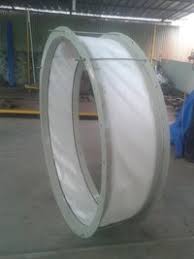 | Duct Bellows HVAC systems and industrial ducting rely on high-quality duct bellows for durability and performance. View product → |
Frequently asked questions
What is an HVAC duct bellows, and where is it installed?
An HVAC duct bellows is a pleated flexible connector or expansion section installed between duct sections, fans, air-handling units, building interfaces or vibrating equipment. It absorbs specified movement while preserving the air path and controlling leakage.
How does a duct bellows differ from other flexible components?
A duct bellows is designed for defined axial, lateral or angular movement and a stated pressure range. Unlike a short flexible connector used mainly for vibration isolation, it is selected and guided as an engineered expansion component.
What measurements and movement data should you provide?
Provide the duct opening dimensions, face-to-face length, connection details, operating temperature, pressure, airflow medium, and expected axial, lateral and angular movement. Include nearby equipment loads, support spacing and clearance limits.
Which material, pressure and fire requirements matter?
Select fabric, elastomer, coating, insulation and liner materials for the temperature, dust, oil, coolant or chemical exposure. State positive or negative pressure, leakage limits, fire classification and any project standard before fabrication.
How should you install, inspect and source a bellows cover in Hyderabad?
Verify dimensions, movement direction, material construction and test documents before purchase. Install it aligned and untwisted with independent duct supports, then inspect seams, clamps, liners, clearance and signs of abrasion during maintenance. Ask an industrial duct cover supplier in Hyderabad for a drawing and inspection checklist.