A rigid telescopic steel cover and a spring-assisted roll-up cover do not travel in the same way: one nests overlapping sections through guides, while the other stores and releases torque as its cover winds. By the end, you will be able to identify the mechanism, calculate the space and travel information it needs, and check whether the installed cover follows a CNC axis safely.
Key takeaways
- The CNC axis normally drives cover travel; the spiral spring manages tension or return force.
- Match cover stroke, closed length, section count, and guideway clearance to the CNC axis.
- Commission the cover slowly and check alignment, rollers, sliding shoes, and chip interference.
- Compare spring torque, travel limits, materials, seals, and maintenance access before choosing a supplier.
What moves when a CNC cover travels?
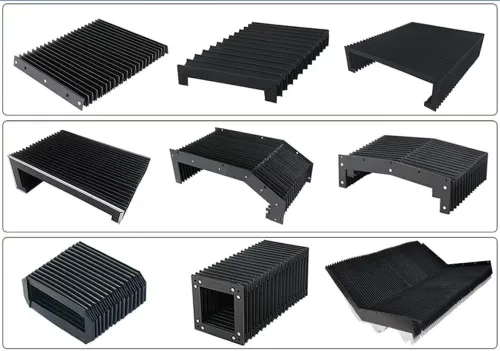
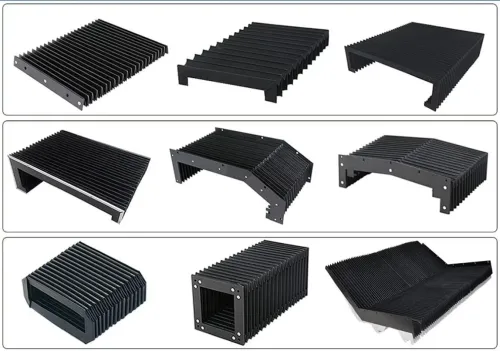
A rigid telescopic steel cover travels because the CNC axis pushes or pulls its sections through guides, rollers, sliding shoes, or linked geometry. The boxes extend over the exposed guideway, then compress into one nested stack; no spiral spring normally drives their primary movement.
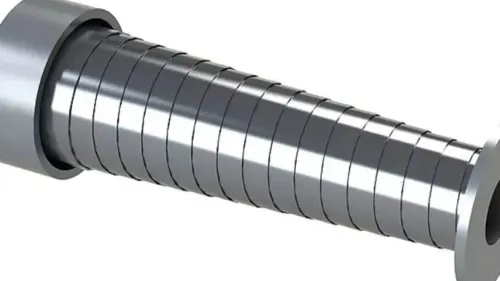
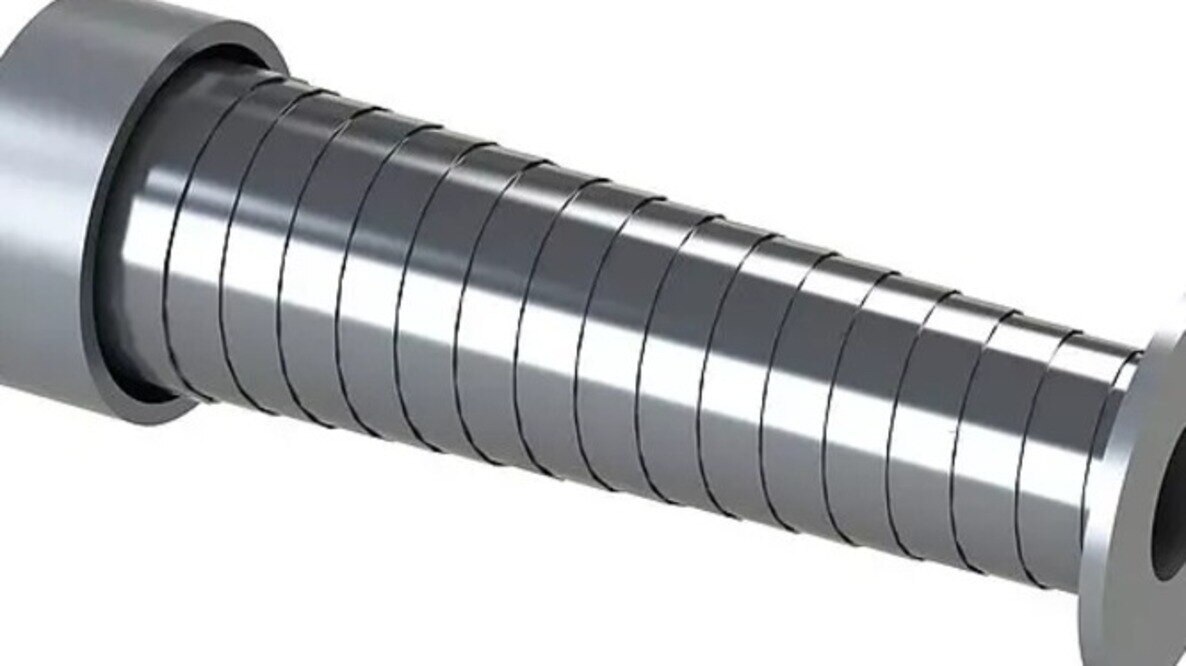
A spring-assisted roll-up cover works differently. The moving axis pulls a flexible strip or segmented apron from a roll, while side guides keep it aligned. During extension, the roll unwinds and the spiral spring stores energy. During retraction, spring torque winds the cover back onto the roll, returning it to the compact drum position.
| Feature | Rigid telescopic steel cover | Spring-assisted roll-up cover |
|---|---|---|
| Moving element | Interlocking steel sections slide and overlap | Flexible or segmented curtain unrolls and rewinds |
| Retraction | Sections nest into a compressed stack | Cover winds around a roll |
| Energy source | Axis motion and section geometry | Axis motion plus spring return torque |
| Guidance | Rails, rollers, shoes, and section alignment | Side tracks, rollers, and the roll assembly |
| Full retraction | Requires space for the nested boxes | Requires drum diameter and radial clearance |
At each stroke end, check that the rigid sections have room to nest or that the roll has room to wind without touching tooling. A search for a spiral spring machine cover in Hyderabad must identify the cover type first; treating both designs as interchangeable creates incorrect mounting, cleaning, and service expectations.
How the spiral spring controls extension and retraction
As the cover extends, it pulls the flexible apron or segmented strip from its roll and winds the spiral spring tighter. That stored energy drives the roll in the opposite direction during retraction, drawing the cover back without leaving slack between the moving and fixed ends.
The spring’s job is not to provide one static lifting force. Its torque changes as the spring rotates, while the cover load changes with position, friction, acceleration and guide geometry. A mid-travel balance can therefore become weak at full extension or excessive near the roll.
Request a torque-versus-position curve, or a specified usable torque range across the complete stroke.
- During extension, the machine axis pulls the cover outward, the roll rotates and the spring stores energy.
- Near full extension, the spring must still hold the cover taut without sagging or skipping its guides.
- During retraction, stored torque rewinds the cover onto the roll and must decelerate it before the end stop.
- At full retraction, check that the wound cover and spring assembly clear tooling, guards and nearby machine parts.
A weak spring leaves incomplete extension, wrinkles or sag. An overly strong spring increases guide loads, causes impact at the travel limit and transfers unwanted force into the linear axis.
A conventional overlapping-box telescopic steel cover works differently: its sections slide, nest and separate through guides, rollers or linked geometry. It is not normally driven by a spiral spring.
Confirm whether your enquiry concerns a roll-up cover or a rigid cover before comparing a CNC machine telescopic cover for spiral spring in Hyderabad with other designs.
How to size the cover for the CNC axis
Fit starts with the axis envelope, not the spiral spring’s torque. Confirm whether you need a spring-assisted coiled cover or a rigid overlapping telescopic steel cover; they use different guides, mounting points and retracted shapes.
1. Measure the protected geometry. Record shaft diameter and length, or guideway width, height and spacing. A round shaft needs a concentric tubular cover with radial clearance for winding and rotation; a flat guideway needs a broad, guided cover that spans the top and sides without rubbing.
2. Record the stroke. Give the CNC axis maximum travel, the cover’s fully extended length and its fully retracted length. The retracted package must fit inside the available space, while the extended cover must reach both end positions without exposing the shaft or guideway.
3. Mark every mounting point. Identify the fixed end, moving end, bracket faces, bolt pattern and permitted mounting direction. A mismatch can twist the strip, overload the spring or leave one end unsupported.
4. Check the moving envelope. Measure radial clearance around a round shaft and the full swept path around a flat guideway. Include tooling, fixtures, cable carriers, chip guards and coolant lines at maximum axis travel; interference at full retraction can jam a cover before the spring reaches its limit.
Give the supplier axis orientation, speed, acceleration and chip or coolant conditions. If you are comparing a CNC machine telescopic cover in Hyderabad, these measurements matter more than the location label.
How to commission the cover without creating a binding fault
Commission the cover at low jog speed before allowing full acceleration. Confirm which end is fixed and which end moves; reversing those roles can load the spring, guides and mounting brackets incorrectly.
1. Lock the fixed end to its specified mounting face and attach the moving end to the axis or carriage. Check that the cover sits concentrically around a shaft, or evenly over a guideway, without rubbing the machine structure.
2. Measure parallelism between mounting faces and guide rails. Correct shims or brackets before testing; a cover that starts square but closes unevenly will bind as sections nest or the spring winds.
3. Jog through several short strokes. Watch every guide, roller and spring turn for smooth movement, slack, hesitation, scraping or uneven section spacing. Stop if the cover sags, buckles or the spring pulls one side harder than the other.
4. Check both travel limits at reduced speed. Leave clearance between the cover, carriage and end stops so the machine stop does not become the impact stop. Verify that the cover reaches full extension and full retraction without coil interference.
5. Push lightly against the stationary cover and inspect bracket rigidity. Flexing mounts shift alignment and turn a correctly balanced spring into a binding fault.
6. Remove chips from folds, guides and wipers, then inspect coolant drains. Chip bridges and pooled coolant increase friction; confirm the spring enclosure, cassette or labyrinth keeps contamination away from the spring.
7. Repeat the cycle at operating speed only after the low-speed check passes. Confirm that acceleration does not make the cover lag, collide or transfer force into the axis. Record the observed position, sound and clearance at each end.
What to specify when comparing suppliers and applications
Start with the mechanism, not the catalogue name. Confirm whether you need a rigid telescopic cover whose overlapping sections slide and nest, or a spring-loaded roll-up cover whose strip winds onto a drum. These designs need different guides, mounts, cleaning access and service parts; calling either one “telescopic” can produce a poor fit.
Give the supplier this checklist:
- Axis type, horizontal or vertical travel, maximum stroke, extended length, retracted length, mounting points, radial clearance and tooling interference.
- Maximum axis speed and acceleration, with the required operating cycle and any rapid reversals.
- Environment: coolant chemistry, washdown method, operating temperature, cast-iron dust, aluminium chips, abrasive particles and available maintenance access.
- Section material and thickness, guide and roller construction, wiper arrangement, seals and chip-shedding features.
- For a spring-loaded design, usable torque across the full travel, spring preload, fatigue rating, winding direction, counterbalance details and protection against spring escape or overextension.
- Dynamic acceptance limits: no section slap, buckling, rubbing, lag or loss of protection at either end position.
- Replacement-part availability plus a documented inspection, cleaning and lubrication procedure.
Ask a machine protection manufacturer in Hyderabad such as SCUTES INDIA PRIVATE LIMITED to identify the design by mechanism and provide those records, not just a product name. Telescopic cover applications in Hyderabad range from machining centres and lathes to grinders and transfer equipment, but local location does not prove compatibility with your axis.
Related product
 | TELESCOPIC SPRING COVER Telescopic Spring Covers provide protection under extreme conditions. View product → |
Frequently asked questions
What moves when a CNC telescopic cover travels?
The CNC axis pushes or pulls the cover through guides, rollers, sliding shoes, or linked sections. The telescopic boxes extend over the exposed guideway and nest during retraction.
How does a spiral spring control extension and retraction?
A spiral spring supplies controlled tension or return force within the cover mechanism. It supports coordinated movement but does not normally drive the CNC axis or primary cover travel.
How do you size a telescopic cover for a CNC axis?
Specify the axis stroke, open and closed lengths, section count, cover width and height, guideway clearances, mounting points, travel speed, and chip or coolant exposure.
How do you commission a CNC telescopic cover without binding?
Move the cover slowly through its full travel, inspect alignment and guide components, check spring tension, remove obstructions, and confirm that sections nest without impact or rubbing.
What should you compare when selecting a telescopic cover supplier?
Compare travel geometry, spring design, materials, seals, rollers or sliding shoes, allowable speed, maintenance access, testing procedures, and experience with your CNC application.