Stop the machine before you try to push, pull or clean a stopped cover. A structured inspection will help you separate a jammed telescopic cover from a spiral-spring fault, axis-alignment problem or pneumatic issue, then decide whether to repair it or order a replacement without guessing at dimensions.
Key takeaways
- Isolate electrical, hydraulic, pneumatic, pressure, and gravitational energy first.
- Check guides, wipers, debris, and alignment before blaming the spiral spring.
- Measure every cover section and mounting detail before ordering replacement.
- Run slow, guarded travel tests before returning the machine to production.
Isolate the machine and identify where the failure starts
A telescopic cover stopped working with a spiral spring is not automatically a spring failure. Stop the machine, isolate electrical, hydraulic and pneumatic supplies, release stored pressure, and secure gravitational energy so the axis cannot move before you touch the cover.
1. Use the machine’s approved diagnostic procedure to confirm whether the axis reaches both commanded end positions without forcing the cover. If the axis stops short, suspect a control, drive, limit-switch or machine-alignment fault rather than treating the cover as defective.
2. With the machine isolated, inspect the cover by hand, keeping fingers out of gaps between sliding sections. Look for chips packed into section gaps, coolant residue, torn wipers, dents, loose fasteners, displaced guide shoes and a cover pulled out of square.
3. Check the pneumatic system for lost pressure, then inspect the guideway and mounting bracket for movement or distortion. A shifted bracket can side-load the cover and create a telescopic cover failure even when its spring remains intact.
4. Do not stand on the cover, press down on bent boxes or repeatedly run the axis at high speed to clear the fault. Chips can pass failed wipers, score guideways and damage seals.
Escalate before production resumes if the cover scrapes, strikes the stroke end, leaves a gap or moves only at unusually low speed. A cover that binds needs assessment, not force.
Separate a spiral-spring fault from a damaged steel cover
A spiral-spring cover problem follows the retraction force; a steel-cover fault follows the sections and guides. Use the evidence below before ordering parts.
| Symptom or check | Spiral spring indication | Steel-cover indication |
|---|---|---|
| Retraction | Hesitation, sagging, uneven retraction, or extension without square retraction | Sections bind at one point or overlap unevenly |
| End movement | Impact at the stroke end | Scraping along one edge from lost alignment or side loading |
| Visible damage | Collapsed coils, broken spring end, or lost preload | Dented or buckled boxes, cracked slat connections, moved guide shoes, or loose fasteners |
| Contamination | Coolant residue or corrosion increasing drag | Chips trapped between sections or in guide tracks |
| Hidden fault | An intact spring can still have insufficient torque, wrong winding direction, or insufficient usable travel | Damaged guides or a mounting flange that no longer holds the cover square |
Do not open or rewind a preloaded spring cassette during routine troubleshooting. Stored energy can release the cassette or arbor violently; use the manufacturer’s removal procedure and suitable restraint.
Excessive stroke speed, acceleration, impact damage, incorrect mounting, corrosion and coolant residue can cause either condition. Replacing the spring alone will not fix bent boxes, damaged guides or distorted mounting geometry.
If the spring evidence is unclear, stop repeated high-speed trials: friction or side loading can turn a minor telescopic cover failure into permanent steel damage.
Clean what is safe to clean, then choose repair or replacement
Clean and inspect in place only when the boxes remain straight and the cover telescopes with its original clearances. After lockout, remove loose chips from section gaps and guide tracks with a suitable brush or vacuum; do not push debris deeper into the cover.
Wipe exposed surfaces, then check wipers and seals for hardening, tears or missing contact. Inspect sliding sections for dents.
| Fault | Corrective action | Stop and replace |
|---|---|---|
| Wipers, guide shoes or loose fasteners | Replace the damaged part after cleaning and alignment | Replace the cover if guides or mounting geometry are distorted |
| Replaceable spring cassette | Correct machine-side alignment, then fit the specified cassette | Obtain the manufacturer’s removal procedure for a preloaded or broken cassette |
| Bent boxes, cracked slat connections or welds | Do not press, stand on or force the cover straight | Choose complete replacement |
| Damaged guides, lost overlap or recurring fault | Inspect the machine guideway and mounting | Replace the cover when clearance or section engagement cannot be restored |
A spiral spring cover problem needs a friction, torque, contamination and acceleration check if the cover moves only at low speed. Repeated high-speed trials can turn drag into bent boxes or a broken spring pack. Do not open or rewind a preloaded cassette; stored energy can release the arbor violently.
For telescopic cover replacement in Hyderabad, provide the damage evidence and alignment findings before selecting a replacement.
Measure the failed cover before requesting a replacement
Do not order from the old cover’s stated width and travel alone. A mechanically interchangeable replacement must match the machine interface, motion profile and available space.
1. Measure the cover in both positions: fully closed length, fully extended length, section count, maximum height and width, box or slat material and thickness, travel direction, orientation, and installation clearance.
2. Measure the machine, not just the cover. Record guideway width and height, available side clearance, mounting-hole pattern, mounting-flange length, width and thickness, guide arrangement, wiper profile and spring-cassette dimensions. Photograph the cover fully open and fully closed, including mounting brackets, section profile, wipers and cassette.
3. Add the machine model, axis travel, maximum speed, acceleration, deceleration, cycle frequency, horizontal or vertical orientation, coolant type and chip load. Unsupported length and motion acceleration affect spring sizing, box stiffness, sealing and guide design.
If no model number exists, identify the original construction from its nameplate, drawing, flange shape, section profile and spring dimensions. For telescopic cover replacement in Hyderabad, SCUTES INDIA PRIVATE LIMITED can use a dimensional survey, photographs and axis data to assess fit rather than quote a nominal length-and-width match.
That evidence prevents a cover that fits the measurement but cannot mount, seal or retract safely.
Related products
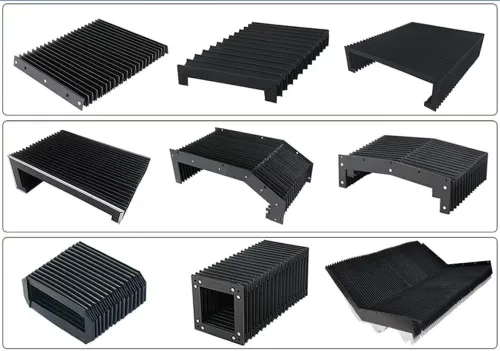
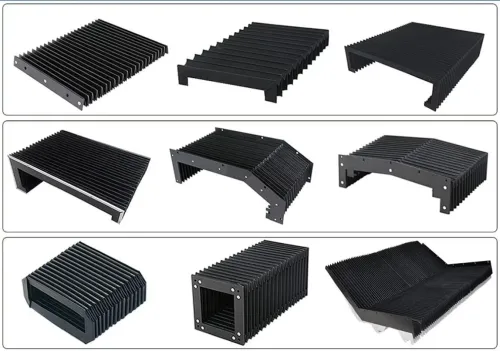
 | TELESCOPIC COVERS A telescopic cover protects guide-way surfaces and components of moving axis of machines. View product → |
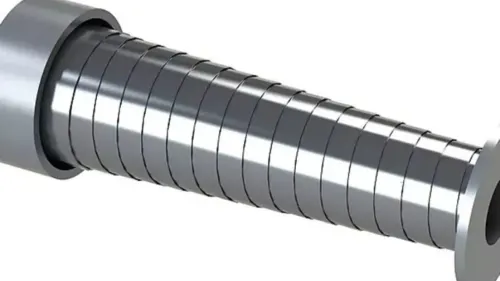
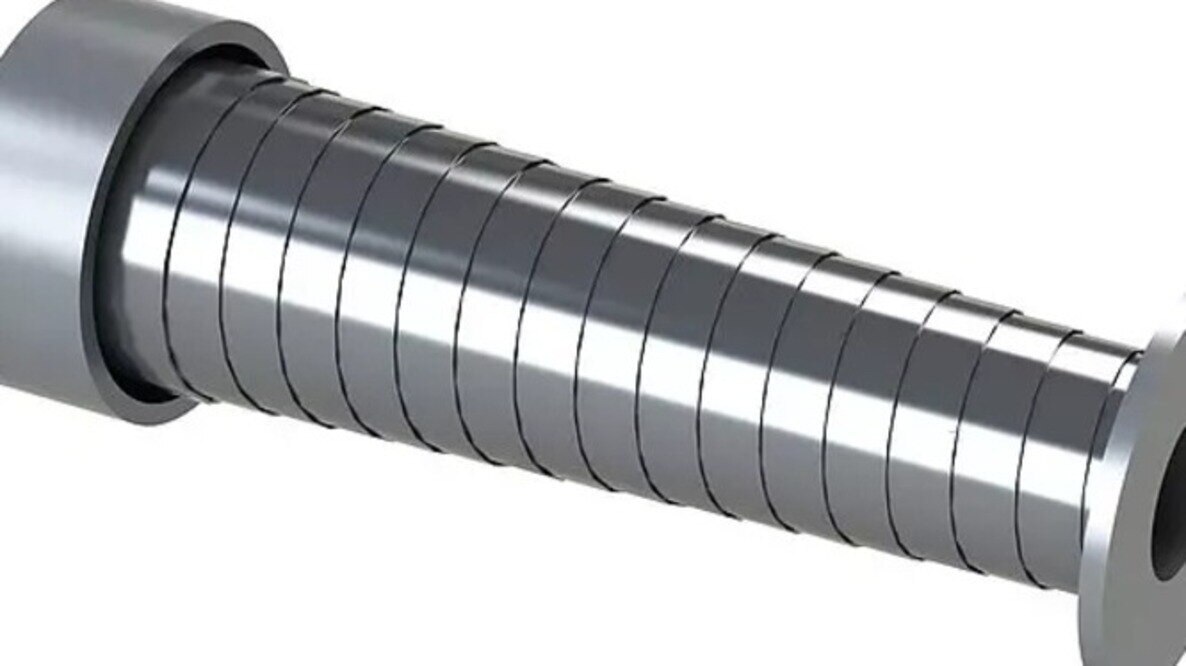
 | TELESCOPIC SPRING COVER Telescopic Spring Covers provide protection under extreme conditions. View product → |
Test the repaired or replacement cover before returning to production
A cover is safe to return to service only after it completes controlled cycles without mechanical or load abnormalities. Reconnect the machine only after checking every fastener, guide, wiper and bracket.
1. Run several complete open-close cycles at reduced speed. Watch for rubbing, rattling, uneven gaps, lost slat overlap, wiper contact and impact at either end of the stroke.
2. Confirm that the cover follows the axis without skewing, sagging or striking the stop. Inspect for coolant leakage after each cycle, including beneath the mounting flange and around wipers.
3. Run the machine at its normal speed, acceleration and deceleration. Compare motor-current or axis-load changes with the machine’s normal behaviour; a sharp increase signals drag, misalignment or excessive side loading.
4. Stop immediately if a gap opens, a section binds, one side scrapes, or the axis load changes sharply. A telescopic cover stopped working with spiral spring is not automatically a spring failure, and a telescopic cover failure can return if the cover does not match the machine’s motion profile.
Record the final closed and extended positions, spring or wiper replacement, alignment corrections and the speed, acceleration, deceleration and cycle conditions used for acceptance. If the repaired cover fails again under normal acceleration, require a design review instead of another high-speed trial.
Check spring travel, clearance, guideway geometry, side loading and motion-profile compatibility before approving it.
Frequently asked questions
What should you do first when a telescopic cover stops working?
Stop the machine, isolate electrical, hydraulic, and pneumatic supplies, release stored pressure, and secure the axis against gravitational movement.
How can you distinguish a spiral-spring fault from a damaged steel cover?
Inspect spring tension and attachment points separately from crushed sections, bent edges, damaged guides, blocked wipers, and alignment problems.
When should you repair or replace a telescopic cover?
Clean safe-to-access areas first, then repair minor alignment or attachment faults; replace sections when steel, guides, or spring components are permanently damaged.
What measurements are needed for telescopic cover replacement in Hyderabad?
Record overall length, closed and extended dimensions, section count, width, height, mounting-hole locations, guide details, wiper sizes, and travel direction.
How do you test a repaired or replacement cover?
Move the axis slowly under guarded conditions, check smooth overlap and spring return, watch for rubbing or gaps, and repeat the test before production speed.