A fabric bellow and a spiral spring do different jobs on a scissor lift: one forms the flexible barrier, while the other provides controlled retraction or tension. By the end, you will be able to calculate the available space, identify motion and contamination risks, compare alternative covers, and prepare a quotation request that reveals whether the pairing is justified.
Key takeaways
- Measure stroke, opening width, closed height, and mounting clearances first.
- Inspect every scissor-arm pinch point through the full lift cycle.
- Use a spiral spring where compact protection must follow a tight opening.
- Include temperatures, contaminants, speed, and dimensions in your quotation brief.
What the bellow and spiral spring each do during lift travel
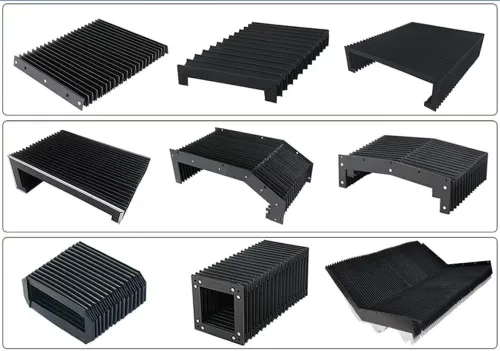
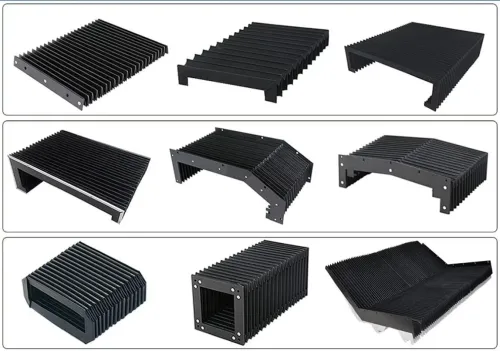
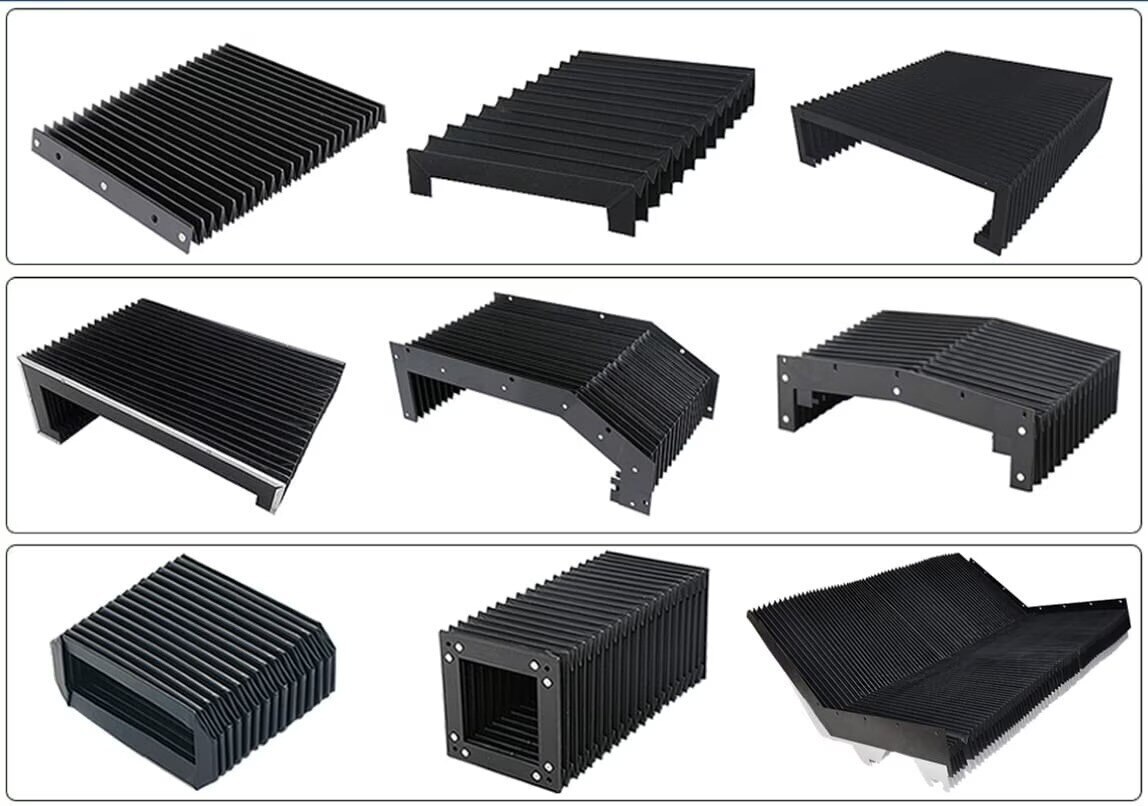
The fabric bellow and spiral spring do not solve the same protection problem during lift travel. The bellow spans the opening around moving scissor arms, follows platform movement through compression and extension, and blocks:
- Dust and chips entering the mechanism
- Oil mist, coolant and moisture reaching sensitive parts
- Access to exposed pinch points
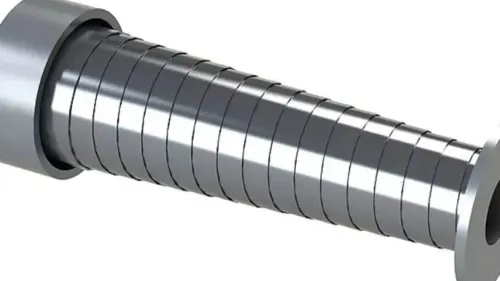
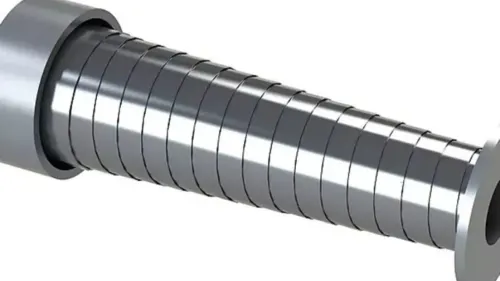
The spiral spring supplies retraction or roll-up force. It keeps the fabric from sagging, bunching, or remaining in the scissors’ path as the lift closes, then controls its return as the platform rises. It is a positioning component, not the barrier itself.
For a fabric bellow spiral spring scissor lift in Hyderabad, pairing is worthwhile when compact self-retraction and frequent cycling matter. Fabric bellow protection in Hyderabad becomes a poor fit when the cover must absorb severe hot-chip impact, carry structural loads, or tolerate large uncontrolled lateral movement without guides.
The spring is not a structural member, safety guard, or substitute for the lift’s mechanical guarding.
Check spring force across the complete stroke, under loaded and unloaded conditions. Excessive force can raise actuator load and pull mounting frames out of alignment; insufficient force can leave the bellow touching the scissors. Guide and guard the spring, and confirm that the assembly never obstructs emergency lowering, limit switches, safety devices, or maintenance access.
Measure the working geometry before choosing a scissor-lift bellow
Nominal lift height and platform size do not determine a bellow’s fit; working geometry does.
For scissor lift bellow selection in Hyderabad, measure the opening length and width, folded and extended height, stroke, minimum and maximum bellow length, mounting-flange dimensions, attachment points, travel direction, lift speed, cycle rate, minimum bend radius, fold pitch, and clearance from every moving component.
Send these quotation measurements:
- Clearance from scissor arms, rollers, cylinders, hoses and limit switches
- Platform tilt, lateral movement and mounting-plane movement
- Deflection with the platform loaded and unloaded
| Measurement | Why it matters | What goes wrong if missed |
|---|---|---|
| Nominal height | Describes the lift only | The bellow fits on paper but obstructs travel |
| Working length | Sets compression and extension | Fabric bunches, stretches or rubs |
| Loaded clearance | Captures platform deflection | Edges shear against frames or mechanisms |
| Lateral movement | Shows whether guides are needed | An unsupported bellow contacts pinch points |
Fold pitch must follow the fabric’s allowable compression, not the number of folds that fits the height. Over-compression creates sharp creases, trapped debris and local stress; under-compression creates a package that obstructs the closed lift.
For a fabric bellow scissor lift in Hyderabad, inspect closed, intermediate and extended positions during scissor lift bellow selection in Hyderabad. Include cleaning access and emergency lowering in the clearance check. A spring-assisted assembly needs a guided path when lateral movement or mounting-plane shift is measurable.
Check the closed-height envelope and every moving pinch point
A proposed assembly fits only if the closed-height envelope leaves room for every part, not just the folded fabric. Record the lift’s closed-height limit, then subtract clearance beneath and beside the platform. Compare the remainder with the folded bellow package, spring housing, guides, mounting frames, fasteners and measured deflection margin.
Use this check: available clearance ≥ folded bellow package + spring housing depth + mounting allowance + deflection margin. Derive the margin from observed movement, never from an invented product limit.
For a spiral spring scissor lift cover in Hyderabad, inspect the assembly through these conditions:
- Fully closed: check fabric entry into the scissor crossing, spring interference, attachment-edge shearing and blocked emergency lowering.
- Intermediate stroke: watch for snagging, rubbing, bunching, uncontrolled snap-back and mounting-frame misalignment.
- Fully extended: confirm the bellow still protects the opening without restricting platform movement, maintenance access, safety devices or limit switches.
- Repeat every position unloaded and with the rated load; platform deflection can close a clearance that looked safe at rest.
| Position and test | Reject the arrangement when |
|---|---|
| Closed, unloaded | The folded package touches arms, frames, guides or fasteners |
| Intermediate, loaded | Fabric pinches, edges shear, or spring force pulls the frame sideways |
| Fully extended, loaded | Travel, emergency lowering, a limit switch or maintenance route is obstructed |
| Any position | A spring path is exposed, snaps back without control, or cannot be safely de-tensioned |
This is the practical core of scissor lift bellow selection in Hyderabad: measure motion, not only dimensions.
Decide when a spring-assisted bellow beats other cover types
A spiral spring scissor lift cover in Hyderabad earns its space when the lift cycles frequently, installation space is tight, and you need the cover to retract without sagging into the mechanism.
Fabric bellow protection in Hyderabad fits ordinary dust, moisture and fluid contamination, provided the spring is guided, guarded and sized for the full stroke.
| Option | Strength | Choose it when |
|---|---|---|
| Spring-assisted fabric bellow | Compact, self-retracting barrier | Frequent cycling, limited space and ordinary contamination dominate |
| Fabric-only bellow | Simpler construction | Guides or gravity keep the fabric clear during travel |
| Apron, slat or deflector cover | Better sacrificial protection | Hot chips, welding spatter, sharp swarf or concentrated coolant jets are present |
| Roll-up cover | Suits a different retraction path | Travel direction and mounting space favour rolling rather than folding |
| Telescopic cover | Rigid guidance and impact resistance | Severe chip impact or structural stiffness matters more than compactness |
A fabric-only design avoids spring interfaces that collect dry dust, but it can bunch, abrade or obstruct the scissors when gravity cannot keep it clear. A telescopic cover is the stronger choice for rigid guidance; do not expect a fabric bellow to absorb repeated sharp impacts or large lateral misalignment.
Hyderabad’s monsoon moisture and wash-down routines require corrosion-resistant or protected spring material, drainage where appropriate, and inspectable mounting details. Dry dust can enter folds and spring interfaces.
A fabric coating does not create an IP rating for the installed assembly. If IP protection is required, test the complete cover, including seams, frames, penetrations, drains and moving interfaces.
Build a quotation brief that exposes the real decision
A quotation based only on platform size can fit at rest and fail during travel. Send the manufacturer a complete brief for fabric bellow protection in Hyderabad:
- Lift make or mechanism type, platform length and width, stroke, maximum extension, collapsed-height limit, speed, cycle rate, allowable added force, ambient and surface temperatures, contaminants, cleaning method, expected service life, and loaded and unloaded drawings or photographs.
- Every clearance around scissor arms, rollers, cylinders, hoses, limit switches and safety devices; travel direction; mounting planes; attachment points; fastener sizes; and the safe maintenance method for releasing spring pretension.
- Fabric construction and coating, thickness, oil and coolant compatibility, abrasion performance, seam method, flame behaviour where relevant, tested minimum fold radius, spring material or corrosion protection, guides, guards and inspection points.
For a fabric bellow spiral spring scissor lift in Hyderabad, approve the pairing only when the spring is guided and guarded, its force remains acceptable across the full stroke, and the cover blocks access without restricting motion or emergency lowering.
Reject it when hot chips, severe wash-down, uncontrolled lateral movement or structural loading dominate the hazard.
SCUTES INDIA PRIVATE LIMITED is useful at this stage when it converts these measurements into a checked assembly instead of quoting from platform size alone.
Frequently asked questions
What does a fabric bellow do on a scissor lift?
It spans the opening around moving scissor arms, compresses and extends with platform movement, and blocks contaminants from protected machinery.
What does a spiral spring do on a scissor lift cover?
A spiral spring supports compact, guided cover movement around an opening while helping the cover return as the lift travels.
What measurements are needed for scissor-lift bellow selection?
Record the working stroke, opening width and length, fully compressed height, extended height, mounting space, and clearances at every moving pinch point.
When is a spring-assisted bellow better than another cover type?
Choose it when the lift needs flexible contamination protection plus controlled movement in a compact envelope; compare it with telescopic covers and rigid guards when space, heat, or impact loads dominate.