
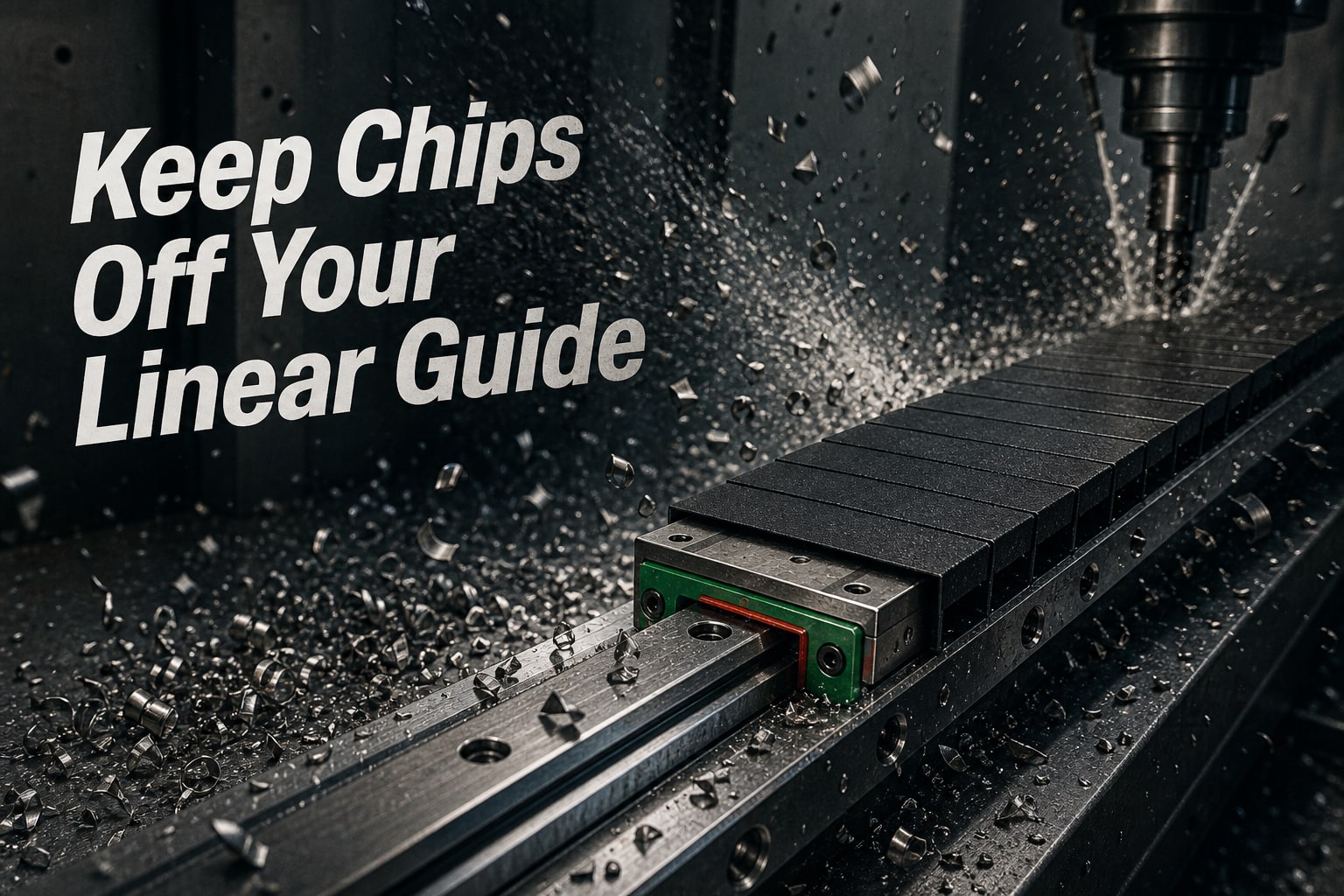
Exposed linear guides collect chips, swarf, coolant and abrasive dust as the carriage moves, but not every way-cover design suits the available space or operating cycle. You will learn how an apron cover moves, what it protects, how to measure the guide, when it outperforms other options and when a sealed or rigid cover is the safer choice.
Key takeaways
- Match cover travel, width, speed, and environment to the linear guide.
- Use slats for chip protection where flexibility and compact storage matter.
- Choose telescopic steel for severe hot-chip exposure and rigid enclosure needs.
- Plan cleaning access, drainage, lubrication, and replacement parts before ordering.
How an apron cover protects a moving linear guide
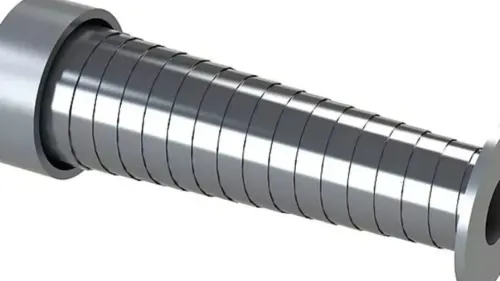
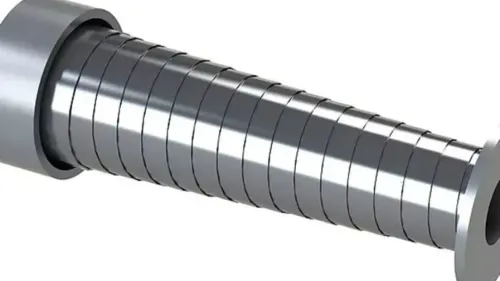
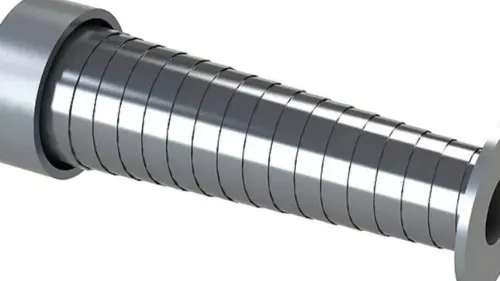
A flexible apron cover for linear guides reduces contamination by moving with the axis while shielding the exposed guideway, so debris does not settle on rolling elements or the lubrication film.
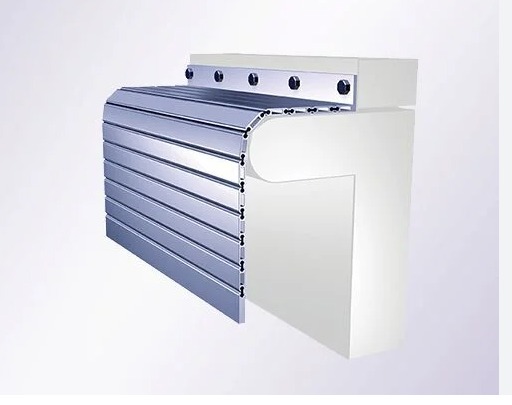
Its aluminium strips are joined by flexible fabric or links. As the carriage travels, the apron folds, overlaps, or rolls into a controlled return path instead of blocking the required stroke. The contamination-facing side takes the impact, while the cover’s attachment points keep the moving section clear of the carriage, cable carrier, and lubrication fittings.
It keeps these contaminants away:
- Cutting chips and swarf
- Coolant splash and oil
- Dust and abrasive particles
The apron reduces the load on the guide’s integral seals; it does not replace them or eliminate lubrication. If it sags into the guide path, accumulates chips in its folds, or contacts the carriage, it can create drag and damage the axis.
Before selecting one, check travel speed, acceleration, cycle frequency, minimum folding radius, unsupported span, side clearances, and return guidance. The moving apron adds mass to the axis, while worn hinges, wipers, rollers, and fasteners become maintenance items. Ask for their replacement availability and inspection interval.
How the slats and fabric move with the carriage
A flexible apron cover for linear guides moves with the carriage instead of remaining fixed over the rail. The carriage pulls the apron across the exposed guide, while the aluminium strips stay aligned across its width and bridge the protected opening.
Each strip pivots slightly against the fabric base, allowing the assembly to follow travel without stretching the metal.
As the carriage advances, the covered section lies flat ahead of it and the returning section enters a guided fold or roll pocket. The fabric base bends continuously at this return point, while the slats overlap like shallow shingles.
That overlap closes the direct path for chips and coolant splash; it is not a pressure-tight seal.
The contamination-facing side should remain oriented toward the incoming debris throughout the stroke. Side guides and end stops keep the apron centred, prevent sagging, and hold the folded pack clear of the linear-guide path.
If the return pocket is too tight, slats bind or the fabric creases; if it is too loose, the cover can rub the carriage and leave gaps at the folds. Clearance must include the carriage’s full swept envelope, not just the rail width.
Apron covers versus telescopic steel, bellows, roll-up covers and no cover
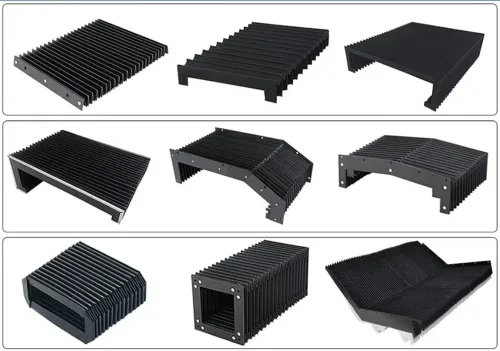
A flexible apron cover for linear guides suits long, exposed axes where the carriage needs full travel and contamination arrives intermittently. It follows the axis without the large envelope of telescopic steel, while preserving access for inspection and cleaning.
| Option | Main advantage | Best or less suitable condition |
|---|---|---|
| Flexible apron | Light, accessible, and adaptable to long travel | Chips, wood dust, grinding debris, and coolant spray; less effective against fine abrasive dust or packed chips in a deep return pocket |
| Telescopic steel | Rigid barrier with strong resistance to heavy, hot chips | Heavy machining and severe impact; needs more space, adds mass, and restricts access |
| Bellows | Encloses the guide more completely | Fine dust and splash; vulnerable to sharp chips, friction, heat, and punctures |
| Roll-up cover | Compact storage with little folded length | Tight installation spaces; inspect the roll, guides, and wipers for trapped debris |
| No cover | No purchase, moving parts, or maintenance | Only clean, protected environments; exposed rails quickly collect debris and lose lubrication |
An apron is not a pressure-tight enclosure or an automatic safety guard. Fine dust can enter through slat joints, side clearances, end gaps, and the carriage opening, so choose bellows, wipers, positive air, or a more enclosed cover when contamination is continuous.
Check the return path before choosing one. A deep chip trough can pack the roll or fold pocket and make removal difficult, while sag, worn hinges, wipers, rollers, fasteners, or guides can let the cover contact the carriage or rail. Ask for replacement-part availability and inspection intervals.
The dimensions and operating data to specify before ordering
Measure the complete moving envelope before ordering a flexible apron cover for linear guides. The rail width alone is not enough: include the carriage, clamps, sensors, lubrication fittings, cable carriers and every attachment that approaches the contamination source.
1. Record the usable stroke, guide length, carriage position at both ends, and the required cover height. Measure the overall width across the guide area, then add side overlap, mounting brackets, tensioning space, wiper clearance and allowance for assembly or thermal misalignment.
2. Specify the fixed and moving attachment points, folded or parked length, unsupported span and minimum folding radius. A cover that reaches full stroke but folds against its own mount can buckle, slap or overload the carriage.
3. Give the axis speed, acceleration, deceleration, cycle frequency and travel pattern. State whether the axis reciprocates continuously, indexes intermittently or remains stationary between cycles; moving cover mass becomes part of the servo load and can increase vibration.
4. Describe the contamination and environment: chip size and shape, abrasive dust, coolant or oil type, splash direction, temperature and cleaning method. Ask for the rated strip thickness, fabric, hinge or link design, wiper material and inspection interval.
5. Request the cover’s maximum unsupported span, allowable speed and acceleration, replacement-part list, and test basis for any “sealed” claim. If you require an IP rating, assess the complete installation under IEC 60529, including cable exits, gaps and maintenance openings.
When an apron cover is the wrong choice
A flexible apron cover for linear guides is the wrong choice when contamination is continuous, extremely fine or carried by pressure. Grinding dust can pass through slat joints, side clearances and carriage openings, while a spray or washdown requirement demands a pressure-tight enclosure rather than a contamination shield.
| Demand | Better strategy | Why |
|---|---|---|
| Very fine abrasive dust | Bellows, enclosed way cover, wipers or positive air | Limits entry through joints and end gaps |
| Heavy chips or impact | Telescopic steel cover | Resists sharp, hot or ejected swarf |
| High speed or acceleration | Validated roll-up cover or enclosed system | Reduces folding force, vibration and tracking problems |
| Pressure washing or sealed interior | Sealed enclosure with controlled drainage | An apron is not pressure-tight |
| Reach-through or ejection hazard | Guard designed to ISO 14120 | Contamination protection alone is not a safety guard |
Do not treat the apron as a substitute for sealed carriage guides or lubrication. If the cover must also prevent access, contain broken tools or withstand crushing and shearing hazards, specify a complete machine guard and verify safe removal for maintenance.
How to turn the selection into a maintainable machine solution
Turn the selection into a maintainable solution by making the manufacturer document construction, installation, service parts, and protection limits. A flexible apron cover for linear guides is a contamination-control component, not automatically a pressure-tight enclosure or a safety guard.
1. Construction: confirm slat material and thickness, hinge or link design, fabric and wiper materials, attachment method, unsupported-span limit, minimum folding radius, travel speed, acceleration and cycle frequency. Ask how the cover behaves under coolant, abrasive swarf and repeated reciprocation.
2. Installation: request a drawing showing side clearances, end stops, return guides, tensioning points and the controlled fold or roll path. Confirm that the apron cannot sag onto the rail, carriage, cable carrier or lubrication fittings, and ask how chips are prevented from packing into the return pocket.
SCUTES INDIA PRIVATE LIMITED can be asked to mark these interfaces on the approval drawing.
3. Service: obtain part numbers and lead times for slats, hinges, wipers, rollers, fasteners and fabric sections. Require a cleaning and inspection interval, plus instructions for removing the cover without disturbing the guide alignment.
4. Boundary: confirm exactly what the apron shields. If the machine needs protection for the entire axis, operator access, hot chips or pressure washing, specify a separate enclosure or full-axis cover rather than assuming guide shielding provides it.
Related product
 | APRON COVER Effectively engaged in offering a vast collection of outstanding quality products which include Apron Covers. View product → |
Frequently asked questions
How does a flexible apron cover protect a moving linear guide?
It shields the guideway from chips, dust, coolant, oil, and other contaminants while moving with the carriage, reducing deposits on rolling elements and lubrication surfaces.
What should you specify before ordering an apron cover?
Provide the guideway width, covered length, travel, carriage speed and acceleration, slat material, fabric type, folded length, mounting space, operating temperature, coolant and chip conditions, and cleaning requirements.
How does an apron cover compare with telescopic steel, bellows, and roll-up covers?
Apron covers suit moving guideways that need flexible chip shielding; telescopic steel offers a rigid barrier, bellows provide enclosed flexible coverage, and roll-up covers suit compact retraction. An uncovered guideway leaves contamination protection to machine layout and maintenance.
When is a flexible apron cover the wrong choice?
Choose another design when the guide faces severe hot, sharp, or high-energy chips, needs a rigid enclosure, requires full sealing, or lacks enough space for the apron’s folded or retracted length.