
A roll-up bellows cover can stop retracting because of sand, chips, misaligned guides, weakened spring force, or damaged fabric, and each fault requires a different remedy. By following a controlled inspection, measurement, restoration, and testing process, you can decide whether to repair the assembly, replace a component, or install a new cover.
Key takeaways
- Lock out every energy source, including stored spring and gravity loads.
- Replace fabric with tears, exposed reinforcement, heat damage or oil saturation.
- Measure travel, compressed length, extension, width, height and mounting points.
- Choose restoration only when the spring cassette, guides and frame remain sound.
How do you make a spiral-spring bellows cover safe to remove?
Make the machine incapable of moving before you touch a spiral-spring bellows cover. Electrical isolation alone is insufficient: the roller, spring cassette, curtain, axis, and gravity-loaded parts can still release stored energy.
1. Lock out and tag out electrical, hydraulic, pneumatic, and gravity-driven movement. Secure the machine axis against travel, verify zero movement, and confirm that stored pressure and suspended loads are relieved.
2. Restrain the roller and curtain with manufacturer-approved clamps, straps, or a purpose-built holding fixture before loosening any end bracket. Do not cut the curtain, remove an anchor, or let the roller unwind freely; an uncontrolled release can spin the roller or eject the spring anchor.
3. Photograph the spring direction, winding position, preload indicators, guide orientation, end attachments, and mounting points. Record the machine and axis, closed and extended positions, travel speed, acceleration, operating temperature, and failure symptoms.
4. Follow the machine or cover manufacturer’s spring-release procedure exactly. Never grip the spring with pliers or rewind it by hand. A trained technician must remove it when the spring is preloaded, the release method is unavailable, an anchor is damaged, or mechanical restraint is impossible.
5. Keep these records with the industrial bellows cover maintenance file. They help distinguish contamination from spring-force loss or structural failure and prevent incorrect reassembly during bellows cover recovery in Dubai.
How do you identify whether the fabric, spring, or guides need repair?
Separate the failure into fabric, spring, and guide faults; that is the core diagnostic method for spiral spring bellows cover repair.
1. Clean before cycling. Remove chips, dried coolant, abrasive dust, and salt deposits with a soft brush, vacuum, lint-free cloth, and mild cleaner confirmed compatible with the coated fabric, seams, seals, and spring finish. Avoid aggressive solvents and high-pressure water: they can drive grit into the cassette, strip coatings, or wash grease from bearings.
2. Inspect every fold, attachment strip, wiper, brush, guide insert, end stop, fastener, and bracket. Dirt, loose fasteners, an isolated puncture, minor stitching damage, or a displaced guide can be repairable.
Replace the bellows element when its coating is brittle or delaminated, it is torn across several folds, or repeated abrasion has weakened the same zones.
3. Cycle the spiral spring through its full stroke and check coil spacing, rubbing marks, flattened coils, corrosion, burrs, axial play, end attachments, and interference with the shaft or guideway. Permanent deformation, lost retraction force, a cracked anchor, seized coils, edge corrosion, or loss of concentricity requires spring or cassette replacement.
Patching fabric cannot restore spring torque.
4. Check guide parallelism and look for crushed channels, burrs, and displaced end stops. Side loading causes wrinkling, telescoping, uneven winding, and repeat failures. Record separate dispositions for the fabric, spring or cassette, guides, wipers, bearings, fasteners, and brackets; this is essential industrial bellows cover maintenance.
What measurements determine a suitable restored or replacement assembly?
Measure the installed cover, not the nominal width in an old drawing. For a bellows cover for spiral spring restoration in Dubai, record compressed length, extended length, usable stroke, outside diameter, inside diameter, winding-barrel diameter, guide spacing, and clearance at both ends.
Measure the available opening around the protected shaft or guideway while the cover remains mounted.
- Record curtain width, mounting-hole pattern, hole diameter, end-frame dimensions, attachment locations, and spring direction.
- Note travel speed, acceleration, cycle frequency, machine temperature, coolant exposure, chip size, coastal humidity, and heavy dust.
- Photograph a tape measure across every critical dimension. Add close views of the spring anchor, guides, wipers, and brackets.
- Give each component a separate disposition: curtain or bellows element, spring or cassette, roller bearings, guides, wipers, end stops, fasteners, and mounting brackets.
This record makes bellows cover recovery in Dubai more reliable because a clean-looking curtain can hide worn guides or a fatigued spring. Compare the options directly:
| Option | Choose it when | Main check |
|---|---|---|
| Restoration | Damage is isolated and reusable parts have known condition | Restored assembly meets stroke and clearance |
| New assembly | Spring, fittings, or fabric have widespread damage | Lead time and machine downtime justify replacement |
A repair saves effort only when the spring, guides, bearings, and attachments can pass inspection. Include the full measurement set with your request.
How should you reinstall and test the restored cover?
Record the original mounting positions before reassembly, then commission the cover in stages. Cleaning is part of industrial bellows cover maintenance: remove Dubai dust, chips, and dried coolant from folds, wipers, brushes, and guide channels without forcing debris into the cassette or washing grease from sealed bearings.
1. Refit the brackets and end attachments at their recorded positions. Confirm the spring direction and set only the manufacturer-specified preload; excessive preload can cause snap-back, high torque, or incomplete retraction.
2. Align both guides parallel through the full stroke. Replace hardened, packed, or displaced wipers and brushes, then confirm they contact the curtain without excessive drag. Lubricate the spiral spring or sliding interfaces only when the machine maker specifies the lubricant, quantity, and location.
Exposed grease captures sand and abrasive dust, increasing torque and cutting the curtain.
3. Before connecting production utilities, move the axis manually through a short range. Watch for binding, fold inversion, uneven winding, and spring snap-back. During spiral spring bellows cover repair, stop if the curtain touches the guideway, shaft, cable carrier, end stop, or nearby fasteners.
4. Run repeated full-stroke cycles at low speed, increase speed in controlled steps, and measure clearance during travel rather than only at the end positions. Test under normal coolant, chip, and temperature conditions, recording hesitation, asymmetric winding, rubbing marks, incomplete retraction, and contamination-related changes.
If the cover contributes to guarding, assess it against the machine risk assessment, ISO 12100, and applicable guarding requirements such as ISO 14120 before production resumes.
When is restoration worthwhile in Dubai, and when should you choose another cover?
Workshop restoration suits a removable assembly with transportable dimensions, a known spring condition, and damage isolated to fabric or hardware. On-site work suits a critical machine, difficult access, or a cover that cannot move without disturbing alignment; confirm access routes, lifting capacity, isolation time, and contamination controls before scheduling bellows cover recovery in Dubai.
| Option | Compare by | Choose it when |
|---|---|---|
| New bellows assembly | Lead time, fit, expected service life | Spring deformation, cracked fittings, seized coils, or widespread fabric failure makes restoration unreliable |
| Telescopic steel cover | Hot-chip load, impact, rigidity, maintenance | Heavy chips or repeated mechanical impact exceed a fabric curtain’s protection |
| Apron or roll-up cover | Space, travel speed, repairability | The opening needs a different folding or rolling path |
| Restored spiral-spring cover | Coolant, sand, stroke, repair effort | Coil rubbing is absent and reusable parts pass inspection |
A spiral-spring cover is a poor choice for severe hot-chip exposure, continuous abrasive slurry, excessive stroke, or geometry that forces coil rubbing. For a bellows cover for spiral spring restoration in Dubai, ask the supplier to separate each item’s disposition:
- Curtain or bellows element, spring or cassette, roller bearings, guides, wipers, end stops, fasteners, and mounting brackets.
- Written scope naming those parts, the test method, and delivery assumptions.
Keep records of the machine and axis, symptoms, photographs, measurements, spring and fabric condition, replacements, test results, and next inspection date. SCUTES INDIA PRIVATE LIMITED belongs in a supplier comparison when you need measurements reviewed and workshop or on-site work planned.
Related product
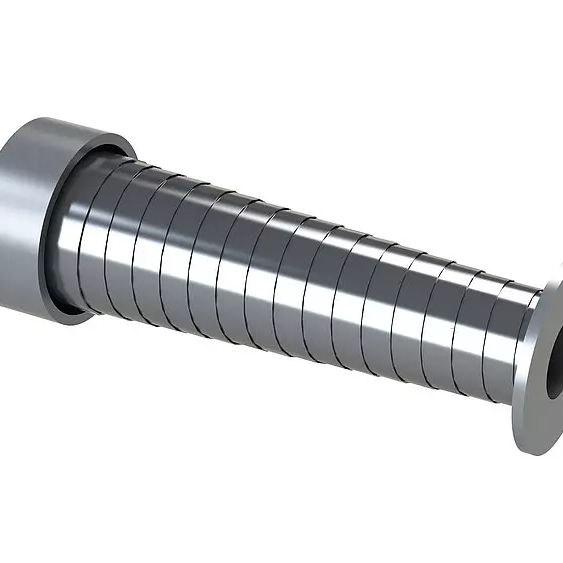 | TELESCOPIC SPRING COVER Telescopic Spring Covers provide protection under extreme conditions. View product → |
Frequently asked questions
How do you make a spiral-spring bellows cover safe to remove?
Make the machine incapable of movement, isolate electrical and hydraulic or pneumatic energy, block gravity-loaded parts, and restrain the roller, spring cassette and curtain before removing fasteners.
How do you identify whether the fabric, spring, or guides need repair?
Inspect the fabric for tears, exposed reinforcement, heat damage, hardening and oil saturation. Check the spring for corrosion, deformation and uncontrolled rewind, then inspect guides, rollers and mounting points for wear, binding or misalignment.
What measurements determine a suitable restored or replacement assembly?
Record travel, fully compressed length, fully extended length, cover width and height, roller diameter, spring-cassette dimensions, mounting-hole positions, guide spacing, clearance and the machine’s operating speed.
How should you reinstall and test the restored cover?
Align the guides and roller, secure every mounting point, confirm free movement by hand, then run slow incremental cycles while checking tracking, rubbing, spring tension, fasteners and clearance before returning to production speed.
When is restoration worthwhile in Dubai, and when should you choose another cover?
Restore the cover when the frame, guides, roller and spring cassette remain serviceable and damage is limited to replaceable fabric or hardware. Choose a new assembly when corrosion, distorted guides, fatigue, repeated binding, heat damage or unavailable components undermine reliability.