
A cover that catches on its spiral spring can be showing spring damage, but the spring is often where a separate alignment, contamination or guide fault becomes visible. You will be able to identify the likely cause, check the cover without creating a stored-energy hazard, and prepare the measurements a technician needs to decide between repair and replacement.
Key takeaways
- Check spring alignment, guide engagement, preload, and anchor position.
- Isolate power and secure the cover before inspecting the obstruction.
- Record dimensions, travel limits, photos, and machine details before repair.
- Test smooth travel and clearance at low speed after repair.
Why the spiral spring becomes the obstruction
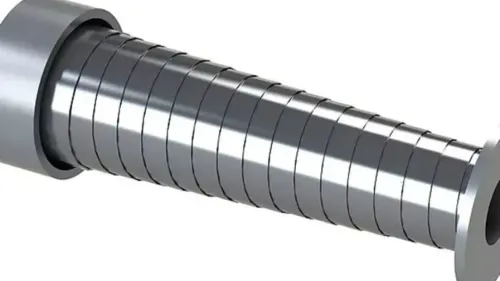
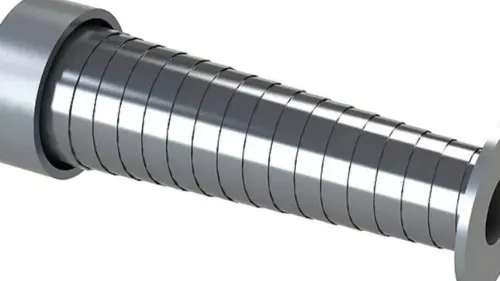
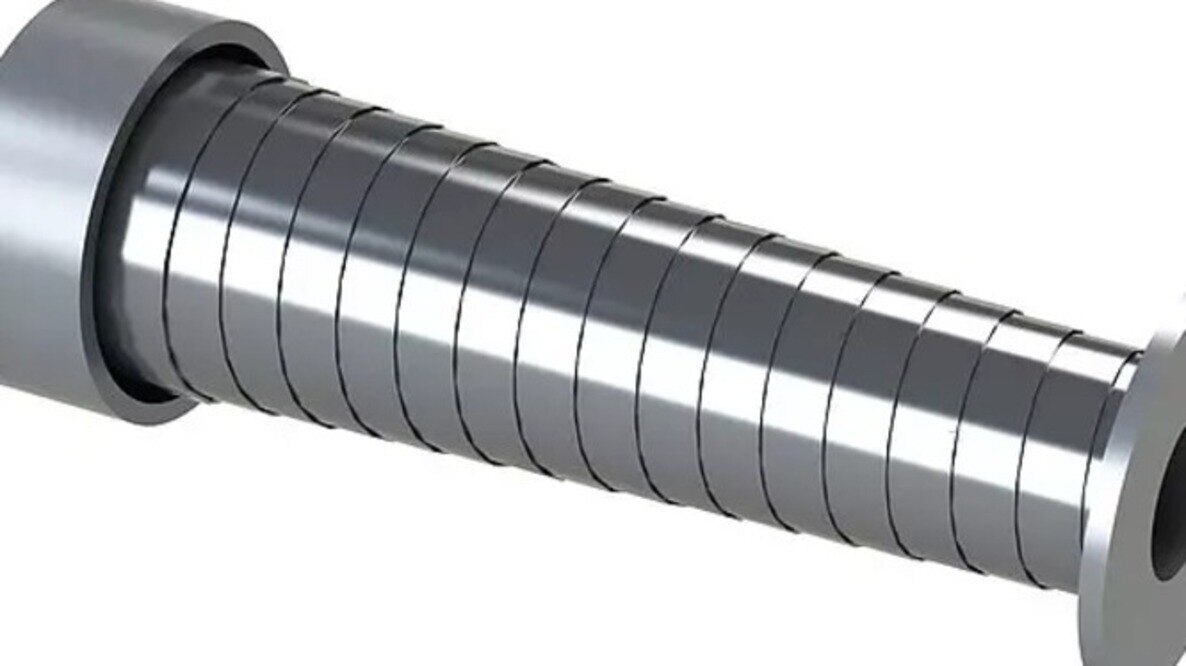
A CNC machine telescopic cover catching on its spiral spring in Dubai often shows the location of failure, not its starting point. A spring becomes the obstruction after it escapes its guide, overlaps incorrectly, loses preload, or moves from a displaced anchor.
The phrase spiral spring obstruction CNC describes this visible failure, while the original fault may be elsewhere.
Trace the catch through these spring conditions:
- A broken turn, kink, flattened section, or uneven pitch creates a high spot that rubs the housing or guide.
- Trapped swarf between coils prevents smooth winding and makes the spring drag against the cover.
- A damaged cover section, loose spring end, or displaced anchor changes the spring’s path during extension.
- Incorrect spring direction or lost preload lets the coil unwind, climb, or contact the telescopic sections.
- An escaped spring guide permits sideways movement, so the coil catches when the cover changes direction.
The initiating cause may be cover skew from non-parallel guide rails, a loose bracket, damaged rollers or guide shoes, hardened wipers, or packed chips forcing the cover sideways. A bent or poorly leveled section transfers that side load into the spring.
That is why CNC machine telescopic cover catching can return after spring replacement: fitting the new spring with the wrong direction or preload recreates the same obstruction. A visible spring catch is therefore a symptom until the cover alignment, guides, anchors, and contamination are checked.
How to separate a spring obstruction from other travel faults
A telescopic cover travel fault that repeats at the same machine coordinate usually has a local mechanical cause, not a CNC command fault. Compare opening and closing during permitted maintenance mode, at the lowest approved jog speed, while recording the exact coordinate, travel direction, noise, and whether the cover catches while opening or closing.
1. Stop if resistance becomes sharp or the cover distorts. A catch at one physical position points to chips beneath a wiper, a dented telescopic box, a slat edge, displaced wiper, contaminated guideway, loose fastener, or damaged roller.
2. Check whether resistance continues through the whole stroke. Force across the full travel points toward misaligned guideways, incorrect cover leveling, excessive bearing or roller resistance, incorrect spring preload, or drive resistance rather than one trapped chip.
3. Test direction separately. A fault only while opening or only while closing receives a focused check of the spring anchor, wiper lip, slat edge, and spring direction. A spring that rubs in one direction can appear sound when the cover moves back.
4. Compare the machine alarm, commanded coordinate, actual coordinate, and limit-switch status. An axis-limit or control problem changes with the commanded position, alarm state, or control reset; a mechanical obstruction stays tied to the cover’s physical location.
For CNC cover troubleshooting in Dubai, record coolant condition, recent collision history, cleaning interval, and whether the noise is scraping, clicking, or binding. That record separates a spring obstruction from alignment, contamination, wear, and control faults before anyone replaces the spring.
A safe inspection sequence before touching the cover
Stop automatic cycling before you approach the machine. A spiral spring obstruction on a CNC cover is a stored-energy hazard: the spring can be preloaded, and pulling the cover past the catch can release it or eject a broken end.
1. Isolate electrical, pneumatic and hydraulic energy at their disconnects and supply valves. Apply lockout/tagout, release pressure, and prevent axis movement with the manufacturer-specified blocking method.
2. Confirm zero energy: test the electrical isolation, read zero pneumatic and hydraulic pressure, and verify that gravity, counterbalance and spring forces cannot move the cover or axis. Remove guards only after this check.
3. Inspect from outside the cover without reaching between sections or into the spring compartment. Look for the catch point, then examine the spring turns and ends for broken turns, kinks, flattened areas, uneven pitch, rubbing marks and trapped metal swarf.
4. With access permitted by the machine design, inspect the spring housing, guide channels, drain paths, inter-slat gaps, wipers, rollers, fasteners and guide-rail parallelism. Check cover leveling; a skewed cover can create a telescopic cover travel fault even when the spring is intact.
5. Do not start with compressed air. It can drive abrasive coolant paste deeper into wipers, bearings and the spring enclosure while scattering hazardous swarf. Use vacuum extraction and wiping; use manufacturer-approved low-pressure washing only when the design permits access, then clear drains before reassembly.
What to record before requesting repair or replacement in Dubai
Send a service provider a measured fault record, not only a photograph of the jam. For CNC cover troubleshooting in Dubai, include:
- Machine make and model, axis name, total stroke, and the cover’s closed and open lengths.
- The exact machine coordinate where catching begins, travel direction, and the alarm code.
- Spiral-spring width, thickness, coil diameter, free length and installed length, if safely measurable.
- Cover-section length, width, height and section overlap, plus the guideway dimensions if available.
- Clear photographs of both spring ends, the spring housing, cover sections, guideway, wipers, rollers and mounting points.
State whether the obstruction remains at one coordinate or follows the cover through its stroke. An isolated broken, kinked or flattened spring turn can be repairable; distorted boxes, torn wipers, cracked welds, worn guides, excessive side play or repeated catching after cleaning and alignment correction require a broader assessment.
The service record must identify the event behind the failure: contamination, collision or impact, alignment change, incorrect spring direction or preload, or normal wear. Add coolant condition, cleaning interval, recent tooling or crash history, and parts already replaced. This prevents repeated spring replacement when the original cause is a skewed cover or damaged guide.
SCUTES INDIA PRIVATE LIMITED can be considered for specialist assessment of industrial protective covers and motion components in Dubai, provided the technician receives these measurements, photographs and history before quoting a remedy. That record makes CNC machine telescopic cover catching diagnosable rather than guesswork.
Related products
 | TELESCOPIC SPRING COVER Telescopic Spring Covers provide protection under extreme conditions. View product → |
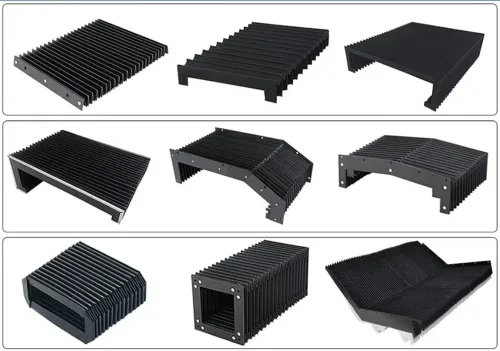
 | TELESCOPIC COVERS A telescopic cover protects guide-way surfaces and components of moving axis of machines. View product → |
How to confirm the repair without creating a second failure
A repair is not confirmed until the corrected cover completes its usable stroke without added drive force. Before removing the spring, record its installed direction and preload; losing either reference can make a replacement accelerate violently or catch again.
- Force the axis through resistance or push the cover while it is powered.
- Remove a preloaded spring without restraint.
- Bypass cover interlocks or increase motor torque to overcome the obstruction.
- Apply lubricant that attracts abrasive chips and forms grinding paste in the guides.
| Check | Pass indication | Failure response |
|---|---|---|
| Low-speed travel | Smooth movement in both directions through the complete usable stroke | Stop and locate the resistance |
| Section overlap | Telescoping sections overlap evenly at each position | Check leveling, guides and damaged sections |
| Drainage | Coolant and chips leave through clear drain paths | Clean the drains; do not seal in contamination |
| Spring clearance | No spring rub, snagging or new contact marks | Inspect direction, preload, anchor and guide |
| Drive readings | Motor current or overload readings remain stable | Remove the cause; do not raise torque |
| Interlocks | Protective interlocks stop motion correctly | Keep the machine out of production |
For a CNC machine telescopic cover catching on its spiral spring in Dubai, run this check before production cycling. If the telescopic cover travel fault returns, compare the new catch position with the original record instead of repeatedly replacing the spring.
A changed position points to a new local obstruction; recurring faults require investigation of alignment, guides, anchors and contamination.
Frequently asked questions
Why does a CNC machine telescopic cover catch on its spiral spring?
The spring can obstruct travel after escaping its guide, overlapping incorrectly, losing preload, or shifting from its anchor. The visible spring contact may be a result of another alignment fault.
How can you separate a spiral spring obstruction from another telescopic cover travel fault?
Check whether the spring is misaligned or damaged, then inspect cover sections, guideways, wipers, fasteners, chips, and end stops for separate interference. Compare the fault location with the cover’s travel direction.
What should you do before touching a CNC telescopic cover?
Stop the machine, isolate electrical and stored energy sources under your site procedure, prevent unexpected axis movement, and wait for hot chips or coolant to drain before inspection.
What should you record before requesting CNC cover repair or replacement in Dubai?
Record the machine model, cover dimensions, travel length, spring position, fault symptoms, photos, serial or asset number, operating environment, and any recent collision or maintenance work.
How do you confirm a repaired telescopic cover without causing another failure?
Remove tools and debris, confirm fasteners and guards are secure, move the cover through its full range at low speed, check clearance and spring engagement, then repeat the test under normal operating conditions.