
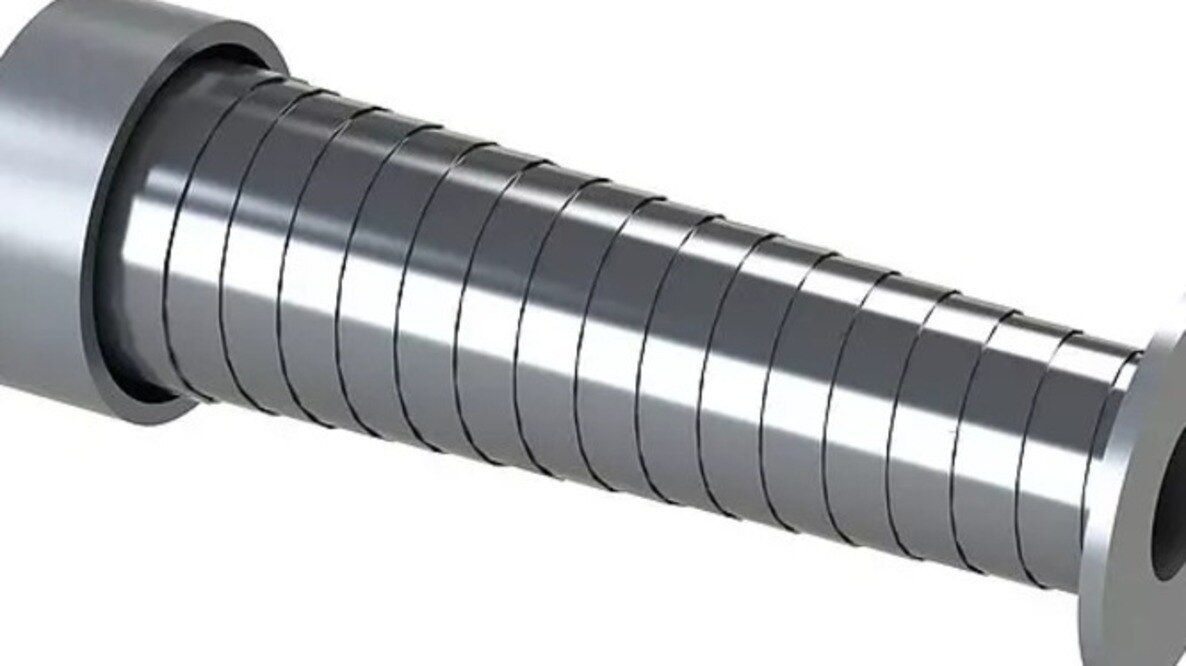
Choose an apron cover when a broad, fairly flat guideway faces heavy swarf and coolant; choose bellows when the path is irregular, multi-axis or demands a short folded package. The right decision also depends on contamination, movement, clearances, sealing, heat and service access, so you will finish with a specification you can send for quotation without comparing nominal travel alone.
Key takeaways
- Choose apron covers for broad, flat guideways with heavy chips and coolant.
- Choose bellows for vertical axes, irregular contours and compact folded protection.
- Check travel length, folding space, dynamic loads and the full protection envelope.
- Use telescopic steel covers or wipers when aprons and bellows are unsuitable.
Start with the guideway shape and protection problem
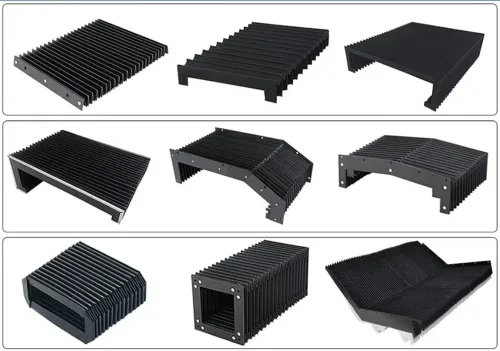
Choose apron covers for broad, relatively flat horizontal guideways exposed to heavy chips, swarf and coolant; choose bellows for vertical axes, irregular contours, intersecting axes or a compact folded enclosure. That geometry is the starting point for apron cover selection and bellows selection, before heat or contamination changes the answer.
| Geometry | Apron covers versus bellows | Best fit |
|---|---|---|
| Broad, flat horizontal opening | Overlapping slats resist direct chip impact and support long travel | Apron cover |
| Vertical transition or irregular contour | Slats leave gaps or bind at changing profiles | Bellows |
| Several intersecting axes | Poor fit around changing directions and tight clearances | Bellows |
| Frequent compression and extension | Limited by slat guidance, rollers and mounting faces | Bellows |
| Sharp, coarse chips or swarf | Better resistance and easier replacement of individual slats or wipers | Apron cover |
| Compact folded enclosure | Requires less exposed travel space when designed around the compressed length | Bellows |
Do not use either cover as a cable carrier. A carrier controls cable and hose bend radius and routing; size it independently and prevent it from rubbing against the cover.
Bellows folds can trap chips, so add a scraper, slat shield or external cover when the chip stream reaches the pleats. Ordinary coated fabric also fails under welding sparks or hot chips; use heat-resistant or metallic bellows, or a metal apron, while shielding seals from conducted heat.
Washdown chemicals, abrasive dust and oil still require material and seal checks. A heavier fabric alone does not solve fold entrapment.
Match the cover to chips, chemicals, heat and sparks
Choose apron covers versus bellows by asking what strikes the cover and what the cover must survive: heavy metal chips favour overlapping metal slats, while irregular movement favours a flexible bellows laminate.
| Condition | Apron-cover construction | Bellows construction |
|---|---|---|
| Heavy metal chips and swarf | Interlocking or overlapping metal slats resist impact and sharp edges | Fabric folds can suffer cuts, pinholes and concentrated wear |
| Coolant and oil | Add wipers, skirts, seals and drainage; slat overlaps alone do not make a seal | Specify the complete laminate for the actual coolant and oil |
| Abrasive dust | Use close-fitting joints and replaceable wiping elements to limit ingress | Use abrasion-resistant fabric, protected seams and reinforced fold edges |
| Hot chips and sparks | Use metal slats with heat shielding so conducted heat does not reach seals or guideways | Use metallic or heat-resistant bellows; ordinary coated fabric can burn or embrittle |
| Chemical washdown | Protect joints and finishes from alkaline or chlorine-based cleaners | Verify coating, thread and adhesive compatibility, not only the base fabric |
A bellows that survives mineral-oil coolant can fail after exposure to alkaline washdown, aggressive synthetic coolant or welding spatter. Request the temperature range and chemical-resistance data for every layer, including thread and adhesive.
Fine dust, coolant mist and laser debris demand more than a material choice. Check the leakage path, fold closures, side gaps and drainage; an apron cover is not automatically sealed. Choose heat shielding and chip evacuation together, because trapped hot debris can damage both the cover and the machine.
Compare travel, folding space and dynamic loads
When comparing apron covers versus bellows, match the design to travel geometry and dynamic loading, not speed alone. High axis speed or acceleration does not automatically favour a bellows; moving mass, guide friction, windage, folding stability and unsupported span decide whether the cover runs reliably.
| Option | Travel and folding space | Dynamic movement fit |
|---|---|---|
| Apron cover | Suits long, broad horizontal travel; needs clearance for slats or segments through the stroke. | Handles direct movement along one axis and chip impact well, but a heavy cover increases inertial load during rapid starts and stops. |
| Bellows | Provides a compact folded package and a high extended length-to-compressed length ratio; verify the stack at full compression. | Suits frequent flexing, vertical axes and complex three-dimensional paths, but high cycle rates can cause pleat wear or folding instability. |
| Either design | Confirm travel direction, lateral and vertical deflection, mounting faces and interference at every position. | Select from allowable acceleration, cycle count, moving mass and support against flutter. |
For a bellows, obtain the compressed length, extended length, pleat height, attachment geometry, unsupported-span limit and minimum bend radius before ordering. A quoted stroke alone can leave the folded stack colliding with the machine.
Specify speed, acceleration, cycle frequency and required service life together. Frequent reversals expose weak folding dynamics; vertical travel adds gravity load; lateral movement demands a design that permits the stated deflection without rubbing or twisting.
Check sealing, maintenance and the real protection envelope
Choose the design that matches the leakage direction, maintenance access and real protection envelope—not the nominal cover size. Apron covers versus bellows becomes a practical decision when chips, coolant and access compete with sealing performance and service life.
| Option | Leakage control | Access and service life |
|---|---|---|
| Apron cover | Overlapping slats can resist chips, but hinges, rollers and side gaps need wipers and flanges, skirts, seals or drainage. Request leakage direction and test conditions; “chip protection” is not a seal rating. | Individual slats, wipers, rollers and fasteners are often replaceable in the field. Check clearance above the guideway. |
| Bellows | A stitched or bonded enclosure can close irregular edges and compact into a folded package; inspect seams, coatings and end seals for leak paths. | Damage to one fold or seam may require complete replacement, unless the design is modular. Access panels must not crush folds. |
An apron cover needs more than its collapsed height: side frames, roller diameter, wipers, chips and slat articulation set the envelope. Check fully extended, fully collapsed and partially collapsed positions, including maintenance access.
Specify:
- contaminant and chip temperature
- coolant, oil and cleaner chemistry
- mounting orientation, cycle count and required service life
- acceptable leakage and replacement access
Neither design controls cable bend radius or routing. Size the cable carrier independently, and prevent it from rubbing the cover.
Know when another protection system is the better answer
When neither an apron cover nor a bellows can handle the application, specify separate systems for surface protection, cable control and access. Do not make one cover perform all three jobs.
| Option | What it controls | When it applies |
|---|---|---|
| Cable carrier | Cable and hose routing and bend radius | Moving cables or hoses need controlled routing |
| Telescopic steel cover | Rigid protection against heavy chips, impact and hot debris | Broad, exposed guideways need a robust sliding enclosure |
| Roll-up cover | Flexible protection that winds onto a drum | Space is limited behind or beside the moving axis |
| Spring cover | A self-tensioning barrier over a compact opening | Short travel, frequent access or a tight installation envelope |
A cable carrier must be sized independently, with its minimum bend radius, fill ratio and mounting points confirmed. Keep it from rubbing against the apron cover or bellows, or wear will occur at every cycle.
If chips damage bellows folds, specify a scraper, slat shield or external guard rather than simply choosing thicker fabric. For a mixed design, SCUTES INDIA PRIVATE LIMITED can review the cover interface separately from cable-carrier sizing, preventing either component from being assigned the wrong job.
Give the supplier the protected length, travel, obstruction clearances, contamination type, washdown method and required access points. Ask for the leakage direction and test conditions when fine dust or coolant matters; “chip protection” is not a seal rating.
Related products
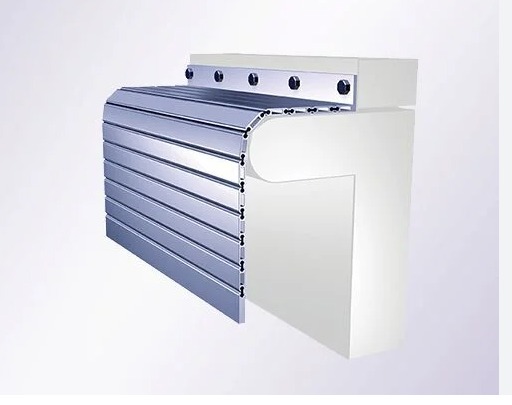 | APRON COVER Effectively engaged in offering a vast collection of outstanding quality products which include Apron Covers. View product → |
 | Duct Bellows HVAC systems and industrial ducting rely on high-quality duct bellows for durability and performance. View product → |
Frequently asked questions
When should you choose apron covers instead of bellows?
Choose apron covers for broad, relatively flat horizontal guideways exposed to heavy chips, swarf and coolant.
When are bellows a better choice than apron covers?
Choose bellows for vertical axes, irregular contours, intersecting axes or installations with limited folded space.
How do chips, chemicals, heat and sparks affect the choice?
Heavy chips and swarf favour rugged apron covers, while bellows suit enclosed or contoured areas; heat, chemicals and sparks require checking the cover material and construction.
What should you compare before selecting a guideway cover?
Compare travel, folded length, available space, dynamic loads, sealing, maintenance access and the complete protection envelope.
When is another protection system the better answer?
Use another system, such as telescopic steel covers or dedicated wipers, when the guideway faces severe impact, high heat, demanding travel or a sealing requirement that aprons and bellows cannot meet.
Related products
 | Laser Machine Bellows Laser Machine Bellows are specialized protective coverings designed to safeguard the vital internal components of laser machines. View product → |
 | SCISSOR LIFT BELLOWS Scissor Lift Bellows are one of the broadly demanded stabilizer for which we are considered an acclaimed designed in the market. View product → |
 | Roll Up Cover A roll-up cover is a highly durable and flexible protective solution designed to safeguard machinery, equipment, and valuable assets from dust,... View product → |
 | Machine Covers Machine covers are specially designed shields used to protect industrial equipment and machinery from environmental elements. View product → |