
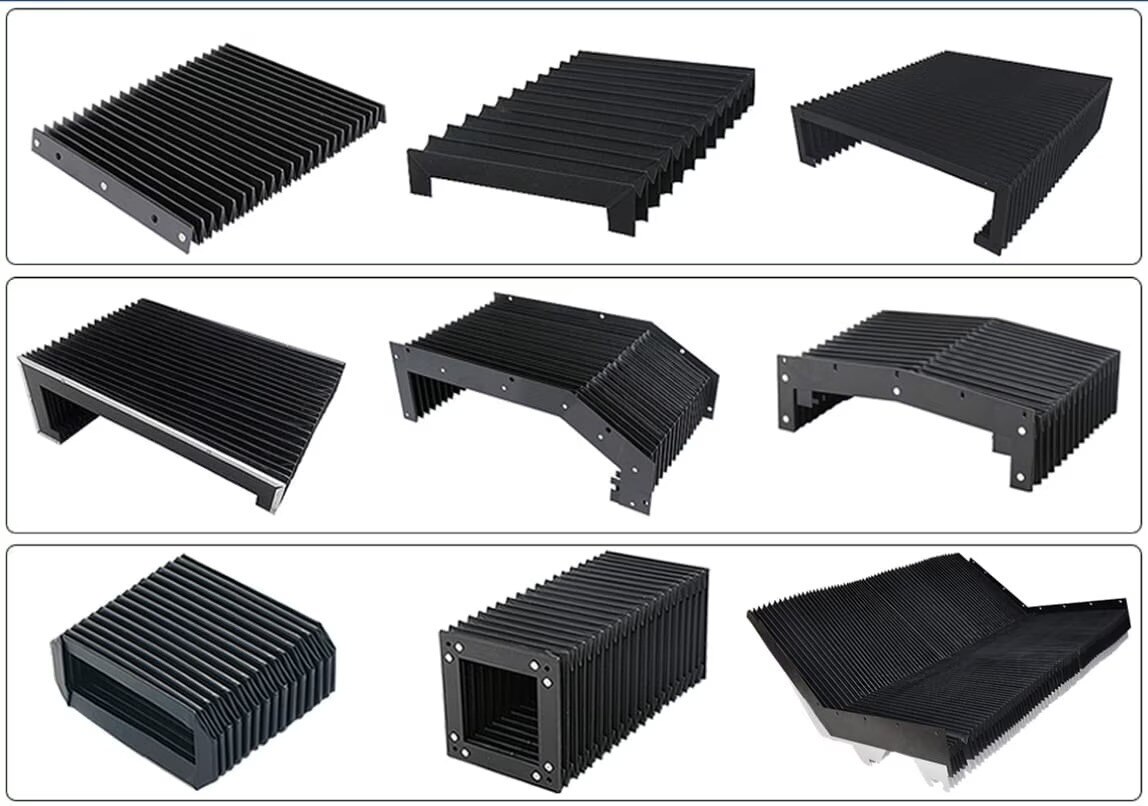
A flexible cover can reduce sand, dust, rainwater and dropped-object entry around a moving scissor mechanism, but poor clearance or unsuitable material can create a new snag, rubbing or pinch hazard. You will be able to decide whether a flap bellow fits the lift, compare it with other guards, define the measurements, and set acceptance checks before manufacture.
Key takeaways
- Use a flap bellow to shield moving lift mechanisms from debris and contact.
- Choose fabric and flap construction for the lift’s heat, oil, coolant and abrasion exposure.
- Measure the complete folded, extended and sideways motion envelope before fabrication.
- Leave inspection access and replaceable sections for practical maintenance.
What a Flap Bellow Covers on a Scissor Lift
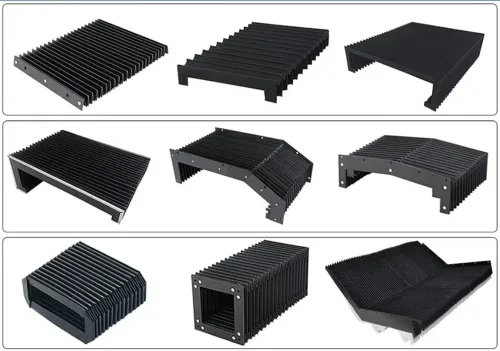
A flap bellow for scissor lift in Dubai is a flexible machine guard made from overlapping fabric flaps or leaves. It attaches around the protected opening or moving mechanism, creating a movable barrier rather than a rigid enclosure.
As the platform rises, the flaps separate and expand; as it lowers, they overlap, fold and compress. Correct sizing keeps the fabric clear of pins, rollers, hoses and link edges throughout the stroke. This is the basis of effective flap bellow equipment protection.
Possible coverage areas include:
- The moving scissor pack and its exposed links
- The hydraulic-cylinder area
- Linkage openings between the arms
- Pinch-point zones beneath or beside the platform
- Openings where sand, tools, hoses or clothing could reach the mechanism
| Protection target | What the bellow does | What it does not do |
|---|---|---|
| Machinery | Reduces entry of sand, dust, rainwater and dropped objects, while limiting contact with moving parts | Does not support the platform or carry lifting loads |
| Operator access | Reduces the chance that clothing, hoses or tools reach the scissor pack | Does not replace primary guarding, a safety-rated interlock or a risk assessment |
The bellow is not a structural member or lifting component. Outside-edge crush and shear hazards remain, so fixed guarding, safe clearances and the lift control-system assessment still apply.
The Decision Test: When Does a Flap Bellow Make Sense?
Choose a flap bellow when all five conditions are present: moving parts are exposed, the lift cycles vertically, contamination threatens the mechanism, the lift operates outdoors, and technicians need access without dismantling a rigid enclosure.
| Condition | Practical test | Decision signal |
|---|---|---|
| Exposed moving components | Identify scissor links, cylinders and pinch zones reachable by debris, hoses or clothing | Protection has a clear purpose |
| Repeated vertical travel | Cycle the lift through its complete stroke, not only its parked position | Flexible overlapping flaps suit changing gaps |
| Desert dust or metal particles | Check whether contamination could reach pins, rollers or hydraulic components | A cover can reduce ingress and wear |
| Outdoor operation | Include sunlight, rain, sand and humidity in the design review | Specify materials for Dubai conditions |
| Maintenance access | Identify lubrication points and inspection areas | Use removable sections or accessible fasteners |
The decision is a balance between coverage and movement resistance. A close-fitting bellow improves contamination control, but excessive tightness can rub, snag, buckle or impose force on the scissor pack. Excessive clearance reduces interference while creating larger paths for sand and water.
Run a dynamic trial through the full stroke and specify flap overlap in both compressed and extended positions; a nominal overlap will not remain constant as the folds move.
Flap bellow applications in Dubai suit contamination-focused flap bellow equipment protection, not every hazard. Choose another guard when there is:
- Temperature above the material rating, fire risk or chemical incompatibility
- Direct abrasive chip impact or contact with sharp edges
- Standing water requiring sealed drainage control
- A need for a rigid, load-bearing guard
Compare the Guard Type and Material Before You Specify It
An overlapping flap bellow suits a moving scissor mechanism when you need contamination control without losing maintenance access. Compare the alternatives before accepting its folds, because each guard trades access, visibility, rigidity and package size differently.
| Option | Main advantage | Choose it when |
|---|---|---|
| Overlapping flap bellow | Flexible coverage with quick access | Travel is repeated and the envelope is predictable |
| Sewn closed bellow | Continuous enclosed protection | Ingress control matters more than rapid opening |
| Apron cover | Simple, quick-to-open barrier | Access is frequent and exposure is moderate |
| Roll-up cover | Compact rolled package | Storage space is tight and the opening is broad |
| Telescopic steel cover | Rigid impact resistance | Chips, tools or falling objects can strike the guard |
| Fixed guard | Continuous visibility and stable separation | The mechanism needs inspection through mesh or clear panels and does not require guard movement |
For flap bellow applications in Dubai, require evidence for every selected component, not tensile strength alone:
- Fabric and coating data for solar UV exposure, elevated summer temperature, desert sand, coastal humidity and salt exposure.
- Compatibility evidence for hydraulic oil, grease, coolant and the intended cleaning chemicals.
- Temperature range, thread specification and fastener material, including corrosion resistance.
- Abrasion evidence and clearance at rubbing zones. Trapped sand can wear a flap against a guide or mounting rail; provide cleaning access and replaceable wear parts.
- A trial using repeated full strokes, the hottest expected condition, the cleaning method and practical sand contamination, with pass criteria for interference, ingress, attachment security and added lift resistance.
Measure the Full Motion Envelope, Not Just the Lift at Rest
Before manufacturing a flap bellow for scissor lift in Dubai, measure the complete motion envelope, not only the lift at rest. A cover sized for one position can buckle, snag, or restrict the scissor pack elsewhere.
1. Record collapsed height, extended height, maximum width, attachment perimeter, total stroke, fold height, bend radius, allowable compression, minimum and maximum platform height, link angles, lateral movement, and available clearance.
2. Mark nearby pins, rollers, hydraulic hoses, electrical wiring, moving edges, fasteners, and every linkage pinch point. Record their positions at the lowest and highest platform heights, through intermediate positions, during side-to-side movement, emergency lowering, and transport.
3. Trial the proposed envelope through every movement. Confirm that fabric does not contact a moving edge, carry hose or cable loads, snag a fastener, or add resistance to the lift. Route hoses and cables on separate supports with strain relief, bend-radius control, and abrasion protection.
4. Specify flap overlap in both collapsed and extended positions, end closures, drainage path, and attachment method. Define seams, closures, drainage, and a test method before calling the flexible cover watertight; nominal overlap alone proves nothing.
The final drawing should show the bellow, attachment points, clearance limits, and nearby moving parts together. Recheck rubbing marks, distorted folds, or new resistance after cycling, because a small change in clearance can create a new pinch or snag hazard.
Turn the Design Into an Acceptable, Maintainable Guard
Put the acceptance criteria in the purchase specification before fabrication. Require a dynamic trial through repeated full strokes, inspection at the hottest expected operating condition, practical sand or dust contamination, and cleaning with the intended method.
| Criterion | Pass requirement | Check |
|---|---|---|
| Interference | No rubbing, snagging, buckling or added lift resistance | Cycle from fully lowered to fully raised |
| Attachment | No pulled eyelets, loose fasteners or shifting panels | Inspect after cycling and emergency lowering |
| Ingress | Sand and dust do not reach protected moving parts beyond the agreed limit | Examine the scissor pack after contamination testing |
| Maintenance access | Lubrication, inspection and fault finding need no extensive disassembly | Operate removable panels or quick-release points |
| Operation | No new noise or force that affects lift movement | Compare movement before and after the trial |
Keep cables and hydraulic hoses independent from the bellow. Give them separate supports, strain relief, specified bend-radius control and abrasion protection, then check for snagging during emergency lowering and transport.
Your maintenance plan must record torn or cracked material, delaminated coatings, broken stitching, pulled eyelets, loose fasteners, distorted folds, rubbing marks, new resistance and unusual noise. Damage is not cosmetic if it reduces clearance around a moving scissor member.
For flap bellow applications in Dubai, SCUTES INDIA PRIVATE LIMITED can use your motion envelope and environmental requirements to develop a cover proposal; you retain responsibility for the lift risk assessment and acceptance criteria.
Related product
 | SCISSOR LIFT BELLOWS Scissor Lift Bellows are one of the broadly demanded stabilizer for which we are considered an acclaimed designed in the market. View product → |
Frequently asked questions
What does a flap bellow cover on a scissor lift?
It covers exposed moving mechanisms and openings around the scissor lift, forming a flexible barrier against debris, fluids and accidental contact.
When does a flap bellow make sense for scissor lift equipment?
Specify one when the protected area changes shape during travel and a rigid guard would restrict movement, add excessive bulk or obstruct access.
How should you compare flap bellow guard types and materials?
Compare overlapping flap construction, attachment method, flexibility, abrasion resistance, temperature range and resistance to the oils, coolants or chips present at the lift.
What must you measure before specifying a flap bellow?
Measure the full motion envelope at rest, fully raised and during scissor travel, including compression, extension, lateral movement, pinch points and service clearances.