
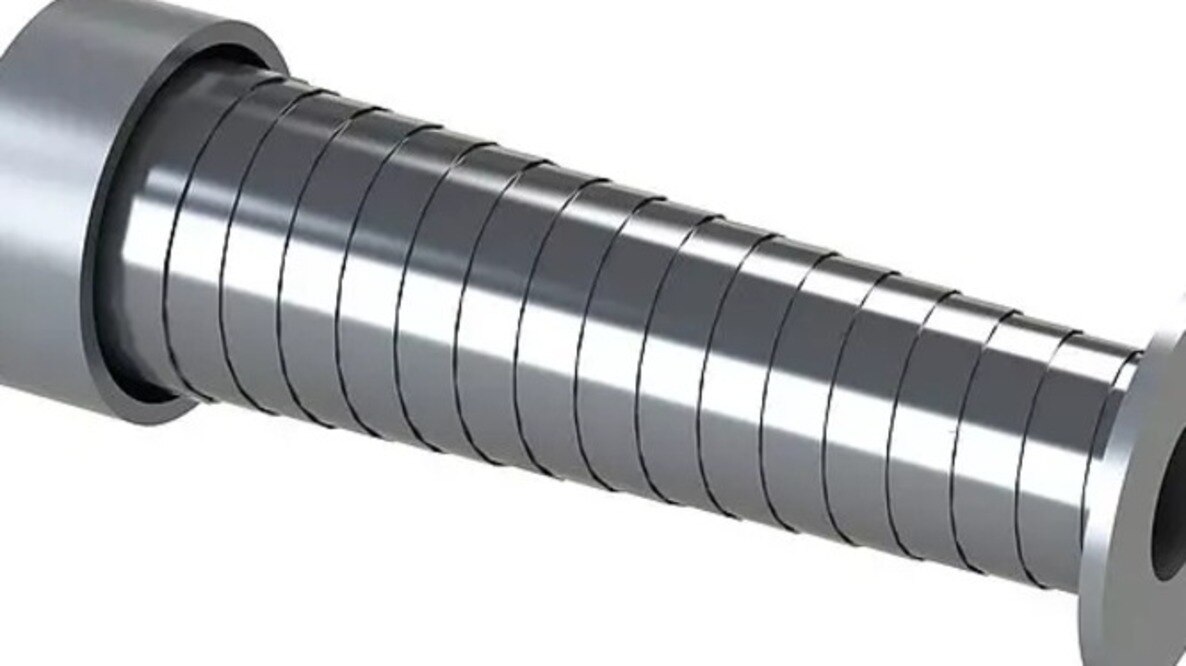
Choosing between a telescopic spiral spring, a complete telescopic steel cover and a conventional spiral spring depends on how the machine moves, what the cover must resist and how much space the installation provides. By the end, you will know how to measure the machine, specify operating limits, compare materials and request a quotation that matches Dubai’s heat, dust, coolant and corrosion conditions.
Key takeaways
- Use a telescopic spring for roll-up contamination protection, not torque storage.
- Size the cover for actual travel, clearance, retraction and machine mounting space.
- Specify corrosion-resistant material and finish for heat, dust, coolant and humidity.
- Require drawings, operating limits, inspection points and acceptance criteria in the quotation.
Which type of spiral spring belongs on your machine?
A telescopic spiral spring belongs on a machine when you need a roll-up contamination cover, not a torque-storage spring.
| Component | What it is | What it does |
|---|---|---|
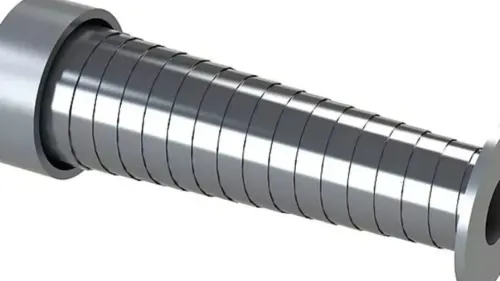
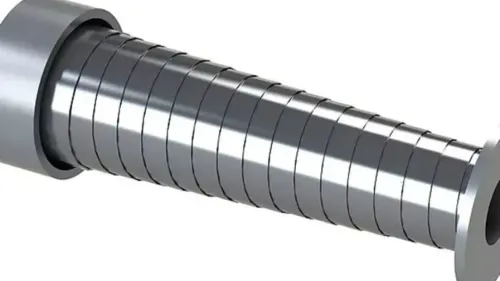
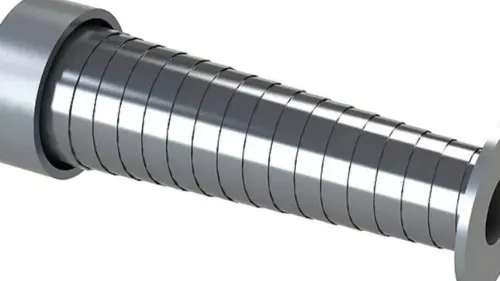
| Telescopic spiral spring | Spring-steel strip whose coils wind concentrically as the axis retracts and unwind during travel | Shields a shaft, screw or guideway without storing rotational power like a clock spring |
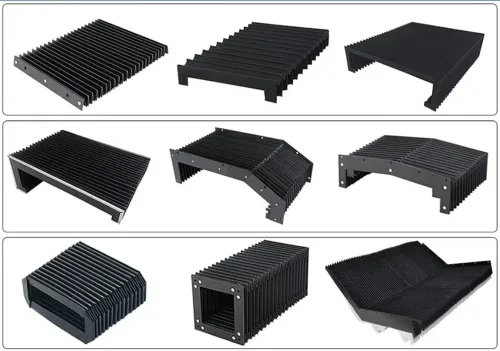
| Telescopic steel cover | Complete engineered assembly, including the strip, end attachments, guides, overlaps, seals and drainage features | Provides the fitted protective system around moving machinery |
| Conventional spiral spring | Coiled spring selected to store or release torque | Powers or returns a mechanism; it is not automatically a contamination cover |
In spiral spring machine applications, match the cover to the movement. A rotating-shaft cover follows circumferential motion, so check rotational balance, radial clearance and attachment security. A linear-axis cover follows a defined stroke between fixed and moving points; its winding direction, support and retracted package differ from a shaft cover.
For spiral spring cover machinery, decide what you are protecting against: chips and coolant, or operator access. The cover addresses contamination, not safe access. If hazardous parts remain reachable, apply risk assessment under ISO 12100 and use guarding designed under ISO 14120.
Check openings and reach-through distances against ISO 13857; a spring cover is not a substitute for that guard.
How do you size a cover for the machine’s real travel?
Measure the machine, not the catalogue width. For a telescopic spiral spring in Dubai, record the shaft diameter or guideway width, exposed length, required stroke, fixed and moving mounting points, travel direction, end clearances and attachment-hole pattern.
Use this measurement checklist:
- Cover envelope: compressed length, extended length, outside diameter, inside diameter, strip width and strip thickness.
- Installation space: clearance around the retracted coil, room for the full extended length and clearance for mounting hardware.
- Motion data: maximum travel speed, acceleration, cycle frequency, stopping behaviour and axis orientation.
- Drawing data: show the cover in both extended and retracted positions, with every mounting dimension.
The coils must wind concentrically without touching the shaft, bracket, cable or hose. Rapid reversals, high acceleration, shock stops and unsupported horizontal runs can buckle the strip or drive an end attachment into its stop even when the nominal stroke fits.
| Replacement element | Complete cover assembly |
|---|---|
| Existing winding direction, pre-load, width, thickness, material and attachment geometry must match | Supplier sizes the strip, guides, attachments, package and clearances together |
| A similar-looking strip can wind backwards or fatigue at the edges | The assembly must fit both machine travel and the available installation envelope |
For a replacement, photograph the existing assembly and record its winding direction, pre-load and attachment geometry. Replace only the strip when every parameter matches the original design; otherwise specify the complete engineered cover.
Which material and finish survive Dubai service conditions?
Carbon spring steel suits many enclosed machine tools, where chips, swarf, dust and incidental coolant are the main threats. In spiral spring cover machinery, choose it only with a finish, seal arrangement and drainage path that control corrosion.
| Option | Choose it for | Specify |
|---|---|---|
| Carbon spring steel | Enclosed equipment with limited moisture and ordinary coolant | Coated strip, drainage, protected fasteners and compatible seals |
| Stainless steel | Outdoor, coastal or condensation-prone equipment; frequent washdown or corrosive chemicals | Stainless grade, seal compatibility and complete-assembly temperature range |
| Protective finish | Salt-laden humidity, airborne dust, cutting fluid or alkaline cleaner | Coating suited to the chemical exposure, not merely to Dubai’s name |
Welding fumes, cutting fluid, alkaline cleaner and ambient heat impose different demands. Stainless strip is not automatically the right answer, and spring steel is not sealed against fine abrasive dust or high-pressure washdown.
Inspect at a defined production interval:
- Remove chips with a suitable brush or low-pressure air before they dent the strip or stop smooth winding.
- Wipe sticky coolant residue; it binds coils and retains abrasive dust.
- Check for pits, edge cracks, dents, scraping, blocked drains and abnormal movement.
- Remove welding spatter promptly; it can pit or permanently weld strip surfaces.
Do not add oil until the manufacturer approves it. Oil attracts abrasive particles, and some covers are designed for dry running. Poor drainage leaves contaminated liquid inside the retracted package.
What operating limits and neighbouring equipment must you verify?
A catalogue travel figure cannot establish whether a cover will survive your machine. Obtain the manufacturer’s limits for:
- Maximum travel speed, permitted acceleration and deceleration
- Temperature range, minimum and maximum compression
- Coil stress, allowable misalignment and orientation
- Expected cycle life and the mounting arrangement used to establish it
Request the cycle-life test basis in writing. It must state speed, acceleration, travel direction, contamination level, temperature and mounting arrangement. A different stopping profile or dusty horizontal installation can shorten fatigue life.
| Condition | Verify | Consequence if ignored |
|---|---|---|
| Cycle-life rating | Test speed, acceleration, contamination and temperature | The quoted life may not represent your service |
| Horizontal travel | Full-stroke strip support and chip clearance | Unsupported strip can buckle or fatigue |
| Moving lines | Carrier, bend radius, strain relief and separation | Cables or hoses can rub, kink or fail |
Confirm that the strip remains supported through the full stroke and that no bracket, chip or hose touches the coils. In spiral spring machine applications, a spring cover is not a cable carrier merely because it rolls.
Use an energy chain or another carrier for moving cables and pneumatic lines; the cable or hose manufacturer must specify its own minimum bend radius.
Include the cover in the risk assessment. Check openings, reach-through distances and hazardous-part locations against ISO 13857. If access remains possible, install a fixed or movable guard under ISO 14120 and address broader machine risks under ISO 12100.
What should a Dubai quotation and acceptance check include?
A quotation for a telescopic spiral spring for moving machinery in Dubai must identify whether you need a replacement spring element or a complete telescopic steel cover assembly. Width alone cannot establish interchangeability.
1. Attach a dimensioned envelope drawing showing extended and retracted lengths, shaft or guideway dimensions, inside and outside clearances, strip width and thickness, axis orientation, mounting-hole pattern, and the available retracted package space.
2. State the operating profile: stroke, cycle rate, maximum speed, acceleration, travel direction, and whether the cover serves a rotating shaft or a linear guideway. Include expected chips and coolant, ambient-temperature range, corrosion exposure, washdown method, inspection access, and whether replacement strips or complete assemblies must remain available.
3. Ask the supplier to confirm permissible compression, coil stress, allowable misalignment, drainage, and the finish suited to the actual chemical environment. For a telescopic spiral spring in Dubai or elsewhere in the UAE, send photographs showing dust, coolant, welding spatter, salt exposure and nearby washdown equipment instead of writing “industrial.”
SCUTES INDIA PRIVATE LIMITED belongs in a comparison when you want a manufacturer to review the measured envelope, movement profile and protection conditions rather than quote from width alone.
4. Before acceptance, cycle the cover at production speed in both travel directions. Inspect end attachments, listen for scraping, and confirm that the retracted package clears every cable, hose and bracket. Record the approved drawing and operating limits for future replacement orders.
Related products
 | TELESCOPIC SPRING COVER Telescopic Spring Covers provide protection under extreme conditions. View product → |
 | TELESCOPIC COVERS A telescopic cover protects guide-way surfaces and components of moving axis of machines. View product → |
Frequently asked questions
Which type of spiral spring belongs on your machine?
Choose a telescopic spiral spring when you need a roll-up cover to shield moving machine parts from contamination. Choose a torque-storage spring when the spring’s job is to store and release rotational energy.
How do you size a cover for the machine’s real travel?
Measure the full working travel, retracted length, extended length, available mounting space, moving clearances and the machine’s actual speed and acceleration. Include service access and the cover’s attachment points in the drawing.
Which material and finish survive Dubai service conditions?
Match the strip material and surface finish to heat, humidity, dust, chips, coolant, oil and cleaning chemicals at the installation. Ask the supplier to state the material grade, finish, temperature range and corrosion assumptions.
What operating limits and neighbouring equipment must you verify?
Verify maximum travel, speed, acceleration, cycle frequency, temperature, minimum bend or roll diameter, mounting orientation and permissible contamination. Check clearances against tooling, cables, hoses, guideways, guards and operators.
What should a Dubai quotation and acceptance check include?
Request a dimensioned drawing, strip material and finish, travel and retracted dimensions, mounting details, operating limits, test method, inspection records, delivery scope and warranty terms. During acceptance, inspect dimensions, attachment points, smooth movement, clearances and damage protection.