

A quotation based only on travel length and sheet-metal dimensions cannot tell you whether a cover will survive your axis speed, acceleration, coolant, chips or cleaning routine. By the end, you will have a practical way to compare designs, verify fit, normalize telescopic machine cover price and demand evidence before placing an order.
Key takeaways
- Give every supplier identical travel, clearance and mounting data.
- Match bellows, plates, seals and guides to the machine hazards.
- Compare total lifetime cost, not telescopic machine cover price alone.
- Require drawings, material details and a condition-based acceptance test.
Start with the machine’s complete operating envelope
Give every telescopic machine cover manufacturer the same machine data sheet before requesting quotations; dimensions alone do not produce comparable offers. Record guideway length, required travel, closed and extended heights, cover width, section count if known, mounting points, mounting orientation, available clearance and every interference zone across full-axis movement.
- Specify maximum extension and retraction speed, acceleration, deceleration, cycle frequency, duty cycle, allowable cover mass, vibration level and unsupported span. Include guideway geometry and the required section overlap if your design team has defined it.
- Describe the cutting environment: dry cutting, flood coolant or high-pressure coolant; chip size and temperature; abrasive cast-iron dust; sticky aluminium chips; and cleaning frequency.
- Ask each supplier to state the operating envelope behind its quoted performance, including speed, acceleration, cycle rate, orientation, payload and contamination conditions. Reject a headline speed with no test conditions.
- Request the proposed section count, closed length, overlap, slat thickness, guiding and damping method, wiper material, drainage arrangement and allowable machine-frame modifications.
These conditions determine whether the cover sheds chips, drains coolant and survives repeated motion. A compact closed length can require more sections and tighter packaging; fewer sections with greater overlap can improve stiffness and chip shedding but add retracted length and mass. Compare the complete envelope, not extended travel alone.
Compare the cover’s construction against the hazards
Two covers with the same width and travel can perform very differently. Compare box construction, section count, closed length, telescoping ratio, overlap, unsupported span and extended stiffness against the actual chip, coolant and motion hazards.
| Configuration | Advantage | Trade-off |
|---|---|---|
| More sections | Shorter closed length and compact packaging | Tighter geometry, more sliding interfaces and greater maintenance burden |
| Fewer sections | Greater stiffness and simpler chip shedding | Longer retracted length and higher mass |
| Larger overlap | Better stiffness and chip deflection | Increased closed length and mass |
Ask how the sections slide. Guide rails, rollers, guide shoes and damping arrangements affect noise, binding and wear; a quotation that gives only sheet-metal dimensions conceals these differences.
Check the number and location of each protective feature:
- Scrapers and wipers at every exposed sliding interface
- Seals, end frames, drainage paths and chip-evacuation openings
- Guide rails, rollers, shoes and dampers, including their replacement access
- Unsupported span and stiffness when fully extended
Require a material and finish schedule naming the steel grade, stainless-steel or aluminium components, bellows fabric where used, coating system, and compatibility with coolant, oil, abrasive chips, heat and corrosion. Treat wipers as replaceable wear parts, not permanent seals. Request their material, chemical and temperature limits, replacement method, inspection interval and spare-part identification.
Finally, separate allowable static load from impact resistance. A cover can support a specified distributed load yet fail under hot, heavy or high-velocity chips; require evidence for both conditions.
Verify fit before choosing a standard or custom cover
A proposed cover fits only when its mounting geometry, travel and clearances match the existing CNC machine. Separate a standard catalogue cover, which must match stated dimensions and hole locations, from an engineered replacement or custom cover, which uses a site survey and drawing to resolve altered guideways, damaged frames or nonstandard interfaces.
| Basis | Standard catalogue cover | Engineered replacement or custom cover |
|---|---|---|
| Selection | Match catalogue travel, width, height and mounting pattern | Recalculate geometry from measured machine data |
| Interface | Existing rails and brackets must match | Supplier engineers rails, brackets or frame adapters |
| Risk | Incorrect dimensions cause rework or interference | Design effort and machine modification affect price and schedule |
Before requesting final pricing, complete this evidence pack:
- Inspect and photograph the original cover, including slats, wipers, rollers, guide rails, end frames, mounting brackets, drainage points and damage patterns.
- Send a dimensional drawing showing guideway length, cover travel, closed and extended heights, width, mounting-hole pattern, fastener access, travel limits and fixed machine reference surfaces.
- Check clearance through the complete axis movement, including the highest-acceleration position, adjacent tooling, cable routes, chip conveyors and machine doors.
- Ask the supplier to state parallelism requirements and allowable mounting-surface variation. Misalignment, frame deflection or insufficient clearance causes binding, asymmetric wear, noise and early wiper failure.
- Compare installation support, commissioning and machine-frame modification separately. For safety-related guarding, ask how the cover fits the risk assessment and guarding design under ISO 14120 and ISO 13857; neither standard proves the cover alone provides complete safeguarding.
Normalize telescopic machine cover price and lifetime cost
Different scope makes apparently similar telescopic machine cover price figures impossible to compare. Require every bidder to price the same delivered system and separate:
- Base cover, wipers, scrapers, guide rails and drainage
- Telescopic apron or bellows, mounting hardware and sensors
- Engineering, testing, packaging, installation, commissioning and freight
Ask for the price and lead time of a complete replacement wiper set, individual slats, rollers, guide shoes, springs and end frames. Wipers are wear parts: require their material, coolant compatibility, replacement method, inspection interval and part identification.
Use one commercial table for every bidder:
Item | Bidder A | Bidder B | Bidder C Complete delivered system | | | Replacement-part prices and lead times | | | Service response and inspection visits | | | Warranty and spare-part availability | | | Installation, commissioning and freight | | | Expected machine downtime | | |
Confirm whether technicians can open the cover without removing the machine, and whether each slat, wiper, roller, guide shoe, spring and end frame can be replaced separately. A complete-assembly replacement turns a small failure into a long stoppage.
Assess SCUTES INDIA PRIVATE LIMITED by the scope it can engineer, document and support, not by its headline figure. A low initial price becomes expensive when proprietary wipers, poor service access or machine-frame alterations create repair cost and downtime. Include alignment checks, because binding and uneven wear can follow installation changes.
Related products
 | TELESCOPIC COVERS A telescopic cover protects guide-way surfaces and components of moving axis of machines. View product → |
 | Machine Covers Machine covers are specially designed shields used to protect industrial equipment and machinery from environmental elements. View product → |
Demand documents and a condition-based acceptance test
Before accepting a proposal or shipment, require evidence that the cover will survive your machine’s operating conditions, not merely match its dimensions.
1. Request an approved drawing, material specification, section layout, mounting details, maintenance instructions, warranty terms, inspection report and replacement-part list. The drawing must show travel, section overlap, closed and extended dimensions, mounting pattern, clearances, wiper locations, drainage and service access.
2. Make the manufacturer state the test conditions: axis speed, acceleration, deceleration, cycle rate, orientation, payload or allowable cover mass, contamination type and quantity, coolant pressure and coolant temperature. Nominal speed alone cannot compare service life.
3. Define an acceptance test that reproduces the intended machine conditions for an agreed cycle count. Record smooth travel, noise, clearance, coolant leakage, chip accumulation, abnormal wear and wiper condition during the test.
4. Record who supplies installation alignment checks, including parallelism and mounting-surface inspection. Define a failed test in writing and specify whether the manufacturer repairs, replaces, modifies or refunds the cover.
Dimensional inspection at shipment proves fit, not resistance to contamination or life under repeated acceleration.
Score each manufacturer on the same scale:
| Criterion | Evidence to compare |
|---|---|
| Engineering response | Complete, accurate design review |
| Manufacturing control | Inspection records and traceability |
| Installation support | Alignment checks and commissioning help |
| Service response | Response time, spares and warranty handling |
| Documentation quality | Clear drawings, manuals and test reports |
| Repairability | Standard wipers, access and replacement cost |
Use the scorecard alongside dimensions and price.
Frequently asked questions
What machine information should you send a telescopic machine cover manufacturer?
Send guideway length, required travel, closed and extended heights, cover width, section count, mounting points, orientation, available clearance and every interference zone across full-axis movement.
How do you compare a telescopic machine cover’s construction?
Match the cover’s plates, seals, guides, flexible elements and drainage details to the machine’s chips, coolant, oil, heat, speed and impact hazards.
How do you verify fit before selecting a standard or custom cover?
Check the manufacturer’s drawing against mounting points, closed and extended dimensions, full-axis travel, clearance and interference zones before approving the design.
How should you compare telescopic machine cover price?
Normalize quotations by including installation, replacement parts, maintenance, downtime, expected service life, delivery and any tooling or custom-design charges.
Which documents and acceptance tests should you request?
Request a dimensioned drawing, material and seal details, installation requirements, maintenance instructions and a test that confirms smooth travel, clearance and protection under representative conditions.
Related products
 | TELESCOPIC SPRING COVER Telescopic Spring Covers provide protection under extreme conditions. View product → |
 | Roll Up Cover A roll-up cover is a highly durable and flexible protective solution designed to safeguard machinery, equipment, and valuable assets from dust,... View product → |
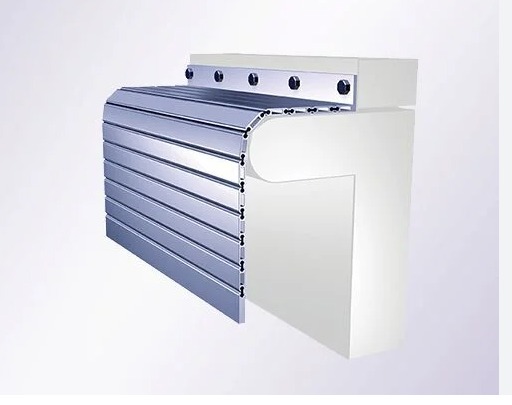 | APRON COVER Effectively engaged in offering a vast collection of outstanding quality products which include Apron Covers. View product → |
 | Laser Machine Bellows Laser Machine Bellows are specialized protective coverings designed to safeguard the vital internal components of laser machines. View product → |