
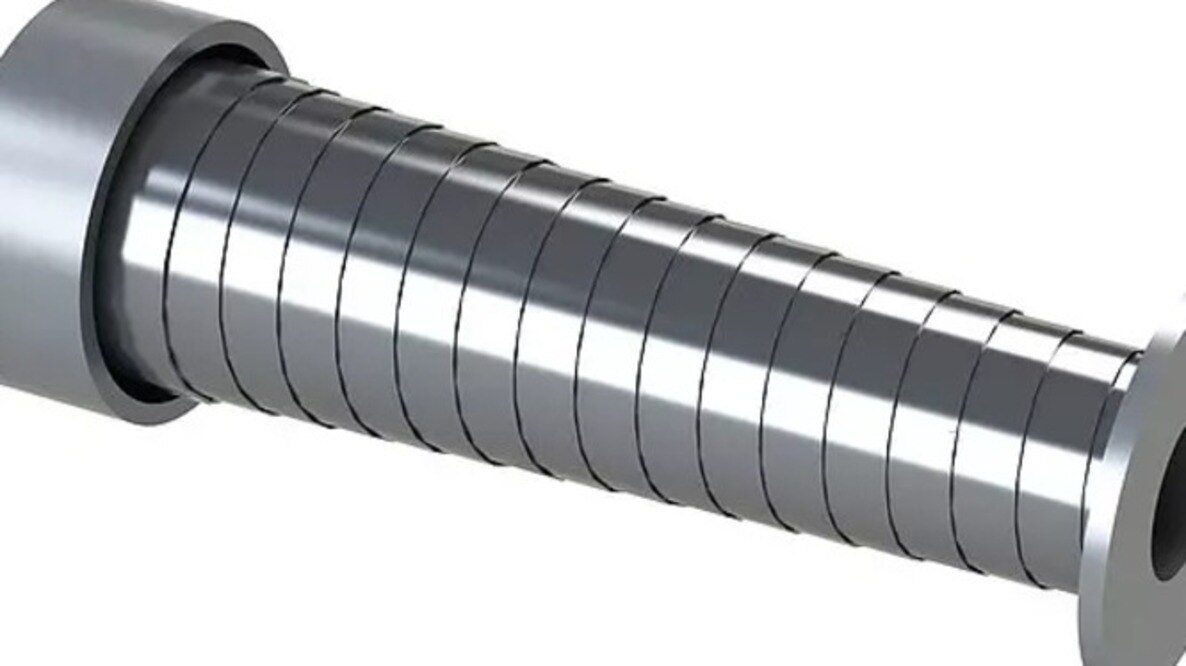
A cover that matches only the axis stroke can still collide at the end of travel, leave a gap, overload its guides or fail under coolant and chips. By the end, you will know which dimensions, machine data, materials and clearance checks determine whether a fabricated apron cover will operate reliably on your machine.
Key takeaways
- Measure the opening and retracted envelope at both travel limits.
- Provide mounting datums, travel speed, loads and contamination details before quoting.
- Match slat width, guide design and material to the machine’s movement.
- Test clearance, sealing and smooth travel before approving fabrication.
What custom apron cover fabrication changes from a standard selection
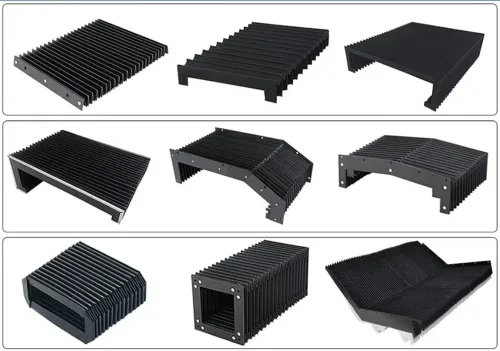
Custom apron cover fabrication designs the cover around the machine’s opening, travel, mounting datums, retracted envelope, guide arrangement and operating loads, rather than choosing a width and stroke from a standard table. Custom apron cover manufacturing normally combines overlapping metal slats, hinge links, guide shoes or rails, end brackets and replaceable wipers.
A standard cover works when its mounting faces, exposed length, package length, guide clearances and material rating already match the machine. Custom design becomes necessary for offset mounting faces, unusual axis orientation, restricted end space, high acceleration, abrasive or hot chips, or a fixed obstruction along the travel path.
Before requesting a quotation, provide:
- Opening width and height, covered travel, extended length and fully retracted package length
- Fixed and moving datums, mounting-hole patterns, end-stop positions and available guide clearances
- Mounting orientation, travel direction, bend or stacking path, allowable protrusions and service access
- Axis speed, acceleration, reversal frequency, duty cycle and the loads acting on the cover
- Chip size and material, abrasive dust, coolant chemistry, pressure, temperature and washdown practice
- Wiper contact surfaces, drain direction, cable exits, lubrication points and inspection access
An apron cover suits impact resistance, chip shedding and a compact rolled or stacked package. Choose another arrangement when its slats cannot follow the movement or its package will not fit.
| Option | Best fit |
|---|---|
| Bellows | Small folded dimensions and flexible movement |
| Roll-up cover | Winding into a housing |
| Telescopic steel cover | Rigid guideway protection on extending axes |
| Brush wiper | Light chip exclusion at a moving interface |
An apron cover is not automatically a personnel guard; gaps, joints and pinch points require a separate machine risk assessment.
How to measure custom apron cover dimensions at both travel limits
Measure custom apron cover dimensions with the machine at both travel limits, because the closed and fully extended positions define the cover’s actual geometry—not the nominal axis stroke.
1. Set the machine fully closed, then fully extended. At each position, record the opening width and height, exposed travel, and the fully retracted slat-package length. Include the fixed attachment and retracted package in the required cover length, or one end can remain uncovered or the package can strike the machine.
2. Mark fixed and moving datums separately. Measure the distance between opposing mounting faces, each bolt-hole location, the movement direction, and the surface where every wiper must contact.
3. Record clearance above, below, and beside the cover at both ends of travel. Check tool changers, fixtures, pallets, chip conveyors, cable carriers, lubrication lines, access doors, castings, and end stops in every position; mid-stroke clearance can disappear at an end limit.
4. Measure guide-rail locations and parallel clearances, end-bracket space, and any bend radius where the apron turns around a roller or guide. Note the drain direction and the access space needed to inspect or replace wipers.
5. Photograph the machine from both ends, then support the images with a dimensioned drawing. Show closed and open positions, fixed and moving datums, mounting holes, guide locations, wiper contact surfaces, allowable protrusions, and the full retracted envelope.
A single overall width or photograph cannot produce reliable custom apron cover dimensions. Include nearby moving components and service access in the drawing before requesting fabrication.
The fabrication requirements a manufacturer needs before quoting
Custom apron cover fabrication requirements give a custom apron cover manufacturer the information needed to quote a buildable assembly, not merely a cover that matches the opening.
1. Send machine drawings with fixed and moving datums, tolerances, mounting-hole patterns, guide locations, travel direction, closed and open positions, retracted package dimensions, allowable protrusions, wiper contact surfaces, drain direction and inspection access. Mark installation alignment requirements, guide-rail clearances, end-bracket space, cable exits and the components moving relative to the cover.
2. Add photographs showing surrounding guards, fixtures, pallets, tools, cable exits and service points. State the allowable retracted envelope and clearance around adjacent moving axes; a single overall envelope dimension cannot reveal interference at either travel limit.
3. Specify maximum travel speed, acceleration, reversal frequency, cycle frequency, orientation and duty cycle. A heavy cover adds reflected moving mass and guide load, while loose slats or excessive hinge clearance can rattle and strike during rapid reversals. Describe whether the cover is horizontal, vertical, inverted or subject to side loading.
4. List chip type and size, abrasive dust, coolant or lubricant chemistry, coolant pressure and temperature, washdown practice, ambient temperature and exposure to hot chips. State whether the cover must drain in one direction, and explain how technicians will inspect or replace the wipers.
Omitting these details can produce a geometrically correct assembly with unsuitable steel, fabric, wipers or guide hardware. Approve the quotation only after the drawing identifies tolerances, reference datums and installation alignment requirements.
How slats, guides and materials are sized for the machine
Size the assembly from the required covered travel and the available retracted package length, not from a catalogue slat width. Calculate slat count by dividing cover length by each slat’s effective pitch, then include the fixed attachment and end hardware in the total.
Effective pitch is less than the slat face width because neighbouring slats overlap; confirm it against the manufacturer’s hinge geometry.
Greater overlap improves chip and splash resistance, but increases friction, debris sensitivity and the minimum retraction package. Overlapping slats are not liquid-tight under high-pressure coolant without a tested sealing design.
In custom apron cover manufacturing, select the material for the actual hazard:
- Painted or coated carbon steel: choose it when impact resistance and cost dominate.
- Stainless steel: choose it for coolant, washdown or corrosive chips.
- Aluminium: choose it when lower moving mass matters more than severe impact and abrasion resistance.
Specify the custom apron cover dimensions and the complete assembly together:
- Set slat thickness, overlap and hinge construction from the pitch and retraction limits.
- Match fabric grade, edge treatment, fasteners and mounting-frame material to the environment.
- Support wide or horizontal covers with structural guide rails against sag, slat buckling and lateral escape.
- Keep opposing guides parallel through the full stroke; do not twist the frame or force the cover to correct a machine-casting error.
- Fit replaceable edge wipers, limit their contact pressure to prevent binding, and provide access for inspection and replacement.
How to validate fit, movement and the choice of cover type
Validate the cover on the real machine, not on a bench: sweep the complete stroke in both directions and check clearance at end stops, guards, fixtures, pallets, tools, chip conveyors, cable exits and adjacent axes. Test the fastest reversals, because slow manual movement will not reveal dynamic interference, slat impact or coolant ingress.
Use this acceptance checklist:
- Inspect guide and wiper contact for rubbing, slat cocking, uneven loading and excessive drive force.
- Run representative chips and coolant when they determine impact resistance or ingress performance.
- Check that the drain path carries liquid away from guides, seals and the machine.
- Confirm technicians can reach mounting fasteners, inspection points and replaceable wipers.
- Record speed, acceleration, reversal frequency and duty cycle during the test.
SCUTES INDIA PRIVATE LIMITED can use the drawing, photographs and operating data to review custom apron cover fabrication; request a drawing review followed by full-stroke acceptance rather than relying on a bench fit.
| Cover type | What it provides | Choose it when |
|---|---|---|
| Bellows | Highly flexible folded protection | Movement needs flexibility and the environment does not demand slat-level impact resistance |
| Roll-up cover | Wound material in a housing | A housing can contain the roll and movement follows one suitable axis |
| Telescopic steel cover | Rigid nested guideway protection | Nested boxes fit the available space |
| Brush wiper | Light, local exclusion | You need local debris control, not full enclosure |
| Apron cover | Articulated impact protection, chip shedding and a compact package | The machine needs robust protection that rolls or stacks within the available envelope |
Related product
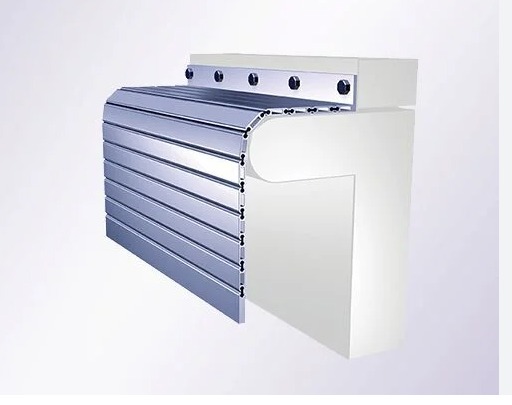 | APRON COVER Effectively engaged in offering a vast collection of outstanding quality products which include Apron Covers. View product → |
Frequently asked questions
What changes when you choose custom apron cover fabrication?
The cover is designed around the machine opening, travel, mounting datums, retracted envelope, guide arrangement and operating loads instead of a standard size.
How do you measure custom apron cover dimensions?
Record the opening, available mounting space and cover envelope with the machine at both fully extended and fully retracted travel limits.
What information does a manufacturer need before quoting?
Provide machine drawings, travel length, mounting datums, guide arrangement, operating speed, loads, contamination, temperature and access requirements.
How do you validate a custom apron cover before approval?
Check mounting alignment, clearances, slat overlap, guide engagement, wiper contact, retracted envelope and smooth movement across the full stroke.