
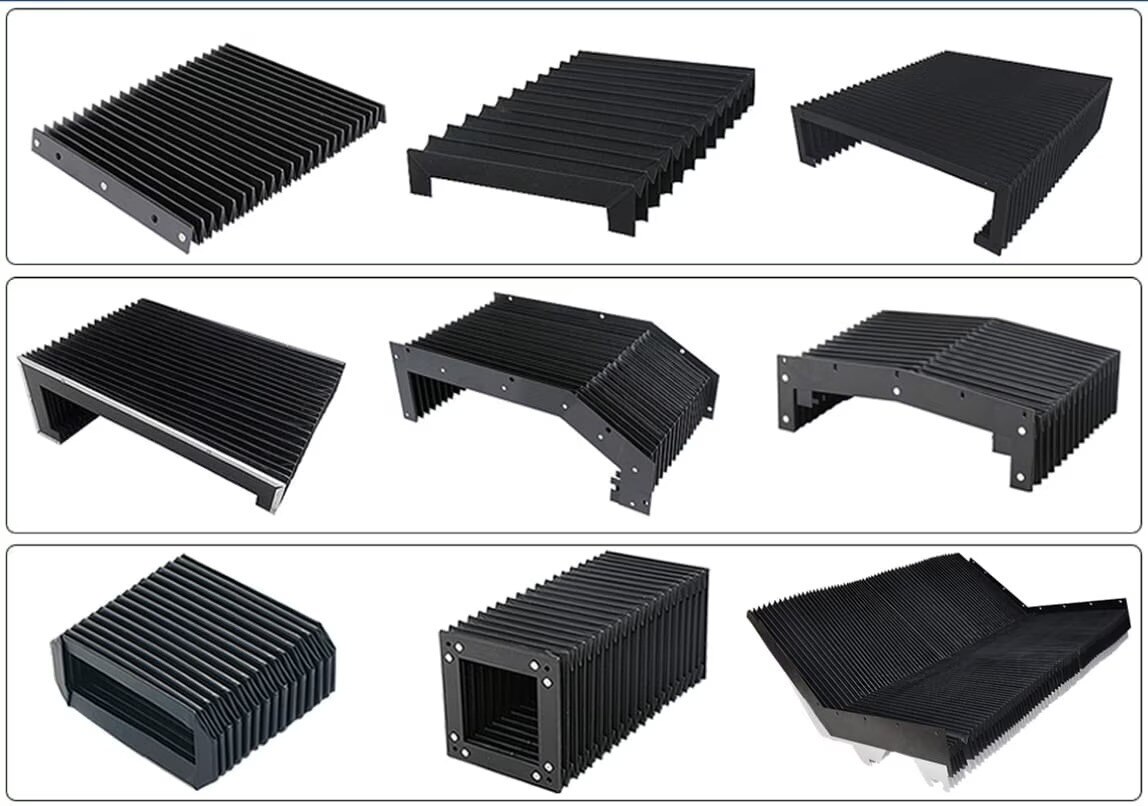
A duct fabric bellow is not simply a piece of coated cloth placed between two ducts. You need to match its layered construction, pressure rating, movement envelope, materials, dimensions and outdoor exposure to the actual Dubai installation before you approve a replacement or new connector.
Key takeaways
- Keep the bellow between rigid ductwork and vibrating or moving equipment.
- Select coating and insulation for temperature, chemicals, UV exposure and condensation.
- Match the design to pressure, movement, vibration and the equipment nozzle.
- Measure face dimensions, bolt pattern, length, movement and airflow before ordering.
What a duct fabric bellow contains and where it belongs
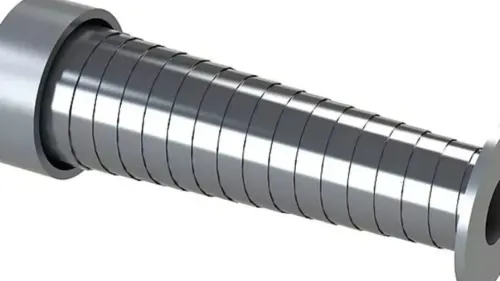
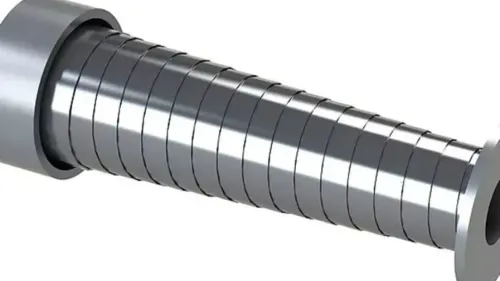
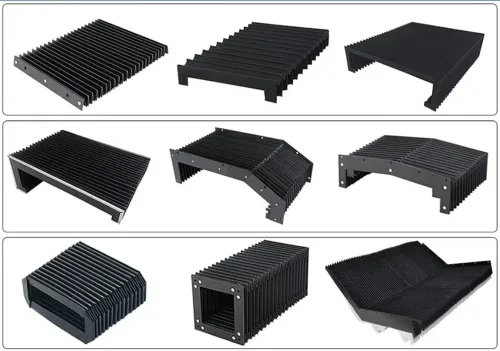
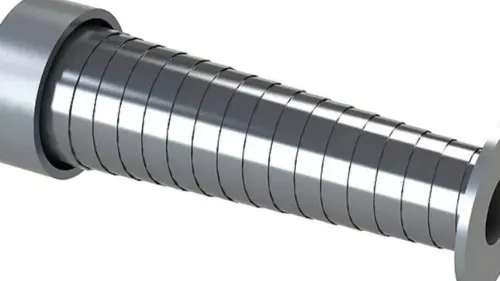
A duct fabric bellow is a short flexible connector fitted between rigid duct sections and equipment that vibrates, expands, or shifts. It isolates fan vibration and absorbs limited movement without forcing the duct or equipment nozzle to carry that movement. It is not textile air-distribution duct, which releases air along its length.
Its assembly normally includes:
- A flexible fabric sleeve forming the moving section and the air path.
- A gas-tight or abrasion-resistant membrane facing the duct airflow.
- Reinforcing fabric that provides mechanical strength.
- An insulation layer where heat transfer or personnel protection requires it.
- End flanges or clamping bars that hold the sleeve to each duct or equipment face.
- Stitched or welded seams joining the sleeve layers.
- Bolts, retaining strips, gaskets, and other fasteners that complete the joint.
The sleeve sits between fixed connection points, such as a fan casing and duct, a damper and duct, or two duct sections separated by a movement gap. An industrial fabric bellow is an assembly, not simply a selected fabric grade; the fabric alone cannot establish pressure performance or leakage control.
The frame, seams, insulation, and fasteners determine how the connector behaves after installation. A flame-resistant fabric claim also does not make the complete joint a fire-rated smoke barrier; require project-approved documentation for the installed assembly when that classification matters.
How to select fabric, coating and insulation for Dubai conditions
Choose the construction from the hottest surface temperature, not the process-gas temperature alone. A lined or insulated connector can carry hot gas while radiant heat, poor insulation termination or fan-side hot spots overheat the outer cover. Measure temperatures at the sleeve, seams, insulation face and clamping hardware.
| Construction | Best fit | Check before approval |
|---|---|---|
| Silicone-coated glass fabric | Moderate-to-high temperature flexible connections | Coating temperature limit, seam strength and abrasion resistance |
| PTFE-coated glass fabric | Chemical exposure and low permeability | Chemical compatibility, flex-fatigue performance and pinhole resistance |
| EPDM- or neoprene-coated fabric | Weather exposure, flexibility and vibration | Maximum temperature, oil or solvent contact and coating durability |
For a fabric bellow in dubai installed outdoors, specify resistance to ultraviolet radiation, elevated ambient temperature, humidity, dust loading and salt-laden air near the coast. Protect the outer cover, stitching, edge treatment and exposed clamps; a process-temperature rating does not prove weather resistance.
Abrasive dust calls for a durable outer coating and a design that prevents dust from collecting in folds.
Select insulation for the temperature reaching the outer layer and the required fire performance. State its thickness, facing, termination and resistance to moisture ingress. Do not accept a flame-spread claim as a fire-rated smoke barrier: require documentation for the complete installed assembly, including fabric, seams, insulation, liner, frame and adjacent duct.
How pressure and movement determine the bellow design
Treat the connector’s job as the first design decision. A vibration connector sits between a fan, casing or rigid duct to isolate small, rapid movement and prevent fan forces reaching the duct.
A thermal expansion joint accommodates calculated duct growth, so specify axial compression or extension, lateral offset, angular deflection and cycle count rather than calling every flexible section a vibration connector.
Give the designer the complete operating envelope:
- State positive pressure, negative pressure or vacuum, plus operating and upset temperatures at the fabric.
- Provide axial, lateral and angular movement, vibration amplitude, frequency, cycle count and required service life.
- Identify duct size, gas or dust composition, flow direction, installation orientation and available clearance.
Design for combined movement. Thermal growth, fan vibration and installation misalignment can occur together; an industrial fabric bellow rated for axial movement alone can fatigue at its seams or distort at the corners when lateral movement is added.
Support the duct independently. Anchors and guides must direct thermal movement, while the flexible section carries neither duct weight nor adjacent equipment loads. For dusty exhaust, specify a wear liner that prevents erosion and flutter without bridging the flexible gap.
Request pressure and leakage ratings, flange or retaining-bar details, bolt requirements, layer temperature limits, and fire or smoke documents where applicable. Include safe access for inspection, and define exclusions such as unsupported loads or unapproved chemical exposure.
What to measure and request before ordering a replacement
A replacement is correctly sized only when you provide movement and operating data, not duct dimensions alone. Send these fabric bellow details for industrial duct applications in Dubai:
- Duct width, height or diameter, face-to-face length, flange outside dimensions, bolt-hole pattern, bolt diameter, spacing and edge distance
- Positive and negative pressure, operating and upset temperature at each fabric layer, duct medium and chemical exposure
- Axial and lateral movement, angular deflection, vibration amplitude, cycle count and required service life
- Installation orientation, available clearance, nearby guides and anchors, and confirmation that rigid supports carry duct and equipment loads independently
- Required leakage rate, fire or smoke classification where the project demands it, and inspection or test procedure
Ask the supplier to return a signed dimensional drawing and identify every layer: membrane, reinforcement, insulation, liner, seams and clamping hardware. SCUTES INDIA PRIVATE LIMITED can use this information to distinguish a replacement duct fabric bellow from one incorrectly sized to compensate for unsupported duct weight or poor alignment.
| Input | Provide | Request back |
|---|---|---|
| Dimensions | Duct size, face-to-face length, flange and bolt details | Dimensioned drawing with tolerances |
| Performance | Pressure, temperature, movements, cycles and leakage limit | Pressure, temperature and movement ratings |
| Construction | Medium, chemicals, fabric layers and insulation | Material certificates and layer temperature limits |
| Safety | Fire or smoke requirement and authority specification | Complete-assembly classification or listing |
| Installation | Orientation, supports, guides and exclusions | Installation, inspection and stated limitations |
Reject any quotation that gives only fabric grade and dimensions; those details do not establish assembly pressure, leakage or service life.
Related product
 | Duct Bellows HVAC systems and industrial ducting rely on high-quality duct bellows for durability and performance. View product → |
How to install and inspect the connector over its service life
Protect the connector before it reaches the flange. A fabric bellow in Dubai can be damaged by dragging, sharp duct edges, welding sparks, grinding dust, or contact with hot surfaces.
1. Confirm the duct is independently supported and aligned before fitting. Do not stretch the sleeve to correct a gap, force it sideways, carry duct weight on it, or use it to absorb pipe strain. These loads create seam separation, corner tearing, and bolt-edge damage.
2. Fit the supplied gasket, retaining bars, clamps, and bolts in the specified orientation. Tighten evenly around the perimeter; excessive compression cuts the fabric, while an uneven clamp leaves leakage paths through needle holes, seams, corner folds, or flange gaps. Keep the sleeve clear of insulation, cable trays, and moving equipment.
3. Record the pressure class and test method, then test the installed joint at the specified pressure. “Airtight” is not a result. Investigate smoke movement, dust tracks, whistling, pressure loss, or visible staining as leakage evidence.
4. Inspect coating cracking, pinholes, abrasion, seam separation, corner damage, loose retaining bars, and loose bolts. Check insulation for compression, wetting, displacement, exposed edges, and loss of thickness.
5. Set the inspection interval from actual duty. Shorten it for continuous fan vibration, abrasive dust, frequent cycling, or outdoor ultraviolet exposure; record photographs, defects, bolt condition, and corrective action each time.
Frequently asked questions
Where does a duct fabric bellow belong?
Fit it between rigid duct sections and equipment that vibrates, expands or shifts. It isolates vibration and absorbs limited movement; it is not textile air-distribution duct.
How do you select fabric, coating and insulation for Dubai conditions?
Check operating temperature, pressure, airflow, oil or chemical exposure, sunlight, humidity and condensation risk, then specify fabric, coating and insulation for those conditions.
How do pressure and movement affect bellow design?
Use operating pressure, temperature, vibration and the direction and amount of movement to determine the bellow geometry, fabric construction, reinforcement and attachment details.
What should you measure before ordering a replacement bellow?
Record the opening dimensions, face-to-face length, bolt-hole pattern, flange details, airflow direction, operating conditions and the movement the connector must accommodate.
How should you inspect an installed duct fabric bellow?
Check for tears, abrasion, heat damage, loose fasteners, leakage, distortion and contact with nearby parts during operation. Inspect after installation and at planned maintenance intervals.