A cover that retracts slowly, scrapes, clicks, or stops short does not automatically need a new spiral spring. By separating spring fatigue from distorted cover sections, seized guides, failed wipers, and contamination, you can identify the actual fault, restore safe movement, and decide whether each part is repairable or must be replaced.
Key takeaways
- Check guideway alignment and obstructions before blaming the spiral spring.
- Photograph closed and extended cover positions before dismantling.
- Replace a spring with incorrect force, dimensions, or travel history.
- Record spring data, overlap, travel, tests, and acceptance conditions.
How do you identify the real cause of cover failure?
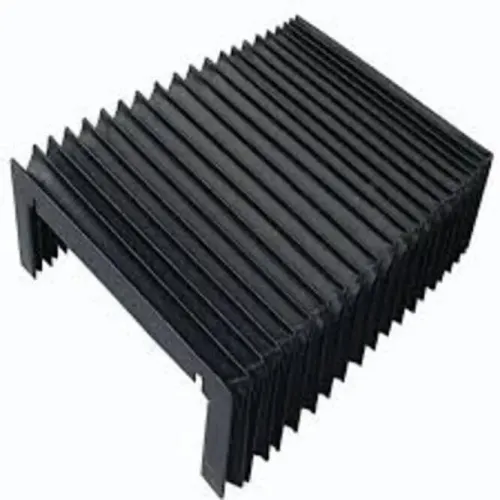
Identify the mechanical restriction before blaming the spring. Isolate the machine, then photograph the telescopic cover fully closed and fully extended; these images establish overlap, travel, and squareness before dismantling.
- Inspect every section for dents, cracked welds, distorted overlap edges, loose fasteners, damaged end stops, corrosion pits, trapped chips, and hardened coolant.
- Check guide rollers for seized bearings, flat spots, excess play, and contaminated tracks.
- Inspect sliding shoes for uneven wear and reduced clearance. Examine wipers for damage that could create drag.
- Look for a bent section, displaced roller, damaged wiper, or loss of parallelism. Any of these can bind the cover and imitate weak spring force.
- Record scraping, clicking, uneven travel, slow retraction, repeated coil binding, and every point where the cover loses squareness.
Confirm that a spiral spring actually drives retraction before specifying a worn spiral spring cover repair. Some telescopic steel covers use rollers, sliding shoes, and end stops without any spiral spring.
Check friction and side loading before measuring spring tension. A seized roller, contaminated track, loose fastener, or misaligned section can consume the spring’s force; replacing the spring alone then produces only temporary improvement. This sequence gives telescopic cover restoration a defensible cause, not merely a new component.
What is the safe sequence for removing and restoring the cover?
Use a locked-out, supported, energy-free sequence: one uncontrolled axis movement or spring release can crush hands, collapse sections, or eject hardware.
1. Apply machine lockout/tagout. Isolate electrical, hydraulic, pneumatic, and counterbalance energy, then prevent axis movement with the manufacturer’s approved restraints.
2. Photograph the cover fully closed and extended. Support or block every moving section so it cannot collapse when fasteners, stops, or mounting brackets are removed.
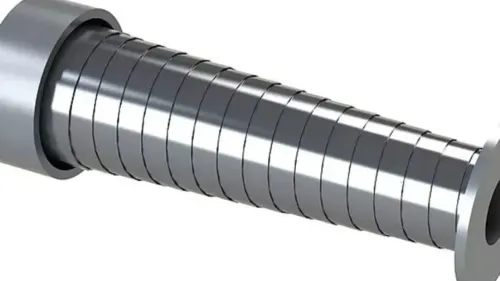
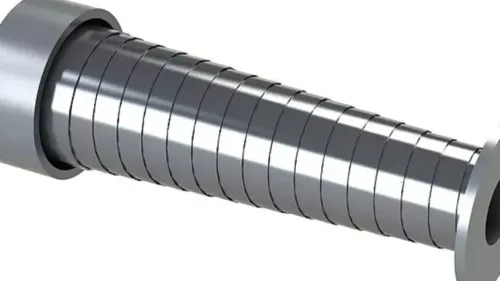
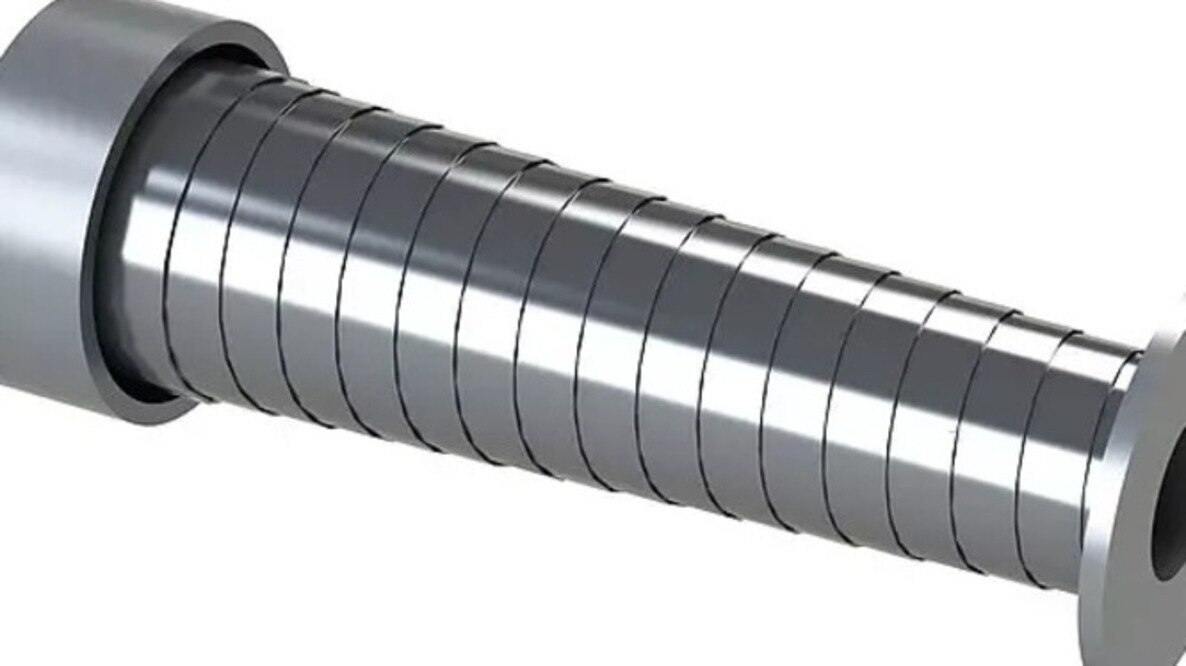
3. Restrain the spiral spring against sudden unwinding before releasing its arbor, outer hook, housing, or retaining hardware. Inspect each part for cracks, scoring, fretting, and looseness.
4. Dismantle in a controlled order, marking section positions and hardware. Never straighten a bent panel while the cover remains assembled; distortion can transfer into adjacent overlaps, rollers, and guides.
5. Remove chips and hardened coolant. Check each telescopic box on a flat reference surface, correcting minor distortion only within the cover maker’s stated straightening limits. Replace any cracked, sharply creased, or structurally weakened section.
6. Replace hardened, torn, permanently compressed, or chemically swollen wipers with a profile and compound suited to the coolant, temperature, speed, and way-surface finish.
7. Clean guide surfaces, clear drainage paths, and verify fasteners, rollers, stops, and mounting points. Restore each overlap without forcing adjacent sections into position, then cycle the cover manually before low-speed testing.
This sequence applies to telescopic cover restoration and any machine cover recovery in Chennai where contamination, heat, or corrosion has accelerated wear.
Can the spiral spring be recovered, or should you replace it?
Replace the spring when you find any condition that compromises its metal, anchors, or rated recoil:
- Visible cracks or deep corrosion pits
- Fractured hooks or a cracked arbor hole
- Permanent set
- Substantial loss of torque
- Repeated coil binding after correcting cover friction
Do not grind away cracks, heat spring steel to straighten it, or stretch the spring beyond its designed travel. Those actions can alter its heat treatment and destroy rated torque.
A specialist can assess a spring that has only lost preload when the strip, hooks, arbor, housing, and working surfaces remain undamaged. Re-tensioning is not a substitute for a fatigued or corroded spring.
To restore telescopic cover and spiral spring after wear, provide these spring details:
- Collapsed and extended cover lengths
- Strip width and thickness
- Coil diameter, material or spring grade
- Winding direction
- Arbor and housing dimensions
- Anchor geometry
- Usable angular travel
- Initial preload
- Torque across the working angle
Also measure the cover-section dimensions, stroke, mounting-hole pattern, guideway width, and available clearance. This is the information required for telescopic cover spiral spring recovery; outside diameter alone cannot identify a safe replacement.
How do you match the spring to the restored cover and verify operation?
Match the replacement spring’s torque and retraction travel to the restored cover, not merely to the old spring’s dimensions. For a worn spiral spring cover repair, confirm suitability for:
- Cover mass, axis orientation, acceleration and cycle frequency.
- Coolant type, chip size and operating temperature.
- Available installation space, anchor geometry and usable operating angle.
Check spring force across the operating angle with the cover installed. A spring that retracts an unloaded cover on a bench can fail under coolant drag, chip buildup, misalignment or machine acceleration.
2. Confirm that the cover is square and that sections open concentrically. Measure even overlap and consistent guide clearance, then check rollers and shoes for damaging play. Stops must contact without impact; rubbing, clicking or side loading indicates a mechanical fault, not a spring-sizing problem.
3. Do not force the cover closed or run it with missing sections or exposed sharp edges. During telescopic cover restoration, leave the spring, guides and sliding surfaces unlubricated until the manufacturer identifies the correct lubricant and location. Excess grease holds abrasive chips against sliding surfaces.
4. Cycle the assembled cover by hand through its complete stroke. Run the machine at low speed before normal production, then confirm full wiper contact, spring retention, quiet movement, no scraping or clicking, correct drainage and no vibration. Record the spring identification, preload, travel and photographs of the final test.
What should a restoration quotation and acceptance record contain?
A quotation to restore telescopic cover and spiral spring after wear in Chennai must describe measured conditions, not simply say “spring recovery.” Attach photographs of the cover fully closed and extended before dismantling, then add photographs after the final low-speed test.
1. Record closed and extended lengths, usable travel, section clearances, overlap, mounting-hole pattern, cover mass if available, and axis orientation. Note the spring identification, strip dimensions or grade, winding direction, arbor and anchor details, preload, and torque or tension readings across the working stroke.
2. Specify the wiper profile and material, roller and shoe condition, guide clearance, stop condition, coolant type, and operating temperature. Record whether rubbing, impact, scraping, clicking, vibration, or uneven retraction remains after assembly.
3. For machine cover recovery in Chennai, identify the corrosion source as coolant attack, trapped moisture, galvanic contact, or ordinary chip abrasion. Replacing a corroded spring or panel without removing the contamination source invites repeat failure.
4. Acceptance requires manual cycling through complete travel, followed by low-speed machine operation. Confirm even movement, correct overlap, full wiper contact, spring retention, quiet stops, drainage, and no abnormal noise.
When comparing a local repair, recovered spring, or complete replacement, use the same measurements. SCUTES INDIA PRIVATE LIMITED is one supplier to consult when you need a measured quotation that relates cover dimensions and motion conditions to the spring, rather than treating it as an isolated part.
Related products
 | TELESCOPIC SPRING COVER Telescopic Spring Covers provide protection under extreme conditions. View product → |
 | TELESCOPIC COVERS A telescopic cover protects guide-way surfaces and components of moving axis of machines. View product → |
Frequently asked questions
How do you identify the real cause of telescopic cover failure?
Isolate the machine and inspect guideway alignment, chips, coolant buildup, damaged wipers, binding, uneven overlap, and end stops before testing the spring.
What is the safe sequence for removing and restoring the cover?
Lock out electrical and stored-energy sources, photograph the cover positions, support sections, label fasteners, remove obstructions, and dismantle only after the cover cannot move unexpectedly.
Can a worn spiral spring be recovered, or should you replace it?
Recover the spring only when its strip, winding, anchors, and force remain within the maker’s limits. Replace it when it is cracked, permanently distorted, corroded, loose at the anchor, or weak across its working travel.
How do you match the spring to the restored cover and verify operation?
Match spring dimensions, winding direction, force, attachment points, and travel to the cover. Test smooth movement, section overlap, full extension, full closure, clearance, and repeatable return.
What should a restoration quotation and acceptance record contain?
List the failure findings, parts to repair or replace, spring specifications, cleaning and alignment work, exclusions, testing method, photographs, measured travel, and sign-off criteria.