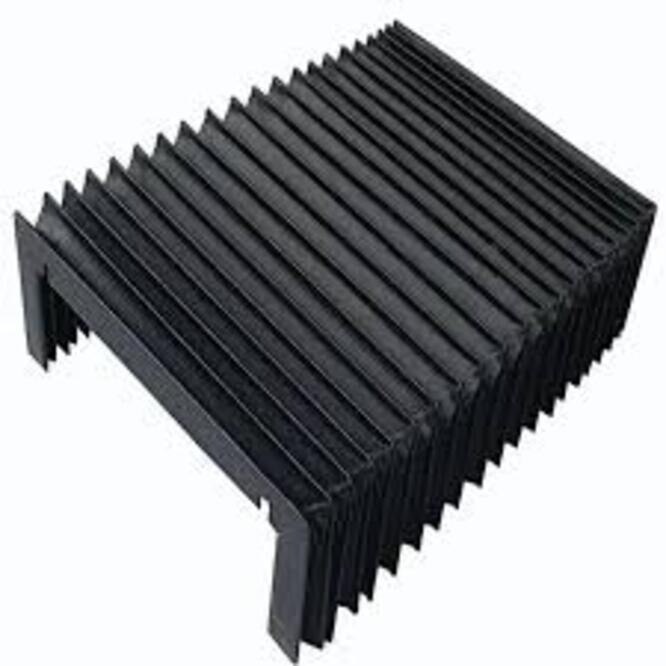
A bellows selected by machine model or travel distance alone can rub against the laser head, trap hot dross, or fail when Canberra temperatures change. You will be able to specify the cover’s construction, dimensions, design limits and maintenance checks before ordering or approving a replacement.
Key takeaways
- Define dust, sparks, swarf, coolant and beam-path hazards before selecting fabric.
- Measure the full axis envelope, including folds, access clearance and cable movement.
- Choose a cover design that matches axis travel, heat exposure and service access.
- Inspect folds, seams and mounting points by travel cycles, not appearance alone.
Specify the hazard before you specify the fabric
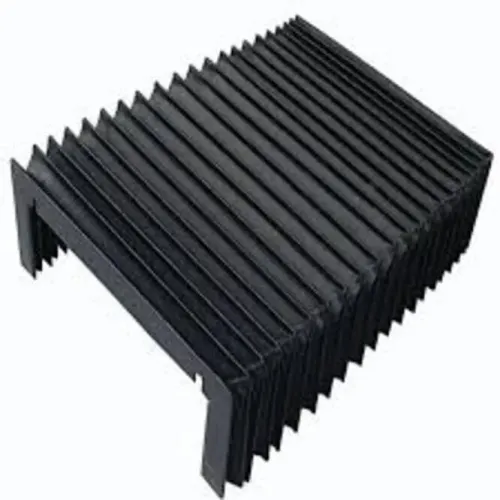
The hazard determines the construction before the fabric name does. State whether the industrial bellows cover must block dust, contain sparks and hot spatter, resist abrasive swarf, stop coolant or oil, shield moving parts, or protect a beam-delivery path.
Also state the laser wavelength, radiant-heat exposure, cleaning chemicals and fire behaviour required; a cover exposed to a direct beam needs a separate optical-safety assessment.
Give the supplier these laser machine cover details:
- Protected component: linear guide, ballscrew, cutting head, autofocus mechanism, optics, cable loop or beam-delivery path.
- Motion: axis travel, maximum speed and acceleration, extended and compressed lengths, folded height, allowable lateral offset and minimum bend radius.
- Interface: fixed or moving mounting, flange or frame dimensions, mounting-hole pattern and clearance from the nozzle, laser head, cable carrier and collision-release movement.
- Environment: continuous and intermittent temperature limits for the finished assembly, including seams and adhesive layers; exposure to oil, coolant, sparks, UV and cleaning agents.
- Ingress target: specify the dust and water exposure you need. An IP54 or IP65 rating on the machine cabinet does not prove the bellows has that rating under IEC 60529.
| Hazard | Likely construction | Check before approval |
|---|---|---|
| Dust, coolant and swarf | PU- or PVC-coated polyester with sealed, abrasion-resistant seams | Chemical and temperature limits |
| Heat, sparks or low friction | PTFE- or silicone-coated glass fabric | Finished-cover heat and fire evidence |
| Optical-path protection | Purpose-designed shielding, not a standard way cover | Wavelength, radiant heat and movement clearance |
Measure the complete movement envelope, not just the stroke
Give the supplier the full movement envelope, because stroke alone cannot show whether the cover will bottom out, sag into the guideway or rub at either end.
Provide these laser machine cover details:
- Protected axis and travel direction
- Total stroke, maximum speed and peak acceleration
- Fully extended length and supplier-approved minimum compressed length
- Folded height, overall width and height, and the required compression ratio
- Allowable lateral offset, bend radius and permitted sag between supports
- Mounting orientation, flange or frame dimensions, and mounting-hole pattern
- Clearance from the laser head, nozzle, autofocus mechanism, optics, cable carrier, tooling and collision-release movement
- Clearance from adjacent frames, guideways, ballscrews and end stops
Measure with the machine at both travel limits, then record obstructions throughout the route. Include installation space: a cover mounted too tightly stays under tension and can tear at full extension; excessive slack can drag across the guideway or force pleats outside their intended shape.
Your bellows cover specifications laser machine for Canberra should also include thermal movement. State the machine’s minimum and maximum operating temperatures, storage limits and any nearby heat source, then ask the supplier to confirm the allowance in millimetres.
Submit photographs or a dimensioned sketch showing the laser head and cable loop; a cover that clears the rail can still obstruct beam-delivery or service movement.
Match the cover design to the axis and access needs
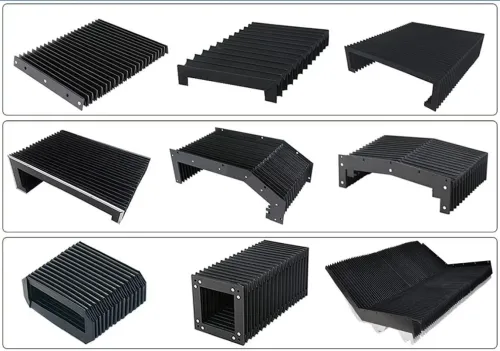
Choose the cover by axis motion and access frequency, not by the laser’s name. An industrial bellows cover suits a moving guideway, but it must not carry a cable loop or replace a cable carrier.
| Option | Choose it when | Choose another enclosure when |
|---|---|---|
| Sewn | You need flexible folds, repairable seams and moderate contamination control | Leaks, hot spatter or aggressive cleaning demand sealed joints |
| Welded | You need a tighter, cleaner barrier against coolant, dust or chips | The material cannot tolerate welding heat or frequent field repair |
| Fixed | The protected component does not travel | The hazard moves with the axis |
| Moving | The cover must follow a slide, head or focus mechanism | A rigid guard can provide better impact protection |
| Roll-up | Long travel and frequent operator access make folded fabric impractical | Chips or sparks could damage the exposed winding |
| Apron | A broad horizontal or vertical surface needs simple coverage | You need sealed protection around all sides |
| Telescopic | Rigid sections must shield a long stroke from impact and debris | Tight clearance or a very small folded length rules out nested sections |
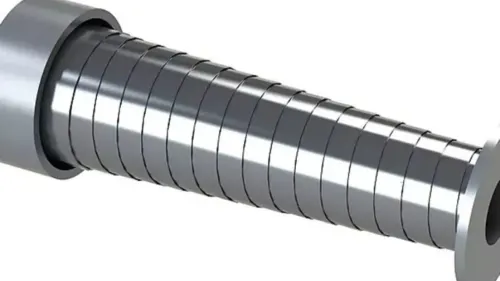
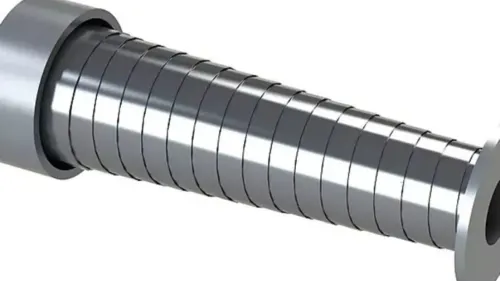
| Spring-cover | Short travel and compact, self-retracting protection are priorities | High loads, long strokes or severe contamination require stronger construction |
In a bellows cover Canberra specification, state whether the cover moves, where access doors open and how the cable carrier clears it throughout travel. Do not transfer an IP54 or IP65 rating from the machine cabinet; IEC 60529 applies to the tested complete enclosure.
Use a separate laser-rated or rigid enclosure when you need beam containment, operator guarding, high-temperature spark control or verified ingress protection.
Account for Canberra temperature, sunlight and installation conditions
A Canberra installation needs stated temperature limits, not “indoor use.” Record the lowest and highest operating and storage temperatures at the machine, including sub-zero winter conditions and summer exposure above 35 °C. Ask the supplier to account for fabric stiffness, seal contraction and thermal expansion at both limits.
| Condition | Put in the specification | Request from the supplier |
|---|---|---|
| Temperature and sunlight | Minimum and maximum operating/storage temperatures; direct or indirect UV exposure | Continuous and intermittent temperature limits for the finished assembly, including seams, adhesives and seals; UV-resistance data |
| Cutting exposure | Material being cut; hot dross, sparks, radiant heat, coolant, oil and cleaning chemicals | Compatibility statement and recommended heat shield, stainless-steel slats or chip deflector |
| Ingress | Dust, spray or wash-down exposure; required protection at the installed joint | Test evidence for the complete bellows assembly in its mounting arrangement, not an IP rating copied from the machine cabinet |
| Installation | Mounting orientation, flange and hole pattern, clearances, allowable lateral offset, extended and compressed lengths | Approved orientation, minimum compressed length and installation drawings |
A bellows cover is not automatically an IP54 or IP65 enclosure. IEC 60529 ratings apply to the complete enclosure and test setup, so specify the actual dust and water exposure instead of transferring the cabinet rating.
Include these conditions in your bellows cover specifications laser machine for Canberra. A supplier such as SCUTES INDIA PRIVATE LIMITED should state the finished construction’s limits and provide drawings or test records that match your laser machine, rather than offering a fabric name alone.
Related products
 | Laser Machine Bellows Laser Machine Bellows are specialized protective coverings designed to safeguard the vital internal components of laser machines. View product → |
 | Machine Covers Machine covers are specially designed shields used to protect industrial equipment and machinery from environmental elements. View product → |
Use a travel-based inspection and replace the cover before failure
A bellows can look intact at rest and still fail when its folds compress. During laser machine bellows maintenance, isolate the machine, release stored energy and inspect the cover while the axis travels through its full safe range.
1. Move the axis slowly from minimum to maximum travel. Check every fold, including the underside and compressed end, for pinholes, cuts, delamination, pulled stitching, distorted frames, trapped swarf and contact with fixed parts.
2. Record rubbing, stretching, sagging and pleats that do not open evenly. Compare the observed movement with the laser machine cover details: extended and compressed lengths, folded height, mounting position, lateral offset and clearance from cable carriers, tooling and the laser head.
3. Remove metal fines, dross and dust before they are pressed into the folds. Vacuum or wipe them away without forcing particles through the fabric; do not assume guideway lubricant cleans or lubricates the bellows.
4. Prevent oil and grease overspray, then confirm cleaner compatibility before using a degreaser. An unsuitable solvent can attack polyurethane, PVC, silicone or adhesive seams even when it is safe for painted steel.
Replace the cover before a hole, split seam or distorted frame exposes the guideway. Replace it immediately if a fold catches, the cover remains under tension at an end stop, or slack sags into the travel path.
A patched surface does not correct wrong compressed length, mounting tension or repeated contact; reassess the design before ordering the replacement.
Frequently asked questions
What hazards should determine a laser machine bellows cover specification?
Specify the hazard first: dust, sparks, hot spatter, abrasive swarf, coolant, oil, moving-part contact or beam-delivery protection. The hazard determines the construction and fabric requirements.
What measurements are needed for a laser machine bellows cover?
Measure the complete movement envelope rather than stroke alone. Include extended and compressed lengths, folded height, width, mounting clearances, access space and interference with cables or nearby components.
How do you match a bellows cover design to a laser machine axis?
Match the design to the axis direction, travel pattern, available clearance and maintenance access. Check whether the cover must accommodate lateral movement, vertical travel, tight bends or frequent removal.
What Canberra installation conditions affect laser machine cover details?
Account for Canberra temperature changes, direct sunlight, workshop heat, dust and installation conditions. Confirm the material and mounting method suit the machine location and exposure.
How should you maintain a laser machine bellows cover?
Inspect the cover across its travel for torn folds, worn coatings, damaged seams, loose mounts, trapped swarf and coolant penetration. Replace it before damage exposes the protected axis or beam-delivery parts.
Related products
 | TELESCOPIC COVERS A telescopic cover protects guide-way surfaces and components of moving axis of machines. View product → |
 | Duct Bellows HVAC systems and industrial ducting rely on high-quality duct bellows for durability and performance. View product → |
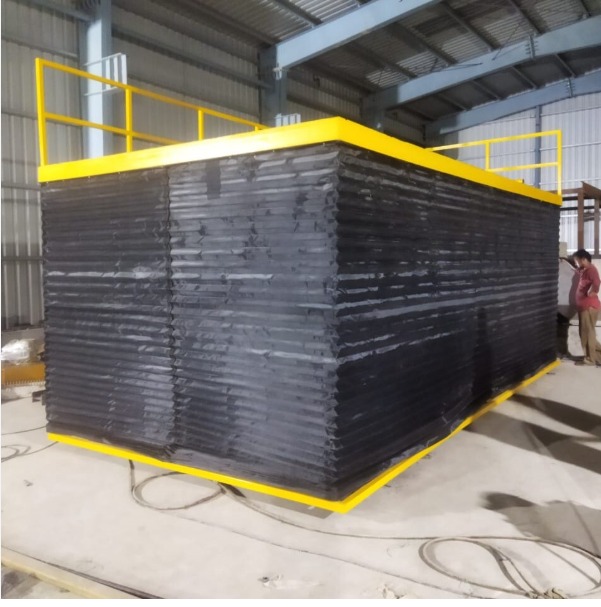 | SCISSOR LIFT BELLOWS Scissor Lift Bellows are one of the broadly demanded stabilizer for which we are considered an acclaimed designed in the market. View product → |
 | TELESCOPIC SPRING COVER Telescopic Spring Covers provide protection under extreme conditions. View product → |