A scissor lift changes geometry throughout every raise, lower, stop, and restart, opening new paths to pivots, cylinders, hoses, and crush zones. By the end, you will know how the cover moves with the linkage, how to specify its dimensions and materials, and how to verify that it protects without becoming an obstruction.
Key takeaways
- Match fold direction to the lift’s changing geometry.
- Measure the full stroke, folded stack, and clearance around moving members.
- Use flexible leather construction where repeated folding and debris protection matter.
- Replace the cover when cracks, loose fasteners, or restricted movement appear.
How the bellow follows the scissor mechanism through its stroke
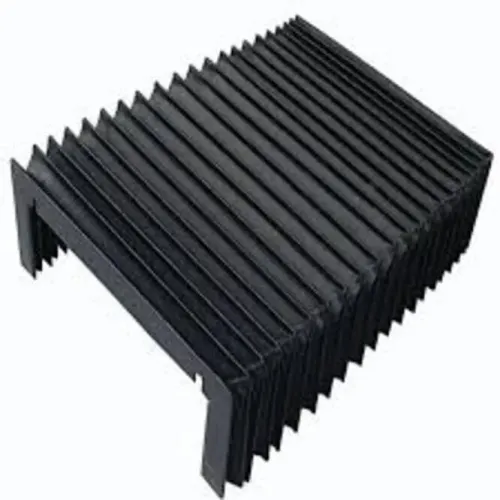
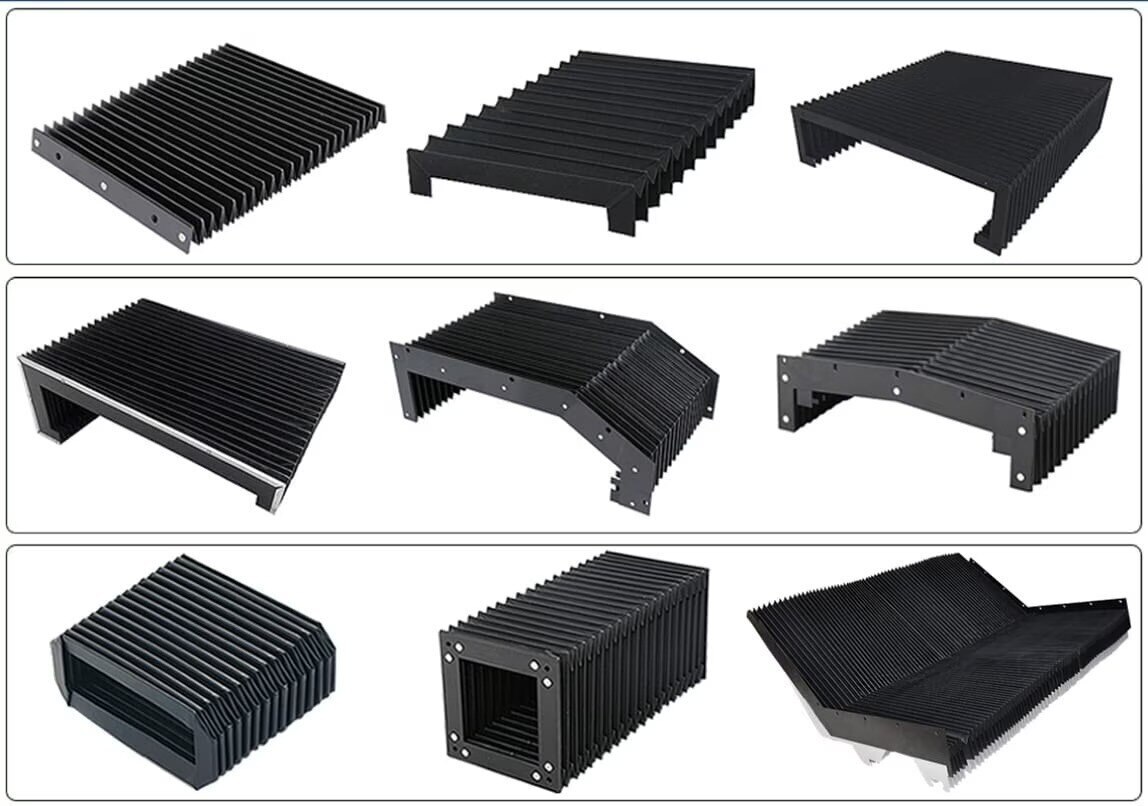
From the fully lowered position to the fully raised position, leather bellow operation follows the lift’s changing geometry without driving or restraining it. Accordion folds compress into a compact stack as the crossed arms close, then open progressively as the arms separate.
The mounting edges travel with the protected envelope, while the bellow stays outside the linkage and clear of the crush zone.
The covered area can include:
- Crossed arms, pivot joints, and bearings
- Hydraulic cylinders, hoses, and wiring
- Operator-accessible gaps, rollers, and adjacent moving hardware
The barrier blocks access to pinch points and keeps out dust, grit, welding spatter, oil, hydraulic fluid, moisture, chips, and falling debris. It can reduce abrasive contamination around lubricated joints, but it does not replace lubrication, wipers, scraper seals, or bearing seals.
A bellow is a flexible contamination and contact barrier, not a structural member. It must not carry platform load, stabilise the arms, limit travel, or replace guardrails, mechanical guards, interlocks, emergency stops, overload systems, lubrication, wipers, or bearing seals.
Do not let a sealed cover balloon or collapse as its volume changes; controlled venting can prevent pressure-driven dust pumping when the openings cannot admit fingers or chips. Check the cover through intermediate positions so folds do not invert, snag, rub, or enter the mechanism.
What makes leather scissor lift bellow construction survive repeated folding
Repeated folding survives only when the material and fold geometry match the lift’s environment. Leather scissor lift bellow construction must specify leather or coated leather for the actual fluid, temperature, cleaning method, and impact exposure—not rely on a label such as “oil resistant.”
Check the cover against:
- Petroleum oil, hydraulic fluid, and coolant, including concentration and contact time
- Water, washdown pressure, and continuous humidity
- Solvents or alkaline cleaners used on the machine
- Operating temperature, radiant heat, sparks, and welding spatter
The accordion assembly must open across several folds rather than forcing one fixed crease to take every bend. Set fold spacing and pleat depth so the collapsed stack fits the available pocket without crushing the fold roots.
Use construction details that keep loads distributed:
- Stitched or bonded seams with thread and adhesive compatible with the exposure
- Reinforced corners where the pleats change direction
- Hemmed or clamped attachment edges
- Mounting frames with fasteners that provide adequate edge distance
- Abrasion-resistant contact surfaces at unavoidable touch points
A broad reinforcement strip or flange spreads repeated pull across the leather. Small holes cut through unsupported material concentrate stress, then tear outward when the linkage pulls sideways.
Sharp fixed creases, exposed fastener heads, trapped chips, and continuous rubbing start damage at fold roots, corners, and mounting edges. Use stand-offs, radiused shields, wear strips, or sacrificial surfaces to eliminate contact; simply adding thickness does not correct the rubbing path.
How to measure the lift and design clearance around every moving member
Measure the mechanism at its fully lowered and fully raised positions, not from platform height alone. For scissor lift leather bellow design, record opening width and height, collapsed or folded length, extended length, stroke, fold height, pleat depth, minimum bend radius, attachment travel, mounting clearance, and the available pocket at each end position.
1. Mark fixed reference points on the frame and platform, then measure the bellow’s mounting faces at both positions. Include the folded stack, bracket thickness, fastener heads, and fold projection in the compressed-space check. If the package exceeds the pocket, it can be crushed or stop the lift before its mechanical limit.
2. Trace the swept envelope through several intermediate positions, not only the endpoints. Include every crossed arm, pivot, roller, hydraulic line, hose, wiring run, cylinder, guide track, platform edge, and floor surface. Keep the bellow outside these paths and preserve the stated minimum bend radius.
3. Run the clearance review with an uneven load, skewed linkage, sudden stop, high-speed jogging, and repeated short strokes. These conditions expose rubbing, snagging, fold inversion, crushing, and interference that a slow full stroke can hide.
4. With the machine isolated under the site procedure, observe a complete stroke and inspect each intermediate position. Look for trapped chips, pulled mounts, loose fasteners, seam tension, and fold contact; repeat the check after representative cycling. A bellow is a barrier, not a structural member, stroke limiter, or substitute for a guard.
When a bellow is the right cover—and when another design is better
Choose a bellows enclosure when the linkage changes angle through the stroke and you can control its folded package, usable stroke, and attachment geometry. A leather bellow for scissor lift mechanisms must sit outside the moving envelope, with brackets and fasteners clear of crossed arms, pivots, rollers, and guide tracks.
| Option | Strength | Wrong choice when |
|---|---|---|
| Bellows enclosure | Follows changing linkage geometry and maintains a defined barrier | The folded stack, pleat projection, or attachment travel cannot fit the compressed pocket |
| Flexible skirt | Covers a broad area against splash and falling debris | Loose fabric can enter crush zones or the skirt cannot hold a controlled gap |
| Roll-up cover | Handles long travel when a clear winding path is available | Scissor arms need coverage from several directions, or chips and grit can jam the roll |
| Telescopic cover | Protects guided, straight-line travel with rigid overlapping sections | The linkage changes angles and creates a large, irregular swept envelope |
Do not select by platform height alone. Check the fully raised and lowered positions, then trace intermediate motion so the cover does not balloon, snag, invert, or become crushed. A skirt that looks generous at rest can fold into a shear zone during descent.
SCUTES INDIA PRIVATE LIMITED can use the measured envelope, operating media, temperature, and cycle conditions to specify leather or coated leather, rather than treating nominal size as the design basis. That distinction matters when oil, hydraulic fluid, welding spatter, or trapped chips will attack the cover.
Related product
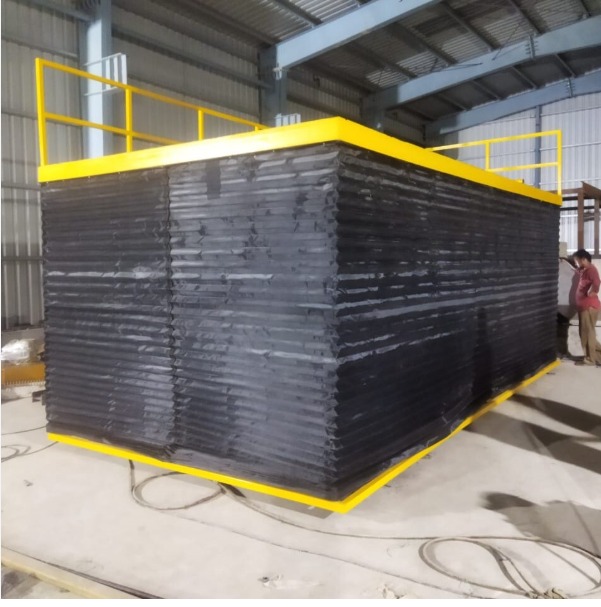 | SCISSOR LIFT BELLOWS Scissor Lift Bellows are one of the broadly demanded stabilizer for which we are considered an acclaimed designed in the market. View product → |
How to test, inspect, and maintain the installed protection
Accept the installed bellow only after it passes a full-stroke check and a post-cycle inspection. Isolate the machine according to the site procedure before entering the inspection area or operating the lift.
1. Observe one complete lowered-to-raised-to-lowered stroke. Check every intermediate position for rubbing against scissor arms, hoses, cylinders, pivots, rollers, floor surfaces, platform hardware, or fasteners.
2. Watch the folds as they move. Reject ballooning, collapse, fold inversion, trapped chips, excessive seam tension, loose fasteners, pulled attachment edges, cracked fold roots, and worn corners.
3. Check pressure behaviour during repeated movement. Venting or controlled openings can prevent ballooning and dust pumping, but position and size each opening so it cannot become a finger path or a route for chips into the mechanism.
4. Confirm that the cover leaves guardrails, gates, emergency lowering equipment, limit switches, position sensors, hose routing, and emergency-stop access unobstructed. It must not carry platform load, restrict travel, or replace a guard or interlock.
5. Verify access to every grease point and inspection area. Use a removable section or access opening where the bellow blocks lubrication; the cover does not replace lubrication, wipers, scraper seals, or bearing seals.
6. Repeat the inspection after representative cycle testing, including normal stops and direction changes. Early damage usually appears at fold roots, corners, and mounting edges before it appears on the flat faces. Record defects and correct them before release.
Frequently asked questions
How does a leather bellow follow a scissor lift through its stroke?
Its accordion folds compress as the lift lowers and open progressively as the crossed arms separate, without driving or restraining the mechanism.
What makes leather scissor lift bellow construction survive repeated folding?
Durable leather, consistent fold spacing, reinforced attachment points, and controlled bend radii reduce stress during repeated compression and extension.
What measurements are needed for scissor lift leather bellow design?
Measure the lift’s full stroke, folded and extended bellow dimensions, attachment locations, fold direction, and clearance around every moving member.
When is a bellow the wrong protective cover for a scissor lift?
Choose another design when the mechanism needs open access, experiences extreme heat or chemical exposure, sheds sharp debris, or requires protection across complex multi-axis motion.
How should you test and maintain a leather bellow on a scissor lift?
Cycle the lift through its full range, check for rubbing and restricted motion, inspect folds and fasteners, and remove debris before damage spreads.