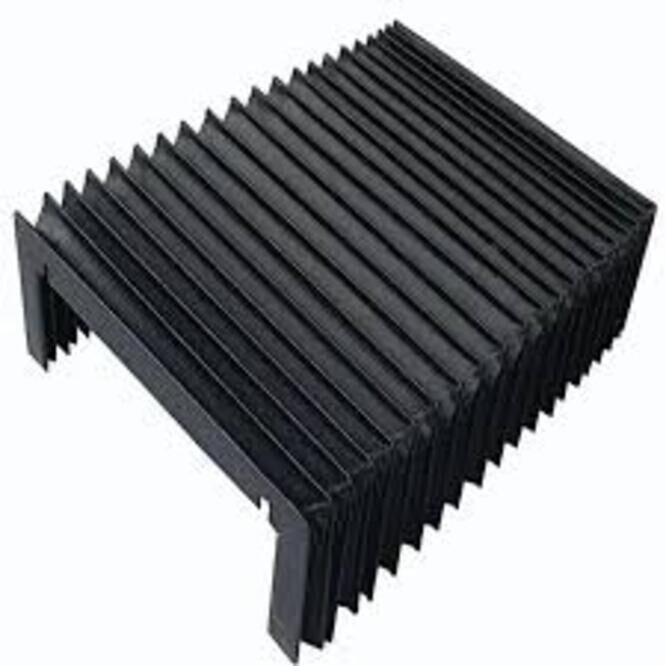
A damaged cover after an axis collision is not automatically a cover-replacement problem: the rail, carriage, drive, mounting plates or travel limits may have caused the failure. By the end, you will be able to isolate the machine, identify the damage pattern, decide whether to repair or replace the protection, and choose between a bellows cover and spiral spring without creating a second failure.
Key takeaways
- Isolate power and stored energy before inspecting or moving the damaged cover.
- Map damage against axis position to find the failure point.
- Separate cover binding from alignment, bearing, motor, and drive faults.
- Choose bellows or spiral spring protection based on debris, heat, travel, and motion.
Stop the axis and map the damage before running it again
Isolate electrical and stored energy before touching the cover, and do not “test” it by cycling the axis. Photograph the cover at full extension and compression, mark the damage location, and record the axis position where the incident occurred.
- Inspect every fold for punctures, melted coating, glazed or brittle fabric, abrasive thinning, trapped swarf, and tears at the end attachment. Damage concentrated on fold crests points to heat, repeated bending, or compression interference.
- Check crushed or displaced frames, broken support slats, detached end plates, torn attachment strips, distorted guide rails, and rubbing marks. Confirm that the cover does not reach its compression limit before the axis reaches its specified end of travel.
- Clean the guideway, rails, guide channels, and any spiral-spring housing. Chips beneath a fold or inside a housing create high spots, abrasion, and jamming on the next cycle.
- Inspect a spiral cover’s housing, end bearings, guide tracks, strip overlap, spring anchor, and travel stops. A replacement strip will fail again if the housing or guide has shifted.
- Check for loose carriage hardware, worn linear-guide components, failed travel limits, misalignment, and material inside the laser head or drive system. These faults can create laser machine bellows cover damage even when the cover was correctly selected.
A bellows cover movement failure that repeats at the same travel position requires an axis and obstruction investigation before ordering another cover. After clearance is confirmed, jog at low speed through the complete travel and watch fold sequencing, side clearance, retraction force, and end-of-travel behaviour. Stop immediately if the cover rubs, snags, or loads unevenly.
Separate cover binding from an axis or drive fault
A bellows cover caused the abnormal movement only when it adds resistance, catches, or reaches its compression limit. An axis fault remains after the cover is safely disconnected or removed by a qualified technician, with the machine’s guarding and laser controls preserved.
Use the failure position as evidence:
- Cover fault: rising servo load, scraping, sideways buckling, or a sudden stop appears only with the cover installed. Inspect displaced frames, trapped swarf, unequal mounting height, torn attachment strips, and fold contact with the guide.
- Axis fault: the same position produces following error, vibration, backlash, rough travel, or a limit-switch failure without the cover connected. Check linear-guide blocks, carriage bolts, coupling hardware, alignment, lubrication, and acceleration settings.
- Shared fault: movement is smooth at low speed but fails during rapid travel. Reduce acceleration, measure the cover’s compressed length, and check that the axis stroke does not exceed the cover’s movement envelope.
Do not clear a bellows cover movement failure by increasing speed or force. That can hide binding while crushing frames or transferring load into the axis. Record motor current or servo following error during a controlled low-speed test, then compare it with the cover disconnected.
Repeated damage at one travel position points to alignment, obstruction, or a failed limit device; order another cover only after those causes are eliminated.
Choose repair, replacement or a full machine-axis investigation
Patch only when the damage is local, the fabric remains flexible, the folds retain their shape, and no frame, support slat, attachment strip, guide rail, or end plate is bent. A patch is not a cure for repeated laser machine bellows cover damage or exposed guideways.
| Option | Choose it when | Do not choose it when |
|---|---|---|
| Patch the cover | One puncture, cut, or small hot-spatter hole is clear of fold crests and attachment points | Fabric is brittle, oil-saturated, torn at an end, or rubbing the machine |
| Replace the bellows | Folds are collapsed, melted, abrasive-thinned, split, or the cover reaches its compression limit early | The same travel position causes every failure |
| Replace the spiral cover | A coil is deformed, overlaps incorrectly, scrapes its housing, or fails to retract smoothly | You need bellows-level sealing, thermal insulation, or particle exclusion |
| Investigate the axis | Damage follows a collision, abnormal movement, side loading, or a fixed travel position | You have not checked alignment, limits, carriage hardware, guides, and acceleration |
A laser machine cover replacement must retain the original attachment points, fold pitch, support spacing, mounting orientation, and movement envelope unless the axis is being re-engineered. Changing those dimensions can create a new compressed-length or side-load failure.
Stop ordering covers when failures recur at the same coordinate. Measure axis alignment, inspect linear-guide wear and loose carriage hardware, verify travel limits, remove obstructions, and review acceleration before selecting another bellows or spiral cover. Treat the replacement as part of the complete guard; ISO 14120 concerns guard design and construction, not laser-beam containment certification.
Compare bellows and spiral spring protection against the real exposure
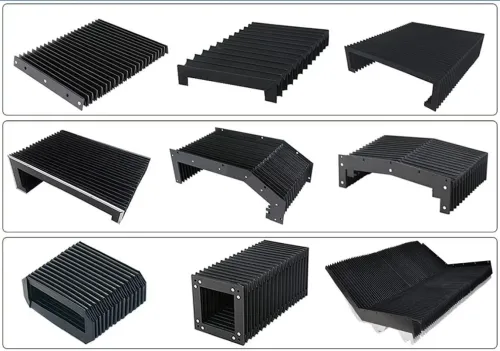
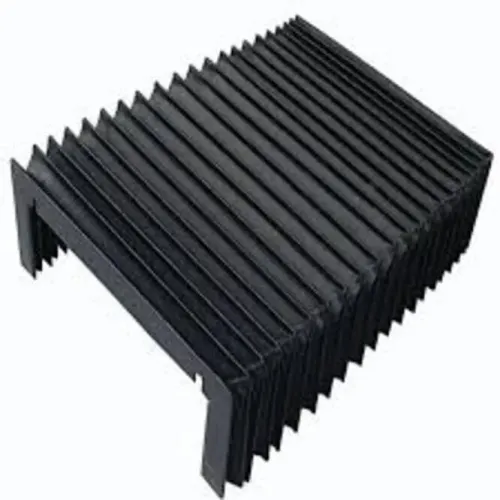
A bellows cover is the better choice when the damaged area needs continuous sealing against hot spatter, chips, coolant, dust, or repeated rubbing across a guided stroke. Choose it over a spiral spring laser machine protection system when particle exclusion and thermal separation matter more than compact retraction and very high cycling speed.
| Option | Better fit | Main limitation |
|---|---|---|
| Bellows cover | Sealed folds, irregular movement, hot debris, coolant, and guideway protection | Needs correct folded length, support, and clearance; compression interference will tear it |
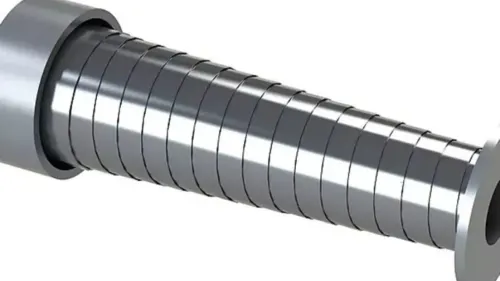
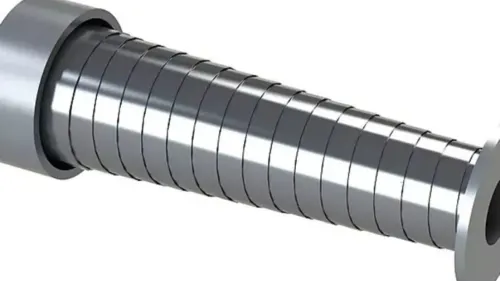
| Spiral spring cover | Short installation space, rapid repeated cycles, and a straight retracting path | A damaged housing, guide, overlap, anchor, or spring can cause repeat failure even after strip replacement |
After laser machine bellows cover or spiral spring damage, select a bellows when the failure shows punctured folds, melted coating, glazed fold crests, trapped swarf, or exposed guideways. Specify fabric, coating, internal slats, end frames, compressed length, extended length, temperature exposure, and attachment method from the actual stroke—not from the old cover alone.
A spiral spring remains the stronger choice when the axis has limited installation space, the cover retracts into a protected housing, and the exposure is mainly dry chips rather than heat and fluid. Inspect its housing, bearings, guide tracks, strip overlap, spring anchor, and travel stops before approving replacement.
SCUTES INDIA PRIVATE LIMITED supplies both bellows and telescopic spring-cover options, so the useful comparison is the machine’s exposure and motion—not the damaged cover’s original design. Neither option proves laser safety; assess beam paths, access openings, viewing panels, interlocks, wavelength, and power separately.
Related products
 | Laser Machine Bellows Laser Machine Bellows are specialized protective coverings designed to safeguard the vital internal components of laser machines. View product → |
 | TELESCOPIC SPRING COVER Telescopic Spring Covers provide protection under extreme conditions. View product → |
Commission the replacement without repeating the failure
After laser machine bellows cover or spiral spring damage, do not release the machine on a visual check alone. Complete the laser machine cover replacement with the guideway cleaned, the mounting surfaces aligned, and every damaged fragment removed from the cover, rail, laser head area, and drive system.
- Inspect the full travel for bent housings, displaced guide tracks, damaged end bearings, loose spring anchors, shifted strip overlap, broken support slats, detached end plates, and distorted mounting plates.
- Measure the compressed and extended cover lengths against the machine travel. Stop if the cover reaches its compression limit before the axis reaches its end stop.
- Jog the axis at low speed through its complete stroke. Check clearance, fold sequencing, rubbing, scraping, retraction force, coil overlap, and end-of-travel behaviour.
- Repeat the stroke with the machine stopped at several positions, then run the specified operating cycle while checking for heat, vibration, abnormal load, and renewed contact.
- Test the axis limit switches, travel stops, emergency stop, guard switches, and restart prevention. Confirm that the cover cannot enter a pinch point or obstruct an operator.
- Verify the complete laser enclosure for the laser class, wavelength, power, access openings, viewing panels, interlocks, and foreseeable beam paths. A bellows or spiral spring cover is not automatically a laser-safety enclosure.
Record clearance measurements, test results, photographs, and the replacement part details before returning the machine to production. Any renewed binding, exposed guideway, damaged seal, or failed interlock requires isolation and further investigation.
Frequently asked questions
What should you do first after laser machine bellows cover damage?
Isolate electrical and stored energy, stop axis movement, photograph the cover, mark the damage, and record the axis position.
How can you tell whether the cover caused the movement failure?
Inspect for binding, crushed folds, torn fabric, displaced frames, and abnormal resistance, then check alignment, guides, bearings, motor, and drive faults separately.
When should you repair or replace a laser machine cover?
Repair minor, local damage only when the frames remain aligned and the cover retains its travel and sealing function. Replace it when folds, frames, attachment points, or seals are distorted.
How do bellows covers compare with spiral spring protection?
Compare coolant, chips, dust, heat, travel speed, stroke length, retraction space, sealing needs, and access before selecting either design.
How should you commission a replacement cover?
Verify mounting and alignment, move the axis manually through its full stroke, check clearances and fold movement, then run controlled cycles before returning to production.