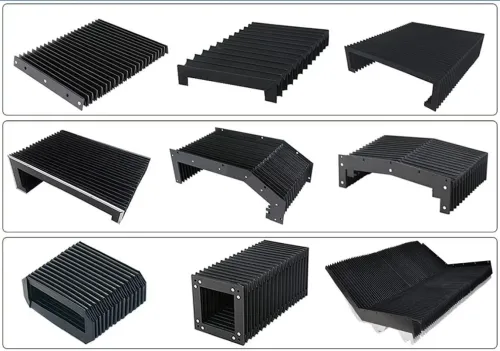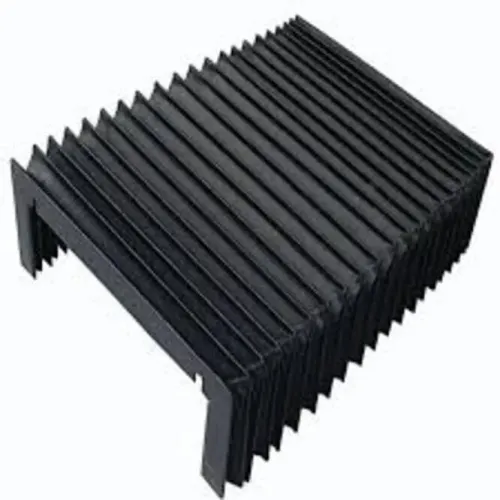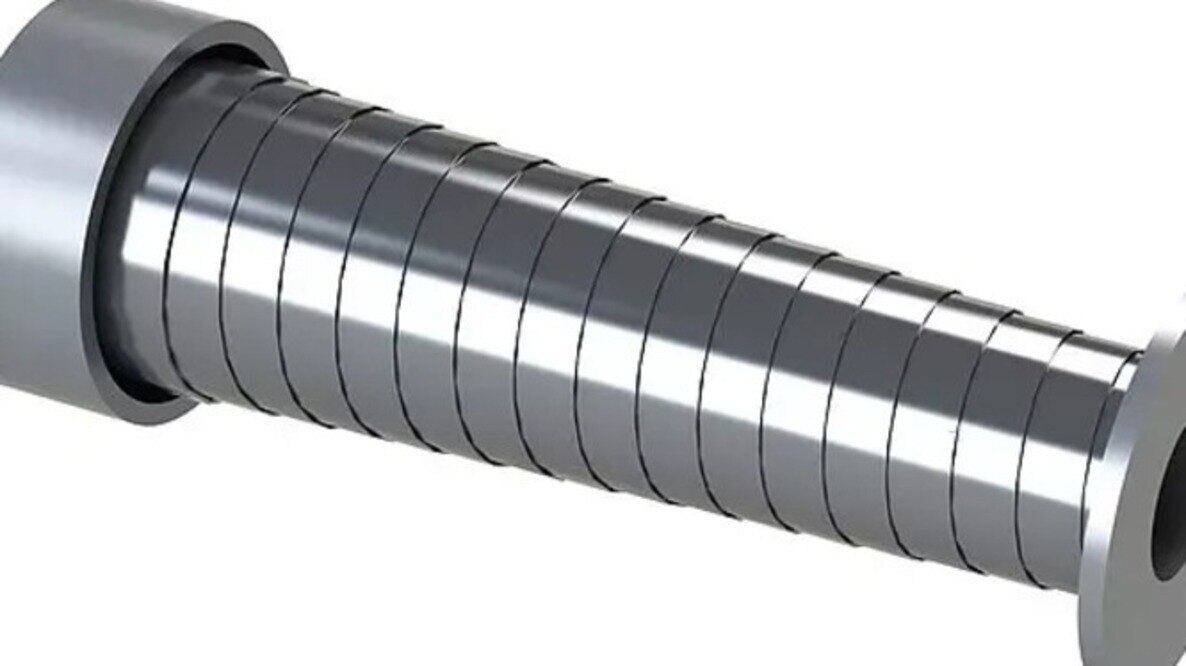
The decision depends on more than axis travel: chip temperature, coolant exposure, acceleration, available retracted space and the cost of added moving mass all affect the result. By the end, you will have a practical way to compare a steel telescopic cover with bellows, roll-up covers, apron covers, wipers or an exposed guideway, and a specification checklist for requesting a credible quotation.
Key takeaways
- Choose a cover when chips, coolant, heat, dust or access risks threaten the guideway.
- Specify travel, stroke, speed, acceleration, mounting space and contamination before requesting quotes.
- Match steel, wipers and drainage to the actual chips, coolant and grinding debris.
- Test reversals, acceleration, clearances and safety functions before releasing the cover for production.
When the Added Mass and Cost Are Justified
A CNC machine telescopic cover for automation builders earns its added mass and cost when a rectangular guideway faces abrasive chips, hot swarf, grinding dust, coolant splash, frequent cycling or operator-access hazards. The practical machine telescopic cover benefits are fewer contamination-related clean-downs, less guideway wear, fewer unplanned interventions and less downtime.
Compare those avoided costs with the purchase price, mounting work, alignment effort and moving mass.
Steel has the stronger case in heavy machining and grinding. It is harder to justify in a clean, low-duty cell where an exposed guideway or lighter protection already controls the risk.
Do not select it when the axis has very high acceleration, little retracted space, non-linear motion, unusual geometry or contamination that enters through unavoidable gaps. Check these alternatives:
- Flexible bellows: obstructions, irregular envelopes and multi-axis motion.
- Roll-up or apron cover: long, low-profile linear axes.
- Wipers alone: light contamination and low debris volume.
| Option | Strong case | Main trade-off |
|---|---|---|
| Steel telescopic cover | Hot, sharp chips and repeated rectangular-axis travel | Mass, noise, retracted length and wiper maintenance |
| Flexible bellows | Low mass or irregular multi-axis geometry | Vulnerability to hot chips, sharp swarf and chemical attack |
| Roll-up or apron cover | Long, low-profile travel | Different sealing and impact limitations |
Treat the cover as a protection component, not automatically as a personnel-safety guard. If it forms part of safeguarding, validate openings, impact resistance, access prevention, interlocking and residual risk under the machine-safety requirements for the completed machine.
Define the Cover Before You Ask for a Quotation
Give the supplier a dimensioned envelope, not only the axis stroke. These CNC telescopic cover specifications determine whether a telescopic cover for automation equipment will fit, move freely and protect the guideway.
1. Record extended length, closed length, usable stroke, section count, cover width and height, retracted height, maximum envelope, mass, mounting footprint and mounting-hole pattern. Add guideway clearance, the largest moving assembly, allowable load, axis orientation, horizontal or vertical installation, cantilevered travel and unsupported span.
2. Check the envelope at full extension and full compression. Include tooling, cable carriers, lubrication points, access doors and guards; a cover that clears the guideway can still strike an adjacent assembly. Ask for the minimum safe compressed condition, not merely the number of boxes.
3. Mark guideway and mounting-face datums on the machine layout, then state allowable misalignment and any floating attachment required for thermal growth. Confirm that segment overlap remains sufficient across the full stroke: insufficient overlap exposes the guideway, while excessive overlap increases closed length and mass.
Mounting faces that are out of parallel or offset from the guideway can make the cover bind, buckle or wear its wipers unevenly. Include the cover’s mounting tolerances and clearance zones in the actual machine drawing before approving a supplier’s proposal. Nominal travel alone cannot reveal interference, inadequate overlap or installation clearance.
Match Materials, Wipers and Drainage to the Contamination
Choose construction from the contamination, not from the word “steel.” Stainless steel resists corrosion better than painted or coated steel during water-miscible coolant, cutting-oil exposure or washdown, but CNC telescopic cover specifications still need panel thickness, surface treatment and compatibility with the actual coolant chemistry.
- For hot, sharp or heavy chips, request the permissible chip temperature or impact condition, joint construction, replaceable wear strips and any chip-impact shield. Internal liners can reduce abrasion and trapped-chip noise.
- Specify overlapping sections, scraper design and wiper material separately. Wipers are wear components: excessive pressure increases drag, heat and drive-load variation; insufficient pressure permits leakage. Require a replacement method and inspect hardened edges, tearing, visible gaps, coolant leakage or a new rise in following error.
- For wet machining, request sloped panels, drainage paths, anti-pooling features, spray direction, coolant concentration and temperature range. A coolant-resistant claim or inferred IP rating does not prove moving-cover performance.
| Material | Best fit | Main limitation |
|---|---|---|
| Stainless steel | Coolant, oil and washdown | Chemistry still governs corrosion |
| Painted or coated steel | Dry chips and lower-cost environments | Coating damage exposes the substrate |
| Bellows | Low mass, irregular geometry and multi-axis motion | Hot swarf, sharp chips and chemicals can damage fabric or seams |
These machine telescopic cover benefits apply only when contamination matches the design. A telescopic cover for automation equipment is the wrong choice when flexibility or low mass outweighs resistance to hot swarf.
Test Acceleration, Reversals and Safety Before Production
Approve a cover against the real motion profile, not maximum rapid-traverse speed alone. Peak acceleration, deceleration, reversal frequency, cover mass, wiper friction, guide friction and unsupported length can create higher loads than steady travel.
Two covers with the same speed rating can behave differently on a high-cycle axis:
| Cover | Same rating, different risk |
|---|---|
| Light cover with low-friction wipers | Lower drive load, but check impact and vibration |
| Heavy cover with firm wipers | Higher inertia and drag during reversals |
| Long cantilevered cover | Greater deflection, segment misalignment and resonance risk |
Request the supplier’s allowable speed, acceleration, deceleration, cycle frequency, reversal conditions, noise limit and test method. Compare each value with the actual acceleration curve and reversal rate. These are essential CNC telescopic cover specifications, not optional catalogue details.
Run a representative duty-cycle test before production approval. Use the actual stroke, payload-induced vibration, coolant spray, representative chips, full tooling envelope and cable-carrier envelope. Inspect:
- Segment synchronization, impact and vibration
- Cover temperature, operating noise and wiper leakage
- Axis following error during acceleration and reversal
Ask what the supplier tested, for how many cycles and under which contamination conditions. A generic CNC rating, or “chip-proof” and “coolant-proof” wording, is not a test boundary or safeguarding proof.
During design review, confirm that the CNC telescopic cover for automation builders cannot create a pinch point or obstruct emergency access. If it forms part of safeguarding, validate openings, impact resistance, access prevention, interlocking and residual risk for the completed machine.
Calculate Total Cost and Select a Supplier That Can Engineer the Fit
Choose a telescopic cover only when reduced contamination exposure and intervention outweigh purchase cost, added moving mass, alignment work and recurring maintenance. That is the practical machine telescopic cover benefits test, not a claim of maintenance-free protection.
Budget for parallel mounting faces, datum checks, retracted-space verification, wiper access, chip cleaning and segment-joint inspection. Track these service indicators:
- Visible gaps or coolant leakage
- Uneven, hardened or torn wipers
- Trapped chips or coolant pooling
- New vibration, impact noise or rising following error
Request a dimensioned drawing, mass and centre-of-gravity data, mounting tolerances, drainage arrangement, replacement-part list and written duty-cycle limit. SCUTES INDIA PRIVATE LIMITED belongs in the comparison only if its engineers review the guideway envelope, motion profile, coolant, chip type and access constraints instead of quoting from stroke alone.
| Option | Fit and service access | Motion and lifecycle test |
|---|---|---|
| Telescopic cover | Rigid rectangular axis; needs retracted space and alignment | Check mass, acceleration, wipers and joint inspection |
| Bellows | Irregular or obstructed geometry; easier around interference | Check flexibility, abrasion and replacement frequency |
| Roll-up or apron cover | Long, low-profile travel | Check tension, overlap and chip entry |
| Combined system | Multiple contamination paths | Check interfaces and total maintenance effort |
For a cnc machine telescopic cover for automation builders, select telescopic protection for a rigid, repeatedly cycled, chip- or coolant-exposed axis with adequate retracted space. Choose another arrangement when geometry, acceleration, mass or access makes those conditions impossible.
Frequently asked questions
When is the added mass and cost of a CNC telescopic cover justified?
It is justified when abrasive chips, hot swarf, grinding dust, coolant splash, frequent cycling or operator-access hazards threaten the guideway. Compare the cover cost with cleaning time, guideway wear, interventions and downtime.
What should you include in CNC telescopic cover specifications?
Give the supplier the guideway dimensions, cover travel, axis stroke, maximum speed, acceleration, reversal frequency, mounting limits, retracted length, extended length and available clearance. Include the contamination type, coolant details and access requirements.
How do materials, wipers and drainage affect a telescopic cover for automation equipment?
Select materials and wipers for the chip shape, heat, coolant and dust involved. Provide drainage that moves coolant and debris away from the guideway instead of trapping it inside the cover.
What should you test before putting a machine telescopic cover into production?
Run the cover through maximum acceleration, repeated reversals and full travel. Check interference, noise, vibration, wiper contact, drainage, mounting security and access-related safety functions.