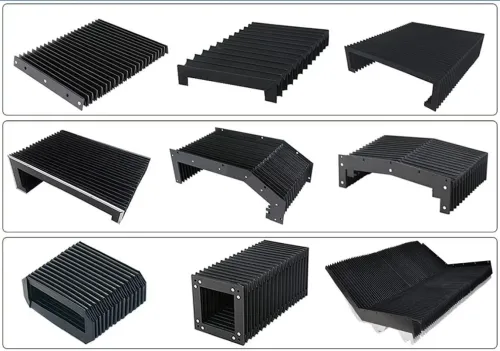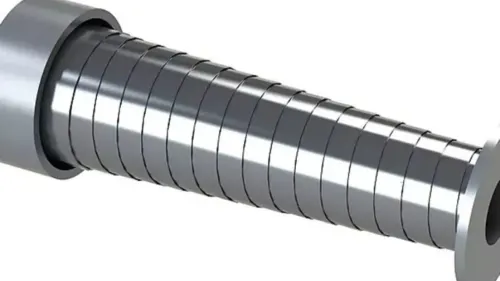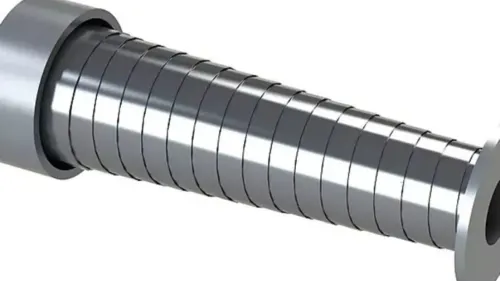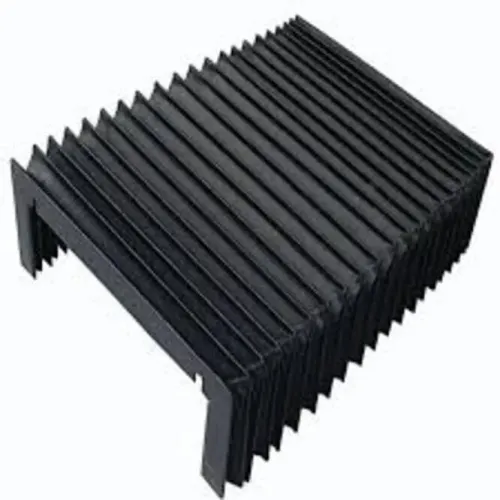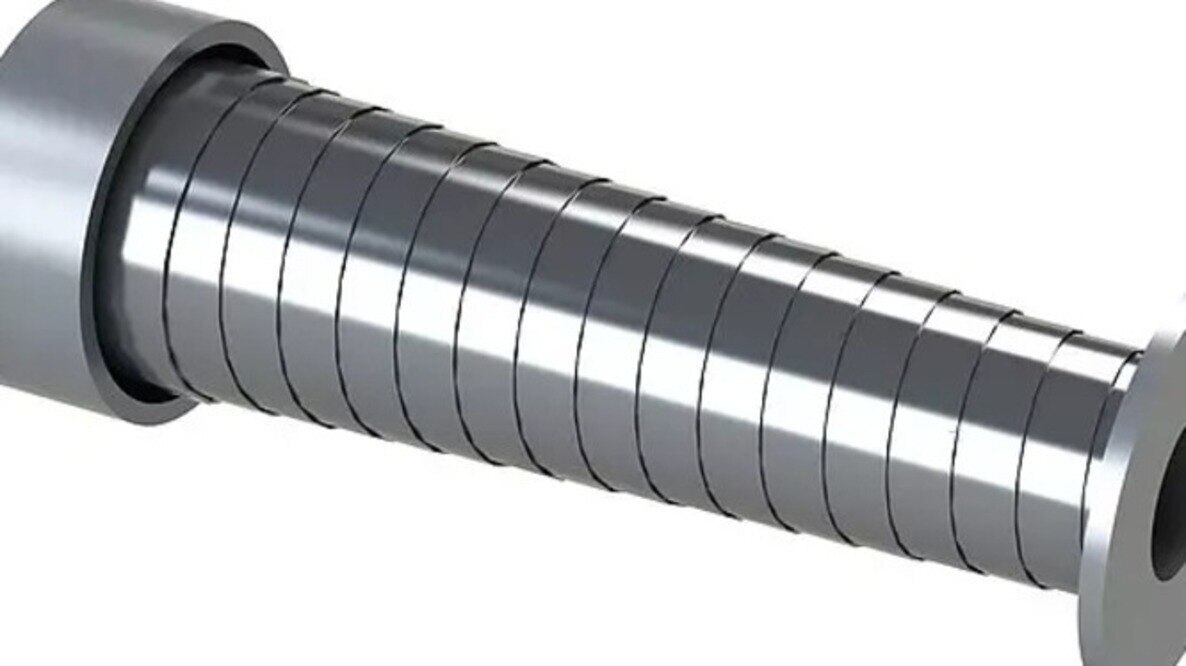
A broken or unwound spiral spring can leave a telescopic cover skewed, jammed, or moving beyond its intended stroke while exposing the machine beneath it. You will be able to isolate the hazard, identify the underlying cause, decide between component repair and replacement, and specify a safe recovery or replacement in Canberra.
Key takeaways
- Isolate all energy and mechanically secure every cover section before inspection.
- Trace spring damage to the cover, machine alignment, chips, coolant or excessive travel.
- Use local repair for minor damage; specify engineered recovery for distorted or unsafe covers.
- Provide cover dimensions, travel, mounting details, machine axis and damage photos in your enquiry.
How do you make a damaged spiral-spring cover safe to inspect?
Stop the machine and isolate electrical, hydraulic, pneumatic, and mechanical energy under the site’s lockout/tagout procedure. Wait until stored axis motion has stopped, then support the telescopic cover mechanically and prevent every section from moving before opening a spring housing or end anchorage.
1. Treat a broken or de-tensioned spiral spring as stored energy. Never cut, drill, or remove retaining hardware while the spring remains loaded.
2. Photograph the cover from outside the travel zone. Capture the spring housing, both end anchors, mounting plates, safe closed and extended positions, and every collision mark.
3. Confirm the mechanism before calling it a spiral spring cover. Check the nameplate, machine drawing, or OEM service record for a spiral, coil, gas, or counterbalance spring; many telescopic steel covers use no spring.
4. Inspect only visible, stationary parts: cover sections, guides, rollers, scrapers, limit stops, fasteners, drainage holes, and the guideway beneath the cover. Do not reach into a moving or loaded mechanism.
5. If the cover blocks access to a hazardous zone, treat removal as a guarding change under the Work Health and Safety Act 2011 and the machine owner’s plant-risk controls. This is the safe starting point for a telescopic cover for spiral spring damage Canberra enquiry.
How can you tell whether the spring cover caused the failure or the machine did?
Treat spring cover damage as a symptom until you identify what overloaded or misdirected it. A broken spring can be the result, not the cause.
1. Check the axis movement. Look for excessive travel, collision marks, an incorrect limit setting, or a tool or workpiece contacting the cover when closed or fully extended.
2. Inspect beneath the cover for packed chips, abrasive sludge, blocked drain paths, dried coolant, and guideway misalignment. Remove contamination without forcing debris past the wipers into bearings, then verify the machine-specified guideway lubricant. Do not add general-purpose grease.
3. Check the structure. Look for loose mounting bolts, bent brackets, damaged end stops, and a cover sitting off-square at either end. A distorted spring can cause rubbing, jerky extension, uneven overlap, incomplete opening, or movement beyond the designed stroke, but these symptoms do not prove the spring is the only fault.
4. Examine the spindle or shaft for runout, seized bearings, abnormal vibration, or a drive fault that could impose uneven movement. Measure closed length, maximum extended length, stroke, section overlap, and clearance to the tool or workpiece.
Record the machine and axis model, serial number, speed, acceleration, coolant, chip temperature, and whether the machine ran after failure. If the cover was driven while unloaded, inspect every section for twist and loss of parallelism before ordering parts.
When is local repair enough, and when does the cover need engineered recovery?
Choose local repair only when the damage is limited to a replaceable wiper, guide shoe, roller, fastener, or minor non-structural distortion, and every section remains dimensionally stable. A spring with lost force, permanent set, cracks, or detachment needs replacement to its specified grade, dimensions, winding direction, torque, and preload.
Straightening a dent will not restore spring force.
| Option | What it means | When it applies |
|---|---|---|
| Local component repair | Replace the damaged part and verify dimensions | Stable sections with only wiper, guide shoe, roller, fastener, or minor non-structural damage |
| Engineered recovery | Remove, assess, fixture, repair, and re-align affected components | Bent section, torn bellows, cracked weld, distorted frame, damaged spring anchor, fractured seam, severe twist, deep corrosion, or damage across several sections |
| Complete replacement | Rebuild the assembly rather than preserve damaged sections | Damage across multiple sections, failed structure, or clearances and overlap cannot be restored |
Do not weld thin sections in place. Heat can change overlap, seals, running clearance, and stiffness, while spatter can damage the guideway; an approved weld requires removal, accurate fixturing, cleaning, and inspection before refitting. Check stainless-steel sections for cracks, buckling, heat distortion, corrosion, and lost parallelism.
Inspect spring strips, scrapers, rollers, guides, drains, fasteners, welds, and mounting plates against specified clearances and overlap. That determines whether telescopic cover damage repair Canberra is realistic.
What measurements and recovery steps produce a correctly fitted cover?
Nominal machine-axis travel is not enough for a spiral spring cover recovery. Record closed height or length, maximum extended length, section count, section width and height, travel direction, stroke, section overlap, mounting-hole pattern, cover weight, and available space at both ends.
Add tool or workpiece clearance, machine speed and acceleration, horizontal, vertical or overhead orientation, coolant type and concentration, chip size and temperature, grinding dust, washing practice, and cycle rate.
- Isolate and mechanically support the cover, then remove chips and sludge without forcing debris into the guides.
- Inspect every nested section, spring housing, anchors, tension, winding direction, preload, guides, rollers, wipers, stops, drainage and mountings.
- Replace worn parts, correct mounting and guide alignment, and confirm that sections remain parallel through the stroke.
- Reject a spring-only repair if the housing or sections were driven while unloaded; check for twist, distortion and damaged anchors.
Accept the recovery only after a full stroke without binding, rubbing, lifting, uneven timing or excessive wiper drag. Manufacturer clearance and overlap limits override a generic visual check. Commission at low speed, repeat full strokes, and monitor noise, spring temperature, guide load, wiper contact, and chip or coolant ingress before production resumes.
How should you specify repair or replacement in a Canberra enquiry?
State the outcome you need: emergency assessment, spring or mechanism restoration, telescopic cover damage repair Canberra, or complete telescopic cover replacement Canberra. That choice tells the supplier whether you need remote triage, component recovery, or a new assembly.
1. Send photographs of the complete cover, damaged spring or spring box, both ends, mounting interface, and safe closed and open positions. Include the machine and axis model, serial number, cover dimensions, travel, section count, failure date, operating environment, and whether the machine continued running.
2. Describe the process, not just the location. State whether the cover is horizontal, vertical, or overhead; chip size and temperature; coolant type and concentration; grinding dust; washing practice; cycle rate; and axis speed or acceleration.
Canberra affects freight and site logistics, but these machine conditions determine material, drainage, wiper design, guide arrangement, and spring selection.
3. Ask the quotation to identify each included item: spring, guides, rollers, wipers, mounting hardware, section straightening, welding, freight, removal, installation, testing, and recommissioning. A spring-only price can leave you responsible for distorted sections or a damaged mounting frame.
SCUTES INDIA PRIVATE LIMITED can review these details to judge whether a repairable component, engineered recovery, or new cover is appropriate. Keep the machine isolated until the repaired or replacement cover completes repeated low-speed full strokes and a separate guarding assessment confirms that operators cannot reach a hazardous zone.
Related products
 | TELESCOPIC SPRING COVER Telescopic Spring Covers provide protection under extreme conditions. View product → |
 | TELESCOPIC COVERS A telescopic cover protects guide-way surfaces and components of moving axis of machines. View product → |
Frequently asked questions
How do you make a damaged spiral-spring cover safe to inspect?
Stop the machine, isolate electrical, hydraulic, pneumatic and mechanical energy, wait for stored motion to stop, then mechanically support and secure every telescopic section before opening the spring housing or end anchorage.
How can you tell whether the spring cover caused the failure or the machine did?
Inspect the spring, housing, wipers, guides, mounting points and section alignment, then check machine travel, axis alignment, collisions, chip buildup, coolant entry and abnormal loads. Damage concentrated around an obstruction or misaligned mounting point indicates a machine-side cause.
When is local repair enough, and when does the cover need engineered recovery?
Local repair suits confined damage such as a replaceable wiper, loose fastener or accessible spring component. Use engineered recovery when sections are distorted, springs are deformed, mountings have shifted, travel is compromised or safe containment cannot be verified.
What measurements produce a correctly fitted replacement telescopic cover?
Record closed and extended lengths, section width and height, travel, mounting-hole positions, guideway geometry, end clearances, wiper arrangement, spring location, machine axis and the operating exposure to chips, coolant and heat.
What should you include in a Canberra repair or replacement enquiry?
Include the machine make and model, axis, cover dimensions, travel, mounting details, operating environment, failure history, clear photographs and any drawings or previous cover identification.
Related products
 | Machine Covers Machine covers are specially designed shields used to protect industrial equipment and machinery from environmental elements. View product → |
 | Roll Up Cover A roll-up cover is a highly durable and flexible protective solution designed to safeguard machinery, equipment, and valuable assets from dust,... View product → |
 | APRON COVER Effectively engaged in offering a vast collection of outstanding quality products which include Apron Covers. View product → |