Laser axes move quickly through environments filled with metal dust, slag, smoke residue, coolant mist and ordinary shop debris. To choose protection that works, you need to understand how spring-loaded sections retract, what parts they shield, where they stop being suitable, and how the cover must be measured and mounted.
Key takeaways
- Match spring sections to axis speed, debris load and installation space.
- Measure travel, closed length, opening size, mounting faces and obstruction clearances.
- Use overlap, seals and a low-point drain to control coolant and residue.
- Request drawings, material details, test conditions and warranty terms before purchase.
How nested spring sections follow a laser axis without blocking its movement
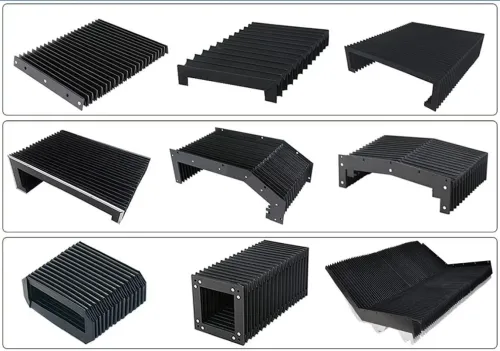
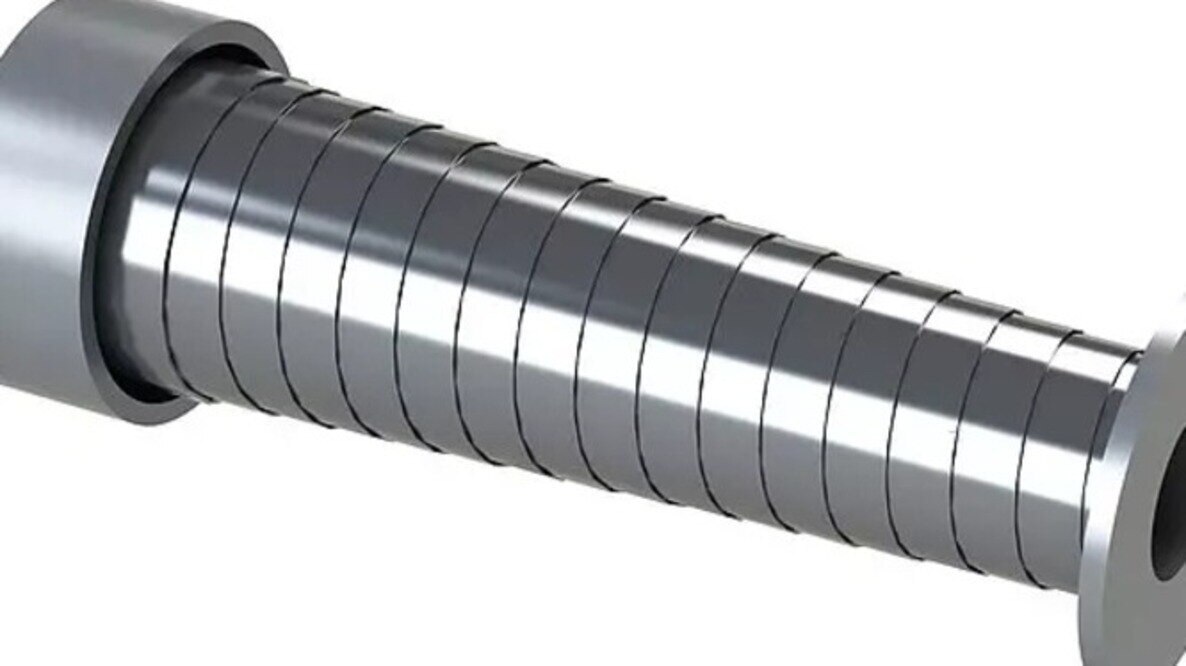
A telescopic spring cover on a laser machine uses preloaded spring-steel strips or a roll-up curtain to keep tension as the axis travels. Guided nested sections open in sequence while retaining overlap, keeping contamination outside. The barrier can cover linear rails, ball screws, rack-and-pinion drives, cable routes, encoder components, focusing-axis hardware and other moving assemblies.
During retraction, the spring draws the curtain into a compact coil or stacked package.
The spring controls retraction and tension; it does not guide the machine axis. End fixings, guided edges, wear strips or a rigid carrier prevent buckling, lateral escape and contact with protected parts.
The cover must also tolerate the actual contaminant: metallic dust, chips, slag, smoke condensate, coolant mist and shop dust do not impose identical sealing or heat requirements.
| Option | Construction and movement | Main trade-off |
|---|---|---|
| Spiral-spring cover | Preloaded strip or curtain; compact, rapid retraction | Needs guides and a specified winding radius |
| Steel telescopic box | Overlapping rigid boxes or slats; stiff chip barrier | More space, alignment and sliding-clearance requirements |
| Sewn or laser bellows | Flexible folds for multi-direction movement | Dust sealing is strong, but hot spatter, sharp chips and abrasion can damage fabric |
| Roll-up cover | Curtain winds onto a spring or drum | A tight radius causes curling, fatigue and lost retraction force |
These covers do not stop direct laser radiation, reflected beams, hot spatter or molten material, and they are not laser-safety enclosures under ISO 11553-1 or IEC 60825-1. Near the laser head, preserve beam clearance, assist-gas delivery, nozzle access and every service position.
Which cover construction suits the axis speed, contamination and available space
A spiral-spring cover suits a fast axis when retraction space is short, but it is not a standardised product category. Confirm the construction, acceleration, bend direction, sealing path and contamination before treating a search phrase such as spiral spring cover laser equipment Canberra as a specification.
| Option | Strength | Limits and failure risks |
|---|---|---|
| Spiral-spring cover | Compact retraction and rapid movement; spring-steel strips maintain tension. | Overlaps can jam with chips; broken springs stop retraction. Steel resists hot debris but does not create a gas-tight barrier against smoke or vapour. |
| Steel telescopic box cover | Overlapping rigid boxes or slats provide high stiffness and strong chip resistance. | Needs more installation space and precise sliding alignment; wipers wear and hard seals pack with chips. |
| Sewn bellows | Flexible movement in multiple directions and strong dust sealing. | Hot particles, sharp chips, abrasion and unsuitable chemicals can tear or degrade the fabric. |
| Laser bellows | Flexible, sealed protection around laser-axis movements. | Check heat, spatter, chemical compatibility and service access; torn fabric removes the barrier quickly. |
| Roll-up cover | Long travel with compact storage. | Keep the spring strip above its specified minimum winding radius; a tighter radius causes permanent set, curled edges, fatigue and lost retraction force. |
Match the cover to travel speed, acceleration, heat exposure and contaminant type, then leave access for cleaning and replacement. A steel cover can survive hot chips yet leak fine vapour; a fabric cover can seal dust yet fail under spatter. Inspect overlaps, wipers and seals for the likely failure mode before purchase.
What dimensions and machine measurements determine the correct cover
Record the axis and its complete motion before choosing a cover. Measure the machine with the axis fully closed and fully extended, then inspect every intermediate position for interference.
- Record travel, fully retracted length, fully extended length, cover width, height, outside diameter, inside diameter, mounting-flange dimensions, allowable clearance and moving mass.
- Specify stroke speed, acceleration, orientation, expected stroke cycles and reversal frequency; ask for cycle-life data at those values and at the intended contamination level.
- Map nearby cable paths, cable carriers, encoder locations, laser-head and nozzle positions, service positions, rack, fasteners, guards and access panels.
- Identify contaminant type, operating temperature, and exposure to coolant, oil, smoke condensate, chips, slag or shop dust. State whether deposits can fall toward the optical or cutting zone.
- Check the minimum winding or bend radius against the supplier’s spring-strip specification. Do not infer it from the machine envelope; a tighter radius causes permanent set, edge curling, fatigue and lost retraction force.
- Add space for flange bolts, wipers, side guides, drainage, cleaning tools and removal of the cover during maintenance. Verify that no intermediate position traps chips or rubs against the laser head, nozzle or cable carrier.
The phrase spiral spring telescopic cover for laser machine canberra identifies a location, not a performance class. Replace it in the purchasing specification with these measured values, plus the required material and sealing level. A telescopic spring cover laser machine application succeeds only when the envelope, motion profile and service access are documented together.
How mounting, overlap and drainage keep residue away from the mechanism
The cover becomes a barrier only when its attachments and sealing path stay aligned; it must never guide the laser axis or carry side loads.
1. Attach one end to the stationary frame and the other to the moving carriage through aligned flanges or brackets. Check concentricity, parallelism and support stiffness before tightening fasteners. Misalignment makes the cover rub, buckle or transfer side force into the carriage.
2. Close every contamination route with overlapping spring sections, side guides, end seals, scrapers and machine-side wipers. Select wiper material for the coolant, oil and temperature, then set controlled compression: excessive pressure increases friction, while insufficient contact leaves a leakage path.
3. Provide a drain or low point for coolant mist and condensate. Inspect the drawing or a sample for pockets at overlaps and end seals, where trapped chips become abrasive during repeated strokes. Horizontal covers need anti-sag support and deliberate chip management; vertical covers impose different spring and guide loads.
4. Balance spring force, curtain mass, friction and acceleration during a trial stroke. Weak tension causes sagging, flapping and rubbing; excessive tension raises drive load and can produce end-of-stroke impact. Clean the cover and inspect overlaps, guides, seals and wipers routinely.
Search terms such as spiral spring machine protection Canberra identify a product need, not these installation requirements.
How to turn a local laser-machine protection requirement into a defensible purchase
A defensible purchase turns a local search into acceptance criteria. Treat “spiral spring cover laser equipment Canberra” as a location prompt, not a specification: record the protected axis, travel, retracted and extended lengths, width, height, speed, acceleration, cycle count, temperature, contaminant, sealing level and mounting orientation.
1. Require a dimensioned drawing showing retracted and extended envelopes, flange patterns, guides, wipers, section overlap, drainage, service clearances and the minimum winding or bend radius. Check every dimension against the machine, not a catalogue label.
2. Request spring force, moving mass, permitted speed and acceleration, cycle-life evidence at the intended orientation and contamination level, temperature limits, material and coating details, seal compatibility with the actual coolant or oil, and instructions for cleaning, inspection and replacement.
3. Ask a supplier serving Canberra or another service location to confirm that the cover leaves the beam path, assist-gas route, nozzle, optical components and maintenance positions clear. Request laser-safety documentation separately; a machine-protection cover is not an enclosure or a substitute for laser-risk controls.
4. For a quote from SCUTES INDIA PRIVATE LIMITED, provide the same measurable specification and ask how its proposed component will adapt to the axis layout, contamination, travel direction and installation orientation.
5. Compare tested movement, sealing, drainage, service access and replacement effort. Reject comparisons based only on “telescopic spring cover laser machine” or “spiral spring machine protection Canberra”; those phrases identify searches, not performance classes.
Related products
 | TELESCOPIC SPRING COVER Telescopic Spring Covers provide protection under extreme conditions. View product → |
 | TELESCOPIC COVERS A telescopic cover protects guide-way surfaces and components of moving axis of machines. View product → |
Frequently asked questions
How does a telescopic spring cover follow a laser machine axis?
Preloaded spring-steel sections nest together and extend in sequence as the axis moves, maintaining overlap while leaving the travel path clear.
How do you choose a telescopic spring cover for laser equipment?
Compare axis speed, contamination type, heat exposure, required travel, installation space and the cover construction's resistance to wear and deflection.
Which machine measurements determine the correct cover dimensions?
Record axis travel, closed length, opening width and height, mounting-face locations, section clearance, folded thickness and nearby cable or component obstructions.
How do mounting, overlap and drainage protect the mechanism?
Secure the cover to rigid mounting faces, maintain continuous overlap between sections and direct coolant or residue toward a controlled low-point drain.
What should you include in a defensible laser-machine protection purchase?
Specify the operating conditions, measured dimensions, materials, travel and speed limits, drawings, inspection criteria, test evidence, delivery scope and warranty terms.