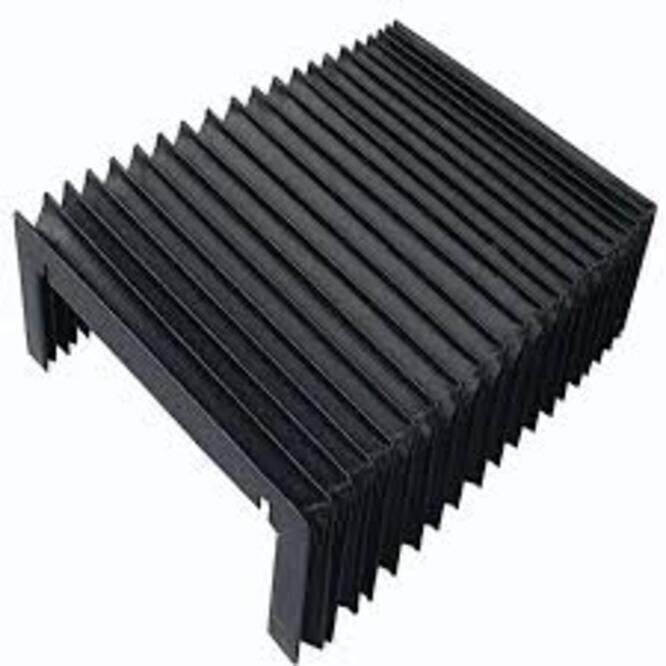
A spiral spring supplies controlled force that helps a moving cover retract, balance its weight, or follow an axis, but it does not replace the cover’s guides, structure, or protective surfaces. By tracing the cover through its stroke and matching spring force to travel, orientation, speed, and cycle count, you can tell whether the arrangement suits your machine.
Key takeaways
- A spiral spring stores energy to retract and counterbalance a telescopic cover.
- Match the cover arrangement to travel direction, mounting orientation, and machine clearance.
- Verify spring force across full travel, not only at the retracted position.
- Specify cleaning, inspection, and replacement access for Bangkok operating conditions.
What the spiral spring physically does
A spiral spring stores energy as the cover extends and releases it to retract the cover. It can counterbalance cover weight, keep a moving section against its guides, or reduce the effort required from an operator or actuator.
That is the practical answer to what does a telescopic cover do with a spiral spring in Bangkok: it assists movement and positioning.
The spring may connect to:
- a flexible curtain or linked slats
- a winding drum
- a linkage
- a moving cover section
A nested steel telescopic cover normally moves through guided sections, rollers or sliding shoes, stops, and wipers. Adding a spiral spring creates a spring-assisted movement system; it does not automatically change the cover into a roll-up design. Telescopic cover spiral spring use depends on the cover’s mass, travel direction, friction, and mounting arrangement.
Control the force across the full stroke. Too little force leaves the cover sagging, partly open, or off its guide. Too much force increases guide loading, resistance, vibration, noise, and return force on the machine axis. If the cover must stay in position, use a latch, damper, friction device, controlled drum, or positive machine stop.
The spring does not provide chip resistance, sealing, load capacity, or structural support; the cover construction and guide system must handle those duties.
How the cover behaves through full machine travel
At full retraction, nested sections stack together, or a spring-assisted curtain winds onto its drum, leaving the working area clear while the spiral spring sits near its stored-energy condition.
1. During extension, the moving axis pulls the machine movement cover outward, or the spring returns it toward its protected position. Guides, section overlaps, wiper lips, and transitions keep the cover aligned.
Watch for uneven extension, rubbing, a gap on one side, sagging, snap-back, or a spring that stops before the cover reaches its intended position.
2. At full extension, the cover reaches its travel stop while retaining enough overlap, guide engagement, and drainage clearance to protect the covered route. The spring must not slam the final section into the stop or pull so hard that it distorts the guide system.
In telescopic cover spiral spring use, the spring assists return or balances cover mass; machine geometry and mechanical guides still determine the travel path.
3. During reciprocating travel, every extension-and-retraction reversal loads and unloads the spring. Count each reversal as a spring cycle, because repeated cycling drives fatigue even when the cover moves only a short distance.
A latch, damper, friction device, controlled drum, or positive machine stop is needed when the cover must hold position rather than snap back.
Which cover arrangement suits the movement and orientation
Choose the construction for the movement first: a spring-assisted cover is not automatically equivalent to a conventional telescopic steel cover.
| Option | What it means | When it applies |
|---|---|---|
| Spring-assisted telescopic cover | A spiral spring helps retract, balance, or hold a guided cover; the sections still need guides, overlaps, stops, and wipers. | Vertical or inclined travel where cover weight affects movement. |
| Rigid nested steel cover | Sliding steel boxes provide section stiffness, overlapping protection, wipers, and drainage. | Long horizontal guideways and chip-heavy cutting zones. |
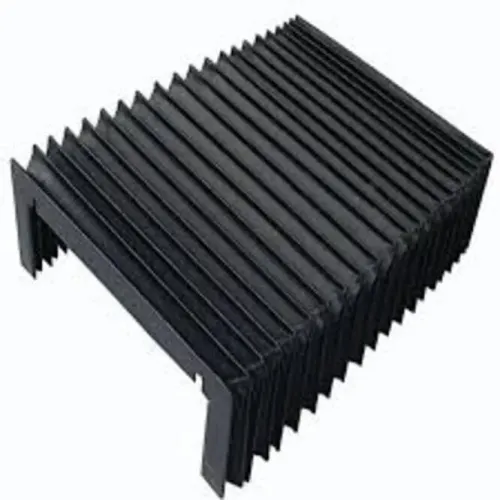
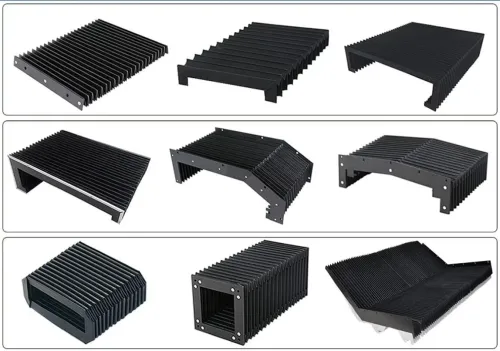
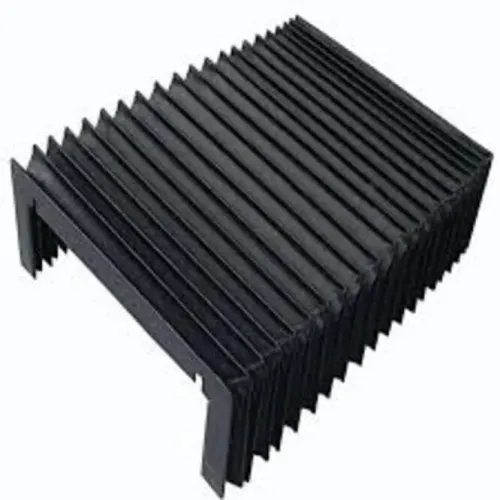
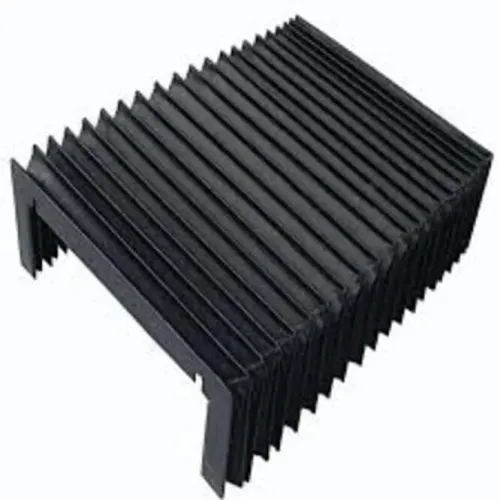
| Bellows | A flexible folded enclosure follows changing geometry. | Use when flexibility matters; select material for coolant, heat, chips, and repeated folding. |
| Apron cover | Linked slats create a compact rigid surface. | Use where a shorter packed arrangement is more important than nested boxes. |
| Roll-up cover | A curtain winds around a spring-loaded drum. | Limited packed height, compact storage, or a large opening; it does not provide the same rigid nested-box behavior. |
For a spiral spring telescopic cover in Bangkok, horizontal travel often places cover weight on the guides. Vertical travel makes spring counterbalance valuable but demands retention and controlled return; inclined travel combines gravity with spring force. Rotary movement requires control of winding radius and torsion, while reciprocating movement requires fatigue analysis for repeated reversals.
Treat any machine movement cover as an enclosure, not a step, bearing, guide, or structural support, unless its design expressly specifies that load capacity.
How to size the cover and verify spring force
Size the machine movement cover from measured geometry, motion, contamination, and service data—not axis speed alone. Give the supplier:
- Protected shaft or guideway diameter
- Cover width and height
- Collapsed length, required travel, and extended length
- Section count and available clearance
- Mounting points and guideway geometry
- Orientation, axis speed, and acceleration
- Chip type, coolant exposure, temperature, and cycle frequency
Check spring force across the entire stroke. Compare it with cover mass resolved along the travel direction, guide and wiper friction, acceleration force, and geometry that changes leverage or drum radius. Verify force at these positions:
| Position | What to verify | Failure if force is wrong |
|---|---|---|
| Retracted | Stored force and clearance | Incomplete return or excessive preload |
| Intermediate | Force balance and alignment | Sagging, rubbing, vibration, or guide loss |
| Extended | Return force and stop approach | Snap-back, distortion, or end-stop impact |
Confirm that the actuator can overcome spring force without servo following error, excess current, vibration, or impact. Telescopic cover spiral spring use also requires a life estimate based on winding cycles, strip stress, deflection, spring diameter, corrosion, and temperature.
For acceptance, run the cover at operating speed through repeated cycles, measure force or motor load at several positions, and inspect for incomplete return, permanent set, cracking, corrosion, and guide wear. Compare results with the design values before release.
What to specify for Bangkok service and ongoing maintenance
Specify the spring and cover as a system, not by location alone. For a spiral spring telescopic cover in bangkok, ask for:
- Spring material and finish, housing protection, compatible lubricant, and drainage route
- Wiper material, guide-shoe or roller design, and retention method
- Rated speed, acceleration, cycle life, and inspection interval
Chloride-bearing cleaners and cutting fluids can attack stainless spring strip; unprotected carbon-steel springs and housings can corrode faster. A sealed housing and suitable coating do not replace a defined drainage path.
| Arrangement | Best fit | Main check |
|---|---|---|
| Rigid telescopic cover | Horizontal or inclined guideways with chips | Overlaps, guides, wipers, and drainage |
| Spring-loaded roll-up cover | Compact storage or a large opening | Drum radius, winding cycles, and retention |
| Bellows or apron cover | Flexible geometry or linked rigid protection | Folding fatigue, slat alignment, and coolant compatibility |
During maintenance, remove chips, clear drainage paths, inspect overlaps and wiper lips, check fasteners and guide shoes, and compare spring force with its original measurement. Replace the spring after force loss, permanent set, cracks, or surface corrosion, even if it still retracts the cover.
If you are asking what does a telescopic cover do with a spiral spring in bangkok, involve a specialist when drawings, measured stroke, or movement type are unclear. SCUTES INDIA PRIVATE LIMITED can distinguish a rigid telescopic cover from a spring-loaded roll-up arrangement and check the axis, contamination, and service conditions.
Select the spring for controlled movement; select the cover construction for the actual mechanical and contamination loads.
Frequently asked questions
What does a spiral spring do in a telescopic cover?
It stores energy as the cover extends and releases that energy to retract the cover. The spring can counterbalance cover weight, maintain contact with guides, or reduce actuator and operator effort.
How does a telescopic cover behave through full machine travel?
The cover sections extend and overlap as the machine moves, while the spiral spring changes tension through the travel. Check smooth movement, guide contact, section overlap, and spring force at both travel limits.
Which telescopic cover arrangement suits the movement and orientation?
Choose the arrangement according to travel direction, mounting position, available space, cover weight, and exposure to chips, coolant, oil, and heat. Horizontal, vertical, and inverted movements place different demands on spring support and guidance.
How do you size a telescopic cover and verify spring force?
Measure full travel, closed and extended lengths, section overlap, envelope space, cover mass, guide friction, and mounting orientation. Compare the spring force across the complete stroke and confirm that it retracts the cover without overloading guides or the drive.