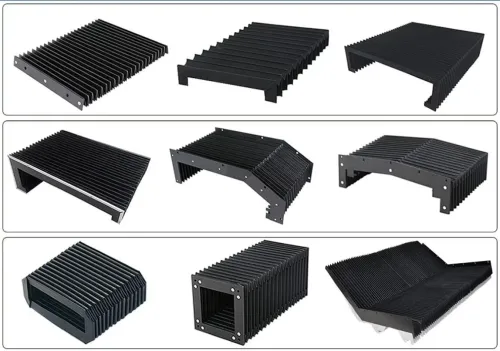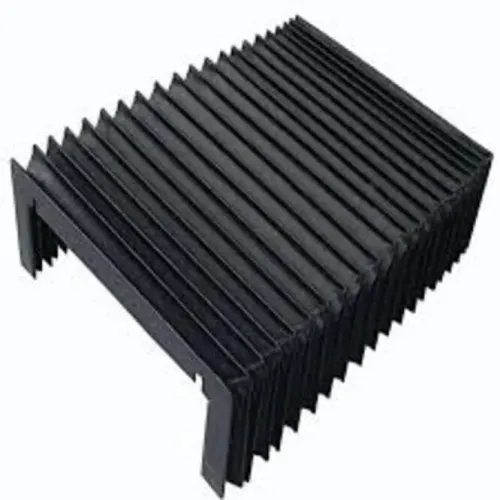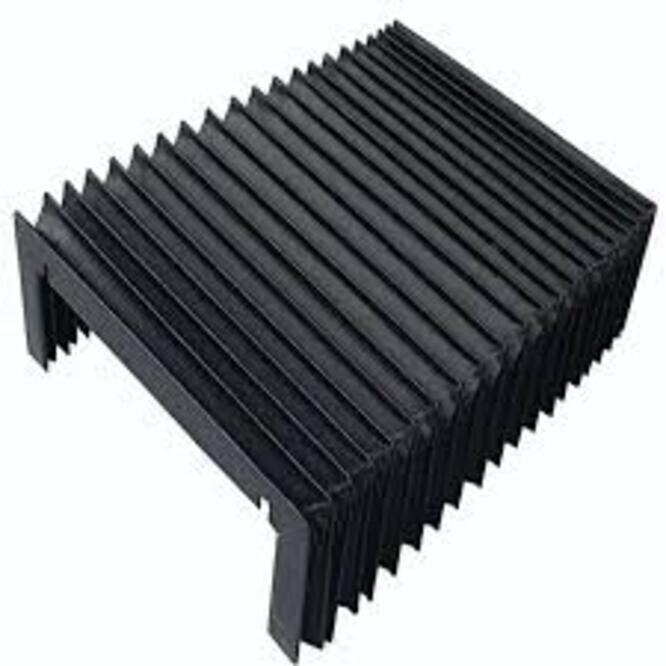
A spiral spring cover earns its cost when a laser axis faces hot chips, sparks or abrasive metal debris, but it is not automatically the best answer for every machine. By checking the laser process, Bangkok’s humidity and condensation risks, the cover’s geometry, and the trade-offs against fabric and telescopic designs, you can decide whether the protection justifies its mass, noise and maintenance.
Key takeaways
- Choose spiral springs for compact axes needing metal protection from chips and debris.
- Match materials and seals to Bangkok heat, humidity, coolant and laser-generated contamination.
- Compare travel, packed length, stiffness and maintenance before selecting a cover type.
- Run a full-axis trial to check interference, access, noise and reliable retraction.
How a spiral spring cover works—and when it is worth choosing
A spiral spring machine cover protects an exposed guideway with overlapping, formed metal strips that extend under axis movement and retract into tightly wound turns. Spring tension keeps the strips engaged while the cover follows the moving carriage, shielding linear guides, screws, bearings, cable carriers and nearby optics from chips and debris.
The laser machine bellow benefits justify its extra mass and noise when the way is exposed to abrasive metal particulate, sparks, hot slag or occasional hot particles, and the installation has enough clearance for the coils. Protection is not automatic: inspect for raised coils, dented overlaps, distorted end mounts, rubbing marks and increasing retraction force.
Specify resistance to condensation, cutting fume, coolant, oil mist and cleaning fluid; fine dust can still pass through gaps more readily than with a properly closed fabric bellows.
Choose based on the dominant failure risk:
- Choose spiral metal protection for impact, heat and abrasion.
- Choose fabric for low mass, quiet operation, tight packing and rapid reciprocation.
- Choose telescopic steel where rigid, enclosed protection and broad unsupported spans matter.
| Option | Main advantage | Main compromise |
|---|---|---|
| Spiral spring | Hot-chip and spark resistance | More mass, noise and less fine-dust sealing |
| Fabric bellows | Low mass and compact folded length | More vulnerable to cuts, sparks and hot debris |
| Telescopic steel | Rigid, enclosed shielding | Greater space, cost and access limitations |
None of these covers is a laser-safety enclosure. The cover must not obstruct the cutting head, height sensor, cable carrier or fume-extraction path.
Match the cover to Bangkok conditions and the laser process
A spiral spring bellows cover for laser machines in Bangkok suits axes exposed to hot chips, sparks, and abrasive metal particles, especially on fiber-laser sheet or plate cutters. It is less suitable where fine dust, cutting fume, or liquid must be sealed out completely.
| Operating condition or application | Suitability | Reason |
|---|---|---|
| Hot metal chips and sparks | Suitable | Overlapping metal strips resist heat and abrasion better than lightweight fabric. |
| Fine dust, smoke, or powder | Conditional | Gaps between turns can admit contamination that a properly closed fabric bellows excludes more effectively. |
| Coolant, oil mist, or cleaning fluid | Conditional | Specify compatible strip material, seals, drainage, and fasteners; pooled liquid accelerates corrosion. |
| Air-conditioned enclosure opening to Bangkok air | Conditional | Warm humid air can condense on cool metal, so avoid water traps and provide drainage. |
| Direct laser beam, reflected radiation, or hot slag impact | Unsuitable alone | A guideway cover is not a laser-safety enclosure; use the interlocked, wavelength-specific housing required by the hazard assessment. |
The climate adds a failure mode that a speed-and-stroke specification misses. Check corrosion resistance, raised coils, damaged overlaps, distorted mounts, rubbing marks, and increasing retraction force after exposure to humidity or impact.
Do not assign IP54 or IP65 to the cover by assumption. IEC 60529 ratings apply to a tested, documented complete enclosure assembly, not automatically to a spiral cover fitted to one axis.
Spiral spring, fabric bellows or telescopic steel: what changes in practice
A fabric bellows usually wins on speed and quiet, while a spiral spring cover wins against hot chips and abrasion. For a laser machine bellows cover in bangkok, compare the whole operating envelope, not travel speed alone.
| Option | Protection | Speed and folded length | Stiffness and access | Maintenance and failure risk |
|---|---|---|---|---|
| Spiral spring | Strong against sparks, hot particles and rubbing; less complete against fine dust | Medium mass; compact coil, but needs radial clearance | Stiffer than fabric; access is limited around the coil | Inspect overlaps, raised coils, end mounts and retraction force; dents, scratches and fatigue can stop smooth return |
| Fabric bellows | Best sealing when correctly sewn and coated; vulnerable to hot chips, sparks and sharp debris | Lightest and quietest; usually the shortest folded package | Flexible, low side stiffness; easy to remove for access | Clean folds and inspect stitching, coatings and pinholes; tears and heat damage spread quickly |
| Telescopic steel | Strongest against impact, chips and abrasion; joints are not automatically dust-tight | Heaviest and slower to accelerate; stacked panels consume housing depth | Highest stiffness; access panels can simplify servicing | Check wipers, tracks, scrapers and panel alignment; dented panels bind and raise drive loads |
Choose fabric where rapid reciprocation, low noise and tight packing dominate. Choose spiral spring where abrasive particles or occasional hot material would cut fabric, but verify its noise, mass and clearance. Telescopic steel suits rigid, heavily contaminated axes when longer folded depth is acceptable.
None of these covers is automatically an IP54 or IP65 enclosure; demand assembly test evidence before assigning an IEC 60529 rating.
Check the geometry before you approve the design
A cover can match the axis stroke and still steal travel, buckle, or collide with the laser head. Approve a spiral spring machine cover only after checking its extended length, compressed length, section size, support, and every moving neighbour.
1. Record the axis stroke, available mounting length, and the cover’s minimum retracted length. Add both end-mounting brackets; they can consume travel that the cover itself appears to preserve.
2. Measure the opening width and height around the guideway, screw, bearing rail, and cable carrier. Check the cover’s outside envelope at full extension and compression, not only its nominal strip width.
3. Give the supplier the unsupported span, mounting orientation, maximum speed, acceleration, stopping distance, and vibration. A long horizontal strip at high acceleration can sag, buckle, or strike the guideway even when its speed rating looks adequate.
4. Plot the laser head, height-sensing hardware, cable carrier, clamps, doors, and fume-extraction path through the complete stroke. Leave clearance for the largest head position and for cable-carrier movement; a durable cover that blocks extraction is a failed design.
5. Specify the strip material, thickness, overlap, end seals, drainage route, and exposure to condensation, dust, metal particulate, cutting fume, coolant, and cleaning fluid. Do not label the cover IP54 or IP65 unless the complete installed assembly has been tested and documented to IEC 60529.
Run the drawing through both travel directions and include maintenance access. If the cover needs force to start retracting, rubs at one point, or leaves an opening when the axis is fully extended, reject the geometry before discussing price.
Use a real-axis trial to make the buying decision
Send the supplier the axis drawing, not only its travel figure. Include extended length, compressed length, effective travel, folded height, mounting clearances, carriage dimensions, guideway orientation, maximum speed, acceleration, cycle rate, nearby heat sources, and the cleaning method.
- Axis model and full stroke, including hard stops and overtravel
- Real acceleration and deceleration profile, not just maximum speed
- Guideway width, height, exposed surfaces, and available mounting points
- Operating temperature, condensation risk, fumes, metal particulate, coolant, and cleaning fluids
- Photos or video showing interference points at both ends of travel
- Required protection zone and any agreed limit for contamination behind the cover
Ask SCUTES INDIA PRIVATE LIMITED to return a drawing showing extended length, compressed length, mounting hardware, clearances, and effective travel. The laser machine bellow benefits are unproven if the cover protects the guideway but steals stroke or contacts the carriage.
Run a representative endurance trial on the actual axis before approving production. Use the machine’s real acceleration profile and repeat the normal cleaning routine during the test.
- Cycle the full stroke for the planned duty period
- Apply representative chips, dust, coolant, and cleaning fluid
- Check for interference, buckling, unstable retraction, and abnormal noise
- Measure temperature rise at the cover and mounting points
- Inspect the guideway after opening the cover for contamination beyond the agreed limit
A laser machine bellows cover in Bangkok is a guideway shield, not a laser-safety enclosure. Keep the machine’s wavelength-specific housing and interlocks separate from this acceptance test.
Related product
 | Laser Machine Bellows Laser Machine Bellows are specialized protective coverings designed to safeguard the vital internal components of laser machines. View product → |
Frequently asked questions
When is a spiral spring cover worth choosing for a laser machine?
Choose it when the axis needs a compact metal cover that follows movement while resisting chips and debris. Confirm that its travel, packed length and spring force suit the machine.
How should you match a cover to Bangkok conditions and laser processing?
Check ambient heat, humidity, coolant, oil, fine dust and process debris. Specify materials, seals and clearances that tolerate the actual environment instead of relying on a generic cover.
How do spiral spring, fabric bellows and telescopic steel covers differ?
Spiral spring covers offer compact metal protection and flexible movement. Fabric bellows suit irregular shapes and lighter contamination. Telescopic steel covers provide rigid, heavy-duty protection but need more space and careful guiding.
What geometry checks should you complete before approving the design?
Verify the open and closed lengths, axis stroke, width, height, mounting points, bend or offset requirements, moving clearances, packed diameter and access for cleaning and replacement.
Why run a real-axis trial before buying a laser machine bellows cover in Bangkok?
A trial reveals interference, poor retraction, noise, excessive spring force, contamination entry and maintenance problems across the full stroke.