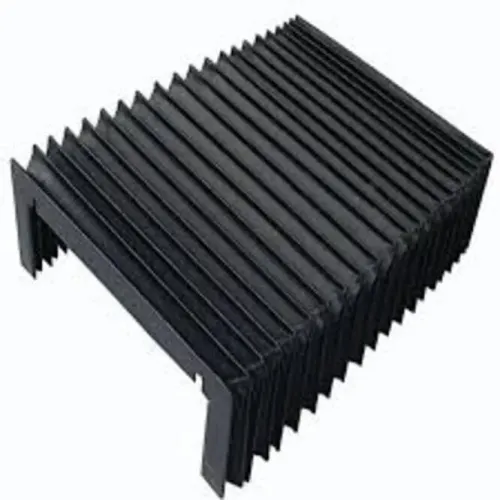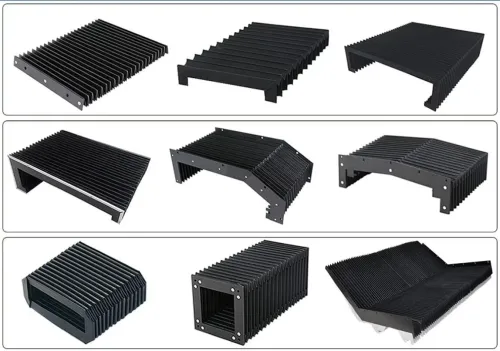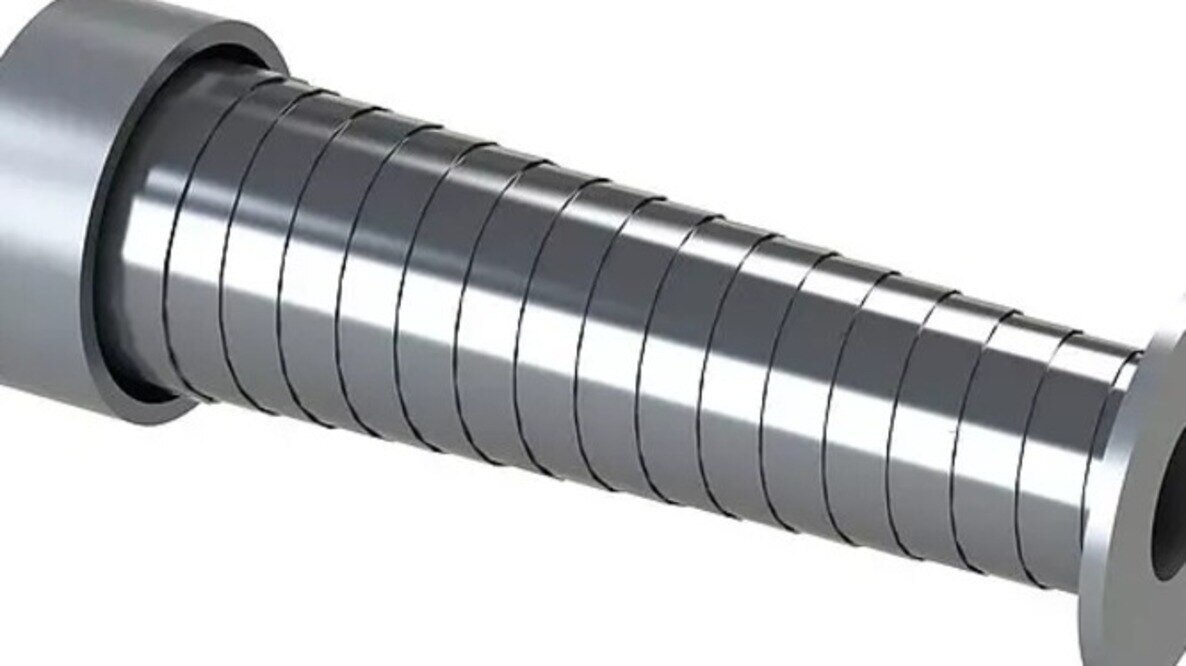
A spiral spring problem can look like a blocked guideway, a bent cover segment, loose mounting, or worn wipers. By the end, you will be able to separate spring failure from those faults, inspect the cover safely, and specify a replacement that fits the machine rather than merely matching its outside diameter.
Key takeaways
- Stop the machine before checking scraping, rattling, gaps, or uneven cover travel.
- Clear chips and inspect guides, rollers, wipers, mounts, and spring adjustment separately.
- Treat corrosion, coolant ingress, and packed chips as repeat-failure risks in Bangkok.
- Match replacement covers to travel, stroke, mounting, clearance, and contamination conditions.
What scraping, rattling, gaps and uneven travel reveal
A cover that scrapes, rattles, binds, or travels unevenly signals a possible spiral-spring problem, but it does not prove one. Friction, packed chips, bent guides, seized rollers, worn wipers, loose mounts, or unequal spring adjustment can create the same symptoms.
For anyone searching telescopic cover for spiral spring failure signs in bangkok, the key decision is whether motion remains controlled.
- Stop immediately for new metallic grinding, sharp intermittent clicking, sudden collapse, spring coils remaining open, visible coil-to-housing contact, shaft contact, or a cover that jams before its end position.
- Stop if the cover accelerates, slams shut, rises faster than before, or loses retraction force; excessive preload or failed damping can destroy end stops, guide shoes, wipers, and brackets.
- Treat a wedge-shaped gap, one side leading, or uneven extension as a warning. Check spring torque balance and guideway parallelism before replacing one spring.
- Remove chips without pushing them into gaps or wipers. Chip-loaded horizontal covers add mass, while long chips can score or wedge between boxes.
| Symptom | What it can reveal | Action |
|---|---|---|
| New scrape or grinding | Spring contact, bent segment, seized roller, or packed debris | Stop and isolate power |
| Rattle or intermittent click | Broken spring edge, loose mount, chip impact, or worn guide | Stop if the sound is new or worsening |
| Wedge-shaped gap | Unequal torque, nonparallel guides, or a bent box | Stop before further cycling |
| Smooth, repeatable travel | No immediate symptom of spring failure | Verify full stroke and stopping positions |
| Corrosion or pitted coils | Reduced fatigue life, even if motion remains normal | Schedule controlled replacement and record identification |
How to separate spring failure from guideway and mounting faults
A cover stopping short does not prove spring failure. Excess friction, a blocked guideway, bent telescoping segment, seized roller, worn wiper, or unequal spring adjustment can create the same symptom. Isolate power before testing; exposed guideways and cutting zones make this a guarding fault, not just a maintenance fault.
1. Clean chips and coolant from the cover, then inspect fully open and closed. Packed chips increase moving mass, while long hot chips can wedge between boxes. If travel improves after careful cleaning, investigate contamination before replacing the spring.
2. Check both sides for parallel movement. A wedge-shaped gap, one side leading, or contact at one corner points to guide misalignment or a bent segment. A spring with broken, distorted, or permanently open coils shows uneven spacing even when the cover is supported and unloaded.
3. Look for bright circumferential wear, black metallic dust, or freshly polished metal. These marks identify new contact from spring deformation, a loose retainer, incorrect spring dimensions, or sideways force from misaligned guides.
4. Tighten and mark mounting screws only after recording their positions. Witness marks, shifted brackets, or movement at the mounting indicate a loose mount; a new metallic grind or intermittent click during free travel demands an immediate stop.
5. Inspect wipers for torn lips, hardened edges, and missing contact. Worn wipers explain coolant leakage and debris entry, but not a rapid rise, slam, or sudden collapse; those symptoms require checking spring preload, damping, and end stops.
This symptom-by-symptom separation prevents spiral spring cover failure symptoms in bangkok from being misdiagnosed and causing repeat damage. Do not return the machine to production because someone can push the cover closed by hand. Restore travel limits, safe clearances, and interlocks where fitted.
A safe inspection sequence for Bangkok machine builders
Before disassembly, isolate every energy source and document the cover in its failed condition. A stationary cover can still contain stored spring force, and an exposed guideway, screw, or cutting zone creates a guarding hazard.
- Stop the machine and apply lockout for electrical, hydraulic, and pneumatic supplies. Block the cover against gravitational movement, support it mechanically, and keep hands clear of the spring housing.
- Clean loose chips and coolant from the outside without forcing debris into guides or spring openings. Photograph the residue before cleaning if it could explain the failure.
- Photograph the cover fully retracted, fully extended, and at the point where travel stops. Include both sides, the guideway, wipers, mounting brackets, gaps, damaged segments, and any exposed moving component.
- Take close photographs of the spiral spring through its inspection opening. Capture corrosion, pitting, broken coils, uneven coil spacing, rubbing marks, displaced ends, and coolant staining.
- Record the machine identification, cover manufacturer, spring identification, stroke, travel direction, operating temperature, coolant type, wash-fluid type, and the date and time of the inspection.
- Measure and record the gap at both sides in the same cover position. Note whether one side leads, whether the cover binds, and whether rollers or guide rails show chip packing, bending, or looseness.
- Record recent changes, including spring adjustment, guideway work, collision, coolant change, alkaline washing, and abnormal noise. Your record for telescopic spring damage in bangkok should preserve these conditions before anyone alters the mechanism.
Do not clamp, cut, or re-tension the spring from guesswork. Give the photographs and measurements to the cover manufacturer or a qualified technician, then follow the specified removal procedure.
Why Bangkok contamination turns small spring damage into repeat failure
A thin water film can start corrosion on an unprotected spiral spring, even while the cover still moves normally. Pitting is not cosmetic: each pit concentrates stress, shortens fatigue life, and creates a crack site during repeated extension and retraction. That is the pattern behind machine spiral spring problems in Bangkok.
- Condensation and high humidity keep steel surfaces wet between cycles, allowing rust to grow inside coil overlaps and retainers.
- Water-based coolant leaves a conductive residue that holds moisture against the spring and promotes sticking.
- Alkaline wash fluids attack vulnerable finishes, then leave deposits that increase friction as they dry.
- Chloride-contaminated air penetrates small coating defects and accelerates localized pitting.
- Abrasive chips score coils and housings, remove protective coatings, and create bright contact tracks.
- Fine dust mixes with oil, coolant, or wash residue into a paste that blocks coil movement and wears guides.
A damaged spring then returns less evenly, rubs its housing, or stores and releases torque unpredictably. The contamination remains inside the housing unless you remove it; wiping the exposed surface does not clear the abrasive paste or corrosive residue between coils.
Continued cycling enlarges pits, grinds metal into black dust, and increases friction until the spring sticks or loses preload. Cleaning the surrounding cover without correcting the contamination path simply resets the failure clock.
Replacement fit checks and the right cover design
Request the cover drawing before ordering a spring. Record closed and extended lengths, usable stroke, cover width and height, segment count, mounting-hole pattern, guideway orientation, and the clearance around the spindle or screw. Add travel speed, acceleration, cycle frequency, operating temperature, coolant type, chip size, and expected chip load.
Ask the supplier for:
- Spring strip width, thickness, outside diameter, material, winding direction, identification number, and specified torque
- Spring housing dimensions, retainer details, guide parallelism, and adjustment procedure
- Photos of both ends, the spring housing, wear marks, and the cover fully open and closed
- Acceptance results: complete-stroke travel, stopping positions, noise, side loading, spring contact, and operation at normal temperature
A search for telescopic cover for spiral spring failure signs in bangkok should not lead to a spring-only replacement. Machine spiral spring problems in bangkok frequently return when a mismatched spring is fitted to a cover with unequal guides or added chip weight.
| Option | Best fit | Reject it when |
|---|---|---|
| Telescopic spring cover | Compact spindle or shaft protection with repeated extension | Guide alignment, torque balance, or chip loading is uncontrolled |
| Box-type steel cover | Rigid guideway protection against heavy, hot chips | Space, weight, or high acceleration is restrictive |
| Bellows | Low-mass protection for complex shapes and fine dust | Sharp chips, heat, or abrasion will attack the fabric |
| Roll-up cover | Long travel with limited storage space | Chips can strike or wedge in the rolled curtain |
| Apron cover | Broad, overlapping protection on large travel axes | Tight seals and precise enclosure are required |
SCUTES INDIA PRIVATE LIMITED can use the recorded cover geometry and operating data to distinguish a repairable spring mismatch from a design change. Do not release the machine until the cover restores clearances, travel limits, and fitted interlocks.
Related products
 | TELESCOPIC SPRING COVER Telescopic Spring Covers provide protection under extreme conditions. View product → |
 | TELESCOPIC COVERS A telescopic cover protects guide-way surfaces and components of moving axis of machines. View product → |
Frequently asked questions
What do scraping, rattling, gaps, and uneven travel indicate?
They indicate a possible spiral-spring problem, but friction, packed chips, bent guides, seized rollers, worn wipers, loose mounts, and unequal spring adjustment can produce the same symptoms.
How can you separate spring failure from a guideway or mounting fault?
Stop and isolate the machine, remove accessible debris, then check spring tension and damage separately from guide alignment, roller movement, wiper condition, mounting tightness, and cover clearance.
What is a safe inspection sequence for Bangkok machine builders?
Lock out the machine, wait for moving parts to stop, photograph the symptom, inspect without reaching between sections, clear loose contamination, and check springs, guides, rollers, wipers, and mounts in sequence.
Why can Bangkok contamination cause repeat telescopic-cover failure?
Chips, coolant, oil, humidity, and packed debris can increase friction, obstruct travel, corrode spring components, damage wipers, and transfer a small defect into repeated binding.
What fit checks matter when replacing a telescopic spring cover?
Confirm closed and extended dimensions, travel, section clearance, mounting points, guideway geometry, spring force, wiper arrangement, access for cleaning, and resistance to the machine’s chips, coolant, oil, and heat.