Chips under a guideway-cover seal usually point to a worn contact edge, misalignment, poor drainage or coolant carrying debris into an overlap—not automatically to a failed cover. You will be able to locate the buildup, separate a sealing fault from an evacuation problem, and decide whether cleaning, adjustment, wiper replacement or structural repair is appropriate.
Key takeaways
- Map chip location before replacing the seal.
- Inspect the wiper through the complete axis travel.
- Separate seal damage from chips carried beneath the cover.
- Choose overlapping wipers and chip-shedding covers for heavy cutting.
Where are the chips collecting, and what does that location reveal?
The chip location identifies the likely entry path, but it does not prove the cover has failed. A telescopic guideway cover is chip-resistant rather than hermetically sealed, so fine residue at an overlap can exist without exposing the guideway.
- Chips outside the seal usually indicate poor shedding, an incorrectly loaded wiper or debris arriving from the machining zone. Check whether the wiper leaves material behind as the cover moves.
- Chips trapped between telescopic sections point to a blocked drain, contamination in the panel overlap, a damaged scraper or coolant aimed directly at the overlap. Fine chips mixed with coolant can form a paste that stays in this cavity.
- Chips reaching the guideway demand urgent investigation of the wiper lip, panel alignment, cover deflection and any continuous gap. The guideway itself is the protected surface; material there confirms that the contamination path has crossed the cover’s working barrier.
A small amount of fine contamination at an overlap does not establish hermetic sealing failure because overlaps depend on contact, scraping and drainage, not an airtight joint. Material on the guideway is different: it shows ineffective exclusion or a gap under operating load.
Diagnose guideway cover chip buildup in Vienna by tracing geometry and contamination path—cover travel, coolant direction, chip shape, panel deflection and drainage—not by location alone.
How do you inspect the seal through the full axis travel?
Inspect the cover slowly through the full axis travel, not only while it is parked at one end. A guideway cover sealing problem in vienna can appear only as panels extend, compress or pass through a damaged overlap.
1. Remove residue with vacuum extraction, a soft brush or controlled low-pressure washing. Avoid routine compressed air: it can drive chips beneath the wiper, into rollers and toward the guideway.
2. Examine the seal lip for cuts, hardened sections, flattening and permanent deformation. Inspect both corners and the fully extended position, where a worn lip often opens a continuous leakage path.
3. Measure the seal-to-panel gap at several points along the cover travel. Look for rubbing marks, panel skew, lifting, uneven motion and roller noise as each section moves.
4. Inspect the overlap between telescopic sections for trapped chips, damaged scrapers and inconsistent contact. Record whether the cover binds or whether extension force changes during the stroke.
5. Check drain holes and low points for blockage, then inspect springs, fasteners and mounting squareness. A cover that is not parallel to the guideway will not seal reliably.
6. Correct alignment and drainage before increasing wiper preload. Excessive preload increases friction, overloads rollers and springs, and accelerates lip wear without correcting misalignment.
After cleaning, repeat the complete stroke inspection and compare travel force with the previous record. A seal that looks sound while stationary can still lift, rub or lose contact at one point in motion.
Is the seal failing, or is the machine carrying chips beneath it?
A clean, intact wiper does not prove a cover defect: high-pressure coolant can drive chips beneath it when a nozzle aims at a telescoping overlap, panel end or corner. Inadequate flow leaves coolant and fine chips as a paste in low points, drain holes and overlaps.
Separate evacuation from sealing with this checklist:
- Inspect the chip conveyor for blockage, then verify that coolant flows toward the conveyor rather than into the cover.
- Watch rapid axis movement; acceleration can carry chips beneath the wiper even when the lip is undamaged.
- Match residue to chip form: long stringy chips can bridge a wiper, aluminum can smear onto its lip, hot chips can deform it, and cast-iron, hardened-steel or other fine abrasive chips can wear the sealing edge.
- Check whether contamination remains inside the cover or reaches the guideway. Fine residue at an overlap does not prove hermetic failure; chips on the guideway demand immediate investigation.
Cutting oil, coolant chemistry, heat and cleaning chemicals can swell, harden, soften or crack an incompatible wiper. Ultraviolet exposure can age exposed elastomers, especially on outdoor or poorly shielded equipment, so compare the residue pattern with the chosen material’s chemical and temperature limits.
A search for guideway cover for collecting chips in vienna identifies a market, not a special sealing mechanism. Diagnose the geometry, drainage, coolant direction, chip type and wiper condition.
Which cover or wiper arrangement suits a chip-heavy process?
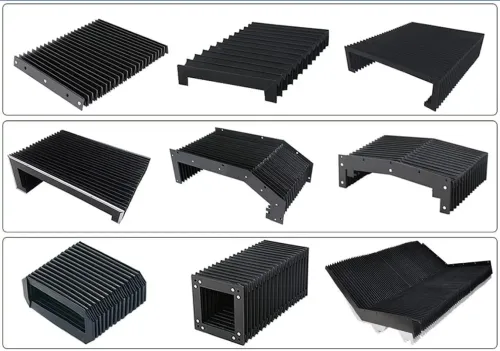
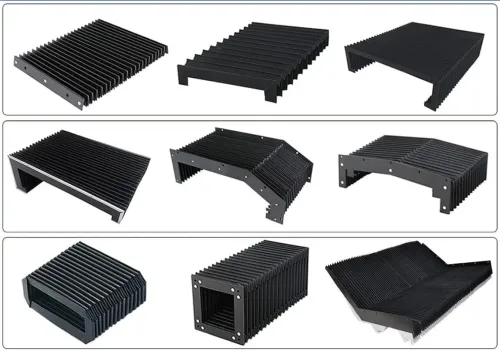
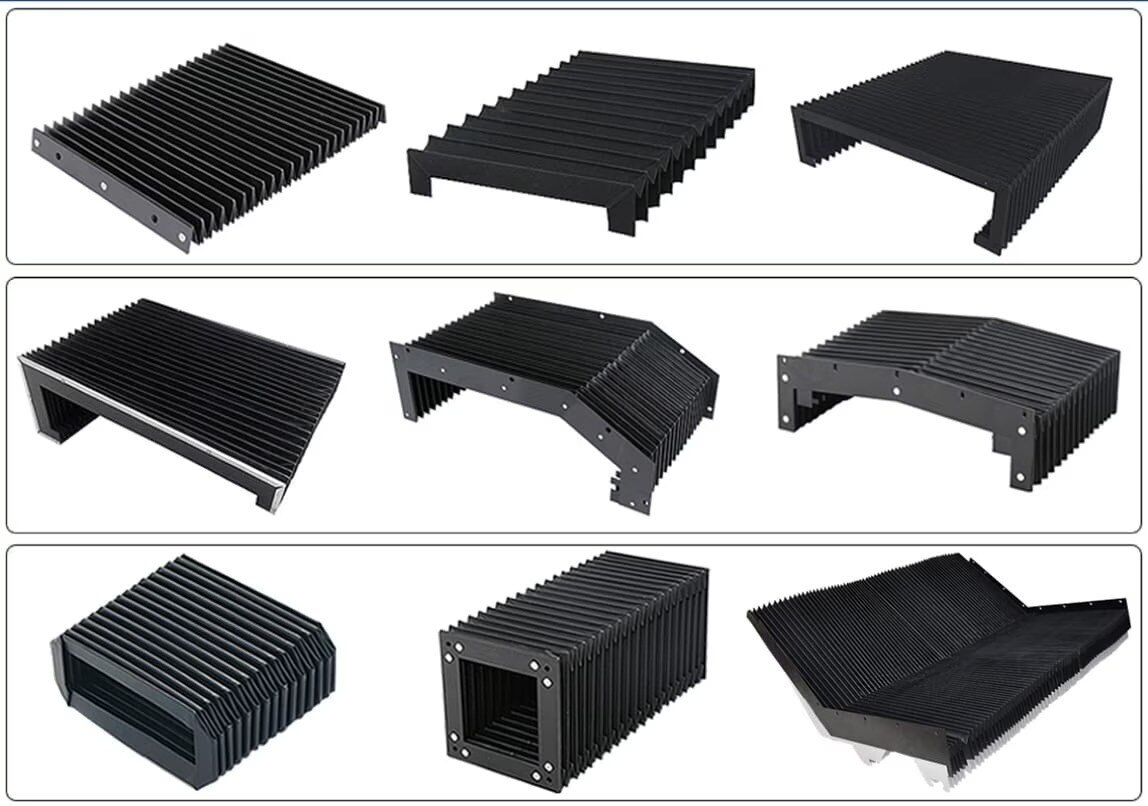
A telescopic steel cover is usually the strongest choice for a rigid axis facing heavy chips, but only when its panels, rollers, scrapers, drains and overlaps suit the process. A flexible wiper can be the better answer where access, geometry or replacement time matters more than maximum chip resistance.
| Option | Practical strengths | Main trade-offs |
|---|---|---|
| Brush wiper | Flexible contact; quick, simple replacement | Fine wet sludge can pass through the bristles; limited protection against pressure-driven coolant |
| Elastomer wiper | More continuous sealing edge | Adds travel friction; confirm resistance to the coolant chemistry and operating temperature |
| Apron cover | Simple, accessible protection for open arrangements | Needs adequate overlap and cleaning access; trapped sludge becomes difficult to remove |
| Bellows | Follows movement and awkward geometries | Inspect for punctures and folds that retain chips; cleaning access can be poor |
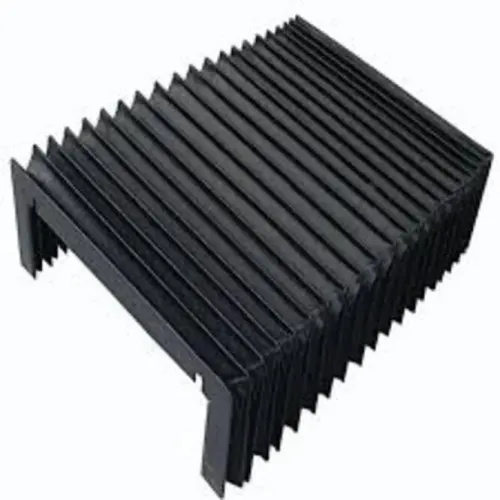
| Telescopic steel cover | Handles rigid axes and high chip loads | Requires correct panel overlap, rollers, scrapers, drainage, maintenance access and acceptable travel force |
Record the conditions before choosing:
- Axis travel, cover width and height, section overlap, maximum speed and acceleration
- Chip size, coolant type and pressure, operating temperature and cover orientation
- Available installation space, required wiper material, cleaning access and allowable travel force
A cover that performs well in dry cutting can fail quickly under high-pressure coolant and fine abrasive sludge. Check whether the design lets you reach drains, overlaps and rollers without dismantling half the machine.
When does a guideway cover need repair rather than a new seal?
Repair the seal when the cover structure remains straight and the fault is limited to a service item. Replace or service wiper strips, brushes, scrapers, rollers, springs and fasteners before considering a new cover.
- Open and clean the cover before diagnosis. Remove packed chips and coolant from the seal groove, panel overlap, drain path and roller tracks with vacuum extraction, a soft brush or controlled low-pressure washing. A new wiper fitted over residue can sit away from its mating surface and fail quickly.
- Check alignment and travel force through the full stroke. A cover that binds, lifts or moves unevenly needs adjustment or mechanical repair, not simply a replacement seal.
- Inspect the structure for buckled panels, cracked welds, distorted frames, damaged mounting interfaces and bent overlaps. These defects can require panel replacement or specialist rebuilding.
- Send the service provider photographs with the cover open and closed, the cover and machine model, wiper-profile dimensions, axis travel, chip material, coolant type and pressure, and the exact point in the stroke where buildup begins.
For guideway cover repair in Vienna, SCUTES INDIA PRIVATE LIMITED belongs in a supplier comparison only when its assessment or manufacturing capability matches those recorded conditions. The evidence should support one of three decisions: consumable replacement, alignment adjustment or structural rebuild.
Related product
 | TELESCOPIC COVERS A telescopic cover protects guide-way surfaces and components of moving axis of machines. View product → |
Frequently asked questions
Where do chips collect under a guideway cover?
Chips at an overlap, corner, drain point or guideway edge indicate different entry paths. The location narrows the fault but does not prove seal failure.
How do you inspect a guideway cover seal through full axis travel?
Clean the cover, move the axis through its complete stroke, and inspect the wiper contact, gaps, folds and overlaps at several positions.
Is the guideway cover seal failing, or is the machine carrying chips beneath it?
A damaged, hardened or displaced wiper indicates a sealing problem. A clean, continuous wiper with chips appearing only after rapid axis motion points to chips being carried underneath.
When does a guideway cover need repair instead of a new seal?
Repair the cover when the shell, guides and mounting points remain straight and intact. Replace the seal when the wiper alone has worn, torn, hardened or shifted.