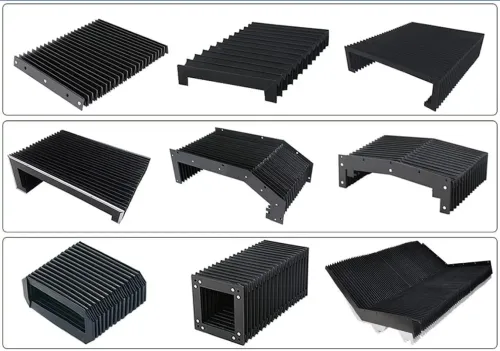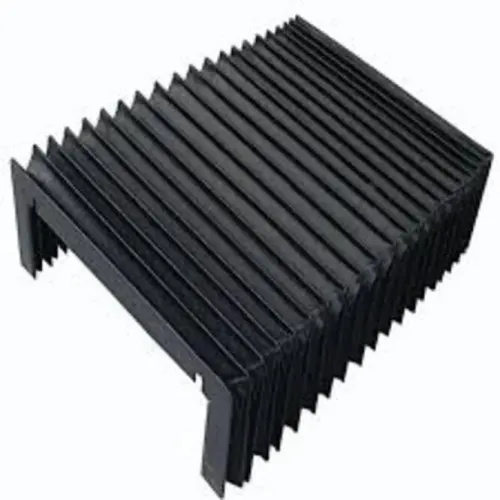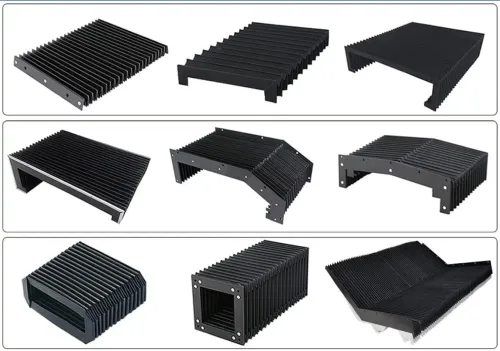

A small burn does not prove that a fabric bellow is repairable: heat can weaken the substrate, coating, thread, seams and folds beyond the visible mark. You will be able to inspect the damage, identify the repair method that fits the material, decide when replacement is safer, and collect the measurements a supplier needs for an accurate quotation.
Key takeaways
- Treat burnt fabric, thread, seams and folds as one inspection area.
- Identify the heat source before selecting a patch or replacement material.
- Replace the bellow when heat has weakened folds, reinforcement or mounting points.
- Measure travel, clearance and mounting dimensions before ordering a new bellow.
Inspect the bellow before deciding whether to repair it
A small burnt patch does not prove the damage is superficial. Treat the bellow as structurally compromised until the textile, coating, thread, seams, reinforcement, folds and mounting points all pass inspection.
1. Isolate the machine and let the cover cool completely. Photograph the outside, inside, heat source and attachment points before cleaning or stretching the fabric.
2. Inspect both faces, fold interiors and seams for brittle or crumbling fabric, melted coating, holes, blistering, delamination, exposed reinforcement, discolouration and melted stitching. Press beside the mark; cracking, powdering or a permanently stiff area indicates weakened material beyond the visible burn.
3. Check every pleat for shrinkage, distortion and loss of clearance. A cover that no longer opens evenly, rubs a guideway or pulls an attachment strip has suffered geometry or load damage, not just surface scorching.
4. Record the actual heat event: continuous temperature, peak duration, radiant heat, flame, hot chips, hot oil or contact with a hot surface. A thermographic image alone is unreliable because reflections and surface emissivity distort readings; confirm critical values with a contact thermocouple or temperature-indicating label.
5. Reject patch-only repair when the fabric tears during a gentle hand-flex test, delamination extends past the mark, seams release, reinforcement is exposed or hardware is distorted.
Those findings point toward fabric bellow replacement in Vienna rather than fabric bellow repair in Vienna; a request for fabric bellow heat damage in Vienna must include the photographs and temperature history.
Find the heat source and match the repair to the material
Record the heat event, not just the machine’s rated temperature. Note continuous temperature, short peaks, radiant heat, flame, hot chips, hot oil, and contact with a hot surface. A brief spike can destroy a coating even when average ambient temperature is acceptable.
Confirm critical readings with a contact thermocouple or temperature-indicating label; a thermographic image alone can misread reflective metal and coated fabric.
Before specifying a patch or seam, collect:
- Fabric and coating names from the drawing, label, datasheet or material certificate.
- Thread, adhesive, reinforcement and seam-construction details.
- Photographs of both sides, including melted coating, delamination, exposed fibres and brittle edges.
- Clearance from the heat source and the expected travel, cycle frequency and exposure duration.
For a fabric bellow for heat damage repair in Vienna, give the supplier the machine location, damage cause, measured temperatures and dimensions. A visually similar patch can peel, melt or contaminate the fold if its coating is wrong.
| Material or condition | Repair that can survive | Main failure risk |
|---|---|---|
| Silicone-coated glass fabric | Compatible silicone-glass patch with rounded corners and bonded or stitched edges | Incompatible adhesive or unsealed punctures |
| PTFE-coated glass fabric | PTFE-compatible sewn repair or specialist bonding | Ordinary adhesive will not adhere reliably |
| Aramid fabric with sound coating | Overlapping patch using matching high-temperature thread | Coating damage allows leakage |
| Melted, delaminated or brittle fabric | Replace the affected panel or assembly | A patch cannot restore the weakened load path |
Stitching through a coating creates leak paths, so seal the holes or add a secondary cover strip where dust, coolant or chips must stay out.
Choose between an on-site repair, workshop repair and replacement
Repair is safe only when heat has affected a replaceable surface area and the fabric, coating, stitching, reinforcement, folds and mounting points remain sound. If the heat source remains, even a neat patch will fail again; add a shield, deflector, insulation, stand-off or cooling without reducing travel clearance or trapping heat.
| Option | What it means | When it applies |
|---|---|---|
| On-site repair | Local patch, seam work or hardware replacement without removing the cover | Damage is small, accessible and stable; folds still open and close correctly |
| Workshop repair | Remove the bellow for cleaning, stripping, pattern checks and controlled restoration | Damage reaches seams, several pleats or attachment strips, but the material retains strength and geometry |
| Replacement | Manufacture and fit a new assembly to the machine dimensions | Fabric is brittle, delaminated, melted, torn through, distorted, or repeatedly exposed beyond its temperature capability |
Choose replacement when stitching pulls through weakened fabric, folds have lost their shape, reinforcement is exposed, or mounting hardware has warped. A new assembly is also the correct choice when the temperature history exceeds the coating, substrate, thread or adhesive limits, or when the cause cannot be controlled.
After any fabric bellow repair in vienna, cycle the machine through full travel. Confirm that no pleat rubs the guideway, seams and mounting strips remain secure, and the cover does not obstruct lubrication points, sensors, access panels or moving emergency-stop components. A fabric bellow is not automatically a safety guard.
Measure the machine before ordering a replacement bellow
Measure the machine, not the damaged bellow alone. Heat can shrink fabric, distort pleats and move mounting points, so a visually similar cover can still bind during travel.
1. Record the required length in both fully compressed and fully extended positions. Measure the usable travel, fold height, number of folds, overall width, and the clearance to the guideway, spindle, table and nearby guards.
2. Measure every attachment detail: mounting-strip length and thickness, hole or slot spacing, bolt diameter, edge margins, and the distance from each mounting face to the first fold. Photograph the assembly with a ruler visible.
3. Record motion data: travel direction, speed, acceleration if known, cycles per minute or shift, and whether the bellow folds horizontally, vertically or around an obstruction. Note any rubbing, sagging or twisting at full travel.
4. Document the heat history rather than only the machine’s nominal temperature. State continuous temperature, short peak temperature, radiant exposure, hot-particle or flame contact, and contact with hot oil, coolant or metal. Record dust, chips and lubricant exposure too.
5. Identify the fabric, coating, thread and reinforcement from labels, drawings or material certificates. State whether the cover must exclude coolant, dust or hot particles, and whether it is guarding or only contamination protection.
For fabric bellow replacement in Vienna, send these measurements with photographs of both sides, the damaged mounting points and the heat source. A repaired cover must pass full-travel cycling without pleat contact, seam opening or obstruction of lubrication points, sensors, access panels or moving emergency-stop parts.
Send a complete enquiry and verify the repaired bellow in service
A useful enquiry lets a Vienna supplier distinguish restoration from new manufacture. Send clear photographs of both sides, the machine location, the heat source, the cause of the event, measured or estimated temperatures, and any material marking on the fabric, coating, thread, or drawing.
Add the bellow’s overall length, width, compressed and extended dimensions, fold height, mounting-hole pattern, travel, cycle frequency, contamination, and required clearance.
- State whether you want fabric bellow repair in Vienna or fabric bellow replacement in Vienna.
- Attach a sketch showing fixed and moving ends, guideway position, nearby heaters, exhausts, spindles, and hot-chip paths.
- Ask the supplier to identify continuous and peak temperature limits, coating compatibility, seam method, and any required heat shield or clearance change.
- Include photographs of damaged mounting strips, distorted pleats, exposed reinforcement, delamination, and discoloured areas.
SCUTES INDIA PRIVATE LIMITED can use this evidence to check whether a proposed cover matches the machine rather than quoting a visually similar assembly.
After repair or replacement, isolate the machine and cycle the bellow through its complete stroke at slow speed, then at normal operating speed. Inspect the tightest compressed folds: a rigid patch or bulky seam that looks sound when extended can buckle, rub, or invert a pleat.
Check every seam, mounting strip, fold apex, and guideway clearance. Confirm that the cover does not block lubrication points, sensors, access panels, or emergency-stop-related moving parts. Record the inspection, and obtain a fresh risk assessment if the bellow forms part of guarding; it is not automatically a safety guard.
Related products
 | Duct Bellows HVAC systems and industrial ducting rely on high-quality duct bellows for durability and performance. View product → |
 | Laser Machine Bellows Laser Machine Bellows are specialized protective coverings designed to safeguard the vital internal components of laser machines. View product → |
Frequently asked questions
How do you inspect a fabric bellow after heat damage?
Check the textile, coating, thread, seams, reinforcement, folds and mounting points. Look for brittle fabric, melted coating, loose stitching, distortion, exposed reinforcement and restricted movement.
When should you repair or replace a heat-damaged fabric bellow?
Use an on-site repair for limited surface damage that has not weakened seams, folds or mounting points. Choose workshop repair for broader damage requiring controlled cleaning, stitching or coating work. Replace the bellow when the material has become brittle, distorted or structurally weak.
How do you measure a machine before ordering a replacement bellow?
Record closed and extended lengths, width, height, fold pitch, travel, mounting-hole positions, attachment method, clearance and the machine’s moving path. Include photographs and a drawing with reference dimensions.
What should you include in an enquiry for fabric bellow repair in Vienna?
Provide machine details, heat-source information, operating temperature, contaminants, dimensions, photographs, material markings, failure history and the required return date. Ask how the repaired bellow will be tested before service.
Related products
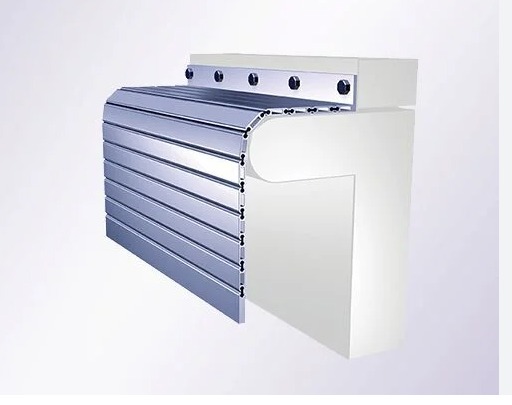 | APRON COVER Effectively engaged in offering a vast collection of outstanding quality products which include Apron Covers. View product → |
 | SCISSOR LIFT BELLOWS Scissor Lift Bellows are one of the broadly demanded stabilizer for which we are considered an acclaimed designed in the market. View product → |