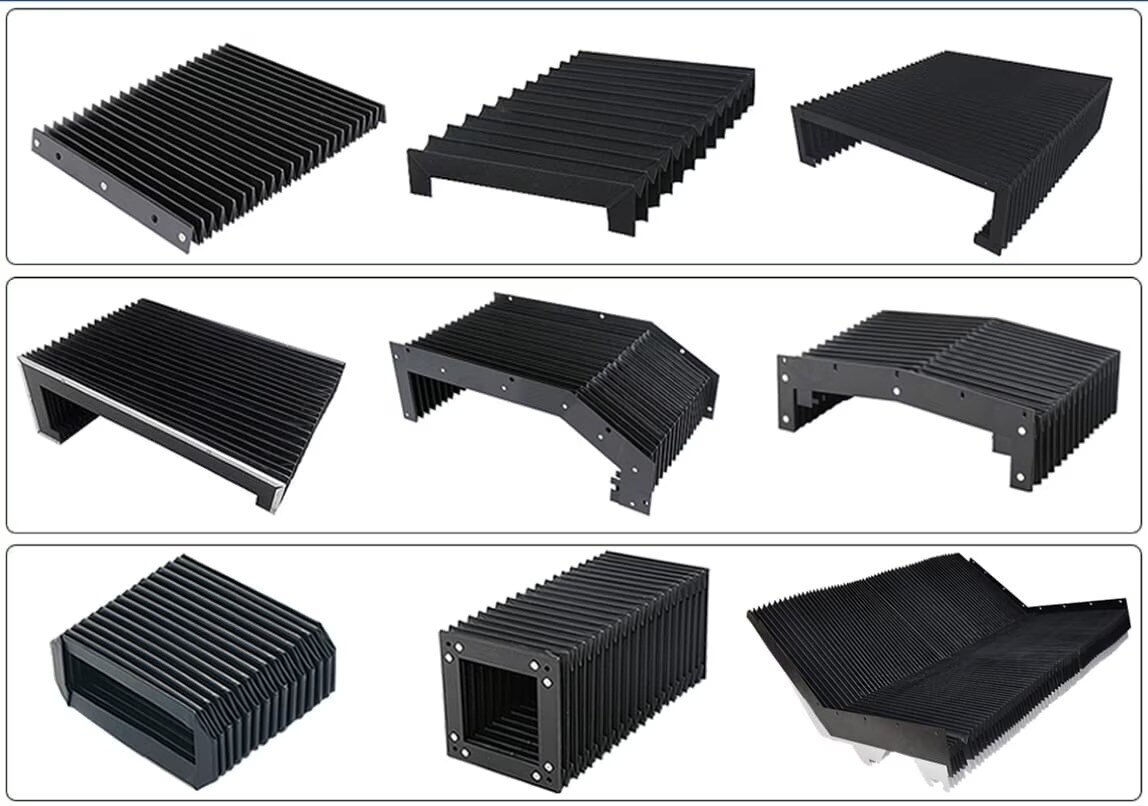
A cover that survives coolant can still fail when sharp swarf cuts its folds, hot chips damage its coating, or a cleaning chemical attacks its seams. You will be able to match cover construction to the hazard, check the limits that suppliers must document, size the cover for machine motion, and set inspection points before failure reaches a guideway or cable route.
Key takeaways
- Use steel covers for sharp chips, grinding swarf and severe impact.
- Request tested limits for temperature, chemicals, ingress protection and sparks.
- Size covers for travel speed, stroke length and three-dimensional movement.
- Inspect seams, slides, slats and mounting points before contamination reaches the machine.
Match the cover construction to the actual industrial hazard
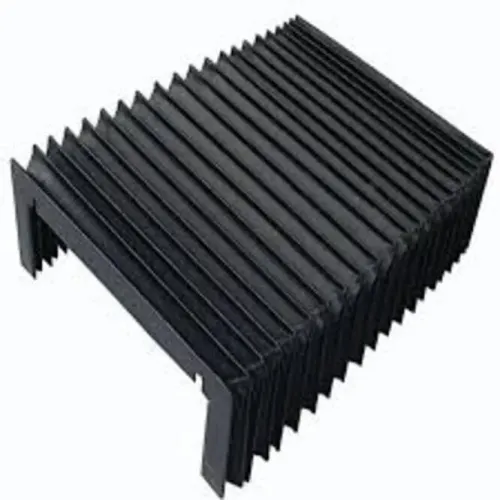
Telescopic steel way covers and steel-slat covers suit machine covers for abrasive environments where sharp metal chips, cast-iron dust and grinding swarf threaten puncture and impact damage. Fabric bellows win when low mass, rapid travel or complex three-dimensional movement matters more than resistance to cutting edges.
| Construction | Best fit | Main trade-off |
|---|---|---|
| Telescopic steel or steel slats | CNC guideways facing sharp chips, grinding swarf and repeated impact | Needs sound overlaps, scrapers, wipers, chip deflectors and end seals |
| PVC-coated polyester | Dust, light wet service and moderate coolant exposure | Less resistant to cutting edges, heat and severe abrasion |
| Polyurethane-coated fabric | Flexible covers exposed to abrasion, oil or cutting fluid | Costs more than basic PVC fabric and still remains vulnerable to sharp swarf |
| PTFE- or silicone-coated glass fibre | High heat, chemicals, welding sparks and hot particles | Higher cost and greater stiffness; sewing and sealing are harder |
Do not treat every hazard as dirt. Grinding dust abrades differently from large chips; high-pressure coolant attacks gaps and seals; welding sparks and molten particles demand temperature ratings for the fabric, coating, thread, adhesive and hardware. A cable route near a foundry line therefore needs a different construction from a dusty CNC axis.
Before choosing, specify operating and peak temperature, thermal cycling, oil or coolant chemistry, washdown pressure and travel speed. Steel panels can survive while worn wipers or damaged overlaps let chips and coolant reach the guideway. An IEC 60529 IP rating does not prove resistance to abrasion, hot-chip impact or chemical attack.
Demand measurable limits for heat, chemicals, ingress and sparks
Evidence for machine covers for harsh environments is a test record, not the phrase “heat-resistant.” Demand operating and peak temperatures for the cover material, coating, thread, adhesive, wiper and attachment hardware, with exposure defined for hot chips, radiant heat, thermal cycling and cryogenic coolant. The weakest component sets service life.
| Evidence | What it proves | What it misses |
|---|---|---|
| ASTM G65 | Comparative dry-sand/rubber-wheel abrasion performance | Sharp-chip impact, coolant contamination and repeated flexing |
| IEC 60529 IP rating | Defined solid-particle and water-ingress protection | Flex life, chemical attack, abrasion, hot chips and high-pressure coolant jets |
| Component temperature data | Limits for each construction component | Actual damage from impact, chemicals or thermal cycling |
Request compatibility results against the actual cutting oil, hydraulic oil, coolant concentration, alkaline cleaner, solvent, acid, biocide and exposure temperature. Oil resistance alone proves little: a coating, adhesive, thread or wiper can fail while the base fabric remains intact.
- Check UV exposure, standing water, salt air and condensation; these reveal swelling, corrosion, delamination and mould-related degradation.
- Ask for fire behaviour and static-discharge results when sparks, welding spatter or charge accumulation are credible hazards.
- In an explosive dust or gas atmosphere, require the complete ATEX assessment under Directive 2014/34/EU, including ignition sources, bonding, earthing, surface temperature and equipment category. Conductive or insulating material alone does not make the cover compliant.
Size the cover around speed, stroke and three-dimensional movement
Select machine protection covers for harsh environments from the motion envelope, not the parked position. A cover that fits at rest can foul during rapid multi-axis movement, stretch at full extension, or buckle at full compression, creating friction, heat and collision risk.
Record these dimensions and operating values in the supplier brief:
- Protected component length, width and height
- Mounting faces, travel direction and attachment points
- Extended length, compressed length and available clearance
- Stroke length, fold height and minimum bend radius
- Axis speed, acceleration and cycle frequency
- Required compression ratio
For fabric bellows, confirm the fold geometry, support frames and bend radius at every axis position. Horizontal or upward-facing folds can retain chips and coolant, so specify sloped surfaces or drainage where debris could enter the next compression cycle. Stitched seams suit some flexible assemblies; welded seams can remove thread abrasion at compatible materials.
Specify end frames, flanges, fasteners and drainage paths together with the wiper interface.
For telescopic covers, check panel overlap, scraper pressure, wiper contact, guide clearances and chip-deflector geometry. Set the deflectors so sharp swarf cannot lodge between panels. High-pressure coolant needs deflection and drainage designed for the jet, with sealed interfaces and suitable wipers; do not rely on fabric alone.
Compare complete cover assemblies, not material names alone
Compare complete assemblies, not material names alone: the panel or fabric can survive while seams, rivets, springs, guides, adhesives, wipers or mounting frames fail. For machine protection covers for harsh environments, compare access, cleaning and service requirements alongside barrier performance.
| Option | Assembly strengths | Best fit and risks |
|---|---|---|
| Fabric bellows | Low moving mass; handles complex movement | Fast laser axes; check flex-life, seam strength and hot-chip resistance |
| Brush wipers | Simple chip exclusion; easy to replace | Open guideways and frequent cleaning; brushes do not seal against fine coolant |
| Roll-up covers | Compact storage and useful access clearance | Space-limited axes; inspect slats, edge seals, drum and spring fatigue |
| Telescopic steel covers | Resists sharp swarf and chip impact | CNC guideways; specify overlaps, scrapers, wipers, guides and end seals |
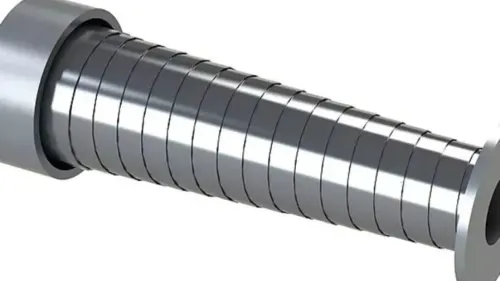
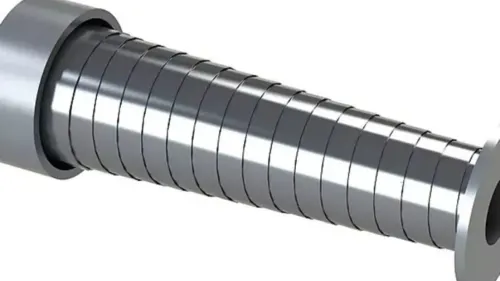
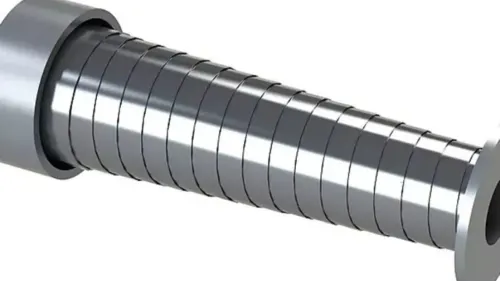
| Spring covers | Compact protection for shafts and rods | Dirty, confined travel; check coil fatigue, snagging and cleaning access |
Ask each supplier for cycle counts or flex-life results, abrasion-test media and load, chemical-test fluid and exposure time, operating and peak temperatures, and the failure mode the design prevents. Request an installation drawing showing fasteners, clearances, drainage, service access and replacement parts.
A washdown assembly needs stainless or suitably coated hardware, sealed fasteners, compatible elastomer wipers and drainage; a cover that tolerates coolant can still fail under hot chips or cutting-oil additives. Compare installation downtime, cleaning effort, movement resistance and any effect on machine accuracy.
SCUTES INDIA PRIVATE LIMITED can be questioned on these construction details and documented service limits rather than accepting “heavy duty” or “extreme conditions” as test evidence.
Related products
 | Machine Covers Machine covers are specially designed shields used to protect industrial equipment and machinery from environmental elements. View product → |
 | Roll Up Cover A roll-up cover is a highly durable and flexible protective solution designed to safeguard machinery, equipment, and valuable assets from dust,... View product → |
Inspect wear before contamination reaches the machine
Treat every machine cover as a wear component: at each planned maintenance interval, inspect it before chips or coolant reach guides, ballscrews or linear bearings.
- Examine every fold for cuts, thinning, hardening and coating delamination. Check stitching or welded seams for leakage, look for exposed reinforcement, and inspect telescopic panels for distortion.
- Check cracked or misshapen springs, worn or torn wipers, loose mounting hardware, blocked drains and chips trapped inside folds. A steel panel can remain intact while a failed wiper lets contamination through.
- Remove debris before it enters the next compression cycle. Clean the folds, drains and panel overlaps, then lubricate only guides or moving interfaces whose materials are compatible with the lubricant.
- Repair or replace the cover when a fold is torn, reinforcement is exposed, a coating has cracked across a flex zone, a seam leaks, a spring has lost its shape, a scraper no longer contacts the panel or a mounting point has loosened.
- Record inspection findings against access downtime, replacement frequency, cleaning time, friction and machine accuracy. A cheaper cover becomes expensive when frequent cleaning or friction affects positioning.
A cover is the wrong solution for direct abrasive blasting, unrestricted weld spatter, temperatures beyond its documented limit or incompatible chemicals. Choose process shielding, relocate the hazard or use a different enclosure strategy when operators need frequent unrestricted access.
Frequently asked questions
Which machine cover construction suits abrasive industrial environments?
Telescopic steel way covers and steel-slat covers suit sharp metal chips, cast-iron dust, grinding swarf and impact. Fabric bellows suit low-mass, rapid travel and complex three-dimensional movement when cutting resistance is less important.
What measurable limits should you request for harsh-environment machine covers?
Request documented limits for operating temperature, chemical exposure, ingress protection, spark or hot-particle exposure and the specific contaminants present in your process.
How should you size a machine cover for moving equipment?
Provide the cover supplier with travel speed, stroke, compressed and extended lengths, clearance, acceleration and the full movement path, including three-dimensional motion and bend radius.
What should you inspect before contamination reaches the machine?
Check seams, slats, guides, wipers, mounting points and fasteners for tears, distortion, gaps, binding, loose parts and accumulated chips or coolant.
Related products
 | Laser Machine Bellows Laser Machine Bellows are specialized protective coverings designed to safeguard the vital internal components of laser machines. View product → |
 | TELESCOPIC SPRING COVER Telescopic Spring Covers provide protection under extreme conditions. View product → |
 | TELESCOPIC COVERS A telescopic cover protects guide-way surfaces and components of moving axis of machines. View product → |