The right choice depends first on the shape and movement of the component, then on the chips, coolant, heat and forces the cover must withstand. By comparing geometry, motion limits, protection performance and installation space, you can reject unsuitable designs before requesting a quotation.
Key takeaways
- Choose telescopic covers for flat guideways and spiral springs for round moving components.
- Check compressed length, travel, speed, vibration and chip direction before ordering.
- Use bellows, aprons or roller blinds when geometry or contamination exceeds either design.
- Specify dimensions, materials, temperature, coolant exposure, mounting and test requirements in writing.
Which cover matches the machine geometry?
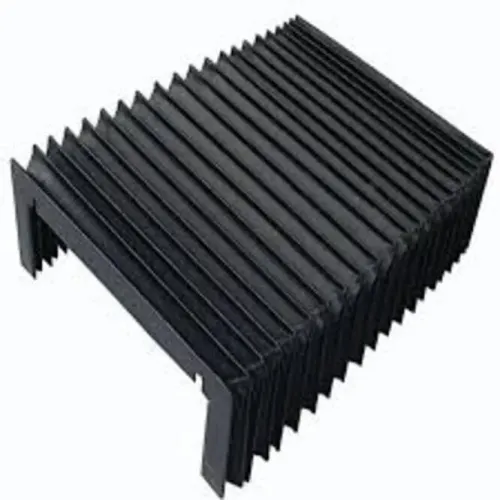
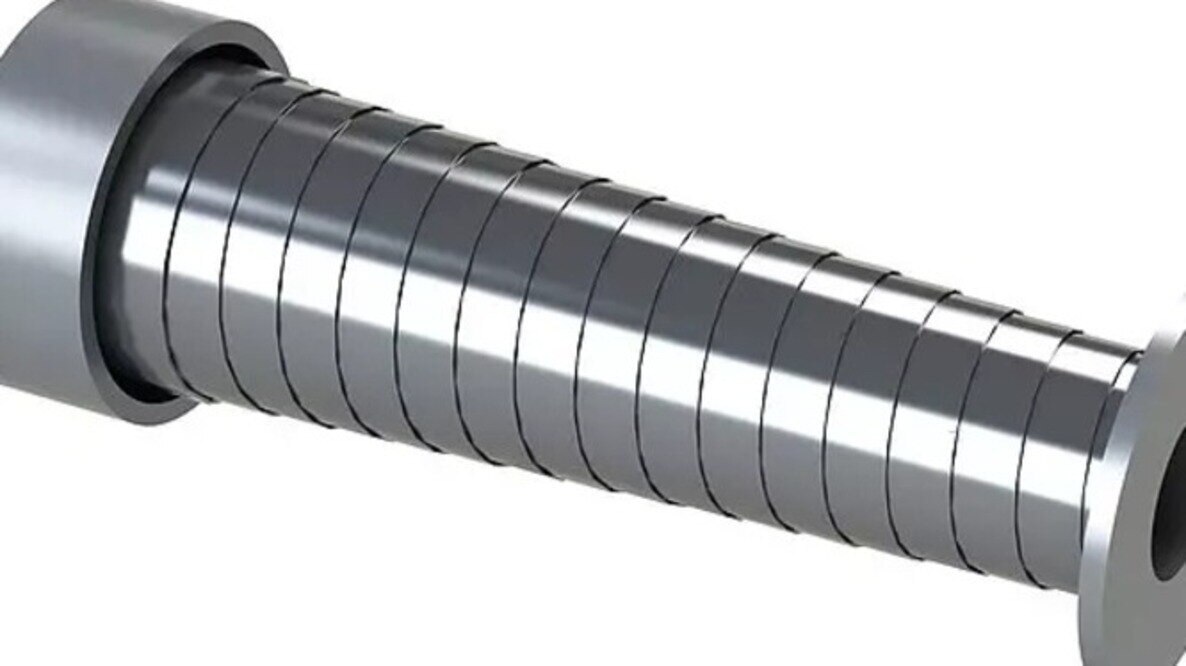
A telescopic cover suits a flat or near-flat machine bed; a spiral spring suits a round moving component. Overlapping box sections create a guided, rigid barrier across beds, guideways and broad horizontal surfaces, while spring-tempered strip wound into a cylindrical assembly protects shafts, lead screws, hydraulic rods and similar cylinders.
| Option | Geometry | What it provides |
|---|---|---|
| Telescopic cover | Flat or near-flat bed, guideway or broad horizontal surface | Overlapping rigid sections that travel with a machine axis and form a protective roof |
| Spiral spring | Shaft, lead screw, hydraulic rod or other round component | Compact cylindrical coverage around the component |
| Wrong substitution | Broad guideway protected by a spiral spring | No broad rigid roof, load-bearing barrier or complete coverage around non-cylindrical areas |
A spiral spring is not a drop-in replacement for a telescopic cover. It can leave exposure at ends and mounting points, and it is unsuitable where chips or loads strike a wide unsupported surface.
The phrase telescopic cover comparison london describes a purchasing search, not an engineering category or British standard; compare the two designs by geometry, duty and supply arrangements.
Check these values before requesting a design:
- Component diameter
- Protected width and height
- Available mounting length
- Maximum stroke
- Extended length and compressed length
- Installed mass
- Whether the cover travels with a machine axis
- Travel speed, acceleration, rotation and permissible radial movement
How do they perform against chips, coolant and heat?
A telescopic cover provides stronger protection for flat guideways facing steel chips, cast-iron swarf, coolant splash and chip impact. A spiral spring suits a cylindrical shaft, screw or rod where compact retraction matters more than a rigid barrier.
| Design | Chips and process debris | Fluids and heat |
|---|---|---|
| Telescopic cover | Overlapping steel sections, scrapers and replaceable wipers resist steel chips, aluminium chips, cast-iron swarf and moderate impact. Specify heavy-duty sections for interrupted milling, hot chips or laser-process debris. | Inter-section seals and drains control oil and water-miscible coolant, but direct jets can defeat joints. Heat limits depend on steel, wiper material and joint design. |
| Spiral spring machine protection | The exposed strip needs clearance around the cylinder. Grinding dust and abrasive fines can enter the coil, while sparks, hot chips and high-impact debris can damage edges or cause permanent set. | Oil and coolant can corrode the strip or reduce retraction force. Ends, mounting points and non-cylindrical areas remain more exposed than with a guided box cover. |
Neither design is automatically airtight or liquid-tight. A telescopic cover fails early when overlap is too short, support is weak, wiper preload causes rubbing, or chips become trapped between sections; excessive preload also increases axis friction.
A spiral spring fails when misalignment makes turns rub, when contamination jams the coil, or when repeated heating causes permanent set and loss of retraction force. Choose the telescopic design for broad, rigid coverage and heavy swarf; choose the spring only when the component is round and the process leaves sufficient clearance around the coil.
What motion and installation checks prevent early failure?
A cover survives only when its motion envelope matches the machine’s actual duty. Send the supplier:
- Travel speed, acceleration and cycle frequency.
- Rotation, permissible radial movement and alignment tolerance.
- Horizontal, vertical or inclined mounting orientation.
- Extended length, compressed length, stroke, installed height and width.
- Moving mass, allowable axis friction and noise limit.
- Coolant, chip load, operating temperature and nearby-part clearances.
For a spiral spring, run the shaft through its full stroke and rotation by hand before powered testing. Each turn must open and close without rubbing, snagging, buckling or colliding with the shaft, mounting flange or adjacent hardware.
Severe shaft misalignment disqualifies the arrangement: it loads the coil edge, damages the strip and destroys retraction force.
A telescopic cover needs stable section guidance, adequate overlap and wipers with enough preload to exclude chips without creating excessive axis friction. Check the entire stroke for binding. Box sections must nest inside the available retracted space, so insufficient length, height or width makes the design impossible even when its nominal stroke fits.
Treat vertical and inclined axes as a separate design. Gravity can accelerate retraction, separate sections or overload guides; specify counterbalance, controlled retraction and guided support where required. Test noise, drainage, section stability and wiper performance over the complete duty cycle, not just one extension.
When are bellows, aprons or roller blinds better alternatives?
Choose bellows when the protected path moves in three dimensions, low moving mass matters, or dust, powder and fine abrasive particles dominate. Their flexible construction follows compound motion without nested boxes. Puncture, abrasion, heat and chemical incompatibility remain failure risks, so specify fabric, coating, temperature and fluid exposure rather than assuming a universal bellows material.
| Option | Main advantage | Critical limitation |
|---|---|---|
| Bellows | Three-dimensional movement and low mass | Vulnerable to puncture, abrasion and unsuitable heat or chemicals |
| Apron cover | Handles defined chip loads and folds into a small package | Unsupported spans and end sealing require careful design |
| Roller blind | Compact storage with broad-area coverage | Impact resistance and edge sealing may be inadequate |
| Telescopic cover | Rigid barrier for high-impact chips and coolant | Needs guided space to nest and does not suit every motion |
Aprons suit chip patterns that would damage fabric bellows but do not demand a rigid roof. Roller blinds suit wide openings where storage length is restricted. Neither is automatically interchangeable with a telescopic cover: check unsupported-span deflection, end sealing, drainage and impact energy before selecting.
A component cover is not automatically an operator guard. If it blocks access to moving parts, assess the complete arrangement against ISO 14120, including openings, access prevention and foreseeable misuse.
- Confirm the debris type, impact energy and temperature.
- Measure unsupported spans and available folded or rolled length.
- Verify end seals, service access and chemical compatibility.
What should you include in a supplier specification?
Give every bidder the same machine data, then compare evidence rather than catalogue claims. A telescopic cover supplier London should quote against the actual duty, not an isolated maximum stroke or speed.
Send an enquiry brief containing:
- A machine drawing with component dimensions, mounting points, available closed length, required extended length, stroke, installed height and width.
- Speed, acceleration, cycle frequency, orientation, rotation and permissible radial movement.
- Coolant type, operating temperature, chip geometry, cutting process, impact conditions and photographs showing nearby parts, clearances and access points.
- The required service interval and duty cycle, including continuous, intermittent or high-frequency operation.
Ask for application-specific calculations or test data covering moving mass, section stability, guide arrangement, overlap, wiper contact and drainage. A cover that reaches the stroke can still overload an axis or lose alignment.
| Check | Evidence before purchase | Failure sign |
|---|---|---|
| Section stability | Drawing, load assumptions or test result | Buckling, vibration or contact |
| Wipers and drainage | Material, preload and drain layout | Coolant reaches the guideway |
| Noise | Measured or witnessed running test | Rattle during acceleration |
| Service access | Removal procedure and clearance drawing | Routine cleaning requires dismantling |
| Replacement parts | Part numbers and availability | Wipers become a redesign |
| Duty-cycle performance | Test at specified speed, acceleration and cycles | Heat, wear or sticking |
When comparing a telescopic cover or spiral spring London search result, include installation support, lead time and local London communication. SCUTES INDIA PRIVATE LIMITED is one potential supplier to assess on those points, alongside proof that its proposed design meets your machine’s actual duty.
Frequently asked questions
Which cover matches the machine geometry?
Choose a telescopic cover for flat or near-flat beds and guideways. Choose a spiral spring for round moving components such as shafts, lead screws and hydraulic rods.
How do telescopic covers and spiral springs perform against chips, coolant and heat?
Compare chip size, coolant chemistry, debris direction, operating temperature and sealing requirements. Telescopic covers provide a rigid overlapping barrier, while spiral springs suit cylindrical protection and require correct strip selection and clearance.
What motion and installation checks prevent early failure?
Confirm travel, speed, acceleration, compressed length, alignment, mounting points, clearance and support. Keep the cover from rubbing, twisting or carrying loads outside its design.
When are bellows, aprons or roller blinds better alternatives?
Use bellows for flexible three-dimensional movement, aprons for broad surfaces with moderate exposure, and roller blinds where compact retraction or a long opening makes rigid sections impractical.
What should you include in a supplier specification?
Provide machine geometry, travel, speed, acceleration, dimensions, mounting details, chip and coolant exposure, temperature, materials, access limits, maintenance requirements and acceptance tests.