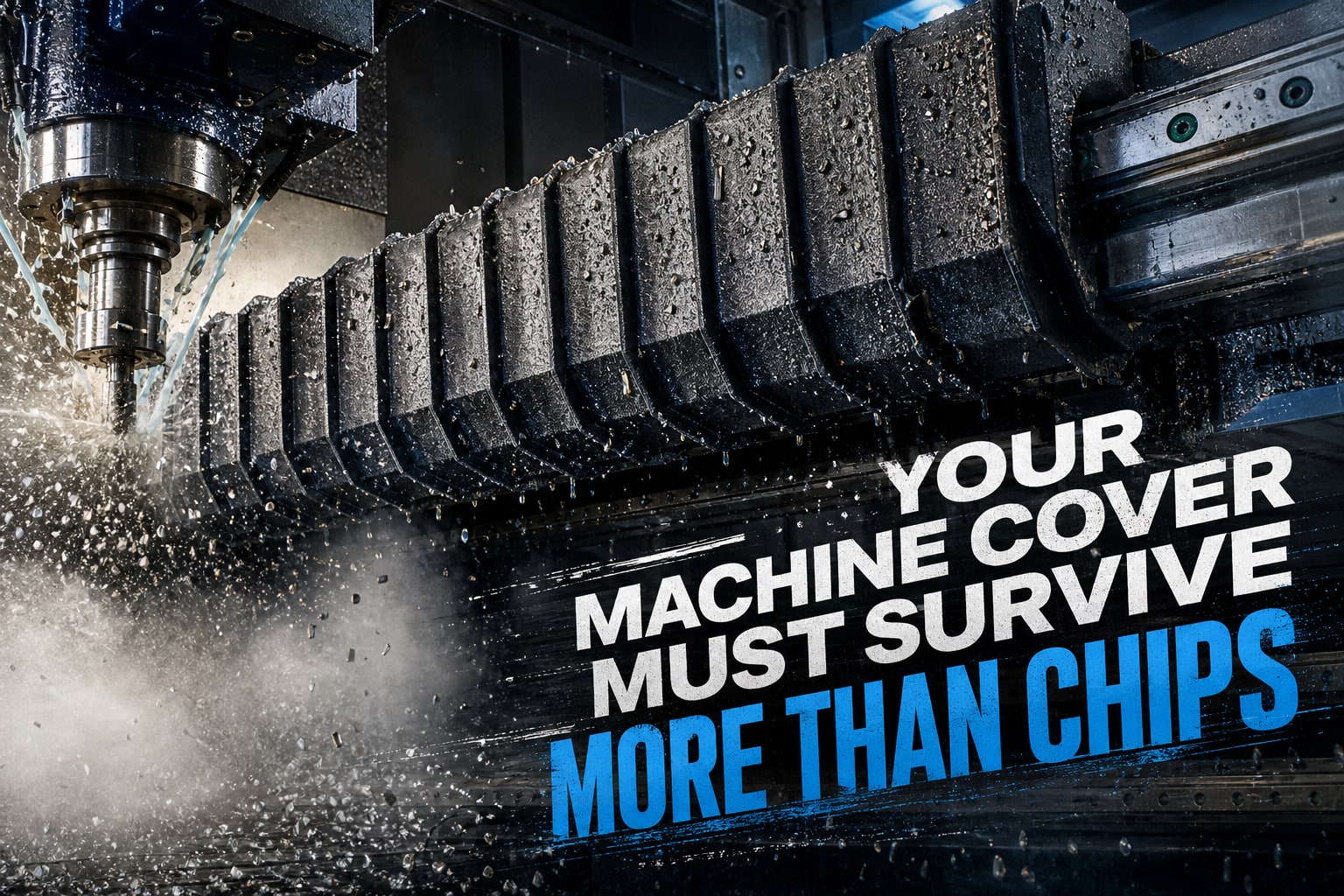
The right machine cover depends on the hazard, not a generic heavy-duty label. By matching the cover material and construction to hot chips, abrasive dust, chemicals, travel motion and cleaning demands, you can narrow the choice to a design that protects the machine without creating new maintenance or performance problems.
Key takeaways
- List every chemical, particle, heat and weather exposure before choosing a cover.
- Select bellows, telescopic covers or cable carriers according to movement and debris.
- Measure the full moving envelope, including compressed, extended and service positions.
- Request material compatibility data, test evidence and a practical maintenance plan.
Start with the exposure, not the phrase “heavy-duty”
Mineral-oil coolant, neat cutting oil, hydraulic fluid, welding spatter, salt spray, acids, alkalis, UV radiation and hot exhaust attack covers differently. Select machine covers for harsh environments from the hazard profile, not a generic label. Demand compatibility data for every layer: base fabric, coating, adhesive, thread, transparent window, gasket, bearing and fastener.
Ask for operating-temperature limits, abrasion ratings, flame classification, and resistance to sparks and molten chips.
Specify these operating conditions before choosing a design:
- Chip temperature and shape, abrasive-particle loading, travel speed, acceleration, stroke and minimum bend radius.
- Cleaning chemicals, washdown pressure, cleaning frequency and required service life.
- Cover mass, folding resistance, drag, support method and axis acceleration limits; excess moving mass can cause vibration, positioning errors and guide wear.
- Scraper or wiper material and preload; excessive preload increases drive load and wear, while insufficient preload admits coolant and abrasive particles.
- Whether the cover protects machinery or people. ISO 14120 applies to guards against mechanical hazards; a way cover or bellows is not automatically a personnel guard.
| Cover type | Useful strength | Main limitation |
|---|---|---|
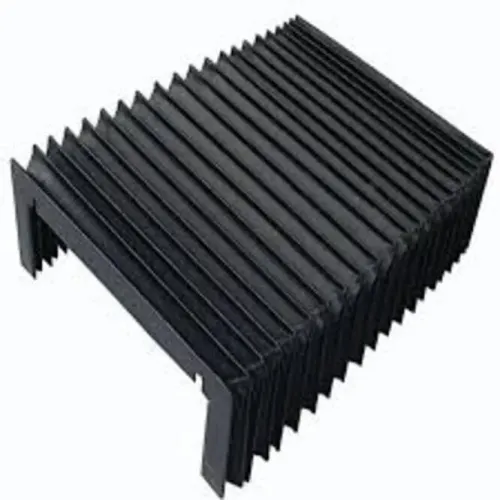
| Fabric bellows | Flexible for multi-axis slides and irregular shapes | Folds and seams collect chips and suffer puncture or hot-chip damage |
| Coated-fabric bellows | Better fluid and abrasion protection than untreated fabric | Coating, adhesive and thread still need chemical testing |
| Steel telescopic cover | Strong resistance to sharp chips and impact | Mass, travel speed, guides and access requirements need checking |
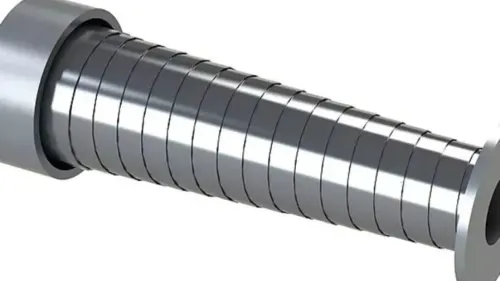
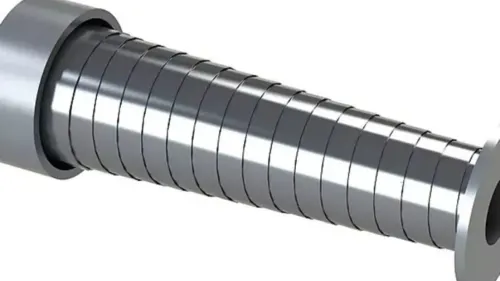
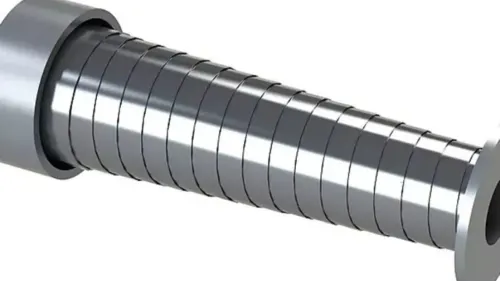
| Roll-up or spring cover | Compact storage and unobstructed travel | Seals and abrasion resistance depend on strip, tension and wipers |
| Brush wiper | Simple supplementary exclusion of debris | Wear component, not a permanent seal or substitute for a cover |
Match the cover type to chips, dust and machine movement
Choose the cover by matching the debris and motion: hot sharp chips demand impact resistance, while dust and coolant demand sealing. Debris management matters most when choosing machine covers for abrasive environments: trapped particles form a grinding layer, clog folds and damage guides.
| Option | Choose it when | Main limitation |
|---|---|---|
| Coated-fabric bellows | A multi-axis slide or irregular geometry needs flexible coverage; specify fabric, coating and fold design for the coolant and temperature. | Folds and seams can puncture, abrade or retain chips. |
| Steel telescopic covers | A linear machine-tool way faces hot metal chips, cutting fluid or impact. | Added mass and stacked-section space; misalignment can damage sliding surfaces. |
| Apron covers | Sharp or hot chips strike a broad moving area and complete fine-dust sealing is not the priority. | Overlapping slats shed chips well but seal less effectively against fine dust, coolant and slurry. |
| Roll-up covers | You need compact, fast-moving protection over a straight guide with moderate dust or coolant exposure. | Flexible curtains are a poor choice for molten chips, welding spatter or heavy impact. |
| Spring covers | A compact cover is needed for a rod, shaft or cylinder against chips and general contamination. | Limited travel geometry and gaps make them unsuitable for fine-particle sealing. |
| Brush wipers | You need a replaceable cleaning edge to sweep chips and coolant from a guide or telescopic section. | They are wear components, not seals; excess preload raises drive load, while low preload lets abrasive particles through. |
Leave access for cleaning, inspection and wiper replacement. A thicker cover fails quickly when dried coolant and chips remain trapped inside it.
Choose for axis direction, speed and collision risk
Axis direction changes debris loading and drainage; speed limits moving mass; collision risk determines whether the cover needs impact tolerance or a breakaway design. Select machine protection covers for harsh environments around all three conditions, not around axis travel alone.
| Axis | Design change | Main failure risk |
|---|---|---|
| Vertical | Support hanging folds or slats, control sag, and provide a drainage path for coolant | Folds collapse, rub, or carry coolant into the guideway |
| Horizontal | Protect the upper surface from chip piles and prevent coolant pooling at joints | Accumulated chips overload the cover or enter through seams |
| Inverted | Check underside clearance, mounting support, drainage and access for inspection | Sagging sections strike the machine or retain contaminated fluid |
| Multi-axis | Use flexible bellows with controlled fold geometry and protected seams around changing angles | Folds puncture, snag, or accumulate chips at frame transitions |
For a high-speed or high-acceleration axis, calculate cover mass, folding resistance, drag, support method and acceleration limit with the machine builder. A cover that survives a collision can still disturb positioning, create vibration or wear the guideway if it moves too heavily.
- Use rigid telescopic sections where straight travel and impact resistance dominate.
- Use fabric or coated-fabric bellows when a slide changes direction or has an irregular envelope; specify fold depth and seam protection against hot chips and abrasion.
- Add scrapers or wipers only after matching preload and material to the guide surface and contaminant. Excessive preload raises drive load; insufficient preload lets abrasive particles and coolant pass.
- Treat a collision sensor, sacrificial panel or breakaway mount as part of the design when tooling, fixtures or chips can enter the travel envelope.
Measure the complete moving envelope before ordering
Measure the complete moving envelope before ordering machine covers for harsh environments: record the guideway’s full stroke, maximum width and height, compressed and extended cover lengths, and every nearby obstruction. Measure with the axis at both travel limits, then repeat with the largest tool, pallet, vice or fixture installed.
| Dimension to confirm | What to record | Why it matters |
|---|---|---|
| Overall travel | Stroke plus acceleration and deceleration zones | A cover sized only to the nominal stroke can bottom out or stretch at the ends |
| Fold or section size | Compressed length, extended length and number of folds or telescoping sections | Incorrect pitch causes folds to stack, rub or block movement |
| Cross-section | Maximum width, height and diagonal projection | The cover must clear tooling, workholding, guards and adjacent axes throughout travel |
| Bend geometry | Minimum bend radius and allowable side offset | A tight turn can crease bellows fabric, overload guides or damage a spring cover |
| Mounting envelope | Flange thickness, bolt pattern, fixed and moving attachment positions | A cover that fits the guideway may still collide with the carriage or mounting hardware |
| Drainage space | Lowest points, drain holes, slope and access for coolant removal | Trapped coolant, chips or abrasive dust add weight and accelerate corrosion |
- Leave clearance for the cover’s fully compressed folds, not just its nominal outline.
- Check the clearance at maximum tool reach, pallet rotation and fixture height.
- Keep drain outlets below contaminated pockets and route them away from rails, ballscrews and workholding surfaces.
- Mark cleaning access; a cover that cannot be opened or removed cannot be inspected for punctures, seam wear or scraper damage.
Record the dimensions in a drawing showing both travel limits and the moving envelope. That drawing gives the manufacturer a fixed collision boundary instead of a single length copied from the machine manual.
Demand construction evidence and a maintainable design
Before selecting machine protection covers for harsh environments, demand evidence that the construction matches your actual exposure and that worn parts can be replaced without removing the machine.
1. Give the manufacturer a written hazard profile: coolant type and concentration, neat cutting oil, hydraulic fluid, abrasive material, chip shape, chip temperature, welding-spatter exposure, travel speed, acceleration, stroke and cleaning method. Ask for a recommended material, cover type and expected service life against each hazard.
2. Request chemical-compatibility data for every exposed layer, adhesive, window, seal and coating. Mineral-oil coolant, hydraulic fluid, acids, alkalis and salt spray can attack different materials; a general “oil resistant” claim is not enough.
3. Ask for abrasion, flex-cycle, flame-resistance and temperature evidence, plus a test description. A surrounding-air rating does not prove resistance to hot chips or welding spatter: localized particles and repeated thermal shock can crack, burn or delaminate a cover.
4. Treat an IP rating as supplementary evidence. IEC 60529 covers defined ingress tests, not cutting-chip impact, abrasion, coolant chemistry, flex fatigue or machine-travel loads.
5. Specify maintenance in writing: replaceable scraper or wiper material, preload setting, inspection interval, access method, fasteners and stocked spare parts. Excessive preload raises drive load and wear; insufficient preload lets coolant and abrasive particles through.
Give SCUTES INDIA PRIVATE LIMITED this same evidence request when comparing a bellows, roll-up design, telescopic cover or spring cover. For machine covers for abrasive environments, documented wear performance matters more than the label “heavy-duty.”
Related products
 | Machine Covers Machine covers are specially designed shields used to protect industrial equipment and machinery from environmental elements. View product → |
 | Roll Up Cover A roll-up cover is a highly durable and flexible protective solution designed to safeguard machinery, equipment, and valuable assets from dust,... View product → |
Frequently asked questions
How should you choose machine covers for harsh industrial environments?
Start with the exposure profile: identify coolant, cutting oil, hydraulic fluid, chips, dust, heat, welding spatter, salt spray, chemicals, UV and exhaust. Check compatibility for each cover layer and component.
Which cover type suits chips, dust and machine movement?
Use the cover form that matches the hazard and motion. Bellows suit guided linear movement, telescopic steel covers suit rigid machine-tool ways, and cable carriers protect moving cables and hoses. Compare sealing, chip shedding and access for cleaning.
What measurements are needed before ordering a machine cover?
Record the complete moving envelope: overall length, compressed and extended dimensions, width, height, mounting points, bend radius, travel, speed, acceleration, service position and nearby collision hazards.
What construction evidence should you request from a cover supplier?
Request material data for the base fabric, coating, adhesive, thread, window, gasket, bearings and fasteners. Ask for chemical compatibility limits, temperature range, abrasion or flame testing, cleaning instructions and replacement-part details.
Related products
 | Laser Machine Bellows Laser Machine Bellows are specialized protective coverings designed to safeguard the vital internal components of laser machines. View product → |
 | TELESCOPIC SPRING COVER Telescopic Spring Covers provide protection under extreme conditions. View product → |
 | TELESCOPIC COVERS A telescopic cover protects guide-way surfaces and components of moving axis of machines. View product → |
 | Duct Bellows HVAC systems and industrial ducting rely on high-quality duct bellows for durability and performance. View product → |