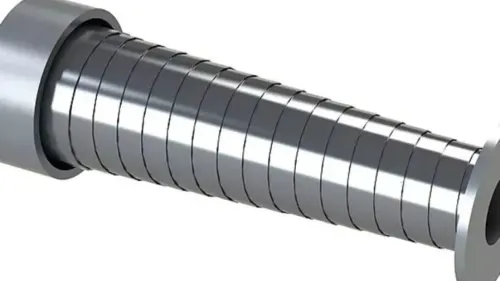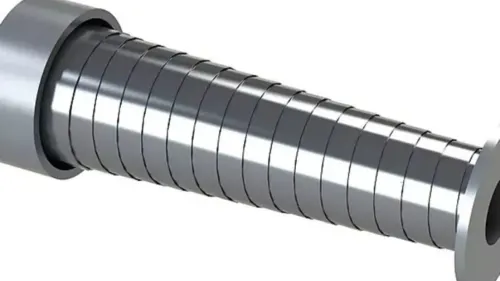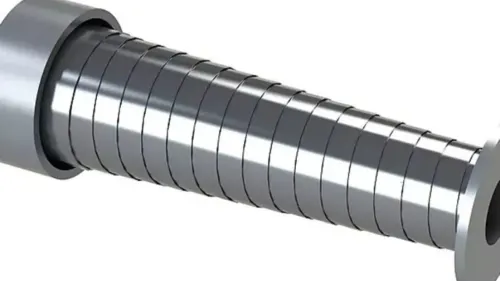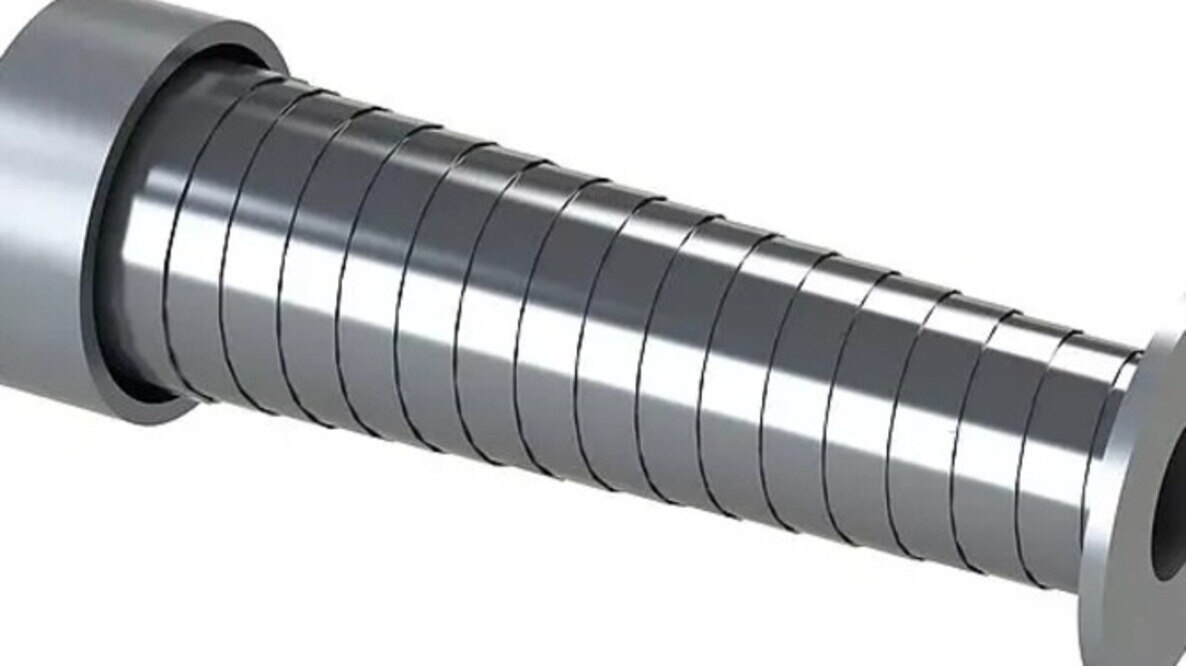
A spiral spring way cover that scrapes, hesitates, jams or retracts unevenly can indicate a damaged cover, a tracking fault or resistance from the machine axis itself. By checking the failure symptom, isolating the stored-energy hazard and recording the machine geometry, you can decide whether to repair the cover, replace its spring, specify a new design or stop using it until the guideway is safe.
Key takeaways
- Stop jogging when cover travel does not match axis travel.
- Isolate cover resistance from guideway, lubrication and axis faults.
- Measure spring, curtain, guides and winding path before ordering.
- Replace the design when repeated spring failures have the same cause.
Identify the symptom before you jog the machine again
Scraping, binding, jerky travel, uneven extension, incomplete retraction, rattling, or cover sections stopping out of sequence indicate way cover movement problems. A spiral cover that reaches its end of travel before the axis does is already unsafe: continued jogging can crush slats, overstretch the spring, or pull a mounting bracket loose.
| Symptom | What it suggests | Action |
|---|---|---|
| Scraping or rubbing | Bent slat, burr, displaced guide, or side loading | Stop and inspect; do not jog through it |
| Jerky extension or retraction | Excessive wiper pressure, chips between coils, seized bearing, or lost spring torque | Stop if resistance repeats or increases |
| Rattle or sections moving out of sequence | Loose fastener, damaged slat, broken guide, or barrel misalignment | Stop before adjacent parts are struck |
| Sudden loss of travel | Spring breakage, barrel fault, travel-limit interference, or an over-stroked cover | Isolate the machine and verify cover and axis travel |
| Servo following-error, overload, or motor-current alarm | A jammed cover transferring load into the axis | Do not reset and jog repeatedly; investigate the mechanical load |
Stop using the machine when the cover jams, folds, leaves the guide, exposes the guideway, contacts a fixed part, or makes the axis alarm. The same rule applies after suspected way cover spiral spring failures: isolate power under your site procedure, prevent unexpected movement, and report the fault.
A damaged cover does not prove the guideway survived; chips, dents, scoring, coolant residue, and damaged wipers still require checking before production resumes.
Separate cover resistance from an axis or guideway fault
Separate the cover from the axis before interpreting alarms. Isolate power, secure the moving parts, and mechanically disconnect or isolate the spiral spring cover only where the machine builder permits. Do not keep jogging against resistance: a jammed cover can trigger servo following-error alarms, raise motor current, and damage the guideway.
Use these checks to locate the fault:
- If the axis moves smoothly with the cover isolated, investigate the cover’s spring, slats, guides, wipers, bearings, barrel, mounting brackets, and winding path.
- If the axis remains rough, noisy, or unable to reach position, inspect the guideway for dents, scoring, embedded chips, coolant residue, damaged wipers, disturbed lubrication, and misalignment.
- If the cover binds by hand or stops out of sequence, look for flattened or cracked coils, trapped chips, corrosion, over-compression, impact damage, side loading, or a seized bearing.
- If the cover reaches its end before the axis, check the cover stroke, axis travel limits, end stops, and mounting position together. Continuing axis travel can destroy the spring or slats.
- If the cover moves freely but the axis still alarms, check the ballscrew or leadscrew, limit-switch interference, encoder feedback, and servo-drive diagnostics.
A replacement cover will not correct machine guideway protection faults. Record the alarm code, motor-current change, cover position, axis stroke, and conditions during failure; that evidence separates a cover-resistance problem from an axis or guideway defect.
Inspect the spring, curtain, guides and winding path safely
A sudden snap, uncontrolled rewind or curtain that will not retract signals stored energy, not a routine sheet-metal fault. Isolate and lock out the machine, prevent axis movement, and restrain the spring barrel before inspection. Do not open or unwind a spring cassette unless you have the manufacturer’s procedure and tooling.
1. Remove loose chips and wipe exposed coolant from the cover without reaching between coils or slats. Photograph the assembly before moving anything.
2. Inspect every visible spring turn for flattened coils, cracks, corrosion, burrs, scoring and chips trapped between turns. Check for over-compression or a coil rubbing the barrel.
3. Examine each curtain slat for impact dents, distortion, cracked joints and sharp edges. A heavier replacement curtain can leave insufficient return torque.
4. Check both side guides, rollers, bearings, wipers and mounting brackets for looseness, seizure, scoring and side loading. Inspect the guideway beneath for dents, embedded swarf, coolant residue and disturbed lubrication.
5. Trace the full winding path. Look for a misaligned barrel, rubbing against adjacent machine parts, damaged fasteners, excessive stroke and anything blocking the travel limit.
6. Refit guards and safety controls before a controlled, low-speed movement test. Keep clear of the pinch zone, stop immediately for uneven winding, rattling or renewed contact, and never force a jammed cover by hand.
Record these findings as way cover spiral spring failures, not simply “cover damage.” For spiral spring way cover damage London assessments, the spring torque, curtain mass, travel and mounting orientation must be checked together.
Choose repair, replacement or a different cover design
Repair the spring when its coils are intact, the barrel and guides are aligned, and the fault is limited to a replaceable bearing, wiper, fastener or contaminated winding path.
Replace the spring or complete cover when torque has collapsed, coils are cracked or flattened, slats are dented, or the cover no longer reaches the axis limits without binding.
A search for spiral spring way cover damage london should identify the failed element, not just the symptom. Compare these options against axis speed, stroke, chip load, coolant exposure and available space:
| Option | Strength | Choose it when |
|---|---|---|
| Spring repair or spring replacement | Retains the existing envelope | The barrel, mounts and guides remain straight |
| New spiral roll-up cover | Compact and fast | Space is tight and the curtain can wind without side loading |
| Telescopic steel cover | Rigid sliding protection | Heavy hot chips, impact or broad horizontal ways dominate |
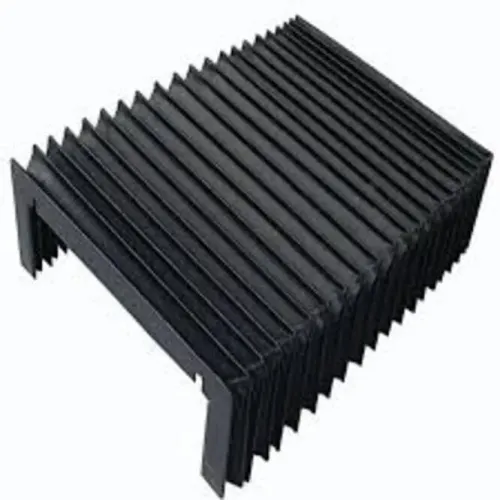
| Bellows cover | Flexible enclosed barrier | The machine needs protection around complex or multi-axis movement |
| Roll-up cover | Low mass and compact storage | The travel is long and debris loading is moderate |
| Apron protection | Simple overlapping strips | You need economical coverage with accessible, less precise movement |
Do not replace the cover alone after a severe jam. Check the guideway for scoring, dents, embedded chips, residue and damaged wipers, then correct any axis, limit-switch or mounting fault causing way cover movement problems. Reject a design that reaches its stop before the machine axis does; continued travel will damage the replacement.
Give a London supplier the measurements needed for a safe fit
A supplier cannot size a replacement from cover width alone. Record the axis stroke, cover travel, available envelope and the conditions that caused the failure before requesting a quotation or conversion assessment.
1. Measure the clear guideway opening, protected width, usable axis travel, cover length when closed, and maximum length when fully open. Record the distance from the guideway to nearby guards, tooling, coolant lines and machine structures.
2. Photograph and measure the mounting faces, bolt-hole pattern, bracket position, barrel or bearing locations, and the direction in which the curtain winds. State whether the cover reaches its limit before the machine axis, then compare cover travel with the axis stroke and end-stop settings.
3. Provide axis speed, acceleration, cycle frequency, and movement direction. Add ambient temperature, coolant type, coolant pressure, chip size and shape, lubrication method, and whether abrasive dust enters the winding path.
4. Report guideway dents, scoring, embedded chips, coolant residue, disturbed lubrication, damaged wipers, loose fasteners, slat deformation and spring corrosion. These machine guideway protection faults can make a new cover fail quickly.
For a search such as “way cover for spiral spring protection problems London”, send these measurements with clear photographs, the machine make and model, axis name, and available drawings. SCUTES INDIA PRIVATE LIMITED can then compare a spring roll-up design with telescopic steel, bellows or a hybrid arrangement without guessing the fit.
Related products
 | TELESCOPIC SPRING COVER Telescopic Spring Covers provide protection under extreme conditions. View product → |
 | TELESCOPIC COVERS A telescopic cover protects guide-way surfaces and components of moving axis of machines. View product → |
Frequently asked questions
What symptoms indicate a spiral spring way cover failure?
Scraping, binding, jerky travel, uneven extension, incomplete retraction, rattling and sections stopping out of sequence indicate way cover movement problems. Stop jogging if the cover reaches its travel limit before the axis.
How can you separate cover resistance from an axis or guideway fault?
Stop the machine safely, isolate the cover from powered motion where the machine procedure allows, and check whether the axis or guideway moves freely without the cover load. Compare the cover’s movement with the axis travel before returning to service.
What should you inspect on a spiral spring way cover?
Inspect the spiral spring, slats or curtain, guide rails, mounting brackets, winding path and debris or coolant contamination. Look for crushed sections, overstretching, loose fasteners, misalignment and restricted retraction.
What measurements does a London supplier need for a replacement way cover?
Provide the closed and extended lengths, cover width, height or clearance, travel direction, spring location, guide dimensions, mounting-hole pattern, slat or curtain construction, machine model and photographs of the installed cover.