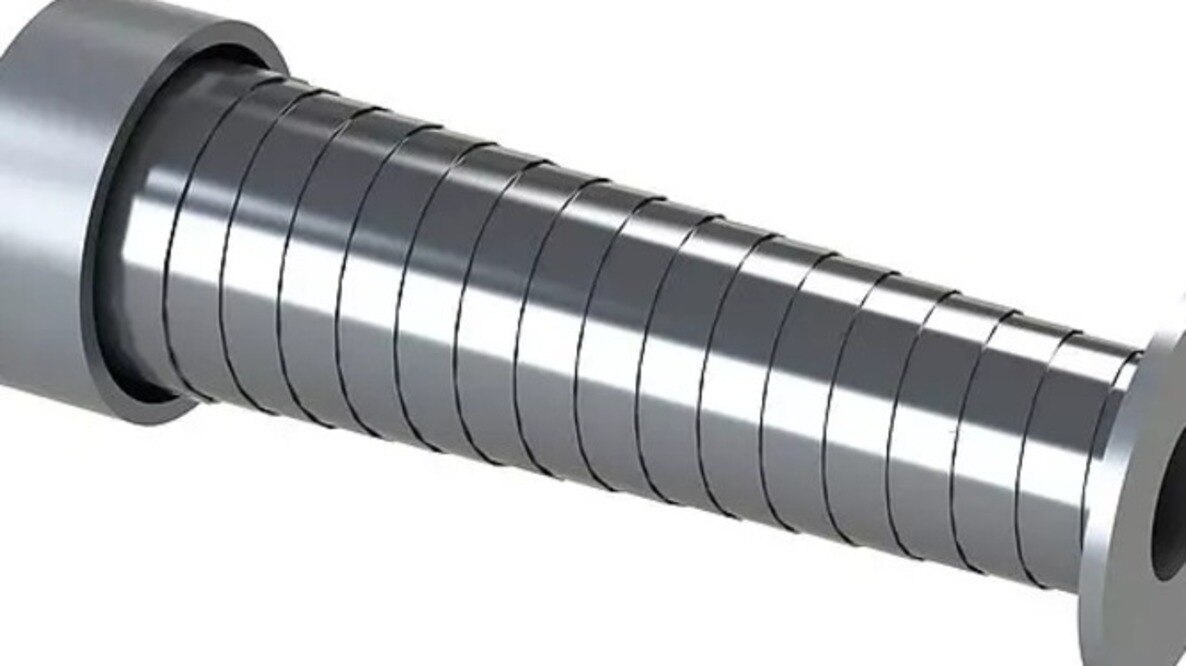
A suitable telescopic cover is sized from the machine’s travel, folded envelope, mounting interface and operating conditions—not from axis stroke alone. Before requesting a quotation, collect the measurements, drawings and machine data that let a supplier confirm fit, movement, drainage, delivery timing and installation requirements.
Key takeaways
- Provide axis travel, closed length, open length and guideway dimensions.
- Include fixed-end, moving-end and retrofit interface drawings with the enquiry.
- Specify coolant, chips, heat, speed, acceleration and cover orientation.
- Confirm materials, delivery lead time, testing and acceptance criteria before ordering.
Prepare the dimensions a supplier needs before quoting
A quotation cannot be sized from axis travel alone. For a custom telescopic cover London quotation, collect the machine make and model, protected axis, and a drawing or sketch showing the guideway, bed, fixed end and moving end.
Missing envelope dimensions can produce a cover that reaches its limit too early or collides with the machine.
1. Record the travel, minimum closed length and maximum extended length, plus the required cover width and height. State the number of telescoping boxes and whether the cover mounts horizontally, vertically or upside down.
2. Mark every mounting-hole position, hole diameter, thread, datum face and fixed-end location. Include the guideway or bed drawing, even if the supplier must redraw it.
3. Measure available space around the fully open and closed envelopes. Show clearance for wipers, maintenance access, coolant drainage, guards and the energy chain, then add photographs with a scale and marked reference dimensions.
4. Send axis speed, acceleration, cycle frequency, chip size and shape, coolant or lubricant chemistry, ambient temperature and expected service life. Note whether this replaces an existing cover and describe any damage or recurring leakage.
Ask for a quotation drawing showing closed and open dimensions, mounting points, materials, finish, wiper specification and maintenance access. Check the cover against the cable carrier’s bend radius, unsupported length and hose or cable fill; a dimensionally correct cover can still create a pinch point or obstruct travel.
Measure the guideway, travel and retrofit interface
Measure the hardware that the cover will attach to, not just the axis travel. Record the fixed end, moving end, travel direction and guideway condition before ordering. A worn rail, damaged mounting face, protruding bolt or insufficient side clearance can bind a correctly stroked cover.
- Clean the guideway, then measure its usable width and height at several points. Record the smallest readings, not the nominal drawing dimensions.
- Measure the travel from the fully closed position to the maximum open position, including any over-travel used during machine operation.
- Record the cover’s available closed length and required extended length, plus the space above, beside and behind the guideway.
- Locate every mounting hole, slot, tapped hole and obstruction from fixed datums. Note thread size, hole depth, bolt-head height and the proposed mounting orientation.
- Check the moving and fixed ends for parallelism. Measure diagonals or compare left-to-right gaps; unequal readings indicate misalignment that the cover cannot correct.
- Photograph the interface with a ruler in view, including coolant outlets, chip conveyors, guards, cable carriers and drain paths.
Send a dimensioned sketch or bed drawing with these measurements, the machine make and model, axis speed, acceleration and cycle frequency. A telescopic cover manufacturer near London can then check box count, wiper contact and mounting geometry instead of sizing from travel alone.
Ask the supplier to mark the closed and extended lengths, installation clearances and hole pattern on the quotation; verify those dimensions on the machine before releasing the order.
Match the cover design to movement, contamination and orientation
A horizontal CNC axis exposed to hot chips and high-pressure coolant normally needs a rigid telescopic steel cover with overlapping boxes, hardened or coated sliding surfaces, suitable wipers and positive drainage. Do not select it by travel alone: the folded package, box depth, overlap, end clearances and available mounting space determine whether it fits.
| Option | Best match | Check before ordering |
|---|---|---|
| Telescopic steel cover | Horizontal or vertical linear axes with chips, coolant and high speed | Sheet thickness, scraper material, damping, reinforced guides, controlled stops and maximum speed |
| Telescopic spring cover | Compact axes with moderate contamination and limited weight | Spring fatigue, chip shielding, coolant resistance and mounting orientation |
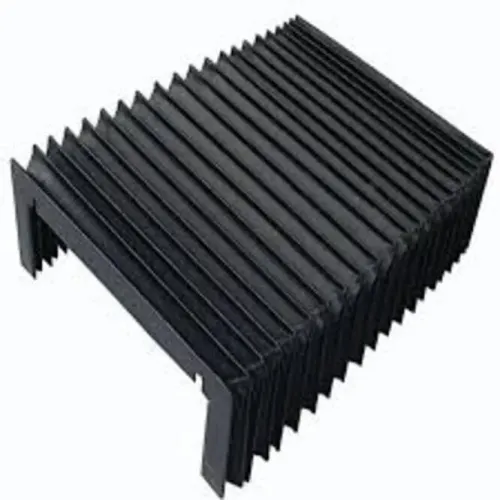
| Bellows cover | Short-to-medium travel, complex profiles or fine dust | Fabric and coating compatibility; it is vulnerable to sharp hot chips and abrasion |
| Apron cover | Long horizontal beds needing robust chip deflection | Slat overlap, hinge protection, return path and drainage |
| Roll-up cover | Space-limited installations with lighter contamination | Curtain material, winding radius, tension and resistance to coolant |
High acceleration can make a physically compatible cover vibrate, strike its stops or lift a wiper. Send maximum speed, acceleration and cycle frequency, then require a stated operating limit.
Specify hot-chip size, abrasive dust, coolant chemistry, tramp oil and ambient temperature. Alkaline or chlorinated fluids can attack sheet coatings, seals and wipers. For vertical, inverted or side-mounted axes, confirm drainage and prevent coolant pooling in the closed package.
For telescopic covers for industrial equipment London buyers should also state the mounting orientation and every obstruction around the travel path, not simply request a steel cover.
Specify materials, dynamics and machine-system interfaces
A telescopic cover’s construction is set by heat, chemistry, impact and motion—not by axis stroke alone. Give the supplier the maximum chip temperature, coolant pressure and chemistry, axis speed, acceleration, cycle frequency, ambient temperature and expected operating hours.
| Operating condition | Design response | Risk if omitted |
|---|---|---|
| Hot, sharp chips | Hardened or heat-resistant sheet, protected overlaps and replaceable wipers | Dents, distortion and torn wipers |
| Abrasive dust or fine swarf | Tight box overlap, suitable scraper material and controlled drainage | Abrasive ingress and rapid guide wear |
| Alkaline, chlorinated or concentrated coolant | Fluid-compatible sheet, coating, seals and wipers confirmed against concentration and temperature | Corrosion, swelling or loss of sealing |
| High-pressure coolant or tramp oil | Sloped surfaces, drainage paths, oil-resistant seals and protected mounting joints | Coolant pooling, leakage and seized sections |
| High speed and acceleration | Damping, reinforced guide elements, controlled stops and a stated speed limit | Vibration, box impact, wiper lift or resonance |
Describe the machine-system interface precisely. Identify the fixed end, moving end, mounting orientation, guideway material, damaged faces, protruding fasteners, side clearance and nearby hoses or cable carriers. A cover with the right closed and extended lengths can still bind if its mounting plane is twisted or its folded package strikes the machine.
Ask for the proposed sheet grade, thickness, coating, wiper compound, seal material, drainage arrangement and rated speed and acceleration in writing. Include cycle frequency and required service life; these figures determine fatigue loading, inspection intervals and whether a standard design is adequate.
Check supplier capability, availability, delivery and acceptance
A quoted dispatch time does not prove that a finished cover exists. Ask where it will be manufactured, where it will dispatch from, whether it is built to order, and which components are genuinely in stock.
Request these details in writing before placing the order:
- Finished cover status: completed, partly fabricated, or awaiting engineering, coating, assembly or testing
- Committed dispatch date, normal production lead time and transport time to your London site
- Closed and extended dimensions, box count, weight, packed dimensions and lifting points
- Installation scope, including positioning, alignment, old-cover removal and support at the London site
- Warranty terms, installation instructions, inspection drawings and replacement wiper or guide arrangements
Search results for telescopic cover supplier london include distributors, integrators and manufacturers. For a non-standard retrofit, ask SCUTES INDIA PRIVATE LIMITED who controls the box geometry, mounting and coolant-management design; a catalogue replacement is not equivalent to an engineered cover.
Verify telescopic cover availability london at finished-cover level, not by the supplier’s stock of sheet or standard wipers.
Confirm that the cover fits the machine’s folded space and mounting holes, then agree acceptance checks: no transport damage, correct closed and extended lengths, free movement through the full stroke, secure fixings, correct overlap and no interference with chips, coolant lines or nearby guards.
Before delivery, confirm the vehicle’s access route, unloading equipment, security booking, induction and any London-site height or time restrictions. Without those details, “delivery included” can still leave you paying for a crane or a second visit.
Related products
 | TELESCOPIC COVERS A telescopic cover protects guide-way surfaces and components of moving axis of machines. View product → |
 | TELESCOPIC SPRING COVER Telescopic Spring Covers provide protection under extreme conditions. View product → |
Frequently asked questions
What information does a supplier need to quote a telescopic cover?
Provide the machine make and model, protected axis, axis travel, guideway dimensions, closed and open cover lengths, fixed and moving interfaces, orientation, contamination, operating speed and acceleration. Include a dimensioned drawing or clear sketch.
How do you measure a guideway for a telescopic cover?
Measure the guideway width, height, total protected length, available space at both ends and the mounting-face locations. Record the travel range and the minimum space available when the cover is fully closed.
What operating conditions affect telescopic cover design?
Coolant type, oil, chip size, abrasive dust, heat, washdown, axis speed, acceleration, cycle frequency and cover orientation affect the bellows, wipers, sliding surfaces, material and stage design.
What should you check before ordering from a London telescopic cover supplier?
Check whether the supplier can manufacture the required dimensions and interfaces, confirm material and fabrication capability, request availability and delivery dates, and agree inspection, travel and fit-testing requirements.