A reliable guideway cover order starts with measurements taken across the machine’s full movement, not a nominal rail width or a product category. By the end, you will know what data to send, which cover construction fits the axis and contamination, how to compare quotations, and what to check before installation or collection.
Key takeaways
- Measure travel, rail width, height and mounting interfaces before requesting a quotation.
- Match bellows or telescopic construction to chips, coolant, heat and axis movement.
- Check compressed length, clearances, access panels and material compatibility.
- Run the cover through its full stroke before signing off installation.
Measure the machine before requesting a quotation
A supplier cannot design a replacement guideway cover from rail width alone. Send the machine envelope, travel and interface details before requesting a quotation; otherwise the proposed cover may foul the axis, block maintenance access or fail to reach the protected area.
- Record the covered length, axis stroke, guideway width and geometry, plus the cover’s closed length, extended length, closed and extended heights, overall width and available mounting envelope. Measure mounting-hole positions, hole sizes, fixing faces and every adjacent obstruction across the full travel.
- State whether this is a replacement or new-build cover. For a replacement, attach the existing cover’s drawing, photographs, serial or identification number and a site measurement; for a new build, provide the machine CAD envelope and interface drawings.
- Add machine conditions: maximum speed, acceleration, cycle frequency, axis orientation, coolant or cutting-oil type, hot-chip load, abrasive dust, welding spatter, washdown method, temperature and corrosion exposure. Identify grease fittings, oil lines, inspection areas and lubrication access that the cover must not obstruct.
- Ask the quotation to identify stages or bellows, brackets, wipers, drainage, lubrication access, limit or proximity provisions, fasteners, surface treatment and installation documents. State the cover mass, friction and reversal impact so the machine builder or controls engineer can check axis response.
For anyone searching “order guideway cover for machines london”, this information produces a comparable quotation rather than a guess. Send drawings in their original scale and mark dimensions that are measured, estimated or still to be confirmed.
Match the cover construction to the axis and contamination
Choose the construction from the axis geometry and contamination regime, not from the word “steel” in a catalogue. For guideway protection london buyers, the wrong cover lets chips lodge between stages, tears on an irregular axis or adds too much moving mass.
| Option | Best axis or geometry | Contamination fit and caution |
|---|---|---|
| Telescopic steel cover | Straight horizontal or vertical machine-tool ways with room for stacked stages | Strong choice for hot chips, abrasive swarf, coolant and cutting-fluid splash; check stage impact and wiper wear. |
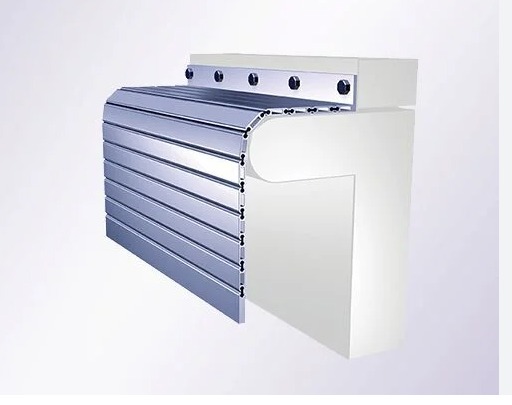
| Apron cover | Long, straight travel where linked metal slats can follow the axis | Handles chips and splash better than fabric, but trapped swarf can damage slat joints. |
| Roll-up cover | Axes needing very short retracted length or an open, compact installation | Suits dust and splash; reject it for hot chips, welding spatter or sharp swarf unless the construction is specifically rated. |
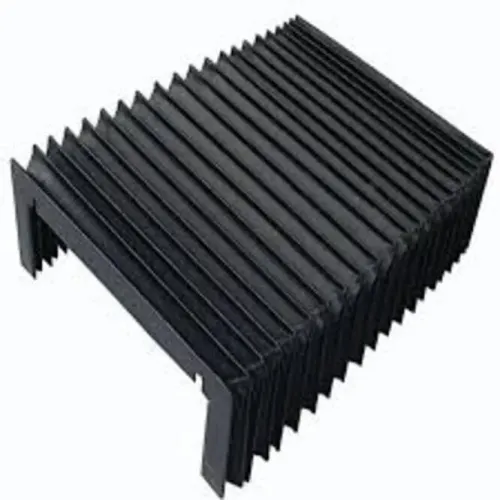
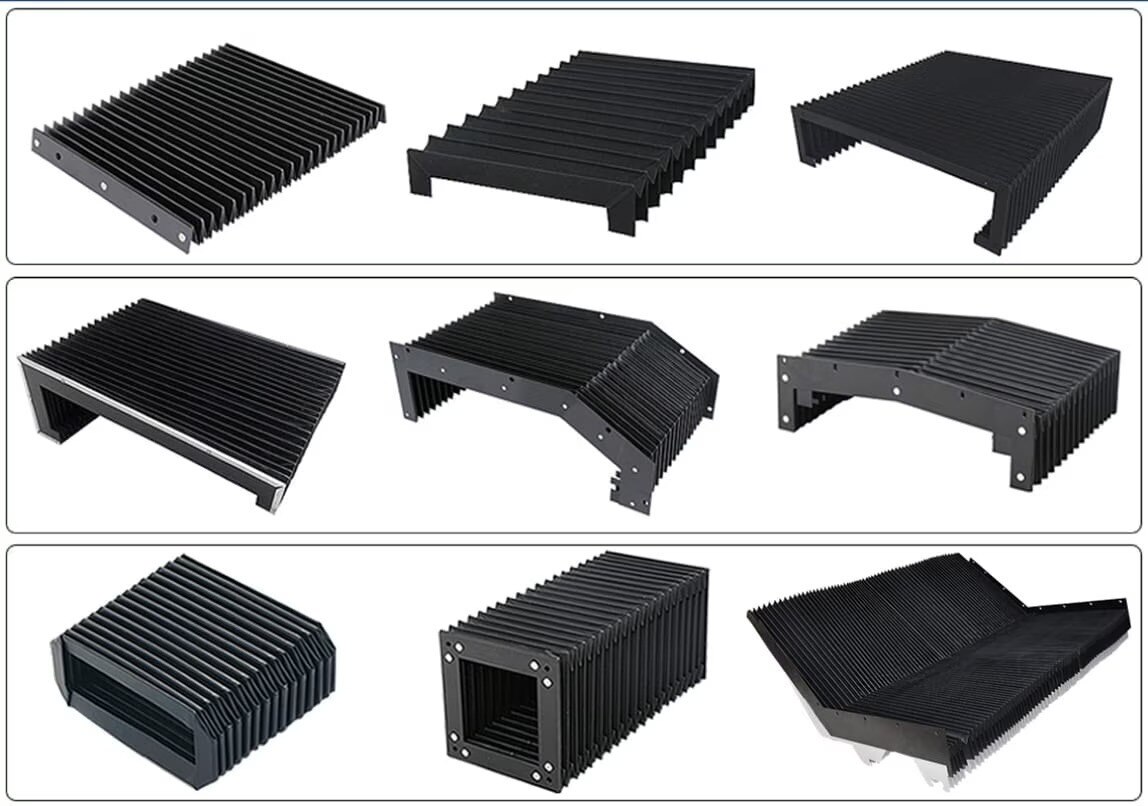
| Bellows | Irregular geometry, short travel, low-mass moving parts or restricted mounting space | Good for dust, coolant mist and light chips; specify fabric, coating and seams against abrasion, chemicals and temperature. |
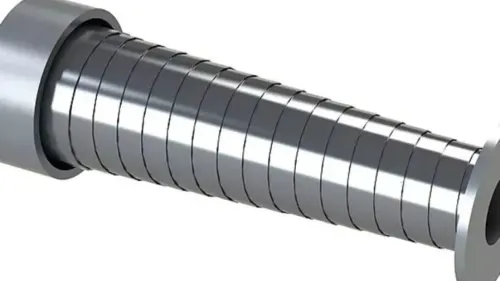
| Spring cover | Compact axes needing a light, self-coiling barrier | Fits light dust and splash; exposed coils and strip edges are poor choices for heavy swarf or hot chips. |
Send the supplier the actual regime: aluminium chips, cast-iron swarf, grinding sludge, dry abrasive dust or mixed contamination. Include coolant type and concentration, wash-down chemicals, cleaning pressure, operating temperature, chip temperature and welding exposure; wipers, seals and coatings often fail before the cover body.
Check the cover’s mass, acceleration limit and reversal impact with the machine builder or controls engineer. Axis speed alone does not set a safe travel speed.
Check movement, clearances and material compatibility
The cover works only if its full kinematic envelope clears the machine, its added mass suits the axis, and its materials survive the process. If your search was guideway cover order london, use the quotation stage to verify these points rather than relying on a nominal rail width.
- Check the closed and extended lengths, cover height, rising stack, mounting width and hole positions against every obstruction through the complete stroke.
- Confirm clearance from cable carriers, hoses, tool-change equipment, guards and operator access at both travel limits.
- Give the machine builder or controls engineer the cover mass, friction and expected cycle frequency; high acceleration and stage reversal can change axis response.
- Ensure the cover does not block grease fittings, oil lines, inspection points or way lubrication. Restricted access increases service time and can cause premature way or bearing wear.
- Record whether chips, wipers or seals could snag during reversal, and allow space to remove the cover for cleaning or replacement.
Check the material system, not just the word steel.
| Check | Give the supplier | Failure if missed |
|---|---|---|
| Coolant and oil | Type, concentration and exposure frequency | Wipers or seals swell, crack or lose contact |
| Heat and chips | Chip temperature, hot-work debris and impact risk | Fabric, coatings or bellows burn or tear |
| Cleaning | Chemicals, pressure and wash-down method | Seals and coatings deteriorate |
| Corrosion and abrasion | Dust, welding spatter and corrosion exposure | Guideways remain contaminated despite an intact cover |
Compare a London supplier’s quotation and delivery plan
Send one controlled information pack to a machine cover supplier in London, not a sketch. Mark the project as a replacement or new build: attach existing drawings, photographs, serial information and site measurements for a replacement; provide the frozen machine CAD envelope and interface drawings for a new build.
Request a drawing-approval date and quotation-validity period.
Ask every bidder to confirm:
- Covered length, stroke, closed and extended dimensions, mounting points and obstructions used in the design
- Stages or bellows, brackets, wipers, drainage, lubrication access, fasteners, surface treatment and installation documents
- Cover mass, friction and reversal impact for your machine builder or controls engineer
- Lead time from drawing approval, dispatch location, packaging size, delivery vehicle and offloading responsibility
- Collection address, collection hours and inspection procedure if you will collect
Compare quotations on identical scope, not the headline price.
| Quote feature | What to compare | Why it matters |
|---|---|---|
| Scope | Included hardware and documentation | Missing brackets or wipers create extra cost |
| Performance | Mass, friction, stroke and cycle limits | An unsuitable cover can slow or disturb the axis |
| Logistics | Manufacturing lead time and delivery or collection terms | A finished cover still delays installation if transport is unclear |
For a guideway cover order in London, record who approves revisions and who pays for redrawing after approval. Include SCUTES INDIA PRIVATE LIMITED in the same technical comparison if it is shortlisted, using the same drawings and delivery questions.
Treat “machine compliant” as a supplier statement, not a safety sign-off. The Supply of Machinery (Safety) Regulations 2008 and the integrator’s risk assessment remain separate from purchasing.
Related products
 | Machine Covers Machine covers are specially designed shields used to protect industrial equipment and machinery from environmental elements. View product → |
 | TELESCOPIC COVERS A telescopic cover protects guide-way surfaces and components of moving axis of machines. View product → |
Test the cover through its full stroke before acceptance
Run the axis repeatedly through its complete stroke at the specified speed, acceleration and cycle rate before acceptance. A cover that moves correctly by hand can collide, chatter or fold under production conditions. For an order of a guideway cover for machines in London, record the test results against the approved drawing.
| Stage | Inspect | Reject or correct if |
|---|---|---|
| Installation | Mounting faces, fasteners, stage alignment, wiper contact and drainage | A bracket is loose, a wiper lifts, or coolant has no clear escape path |
| Commissioning | Repeated full travel, reversal impact, stage collision, chatter and axis response | Stages bind, strike, vibrate, or the added cover mass affects positioning |
| Acceptance | Chip and coolant carry-through, lubrication points, inspection openings and maintenance access | Contamination reaches the guideway or routine servicing requires removing the cover |
Check the cover with the machine in its real operating orientation, including hot chips, coolant flow and washdown where applicable. Confirm that limit switches, proximity devices and adjacent guards remain clear throughout travel.
The cover is not automatically a personnel guard. If anyone can reach moving or dangerous parts, the machine builder or integrator remains responsible for the machinery risk assessment, guarding and control measures under PUWER and ISO 12100. The Supply of Machinery (Safety) Regulations 2008 duties also remain separate from buying guideway protection in London.
Provide the cover’s mass, friction and reversal loads to the machine builder or controls engineer; do not treat them as insignificant.
Frequently asked questions
What measurements do you need to order a guideway cover?
Provide the machine envelope, axis travel, rail width, cover height, compressed and extended lengths, mounting interfaces and protected-area dimensions.
How do you match guideway cover construction to a machine?
Choose construction according to axis geometry and contamination: bellows suit flexible protection, while telescopic covers suit rigid slideways and heavier chip loads.
What should you compare in a London supplier’s quotation?
Compare the stated dimensions, materials, mounting details, delivery date, drawing approval process, testing scope and exclusions rather than price alone.
How do you test a guideway cover before acceptance?
Move the axis through its full stroke and check folding, extension, clearances, mounting security, access interference and protection of the guideway.
Related products
 | Roll Up Cover A roll-up cover is a highly durable and flexible protective solution designed to safeguard machinery, equipment, and valuable assets from dust,... View product → |
 | TELESCOPIC SPRING COVER Telescopic Spring Covers provide protection under extreme conditions. View product → |
 | APRON COVER Effectively engaged in offering a vast collection of outstanding quality products which include Apron Covers. View product → |
 | Laser Machine Bellows Laser Machine Bellows are specialized protective coverings designed to safeguard the vital internal components of laser machines. View product → |