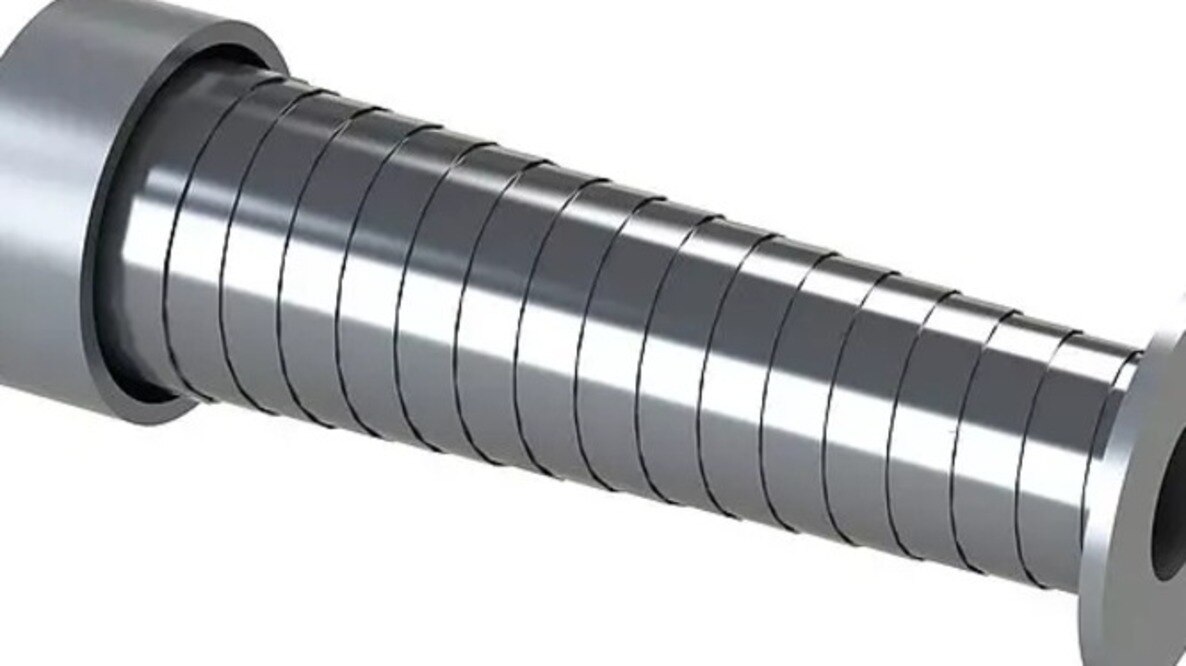
The wrong cover can fit the drawing yet bind at full travel, trap chips between nested boxes or overload the machine axis. You will be able to distinguish cover designs, prepare a complete dimensional and operating specification, and test whether a supplier can deliver a reliable replacement rather than a catalogue match.
Key takeaways
- Define stroke, speed, load and contamination before requesting quotations.
- Measure the installed envelope, including retracted length, extended length and mounting clearances.
- Ask suppliers how they test motion, sealing, heat and repeated chip impact.
- Compare total replacement risk, not only the quoted telescopic spring cover price.
Choose the cover design before you compare suppliers
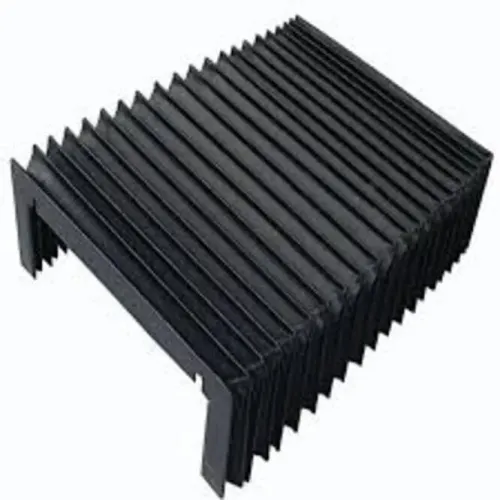
Choose the cover design from the machine’s motion and hazard before comparing suppliers. A telescopic spring cover for machinery fits horizontal or vertical guideways, ball screws and machine-tool beds when nested metal boxes can travel without binding and shield against chips, dust and cutting fluid.
It is the wrong choice for cable routing, structural bridging, lifting or heavy local impacts unless engineered for those loads.
| Option | Suits | Wrong choice |
|---|---|---|
| Telescopic spring or steel guideway cover | Long linear travel with chips and coolant | Tight curves, cable movement or unsupported loads |
| Bellows cover | Flexible axes, irregular paths and fine dust | Heavy hot chips or exposed cutting-fluid jets without suitable fabric and wipers |
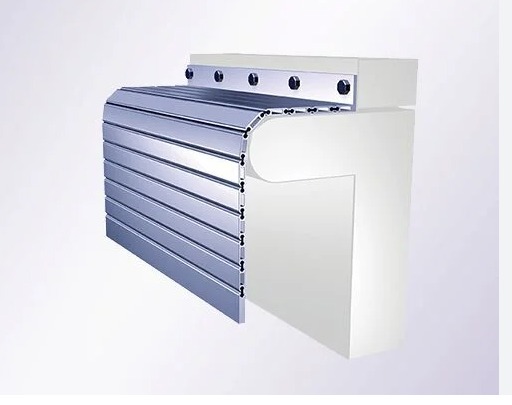
| Apron cover | Broad beds needing overlapping slats and impact resistance | Small clearances or high acceleration without a stability check |
| Roll-up cover | Compact space and moderate contamination | Long unsupported spans, aggressive chips or high-speed reciprocation |
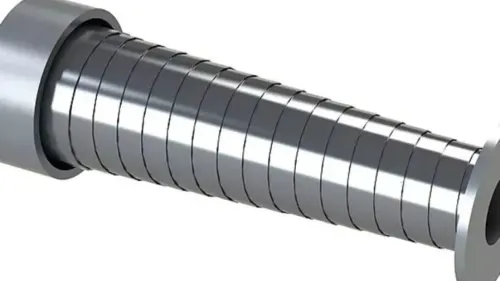
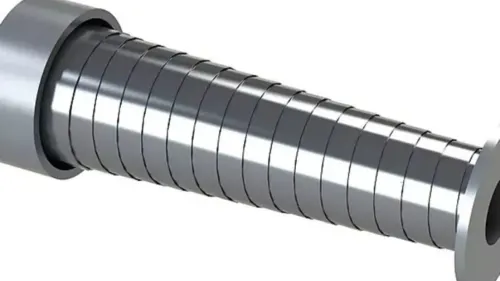
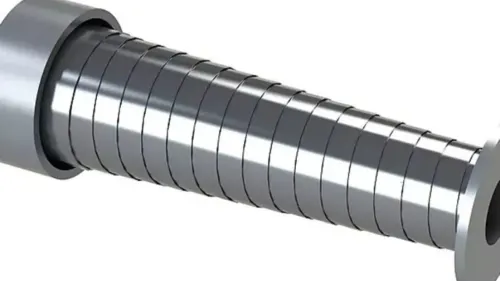
| Spiral spring cover | Compact protection around rotating shafts | Wide machine beds or linear guideway coverage |
Give the supplier the travel, speed, acceleration, cycle frequency, orientation and available space. Ask whether it engineers and fabricates the cover or resells a standard unit, then require calculated box sizes, overlap, guides, wipers, mounting and dynamic performance. Check parallel mounting surfaces and run the cover through its full stroke before production.
Measure the installed cover and define the complete envelope
Record the telescopic spring cover dimensions from the machine’s fixed datum, not from a guess based on outside width. Give the supplier closed length, fully extended length or stroke, overall height and width, outside and inside diameters where accessible, cover height above the mounting surface, and the available installation envelope.
Use the existing cover as a measuring reference without removing it:
- Photograph both ends, each fixing face, wipers, scrapers, drains, guide rails and nearby guards.
- Measure closed length with the axis fully retracted, then jog the machine at low speed to its full travel and measure the extended length.
- Count the boxes or convolutions, measure box pitch and overlap at an accessible side, and record the travel direction.
- Measure mounting-hole centres, hole diameter, mounting diameter, bolt pattern, parallelism, and the distance from the mounting face to the cover top.
- Measure wall clearance around the cover, including cable routes, fixtures and adjacent guards.
| Measurement | How to collect it on the installed machine | Record for quotation |
|---|---|---|
| Closed and extended lengths | Use a fixed machine datum and measure at both travel limits | Lengths and usable stroke |
| Box arrangement | Count boxes and measure repeated pitch and overlap through the side gaps | Number, pitch and overlap |
| Mounting and clearance | Measure hole centres, face height and nearest obstructions | Pattern, envelope and clearances |
| Wipers and drainage | Photograph positions and note contact surfaces and drain outlets | Material, location and orientation |
Move the cover through its complete stroke before sending the figures. Binding, uneven gaps or abnormal wiper drag exposes an envelope or alignment problem that dimensions alone will miss.
Match construction to motion, contamination and chemistry
Match the cover’s construction to the machine’s actual motion and environment; a cover selected from travel length alone can rub, buckle, snag or fatigue early. Specify the following in the enquiry:
- Maximum travel speed, acceleration and deceleration, cycle frequency and duty hours.
- Horizontal, vertical or inclined mounting, plus unsupported span and direction of gravity.
- Reversal frequency and shock loads at stops.
- Pauses, dwell periods and movement through the complete stroke.
Describe contamination by what reaches the cover, not by saying “harsh conditions”:
- Dry chips, abrasive dust or swarf that can enter overlaps and guides.
- Coolant or cutting oil, including the fluid name and concentration.
- High-temperature chips or heat radiated from the process.
- Corrosive cleaning agents, salt or chemical vapour.
Ask the supplier to identify the steel grade, coating or stainless grade, spring material, wiper compound and seal material against those fluids and temperatures. A coating that resists coolant can still fail when chips abrade it.
Require the manufacturer to calculate box stability, overlap, guide loads and wiper drag for your orientation and acceleration. Treat a quoted maximum speed as conditional unless it names the cover size and test configuration.
Before production, check parallel mounting surfaces and run the cover through its stroke slowly; binding, uneven gaps or abnormal drag indicate an alignment or construction problem.
Test the supplier’s engineering and manufacturing capability
Ask for evidence that the telescopic spring cover supplier engineered the cover from your machine’s motion profile, not merely matched its width and stroke to a catalogue item. A capable telescopic spring cover manufacturer will show how the design handles speed, acceleration, orientation, unsupported span and cycle frequency.
Ask for design evidence:
- A drawing showing box sizes, overlap, guide arrangement, mounting datums and wiper positions.
- Calculations or stated limits for guide loads, box stability, acceleration and maximum operating speed.
- Confirmation that the closed length, extended length and neighbouring machine structures were checked together.
- The material grade, sheet thickness, coating, wiper compound and coolant compatibility.
- A replacement-parts drawing identifying wipers, springs, guides and mounting hardware.
Inspection records separate controlled fabrication from a reseller’s promise. Request dimensional inspection of mounting points and closed height, plus records showing that the boxes slide without binding and that gaps, wiper contact and drainage match the drawing. Ask how nonconforming parts are recorded and corrected.
Before acceptance, mount the cover without forcing it into alignment. Check parallelism and height at the fixing surfaces, then move it through the complete stroke by hand or at low speed; reject abnormal drag, uneven gaps or contact with adjacent guards.
Apply the same evidence request to SCUTES INDIA PRIVATE LIMITED rather than assuming a product label proves machine-specific design.
Related products
 | TELESCOPIC SPRING COVER Telescopic Spring Covers provide protection under extreme conditions. View product → |
 | TELESCOPIC COVERS A telescopic cover protects guide-way surfaces and components of moving axis of machines. View product → |
Compare telescopic spring cover price, service and replacement risk
Compare telescopic spring cover price with service and replacement risk, not with travel length alone. A low initial figure can exclude custom mounting, high acceleration, coolant-resistant wipers or the inspection needed to prove reliable operation.
Ask every supplier to state:
- Material grade or coating, box thickness, number of boxes, overlap and pitch.
- Closed and extended lengths, height, width, mounting-hole pattern and datum.
- Wiper, scraper, seal and drainage specifications, including coolant compatibility.
- Rated speed, acceleration, cycle life, load exclusions and whether impact or structural loading is prohibited.
- Inspection records, drawings, installation instructions, lead time, warranty and spare-part pricing.
- The identification data retained for a future telescopic spring cover replacement.
| Ownership factor | Compare | Risk to expose |
|---|---|---|
| Initial supply | Complete engineered quotation, not price based only on width and stroke | Missing features appear as variation charges |
| Service | Installation support, response time, troubleshooting and inspection documents | Misalignment causes binding, wiper wear or machine damage |
| Replacement | Guaranteed retention of drawings, dimensions, materials and mounting details; quoted spare lead time | A same-width cover fails because its closed length or mounting datum differs |
| Downtime | Standard parts, repairable boxes and emergency availability | A small failure stops production while a new cover is fabricated |
Calculate total ownership cost as purchase price, installation, planned spares, repairs and production downtime. A cheaper cover loses its advantage if its supplier cannot identify or reproduce the replacement.
Control installation and prove the cover through its full stroke
During telescopic spring cover installation, preserve the machine’s alignment rather than forcing the cover into position. Check mounting-surface parallelism, height, fixing-hole position and the closed-length envelope before tightening fasteners.
- Measure the mounting surfaces and record the gap at each corner. Correct shims or brackets until the cover sits square without preload.
- Move the cover by hand, then at low speed, through its complete stroke. Stop for binding, uneven box gaps, abnormal wiper drag or contact with guards, cable carriers and machine structures.
- Run the machine at production speed and acceleration, including repeated reversals. Confirm that the boxes remain aligned and the wipers neither lift nor impose excessive drive load.
- Apply the expected coolant flow and inspect every drain. Confirm that liquid leaves the cover without pooling, leaking toward guides or blocking service access.
- Repeat the stroke with actual tooling, fixtures and workpiece clearances. A cover is not accepted if impact or pinch points appear at any position.
- Record photographs, measured clearances, drive-load observations and corrective actions in the acceptance report before production release.
Frequently asked questions
How do you choose a telescopic spring cover supplier?
Choose a supplier that can match the cover to your machine’s motion, contamination, chemistry and complete installed envelope. Check engineering calculations, manufacturing controls, testing evidence, installation support and replacement planning before comparing price.
Which telescopic spring cover dimensions must you provide?
Provide the required stroke, retracted and extended lengths, width, height, mounting points, guideway position, clearances and allowable cover weight. Include nearby components and the full travel envelope so the nested boxes do not bind or collide.
What should a telescopic spring cover supplier test?
Ask for evidence that the proposed construction has been checked through its full stroke under the machine’s speed, acceleration, temperature, chip, dust, coolant, oil and cleaning conditions. Review inspection records and acceptance criteria for movement, sealing and damage.
How can you reduce telescopic spring cover replacement risk?
Confirm material compatibility, wear points, mounting details, service access, spare-part identification and expected replacement procedure before installation. Compare the cost of downtime, remanufacture and fitting work with the original telescopic spring cover price.
Related products
 | Machine Covers Machine covers are specially designed shields used to protect industrial equipment and machinery from environmental elements. View product → |
 | Roll Up Cover A roll-up cover is a highly durable and flexible protective solution designed to safeguard machinery, equipment, and valuable assets from dust,... View product → |
 | APRON COVER Effectively engaged in offering a vast collection of outstanding quality products which include Apron Covers. View product → |
 | Laser Machine Bellows Laser Machine Bellows are specialized protective coverings designed to safeguard the vital internal components of laser machines. View product → |