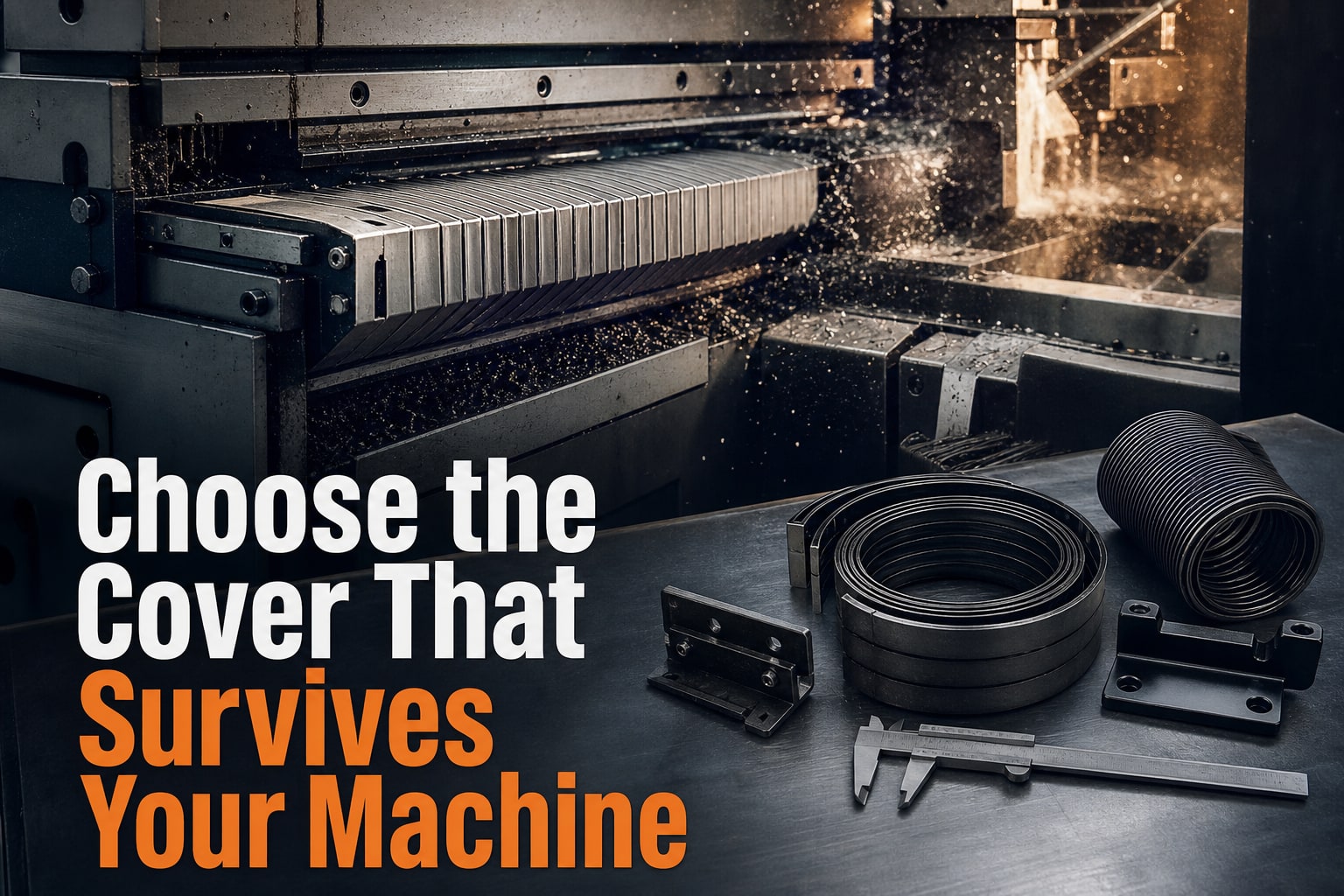
A poor specification can leave you with a cover that fits the machine at rest but binds, leaks coolant or loses travel during production. By the end, you will know what dimensions, motion data, material details, testing evidence and lifecycle costs to request before choosing a supplier.
Key takeaways
- Match the cover type to axis travel, contamination, speed and available space.
- Send complete dimensions, stroke, speed, acceleration and duty-cycle data.
- Request drawings, material details, test evidence and production quality records.
- Compare installation, maintenance, replacement and downtime costs—not just the cover price.
Confirm the cover type and whether it suits the machine
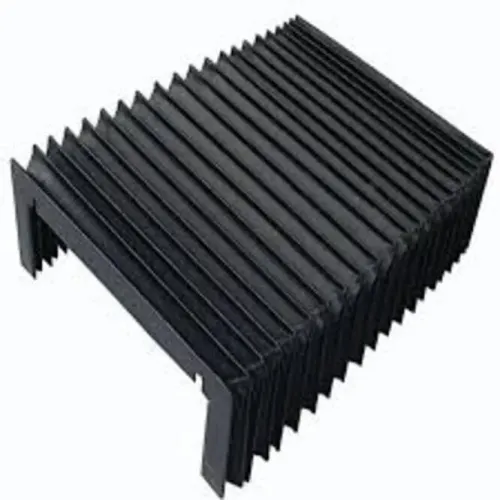
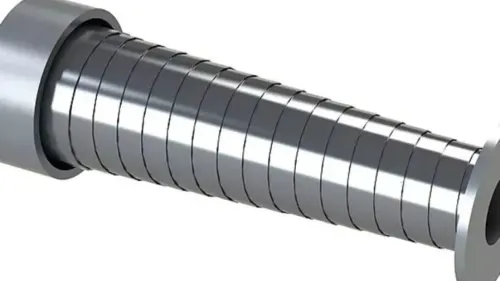
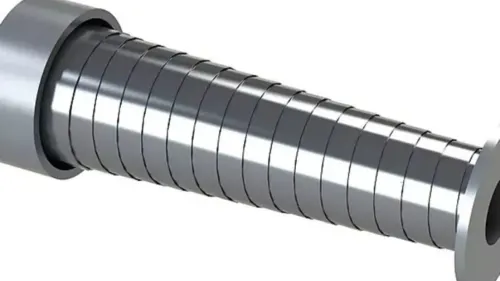
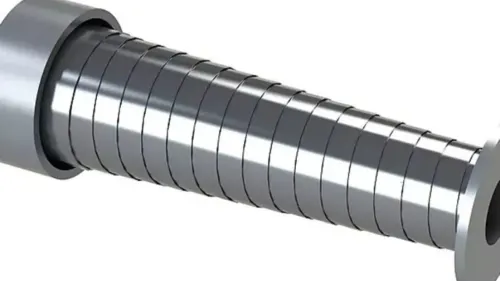
A telescopic spring cover for machinery is the right design when it must shield a guided machine axis from contamination while travelling with that axis. You are buying a formed, nested steel cover with overlapping boxes and spring-loaded wipers—not a generic flexible guard.
Before selecting a telescopic spring cover supplier, make the quotation define “spring cover”:
| Option | Construction | Main design characteristic |
|---|---|---|
| Telescopic steel machine cover | Nested steel boxes with spring-loaded wipers | Suits guided linear travel and requires correct overlap, drainage and wiper contact |
| Roll-up spring-steel cover | Flexible strip wound onto a roller | Suits lighter protection where compact retraction matters, but has different sealing and maintenance limits |
Specify the environment that the cover must survive:
- Chip size and shape
- Abrasive dust
- Coolant type
- Operating temperature
- Pressure-wash practice
- Risk of hot chips landing on the cover
These conditions determine the steel, wiper profile, drainage and need for additional shielding. A cover designed for fine dust can fail when sharp chips cut its wipers.
Give the supplier the actual motion profile, including maximum speed, acceleration, deceleration, cycle frequency, orientation and unsupported span. State whether installation is horizontal, vertical or overhead.
Align the machine mounting surfaces and guideways before installation. Forcing the cover into position with bolts preloads the boxes, raises drive force and produces uneven wiper contact.
For replacement, match closed and extended lengths, usable travel, box geometry, mounting pattern, wiper arrangement, motion direction and dynamic envelope—not only the machine model or outside width. Compare the purchase price with wipers, installation work, shipping and a first spare set.
Give the supplier a complete dimensions and motion schedule
Give the telescopic spring cover supplier a measured telescopic spring cover dimensions schedule, a motion schedule, and the operating conditions instead of a machine model or outside width alone.
- Extended length and collapsed length
- Usable travel, measured separately rather than calculated from those two lengths
- Cover width, height, and outside and inside diameters where applicable
- Number of boxes and the overlap between adjacent boxes
- Mounting-flange length, width, thickness, hole pattern, hole sizes, and datum locations
- Total allowable mass and the required clearance envelope around the cover
- Machine axis, direction of travel, stroke speed, acceleration, and cycle frequency
- Cover orientation, available installation space, and the position of nearby guards, tooling, hoses, and switches
Mark every measurement on a dated machine drawing or photograph. Travel cannot be inferred reliably from extended length minus collapsed length because end boxes and permanent overlap consume part of that distance. A wrong figure can leave the cover short of the protected area or force the boxes into a hard stop.
Add chip size and shape, abrasive dust, coolant type, operating temperature, pressure-wash practice, and whether hot chips land on the cover. Ask the telescopic spring cover supplier to return a controlled drawing showing the agreed dimensions, mounting pattern, clearances, wiper arrangement, and revision number.
For a replacement, attach the original drawing and record the direction of motion; matching only the machine model invites interference.
Test the manufacturer’s engineering and production evidence
A capable telescopic spring cover manufacturer leaves an auditable engineering trail, not just a catalogue envelope. Ask for documents tied to your drawing and duty; a generic width-and-length table cannot prove performance under high acceleration, coolant exposure or frequent reversing.
- A controlled assembly drawing showing dimensions, mounting details and revision history.
- The material grade, sheet thickness, surface finish and corrosion-resistant treatment.
- Replacement-wiper part numbers, material and access instructions.
- Allowable speed, acceleration, temperature, orientation and coolant limits.
- Installation instructions covering alignment, support and fixing torque.
- Inspection criteria for overlap, wiper contact, distortion and travel.
- Test evidence from a cover exposed to comparable speed, contamination and operating cycles.
Ask SCUTES INDIA PRIVATE LIMITED for this evidence in the same format you request from competing suppliers; the comparison then measures engineering control rather than sales confidence.
Treat the telescopic spring cover price as one part of the decision. Require separate lines for the cover assembly, wipers and installation, then identify extras such as sensors or corrosion-resistant finishes in the quotation. A low figure that excludes alignment work, oversized shipping or the first spare-wiper set can become the expensive option after commissioning.
For a telescopic spring cover replacement, reject any proposal based only on machine model or outside width. Require the supplier to confirm the original cover’s travel, collapsed length, mounting pattern, wiper arrangement and clearance envelope against the replacement drawing.
Related products
 | TELESCOPIC SPRING COVER Telescopic Spring Covers provide protection under extreme conditions. View product → |
 | TELESCOPIC COVERS A telescopic cover protects guide-way surfaces and components of moving axis of machines. View product → |
Plan installation, maintenance and replacement before delivery
Make after-sales scope part of the purchase order before delivery. Telescopic spring cover installation should include an installation drawing, mounting-hardware list, access requirements and a supplier contact for alignment questions.
Align the machine mounting surfaces and guideways before attaching the cover; tightening bolts to pull it into position preloads the boxes, raises drive force, creates uneven wiper contact and can cause cracking or telescoping failure.
- Request a controlled installation drawing with datum references, alignment tolerances, mounting sequence, fastener torque and any lifting points. Reject instructions that simply say “fit to machine.”
- Require a maintenance sheet identifying cleaning access, inspection points, cleaning frequency, wiper wear limits and signs of trapped chips, dented box tops, damaged joints or coolant ingress.
- Agree the replacement parts list before shipment. It should give wiper profiles, part numbers, materials, lead times and storage guidance, plus the price and availability of a first spare set.
- Obtain a telescopic spring cover replacement procedure stating which guards or machine parts must be removed, what support equipment is needed, how the cover is realigned and the expected downtime.
- Define after-sales support in writing: remote troubleshooting, drawing revisions, installation assistance and a named contact for warranty claims.
Compare the initial quotation with service-period costs. Include replacement wipers, oversized-assembly freight, machine-side modifications, cleaning access work and installation alignment; the lowest purchase price becomes expensive when these items appear after delivery.
Compare total cost against the operating environment
Compare a telescopic spring cover price with competing designs only after putting every quote against the same operating envelope. Width alone hides the cost of wipers, guide hardware, corrosion-resistant material, coatings, sensors, packaging, installation and commissioning.
Request each item separately, plus a spare-wiper kit; an apparently cheap quote often excludes alignment work, oversized freight or cleaning access.
| Design | Initial-cost tendency | Operating trade-off |
|---|---|---|
| Telescopic spring cover | Higher engineered cost | Strong protection from chips and coolant, but wipers and overlaps need inspection |
| Roll-up cover | Often lower for simple layouts | Compact and flexible, but sharp or hot chips can cut the material |
| Bellows cover | Varies with size and fabric | Good for irregular movement, but abrasion, coolant compatibility and compression space govern service life |
For a telescopic spring cover for machinery, state chip size and shape, abrasive dust, coolant type, temperature, pressure-wash practice and hot-chip exposure. Those conditions determine material, wiper profile, drainage and extra shielding. Then compare expected maintenance over the machine’s planned service period, not just the invoice total.
When a telescopic spring cover replacement is needed, match extended and collapsed lengths, usable travel, box geometry, mounting pattern, wiper arrangement, motion direction and clearance envelope. Matching only the machine model or outside width can reduce travel or cause interference. Ask for replacement-wiper prices and delivery terms before awarding the order.
Frequently asked questions
What information should you give a telescopic spring cover supplier?
Provide the telescopic spring cover dimensions, axis travel, closed and extended lengths, speed, acceleration, mounting points, workspace limits and contamination details.
How do you assess a telescopic spring cover manufacturer?
Ask for general arrangement drawings, material and wiper specifications, engineering calculations, inspection records, relevant test results and evidence of production capacity.
What should you plan for telescopic spring cover installation?
Confirm mounting access, alignment, fasteners, clearance, transport protection, commissioning checks and the maintenance procedure before delivery.
How should you compare telescopic spring cover price?
Compare purchase price with installation time, inspection and cleaning labour, spare parts, expected telescopic spring cover replacement and the cost of machine downtime.
Related products
 | Machine Covers Machine covers are specially designed shields used to protect industrial equipment and machinery from environmental elements. View product → |
 | Roll Up Cover A roll-up cover is a highly durable and flexible protective solution designed to safeguard machinery, equipment, and valuable assets from dust,... View product → |
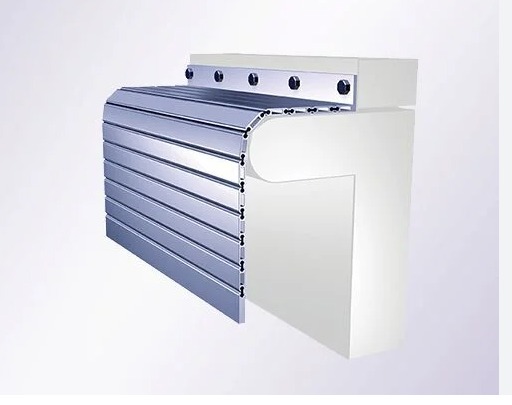 | APRON COVER Effectively engaged in offering a vast collection of outstanding quality products which include Apron Covers. View product → |
 | Laser Machine Bellows Laser Machine Bellows are specialized protective coverings designed to safeguard the vital internal components of laser machines. View product → |