A credible quotation starts with movement data, restraint conditions, chemistry and as-built connections—not duct nominal diameter alone. By the end, you will have a specification for comparing suppliers, checking their calculations and accepting the delivered joint.
Key takeaways
- Give axial, lateral and angular movement at operating temperature.
- Match bellows materials and liners to temperature, pressure and process chemistry.
- Request fatigue calculations, material certificates, drawings and inspection records.
- Approve the installed joint against alignment, supports, guides and cold settings.
What information must you give before requesting a quotation?
Give the duct bellows expansion joint supplier a complete movement schedule, not only duct diameter and operating temperature. Without it, the quotation is a guess at convolution geometry, travel and fatigue life.
1. State the duct run length between anchors or other movement restraints, the material coefficient of expansion, and the temperature change. The supplier can check thermal growth with ΔL = αLΔT; use the restrained run length, not automatically the full connected duct length.
2. Identify the source of movement: thermal growth, equipment settlement, vibration or installation misalignment. Give axial compression and extension, lateral offset, angular movement, torsion and vibration amplitude as separate values. One movement type cannot substitute for another.
3. Give the expected number of cycles, including startup, shutdown, cleaning and upset events. Request the calculated fatigue life or allowable cycles for the stated movement magnitudes.
4. State whether installation occurs at neutral length, pre-compressed or pre-extended. Pre-setting shifts available travel; it does not increase total bellows capacity.
5. Describe flow direction, gas or solids, velocity, particle loading, operating and peak temperatures, and exposure to UV, ozone, oil, coolant, acids, alkalis and abrasive dust. State whether an internal liner is required, along with its material and clearance.
6. Provide pressure type—internal, external or vacuum—pressure cycles, axial restraint and liner details. These conditions change the allowable design envelope.
This information lets the supplier select a design rather than guess at one.
Which construction suits the movement, temperature and chemistry?
Choose construction by movement, temperature and chemistry—not by nominal duct size. A metallic duct bellows expansion joint suits compact layouts, higher temperatures and demanding gas-tightness; fabric expansion joints or elastomeric flexible connectors often suit large, low-pressure ducts or particular particulate and chemical services.
| Construction | Strength | Check before selection |
|---|---|---|
| Metallic bellows | Compact, higher temperature capability, strong gas-tightness | Alloy compatibility, fatigue life, pressure or vacuum behaviour |
| Fabric expansion joint | Large duct sizes, low pressure, abrasive or particulate service | Fabric coating, leakage, temperature limits and chemical attack |
| Elastomeric connector | Flexibility and selected chemical services | Elastomer compound, oil, coolant, ozone, UV and acid or alkali resistance |
Require separate values for continuous operating temperature and peak upset temperature. Ask the supplier to name the metal alloy, fabric coating or elastomer compound, then state limits for UV, ozone, oil, coolant, acids, alkalis and abrasive dust.
For metallic parts, ask how chlorides, sulfur compounds, wet-dry cycling and cleaning chemicals affect the alloy. Require any corrosion allowance or material limitation in writing. Specify round or rectangular geometry from the actual duct layout, then request the number of convolutions, face-to-face length and movement per convolution.
More convolutions are not automatically better: geometry changes spring rate, fatigue life, pressure behaviour and installation space.
If an internal liner is proposed, state flow direction, velocity, solids characteristics, liner material, clearance and whether it is continuous or segmented. The liner reduces turbulence and abrasion, but adds pressure drop and must not bind during movement.
How do pressure, restraint and supports affect the design?
Pressure, restraint and supports define the usable design envelope of a duct bellows expansion joint. Ask the duct bellows expansion joint supplier to state internal pressure, external pressure or vacuum, pressure cycling, operating temperature, axial restraint and liner arrangement. For a pressurised metallic joint, pressure thrust is approximately pressure multiplied by the bellows effective area.
Anchors or suitable hardware must transfer that load; otherwise fans, casings, ductwork and supports can be overloaded.
| Feature | What it does | Design consequence |
|---|---|---|
| Guides | Keep ductwork aligned | They do not replace anchors or absorb pressure thrust |
| Anchors | Transfer pressure thrust and restrain movement | Their stiffness and connection loads require calculation |
| Tie rods | Restrain selected movement and thrust | Their arrangement determines whether lateral or angular movement remains available |
| Unsupported joint weight | Adds a load and possible offset | The bellows can be forced into unintended lateral movement |
Require a drawing showing which degrees of freedom tie rods restrain and where rod loads enter the duct. Give the supplier guide spacing, anchor stiffness, nearby elbows and tees, fan or equipment nozzle loads, and the weight carried by the joint. Request spring rate and reaction loads in each direction, not merely a movement rating.
For process-connected ducting, identify the governing design code, such as ASME B31.3 where applicable. Also require the manufacturer to state the separate bellows design method, movement rating and calculations; a code reference alone is not a complete product specification.
What evidence should a supplier include with the quotation and delivery?
Require a dimensioned proposal before placing the order. It must show the flange pattern, bolt-hole spacing, frame dimensions, face-to-face length, duct gauge, sealing surface, liner, insulation arrangement and every installation clearance. Check these against the as-built site condition: nominal duct size does not establish the connection.
Ask the duct bellows expansion joint supplier to state:
- Axial, lateral and angular design movement, plus torsion or vibration where applicable; the cycle assumption, fatigue calculation or allowable-cycle statement, and spring rates.
- Pressure and vacuum limits, material specification, liner details and installation setting.
- The governing design code and interface assumptions, with calculations tied to the actual joint rather than a catalogue model.
Require this acceptance package with delivery:
- Approved dimensional drawings and serial-number traceability.
- Material certificates, weld procedures and welder qualifications where applicable.
- Pressure or leak-test results, movement data, spring-rate data and inspection records.
A generic certificate of conformity does not prove that the delivered joint matches the calculated design. SCUTES INDIA PRIVATE LIMITED should be considered only after it answers the interface questions in writing and supplies project-specific evidence.
Put the governing test in the purchase order: name the medium, pressure, duration, acceptance limit and safety procedure. Hydrostatic testing verifies pressure integrity, not helium or another gas-leak rate. Pneumatic testing requires controls for stored-energy hazards.
Related product
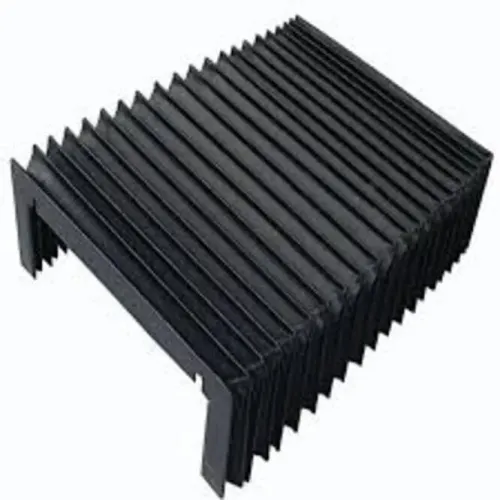
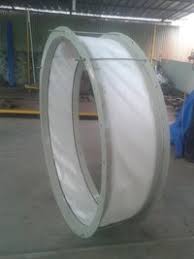 | Duct Bellows HVAC systems and industrial ducting rely on high-quality duct bellows for durability and performance. View product → |
How should you compare quotations and approve the installed joint?
Compare every quotation in one table, using identical fields for each duct bellows expansion joint supplier.
Field | Supplier A | Supplier B | Supplier C Construction | | | Material | | | Geometry | | | Face-to-face length | | | Axial, lateral, angular and torsional movement | | | Cycle life | | | Pressure or vacuum limit, temperature and restraint | | | Spring rate | | | Liner clearance and orientation | | | Connection dimensions | | | Test method and acceptance limit | | | Exclusions and installation responsibilities | | | Delivery documents and serial traceability | | |
Reject a quotation that gives one combined movement figure. Axial compression, axial extension, lateral offset, angular movement and torsion are not interchangeable. Reject a pressure rating that omits temperature, pressure type—internal, external or vacuum—or restraint condition.
Check the installed setting against the required travel in both directions. The installation drawing must show every pre-compression or pre-extension; it shifts available travel but does not increase total capacity.
Before commissioning, verify:
- Anchor and guide positions, bolt-hole alignment and sealing surfaces
- Insulation clearance, liner orientation and removal of shipping restraints
- The joint is not being forced to correct duct misalignment unless that movement is designed
Record the serial number, then compare the nameplate, dimensions, materials and test results with the approved drawing. Use gas-leak testing when fugitive leakage matters; a hydrostatic result is not equivalent. Approve the supplier whose quotation makes loads, movement, chemistry, tests and responsibilities auditable—not the lowest unqualified price.
Frequently asked questions
What information must you give a duct bellows expansion joint supplier?
Provide duct size and shape, operating and design temperatures, pressure or vacuum, axial and lateral movements, angular rotation, cycle count, chemistry, flow media, supports, guides, anchors and installation conditions.
Which construction suits the movement, temperature and chemistry?
Choose the bellows alloy, ply arrangement, liner, cover and attachment method from the temperature, corrosion exposure, particle load, movement type and required cycle life. Confirm compatibility with the process gas, condensate and cleaning chemicals.
How do pressure, restraint and supports affect duct bellows expansion joint design?
Pressure creates axial thrust and movement restraints transfer loads into anchors, guides and ductwork. Confirm anchor capacity, guide spacing, fixed points, duct weight, thermal growth and whether the joint needs a liner or external cover.
What evidence should a supplier include with the quotation and delivery?
Request a dimensional drawing, movement schedule, design conditions, materials, pressure rating, cycle-life or fatigue calculation, weld details, inspection plan, material certificates, test results, installation instructions and storage requirements.
How should you compare quotations and approve the installed joint?
Compare identical design inputs, movement capacity, cycle life, materials, dimensions, delivery scope and documentation. Before approval, check alignment, bolt condition, liner clearance, supports, guides, anchors, cold setting and freedom from shipping damage.