A scissor lift cover must follow the crossed arms, cylinders and platform through their entire movement without rubbing, stretching or creating a new pinch point. By the end, you will know what to measure, which cover arrangement fits each hazard, and how to verify safe operation before the lift returns to service.
Key takeaways
- Measure the full stroke, compressed length, extended length and clearance before ordering.
- Leave clearance at every pivot, cylinder and hose throughout the platform’s movement.
- Use segmented or split covers when fixed bellows would restrict access or motion.
- Inspect folds, mounting points and trapped debris after testing the complete stroke.
What a scissor lift bellows protects and how it moves
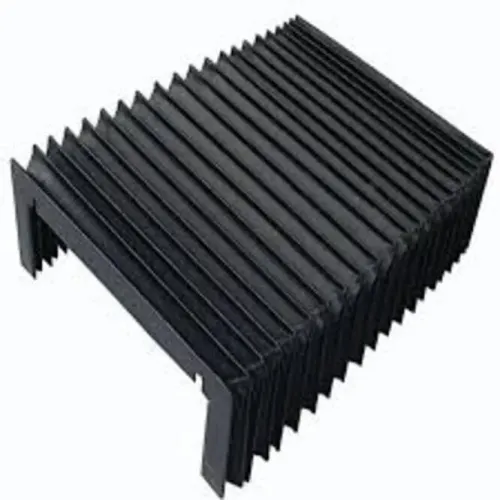
Bellows for scissor lift platforms protect the moving mechanism from falling dust, chips, abrasive particles and liquid splash. A cover can shield crossed arms, pivot points, rollers, bearings, screw drives, hydraulic cylinders, limit-switch hardware, hoses and cable runs when it is attached to the platform base and the lower frame.
It is a flexible guard, not a load-bearing member or impact barrier.
The phrase bellows for scissor lift covers several layouts, and each leaves different exposure points:
| Arrangement | Main coverage | Limitation |
|---|---|---|
| Single underside curtain | Lower mechanism and platform gap | Sides and pinch points can remain open |
| Opposed side bellows | Both sides of the crossed arms | The underside still needs separate protection |
| Four-sided enclosure | Mechanism, cylinders and platform perimeter | Requires careful access and drainage |
| Sectional covers | Individual cylinders, linkages or pivots | More joints create more contamination paths |
As the platform rises, the bellows extends; as it lowers, folds compress into pleats. The design must leave clearance at full extension and full collapse, including space around pivots, hoses and cable loops. A fold that drags on the floor can collect coolant and abrasive slurry, while a fold trapped at a pivot can tear.
Route cables and hoses independently, with their own strain relief, abrasion protection and dynamic bend radius. Bellows for scissor lift protection also cannot replace fixed or interlocked guarding around crushing and shearing zones. End gaps, mounting interfaces, open sides and tears still allow contamination inside.
The measurements that determine whether the cover will fit
Measure the complete motion envelope before specifying a bellows cover for scissor lift equipment. Platform width and length alone will produce a cover that rubs against the arms, bottoms out when collapsed, or becomes taut before full extension.
1. Record the fully collapsed height and fully extended height between the mounting surfaces. Include the actual travel, not only the lift’s rated stroke.
2. Measure the available width and length at both ends of travel. Note changes in horizontal position, angular movement and local offset as the scissor arms open; specify each as a separate allowance.
3. Map the mounting-frame geometry, including bolt patterns, edge profiles, pivot locations, cylinders, hoses and cable routes. Measure the minimum bend radius required around fixed and moving obstructions.
4. Measure the smallest clearance between the bellows envelope and every scissor arm, roller, pivot and platform edge. Check these clearances at full collapse, mid-travel and full extension.
5. Identify the lowest point during movement and measure the space available for drainage, wipers or a segmented design. A sagging pocket can retain coolant and abrasive slurry, adding weight to the moving assembly.
Give the supplier these measurements with a dimensioned sketch or travel drawing. The design review must confirm that folds do not compress into one another or stretch at the endpoints, because both conditions increase operating force and damage seams or attachment points.
How to install bellows around arms, cylinders and pivot points
Mount the bellows to a fixed platform frame and the moving arm, cylinder bracket or lower frame so it follows the changing gap without carrying platform loads.
Bellows for scissor lift protection must close the contamination path on every exposed side; a front curtain alone can leave pivot pinch points, hoses and the underside mechanism open.
1. Identify each contamination route before drilling. Use an underside curtain, opposed side bellows, a four-sided enclosure or separate covers around cylinders and linkages according to the hazard location.
2. Fit rigid end frames or flanges to sound structure, not to thin sheet metal or moving hoses. Seal the mounting interface against dust and splash, while leaving removable fasteners for inspection.
3. Keep the folded bellows clear of crossed arms, pivot pins, rollers and cylinder rods. Do not let fabric, retaining strips or fasteners enter a shear or crush zone.
4. Route cables and hoses independently. Provide their specified dynamic bend radius, strain relief and abrasion protection; the bellows is a guard, not a cable carrier.
5. Cycle the lift slowly from full collapse to maximum rated extension. Check every fold for pinching, excessive tension, snagging, rubbing, exposed gaps and contact with arms or cylinders.
6. Repeat the check with the platform unloaded and under its normal operating load, then verify that the cover has not changed lift speed, force or limit-switch operation. Install fixed or interlocked guarding where the scissor mechanism remains accessible.
Do not stretch a bellows tight to close a gap. Excess tension can tear the cover or pull its mounts loose; a loose fold can catch debris or create an entanglement point. Provide access panels for cleaning and inspect for tears, trapped chips and oil damage.
Choosing the right cover arrangement and construction
Choose a full enclosure when dust, chips or splash can reach the mechanism from several directions; use cylinder bellows for an individual hydraulic cylinder or screw; fit a skirt for a broad, changing gap; use flaps for local openings; choose a roll-up cover where access and compact storage matter; and specify a rigid telescopic cover where exposed parts need impact-resistant, guided protection.
| Option | What it means | When it applies |
|---|---|---|
| Full enclosure | Four-sided or opposed flexible sections | Contamination enters from the sides, underside and platform base |
| Cylinder bellows | Dedicated sleeve around a rod or cylinder | One actuator needs protection without enclosing the whole mechanism |
| Skirt or flap | Curtain or overlapping flexible barrier | You need open access, partial guarding or clearance around arms |
| Roll-up cover | Flexible material winds onto a roller | Frequent access and limited folded space are priorities |
| Rigid telescopic cover | Guided overlapping metal or rigid sections | Chips, impact and abrasion exceed fabric-cover capability |
Verify the material against the actual temperature, hydraulic oil, coolant, cleaning chemicals, UV exposure and abrasive load. Also check tear strength, flex-cycle life, seam construction, reinforcement at mounting points, and whether a low point will retain liquid or slurry.
Ask SCUTES INDIA PRIVATE LIMITED for the proposed material, seam method and folded-length drawing, not just a catalogue photograph. Do not treat the bellows cover for scissor lift equipment as a cable carrier: route cables with their own strain relief, abrasion protection and dynamic bend-radius specification.
Related product
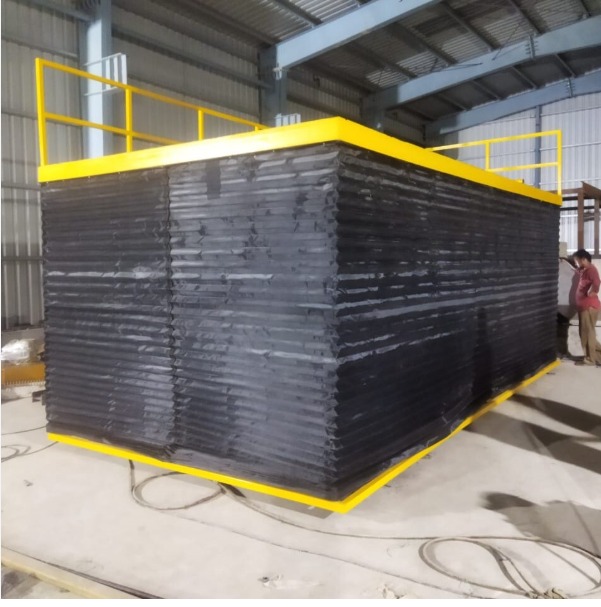 | SCISSOR LIFT BELLOWS Scissor Lift Bellows are one of the broadly demanded stabilizer for which we are considered an acclaimed designed in the market. View product → |
How to test, inspect and maintain protection through the full stroke
Confirm protection by testing the bellows through the complete stroke, not by checking its appearance at one height. Bellows for scissor lift protection are flexible guards, not structural members, so they must not carry platform loads or replace fixed or interlocked guarding around crushing and shearing points.
1. Before commissioning, confirm that the risk assessment still provides safe clearances and prevents access to the scissor mechanism. Keep operators and maintenance staff outside the hazard zone during movement.
2. With the platform empty, inspect the installed bellows at its lowest and highest positions. Look for compressed folds, pinching, stretched seams, exposed mechanism, loose fasteners and contact with arms, pivots, rollers or the floor.
3. Jog the lift slowly through several complete cycles. Watch every fold and mounting edge continuously; stop immediately if the cover snags, rubs, pulls a hose, traps a cable or develops excessive tension.
4. Repeat the test at the lift’s maximum rated travel and operating speed. Compare travel time, force, hydraulic pressure or motor current with the equipment specification or a recorded baseline; the cover must not reduce rated speed or lifting capacity.
5. Check cable and hose movement independently. Bellows for scissor lift applications do not provide cable-carrier protection, so verify bend radius, strain relief and abrasion clearance against each cable or hose manufacturer’s limits.
6. After cycling, inspect for tears, displaced folds and trapped debris, then record the result. Include end clearances and mounting interfaces in scheduled inspections because a bellows for scissor lift equipment reduces contamination without making the mechanism sealed.
Frequently asked questions
What does a bellows cover protect on a scissor lift?
It shields crossed arms, pivot points, rollers, bearings, screw drives, hydraulic cylinders, switches, hoses and cable runs from dust, chips, abrasive particles and liquid splash.
Which measurements determine whether scissor lift bellows will fit?
Measure the compressed length, extended length, width, height, stroke, mounting points and clearance around arms, cylinders, pivots, hoses and nearby structure.
How should you install bellows around scissor lift arms and cylinders?
Attach the cover to stable points on the platform base and lower frame, then check that folds clear arms, cylinders, pivots and hoses through the entire stroke.
How do you test and maintain bellows for scissor lift protection?
Run the platform through its complete stroke, inspect for rubbing and overstretching, remove trapped debris, and repair damaged folds or loose fasteners.